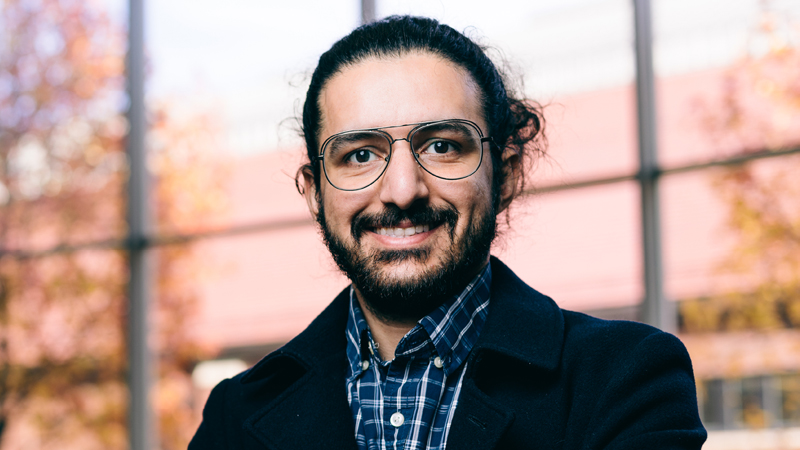
Mohammadkazem Taram is an Assistant Professor in the Department of Computer Science at Purdue University, joining in Fall 2022. He holds a PhD from the University of California San Diego (UCSD), completed in 2022. His research focuses on computer architecture and computer security, particularly microarchitectural attacks, performance mitigations, and security-enhanced hardware design. He has been awarded the ACM SIGMICRO Dissertation Award for his doctoral work and has received several best paper awards for his publications in top-tier conferences like ASPLOS and ISCA. His research interests include hardware security vulnerabilities, secure execution environments, and optimizing performance-security trade-offs. Notable contributions include work on Extended User Interrupts (xUI) , Pathfinder control-flow attacks, and Hardware-Assisted Fault Isolation (HFI) . He actively collaborates with industry and academia, evidenced by his roles in developing novel mitigation techniques against speculative execution and side-channel attacks. Teaching: CS-426 (Computer Security), CS-593 (Microarchitecture Security), and CS-593 (Principles in Computer Architecture) at Purdue. Students: Advises Milad Esrafilian Najafabadi, Berk Aydogmus, and others, with co-advisory roles on Qi Ling and Gustavo Franco Camilo. Labs/Teams: Leads a research group focusing on hardware security and architecture, with a focus on practical and scalable defenses. Publications span top venues like ASPLOS, ISCA, and USENIX Security, with artifacts and open-source contributions. His work emphasizes bridging the gap between theoretical security concepts and real-world hardware implementations.