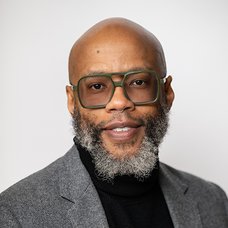
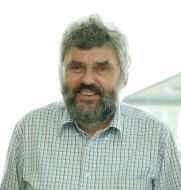
Claire Stansfield is a Senior Research Fellow at the Social Research Institute of University College London (UCL), specializing in information retrieval methods for evidence synthesis. She works within the Evidence for Policy and Practice Information Centre (EPPI Centre) and is affiliated with UCL Institute of Education. Active in machine learning applications for systematic reviews Develops tools for research mapping and visualization Focuses on improving evidence use in policy-making Her research spans social science, public health, education, and international development, with expertise in search strategy design and research register maintenance. Recent work explores: Embedded researcher dynamics in public health Automation in evidence synthesis Geographic search limitations She teaches systematic review methodology in UCL's Master's program and contributes to methodological guidelines for the Cochrane and Campbell Collaborations.
Jian Zhong is a Research Fellow at the University of Birmingham’s Geography, Earth and Environmental Sciences department, focusing on air quality and climate interaction modelling. His work bridges environmental science with public health, contributing to major projects in the UK and international collaborations. Education: PhD in Geography & Environmental Sciences (University of Birmingham, 2011-2015), B.Sc. in Safety Engineering (Central South University, China). Research Interests: Modelling emissions interactions, environmental nanoparticle evolution, climate-weather systems, geographical data analytics for health, and translating environmental research into policy impacts. His work supports UN Sustainable Development Goals through climate mitigation and air quality improvements. Recent Articles: Focus on air quality mapping in European cities, climate risk scaling in West Midlands, black carbon sensitivity tests, and WRF-LES urban particle dispersion models. Scientific Awards: 3rd Place UKFN Video Competition #12 (2022) Best Technical Solution Prize (2022) Grants & Collaborations: £5m WM-Air Programme (Named Researcher), £2m Wellcome Trust health-climate project, EPSRC £6.2m CLEETS Clean Energy initiative, and multiple Royal Society/NERC-funded projects on urban ozone pollution and climate adaptation.
Sabrina Giordano is Associate Professor of Statistics at the University of Calabria , where she teaches Statistics and Data Science courses in both Italian and English. She holds a PhD in Methodological Statistics from the University of Milano-Bicocca and has held visiting positions at RWTH Aachen University, University of Florida, and University of Plymouth. Her research focuses on Statistical modeling of categorical and ordinal data Latent variable models and copula functions Longitudinal analysis and hidden Markov chains Applications in finance, health, and environmental statistics Her methodological contributions are implemented in the hmmm R-package and supported by grants like the PRIN2022 project "SMILE: Statistical Modelling and Inference to Live the Environment". She serves as Associate Editor for Biometrical Journal and Statistical Methods & Applications Director of the Post-Graduate Master in Artificial Intelligence & Data Science Local coordinator for the COST Fin-AI research group Her recent collaborative work explores Dynamic response styles in longitudinal data Fairness-aware classification algorithms Copula-based dependence structures Applications to financial vulnerability and risk perception
Richard Kos serves as Senior Lecturer, Admissions Director, and MUP Program Graduate Advisor at San José State University's Department of Urban and Regional Planning within the College of Social Sciences. As a certified urban planner and geospatial educator, he directs graduate admissions, advises students, and teaches advanced GIS and urban planning courses that prepare students for professional practice in the Bay Area and beyond. Dr. Kos earned his Masters of Regional Planning from the University of North Carolina at Chapel Hill (1995), focusing on land use planning, growth management, urban sprawl impacts, New Urbanism, and transportation planning. His Bachelor of Science in Environmental Planning and Urban Design came from Rutgers University (1989), where he studied interactions between manmade and natural environments. He is also a Certified California Adult Educator (2003) and holds AICP certification (#105484). His research interests center on the application of digital technology to study land use change spatially and quantitatively, transportation planning, alternative approaches to conventional suburban development patterns, and community engagement strategies. Dr. Kos has particular expertise in New Urbanist-inspired development standards, GIS project management, and spatial analysis for urban planning applications, with extensive experience applying these skills to real-world planning challenges throughout California. His publication portfolio reveals a consistent focus on GIS education, spatial analysis applications, and workforce development issues. The articles demonstrate progression from foundational GIS applications toward increasingly sophisticated analyses of economic development, biotechnology industry clustering, and community engagement strategies, reflecting both technological advances in GIS and evolving urban planning challenges. 2016 CommUniverCitan of the Year for neighborhood revitalization leadership 2014 Most Influential Professor award from SJSU students Multiple GIS design awards (1999-2003) including ESRI Map Book selection Academic Award of Merit from American Planning Association (2014) Outstanding Planning Student Organization Award (2015) As Faculty Advisor for the Urban Planning Coalition, Dr. Kos mentors students in professional development while supervising numerous graduate projects through CommUniverCity San Jose. His student teams have produced maps and spatial analyses for clients including the City of San Jose Planning Department, The Health Trust, Catholic Charities, and other Bay Area organizations, creating valuable experiential learning opportunities while addressing community needs.
Stewart James Kowalski is a Professor at the Department of Information Security and Communication Technology, Norwegian University of Science and Technology (NTNU) in Gjøvik. His research focuses on socio-technical approaches to cybersecurity, including security management frameworks, human factors in incident response, and innovative educational methods. He leads projects integrating gamification and simulation into cybersecurity training. Research Interests: Kowalski's work spans cybersecurity economics, socio-technical system design, crisis management, and security behavior modification. His research emphasizes: Developing gamified training tools (e.g., CyberAIMs, CS-Technopoly) for cybersecurity education Modeling organizational maturity in security incident management Analyzing cybersecurity as a public good with economic policy implications Designing privacy-aware gerontechnology services for elderly populations Publication Trends: His recent articles (2018-2023) demonstrate strong focus on: Socio-technical frameworks for incident response and crisis exercises Gamification and simulation in cybersecurity education Economic and behavioral analysis of security decision-making Human/organizational factors in risk management Academic Activities: Kowalski teaches courses on socio-technical crime (IMT4128) and research planning (IMT4205). He actively develops cybersecurity exercises and has presented workshops at events like Sikkerhetsfestivalen (Security Festival). His collaborations include international research on open-source security cultures and e-government frameworks.
Alessandro Polli is a confirmed researcher (Ricercatore confermato) in Economic Statistics at the Department of Social and Economic Sciences, Sapienza University of Rome. He teaches three courses: Quantitative Methods for Time Series Analysis (1st semester), Economic Statistics (2nd semester), and Statistical Methods and Models for Time Series and Panel Data (2nd semester). His office is located in room 108 of the department, with weekly office hours held every Wednesday from 2:00 PM to 5:00 PM. Polli holds a PhD in Economic Analysis, Mathematics and Statistics of Social Phenomena from Sapienza University of Rome. His academic foundation combines rigorous statistical training with social science applications, enabling interdisciplinary research at the intersection of data science and socioeconomic analysis. His primary research focuses on Economic Statistics with specialized expertise in Time Series Analysis and Text Mining methodologies. Polli applies these techniques to examine migration patterns, gender statistics, security perception, labor market dynamics, and political discourse. His work bridges quantitative methods with social science inquiry, particularly through the analysis of textual data from social media, official statistics, and political communications to derive actionable socioeconomic insights. Analysis of his recent publications reveals a consistent trajectory in developing and applying text mining techniques to social phenomena. His research demonstrates increasing sophistication in emotional text mining, temporal validity assessment of sentiment analysis, and integration of machine learning with traditional statistical models. Key thematic clusters include migration discourse in European elections, government crisis dynamics, vaccine sentiment analysis, and automation impacts on Italian labor markets, all characterized by methodological innovation in handling complex textual datasets. Professional engagements include: Consultant to the Historical Research Office of the Bank of Italy Consultant to the Presidency of the Council of Ministers - Guarantee Commission for Statistical Information Member of the Istat quality circle for territorial statistics Referee for international scientific journals including Lexicometrica and Social Indicators Research While specific student advising activities are not documented in available sources, his institutional roles indicate significant contributions to national statistical policy and quality assurance. His collaborative work with major Italian institutions demonstrates applied research impact on official statistics and policy development, particularly in migration and territorial statistics.
Jorge L. Contreras serves as a Visiting Professor at the Center for Advanced Studies in Bioscience Innovation Law (CASBIL) at the University of Copenhagen, with primary institutional affiliation through the S.J. Quinney College of Law at the University of Utah. His work bridges legal frameworks and scientific innovation in bioscience contexts. His research focuses on intellectual property mechanisms in open science ecosystems, particularly patent law applications for bioscience innovation. Key interests include technology transfer protocols, research database governance, and legal structures enabling collaborative scientific advancement. His scholarship examines how patent pledge systems can accelerate biomedical research while balancing proprietary interests. Recent work analyzes institutional stewardship models for research infrastructure, as demonstrated in his 2025 commentary on the Patent Pledge Database transition to University of Copenhagen. This reflects broader trends in his scholarship examining legal architectures for open science initiatives and bioscience data sharing frameworks. Contreras operates within the Center for Advanced Studies in Bioscience Innovation Law (CASBIL), an interdisciplinary hub fostering collaboration between legal scholars, bioscientists, and innovation policymakers. The center focuses on developing practical legal solutions for emerging challenges in biotechnology research and commercialization.
Jeffrey Omari is an Assistant Professor in Communication Studies at Gonzaga University. His interdisciplinary research integrates law, communication, and anthropology to examine internet governance, digital inclusion, and civil rights, particularly in marginalized communities in Brazil. He holds a J.D. and a Ph.D., indicating dual expertise in legal studies and his doctoral discipline. Omari's research interests focus on the intersection of technology and society, with specific attention to: Internet governance models in informal settlements Digital access and democracy in Rio de Janeiro Civil rights in the Anthropocene Platform politics (e.g., Facebook's role in internet perception) Alternative technological governance visions in Brazil His recent publications (2018-2024) reveal a consistent ethnographic approach, moving from case studies in Rio to broader theoretical frameworks about uncertainty and informality. This work aligns with UN Sustainable Development Goals 9, 10, and 16. Scientific Awards: No awards mentioned in the source text. Advising and Grants: While specific students and grants are not detailed, Omari has collaborated with Northern Illinois University on research output. His work suggests engagement with interdisciplinary teams focused on technology and social justice. Labs and Teams: No dedicated labs or research teams are specified in the provided information.
Paruyr Sergey Efendyan serves as Professor in the Department of Cartography and Geomorphology at Yerevan State University's Faculty of Geography and Geology since 2020, with prior institutional memberships at YSU (2021-2023) and Armenian National Agrarian University (2009-2023). His academic foundation includes a Certified Specialist degree in Urban Construction from Kiev Engineering and Construction Institute (1969-1974) and postgraduate studies in Applied Geodesy at Moscow Institute of Geodesy and Cartography (1982-1987), culminating in a 2016 Doctor of Science degree from Armenian National Agrarian University for research on Armenia's unified land information system. Professor Efendyan's research centers on Geodesy, Land Construction, and Cadastre, addressing critical challenges in spatial data infrastructure, land valuation methodologies, and geodetic applications for earthquake monitoring and agricultural land management. His work bridges historical land survey practices with modern technological solutions. His 2022-2025 publications reveal strong thematic cohesion around national spatial data infrastructure development, with recurring emphasis on AI integration, legal frameworks, cadastral revaluation, and satellite-based topographic mapping. Key trends include Python-based quality control systems for road data and anthropogenic impact analysis on soil composition. He actively participates in international forums including Geoforum-2023 (Ukraine), Environmental Protection conferences (Russia, 2022), and Land Management summits (Kyrgyzstan, 2021), demonstrating global engagement despite no explicitly listed scientific awards. Professor Efendyan advises students and manages research grants focused on Armenia's spatial data infrastructure modernization, particularly through Python-based quality control frameworks for road network datasets, though specific grant details remain unlisted in available materials.
Stefan Soesanto is a Senior Researcher at the Center for Security Studies (CSS) at ETH Zurich. He leads the Cyberdefense Project and serves as Co-Team Head of the Risk and Resilience Team . His work focuses on cybersecurity, cyber defense, and international law, with extensive experience in designing cyber wargame exercises and organizing defense conferences. Education: MA from Yonsei University (South Korea) in Security Policies and International Law BA from Ruhr-University Bochum (Germany) in Political Science and Japanese Research Interests: Cyberwarfare and Digital Conflict Hybrid Threats and Cyber Deterrence International Cyber Norms and Policy Implementation Ukraine’s Cyber Defense Strategies Space Economy Security Key Publications: 2024: Analysis of Ukraine’s Digital Warfighting Ecosystem 2023: Insight into Ukraine’s IT Army and Counter-Hybrid Campaigns 2022: Studies on EU Norm Erosion and Cyber Deterrence 2021: Exploration of Cyber-Electromagnetic Activities and Space Security 2020: Critique of EU Cyber Sanctions and Cyber Terrorism Trends
Silvana Trimi is an Associate Professor in Supply Chain Management & Analytics at the Nebraska College of Business , University of Nebraska-Lincoln. With a Ph.D. in Management Information Systems (2001) and prior roles as Assistant Professor since 2001, she specializes in Digital Transformation , Big Data Analytics , and Smart Supply Chain Management . Ph.D. , Management Information Systems, University of Nebraska-Lincoln (2001) M.A. , Business Administration, University of Nebraska-Lincoln (1996) B.S. , Finance, University of Tirana, Albania (1989) Her research focuses on Digital Innovation , Technology Convergence , and Privacy in E-Business , with over 60 publications in journals like Communications of the ACM and Journal of Business Research . She explores topics including Machine Learning , Cybersecurity , and E-Government , often connecting academic theory to real-world organizational challenges. Dr. Trimi serves as Associate Editor for the International Journal of IT Service and Service Business: An International Journal , while also contributing to multiple editorial and review boards. Her teaching portfolio includes Advanced ICT for Business Innovation and Data Communications and Networking , reflecting her expertise in Technology-Driven Organizational Agility . Three research grants (IREX, Layman, Ethics Curriculum, EPSCoR) Keynote presentations at 40+ conferences Special issue editor for topics including Open-Source Innovation and Organizational Blogs
Jeremy Watson is a researcher at the University of Minnesota - Twin Cities' Carlson School of Management, focusing on copyright policy, intellectual property, and technological impacts in creative industries. Key research areas: Copyright economics, digital sampling, and policing technology. Published in top journals with empirical analyses of 1991 copyright decisions' effects on hip-hop production and 2025 study on gunshot detection systems in Chicago. His work bridges legal frameworks with technological innovation in content industries, examining how IP laws shape creativity and platform behaviors.
Stephanie Young is a Professor of Policy Analysis at the RAND School of Public Policy, a Senior Political Scientist at the RAND Corporation, and Director of the Resource Management Program at RAND Project AIR FORCE. She is based at RAND, a leading nonprofit research institution supporting U.S. and allied defense and security policy. Her work centers on defense resource allocation, acquisition, and strategic planning for the Department of the Air Force and broader Department of Defense. Ph.D. in History, University of California, Berkeley M.A. in History, University of California, Berkeley B.A. in Physics, Astrophysics, and History, University of California, Berkeley Her research focuses on defense acquisition, military budgeting, and the Planning, Programming, Budgeting, and Execution (PPBE) system. She explores broader resource allocation decisionmaking, strategic competition, security cooperation, building partner capacity, countering weapons of mass destruction, and U.S. foreign policy in the Middle East and South Asia. Her interdisciplinary background in history and science enables nuanced analysis of policy evolution and institutional dynamics. The 15 most recent publications highlight a consistent focus on PPBE reform, comparative defense budgeting across allied and adversarial nations (e.g., China, Russia, NATO members), space acquisition, and multinational defense collaboration. Her work increasingly integrates historical analysis with contemporary policy challenges, particularly in response to geopolitical competition and budgetary constraints. Stephanie Young has no listed scientific awards in the provided text, though her leadership and scholarly output suggest recognition within policy and defense communities. She has advised and led research teams at RAND, including serving as associate research department director. She taught a Ph.D.-level course on the U.S. defense budget at the Pardee RAND Graduate School. While specific grants are not detailed, her research is largely funded by U.S. defense and security agencies. She spent three months embedded with Special Operations Joint Task Force–Afghanistan in Kabul, demonstrating field engagement with military operations. She leads the Resource Management Program at RAND Project AIR FORCE, which conducts research on defense acquisition, logistics, industrial base, sustainment, infrastructure, and organizational design. Her team supports high-level decisionmaking within the Department of the Air Force and contributes to national security strategy through evidence-based analysis.
Dr. Susanne Feistel is a Researcher at the Leibniz Institute for Baltic Sea Research (IOW) in Warnemünde, Germany, affiliated with the IT & Data Management department under the Directorate. She holds a Dr. rer. nat. from Ludwig Maximilian University of Munich (2012) and a Dipl. Biol. from the University of Rostock (2004). Her research focuses on marine data management systems, with specialization in research data curation, metadata frameworks (notably IOWMETA), and oceanographic database development (IOWDB/ODIN2). Key domains include: Research data lifecycle management for marine science Baltic Sea hydrographic and hydrochemical data analysis Data provenance and reproducibility frameworks Development of FAIR data standards for ocean research Her publications demonstrate consistent focus on marine data systems, with recent work emphasizing standardized data management practices for large-scale research collaborations, geospatial analysis of Baltic Sea conditions, and reproducible data workflows. Publications show strong thematic clustering around metadata systems, hydrographic assessment methodologies, and research data governance. As Data Steward, she contributes to institutional and national research data management strategies, including DAM (German Marine Research Alliance) initiatives. No awards or student supervision information was found in the source materials.
Prof. Dr.-Ing. Thomas Leich holds the Volkswagen Financial Services Endowed Professorship for Business Informatics, specifically Requirements Engineering, at Harz University of Applied Sciences. He is affiliated with the Faculty of Automation and Information, focusing on software variability and configurable systems. University: Harz University of Applied Sciences School: Faculty of Automation and Information Academic Rank: Professor Research Interests span software product line engineering, IT security, Industry 4.0, and feature-oriented programming. His work bridges academic innovation with industrial applications, particularly in secure and scalable systems for automotive and enterprise contexts. Recent Publications emphasize security in configurable systems, empirical software engineering studies, and automotive platform management. Articles often involve collaborations with teams at Otto von Guericke University and international institutions. Scientific Awards include the Hugo Junkers Research Award (2013), the Wissenschaftspreis der Wernigeröder Stadtwerkestiftung (2017), and the 2012 Faculty Research Award from the University of Magdeburg. Supervision of over 20 theses since 2008, spanning topics in ERP security, program comprehension, and embedded systems. He leads the EXPLANT project, funded by DFG, and contributes to FeatureIDE , an extensible framework for feature-oriented development.