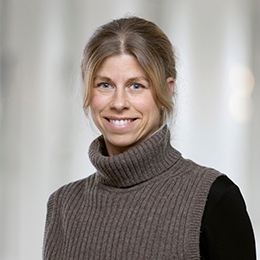
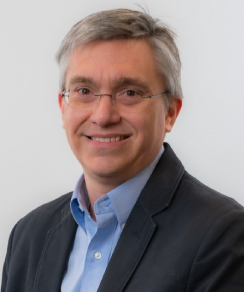
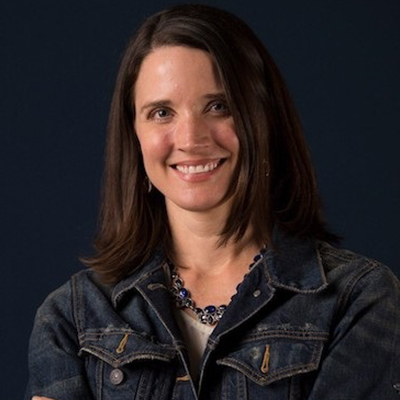
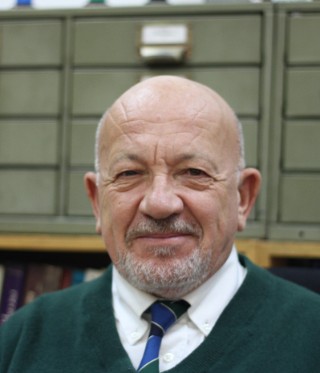
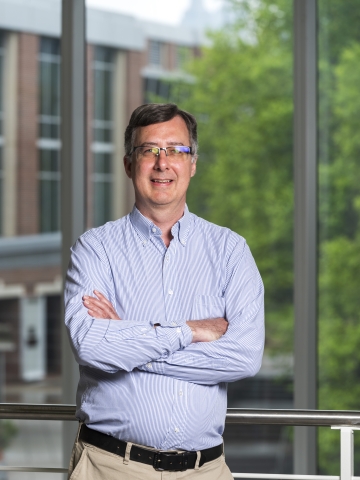
Roles and Affiliation: Emelie Shanks is a Senior Lecturer and Associate Professor at Stockholm University , affiliated with the Department of Social Work . She serves as Vice Head of Department and co-leads the research group on Marketisation and Competitive Tendering for Social Work . Research Interests: Her work focuses on the implications of marketisation and privatisation for social work, including: Marketisation of municipal social services Workforce management and agency workers in public social services Residential care for children and youth Workplace violence in home-based and non-institutional social work Organisational conditions for social work managers Publication Trends: Recent articles examine client-initiated violence in home care, privatisation of child residential care, and the role of market logic in therapeutic content decisions. Her work spans both empirical studies and theoretical analyses of professional identity under managerialism. Leadership and Collaborations: Dr. Shanks collaborates with researchers like Tommy Lundström and David Pålsson. She contributes to interdisciplinary projects such as Social services as an arena for crime prevention , which involves the Department of Criminology and the Social Affairs Administration of Stockholm.
Jeroen P Jansen is an Associate Professor in the Department of Clinical Pharmacy at the University of California, San Francisco, specializing in methodological research at the intersection of evidence synthesis, biostatistics, and health economics. His work focuses on advancing statistical methods for health technology assessment (HTA), particularly in addressing challenges in model-based cost-effectiveness evaluations and complex evidence structures. Research Interests: Clinical and economic value of healthcare interventions Comparative effectiveness and cost-effectiveness analysis Development of open-source simulation models Statistical methods for evidence synthesis Precision medicine applications Health disparities in economic modeling Contributions: Co-author of a textbook on network meta-analysis, developer of guidance frameworks for evidence synthesis, and a leader in promoting transparent health economic evaluations. His methodological innovations include statistical techniques for bridging gaps in evidence and the development of an R software package for simulation models.
Felix Smith serves as a Professor in the Department of Social and Behavioral Sciences at Ferris State University's College of Arts, Sciences and Education. He holds a PhD and MA in Clinical Psychology from Central Michigan University and a BS in Psychology and Sociology from the University of Leicester, establishing his foundation in behavioral sciences. His research program critically examines human sexuality dynamics , particularly the distinction between coercive and consensual sadomasochistic practices, while investigating links between sexual behavior and criminal activity. Additional foci include juvenile sexual development patterns, deception detection through physiological indicators like pupil dilation, and personality constructs such as openness versus rigidity. This multifaceted work bridges clinical psychology with forensic and legal applications. Publication analysis reveals consistent exploration of sexuality-related phenomena since 2005, with interdisciplinary expansion into medical fields evident in his 2013 pharmacology collaboration. Conference presentations demonstrate ongoing engagement with professional communities through the Association for Behavioral and Cognitive Therapies and International Federation for Surgery of Obesity, addressing topics from gastric bypass patient selection to adolescent behavioral norms. No scientific awards were documented in the source materials. Similarly, no information regarding research grants, graduate student mentorship, or laboratory affiliations was provided within the available text.
Coleman Krawczyk is a Senior Research Software Engineer at the Institute of Cosmology & Gravitation , University of Portsmouth , and a Citizen Science and Outreach Fellow. He serves as Technical Lead for the Tactile Universe project , creating 3D tactile astronomy models for vision-impaired students. A member of the Zooniverse development team, he builds data aggregation tools for citizen science projects like Global Earth Model (digital twin infrastructure) and Kilonova Seekers (real-time transient detection). Education: PhD from Drexel University (2014) Key Research: Machine learning for gravitational lensing, dark matter analysis, accessible astronomy, and SDSS/MaNGA survey contributions His recent work includes: Machine learning applications for Euclid Q1 Strong Lensing Discovery Engine (2025) GOTO065054+593624 dwarf nova detection (2025) Self-interacting dark matter evidence via SDSS J0946+1006 analysis (2025) LIGO-Virgo-KAGRA outreach initiatives (2024) Selected awards: Annie Maunder Medal for Outreach (2022) for accessible astronomy innovations He contributes to major collaborations including Sloan Digital Sky Survey , CANDELS , and Global Earth Model , while actively participating in Python-based astronomical software development ( Astropy , SkyPy). Current projects focus on machine learning integration with citizen science and 3D printing for inclusive education, maintaining active collaborations with institutions across the UK , USA , and International Sky Surveys .
Dr. phil. Eva Thomm is a research associate at the Faculty of Education , University of Erfurt, and member of the Institute for Planetary Health Behaviour (IPB) . Her work focuses on educational psychology, science communication, and teachers' trust in research evidence. She serves as an Associate Editor for the German Journal of Educational Psychology (2023-2025) and reviews for 12 journals including Science Communication and PLOS One . Key research areas include: Teachers' source evaluation in belief-evidence conflicts Science communication in educational contexts Digital assessment of professional competencies Epistemic reasoning in teacher training Her 15 most recent publications (2016-2025) demonstrate expertise in: Source credibility assessment Conflict resolution in science communication Medical communication competence testing Belief persistence in educational research Notable award: EARLI Outstanding Publication Award 2021 for work on expert disagreement. Academic affiliations: University of Erfurt (since 2017) Westfälische Wilhelms-Universität Münster (2009-2016) Member of 5 research initiatives including Erfurter Open Science Initiative
Ozan Önder Özener is a Professor at the Department of Architecture, Istanbul Technical University , where he has been since 2010. He earned his PhD in Architecture from Texas A&M University (2009) and holds an Associate Degree in Law from Anadolu University (2016). His work focuses on Building Information Modeling (BIM) , Kinetic Architecture , and Architectural Education . Academic Performance Award (2024) Publication Awards (2022, 2023, 2024) Multiple competition prizes in Urban Design and Architectural Projects His research explores BIM-driven information management , pedagogical innovations , and sustainable building practices , with over 200 publications and 6 funded projects. Key collaborations include Mehmet Ümit Meterellioz and Mark J. Clayton.
Brian Reichow is an Assistant Director of Research affiliated with the University of Connecticut and an active contributor to the fields of early childhood special education and developmental disabilities. He serves as Co-Editor in Chief of the Journal of Early Intervention , Co-Editor of the Disability Coordinating Group of the Campbell Collaboration, and Associate Editor for multiple journals including Topics in Early Childhood Special Education and Journal of Autism and Developmental Disorders . Education: Ph.D. and post-doctoral studies at Vanderbilt University and Yale University; B.A. in Elementary Education and Psychology from University of North Carolina at Chapel Hill. His research focuses on translating evidence-based practices into real-world applications, particularly for children with developmental delays or disabilities in lower- and middle-income countries. He has collaborated extensively with the World Health Organization (WHO) to develop the Caregiver Skills Training program, an open-source initiative aimed at improving identification and management of developmental disabilities globally. His methodological expertise includes systematic review and meta-analytic techniques.
Anne Churchland is a Professor of Neurobiology at the University of California, Los Angeles, with a research focus on perceptual decision-making and multisensory integration. Her work bridges experimental neuroscience with computational approaches to understand how the brain processes information and makes decisions. Churchland's research interests span cognitive neuroscience, decision-making processes, neural circuit dynamics, and multisensory integration. Her laboratory employs advanced techniques including large-scale neural recordings, behavioral analysis, and computational modeling to investigate how neural populations encode information and guide decisions. She has made significant contributions to understanding how spontaneous movements influence neural activity and how different brain regions contribute to evidence accumulation during decision tasks. Her recent publications reveal a strong trend toward large-scale, collaborative neuroscience projects, particularly through the International Brain Laboratory. Her work increasingly focuses on developing and applying advanced tools for neural recording and analysis, including chronic Neuropixels probes and motion correction algorithms for extracellular recordings. Churchland's research spans multiple model organisms and integrates behavioral, electrophysiological, and computational approaches to address fundamental questions in systems neuroscience. Scientific Awards Excellence in Postdoc Mentoring Award, UCLA, 2024 James M. and Cathleen D. Stone Faculty Research Award, Cold Spring Harbor Laboratory, 2020 Louise Hanson Marshall Special Recognition Award, Society for Neuroscience, 2017 Janett Rosenberg Trubatch Career Development Award, Society for Neuroscience, 2012 Churchland leads an active research laboratory focused on perceptual decision-making and multisensory integration. She has secured funding from multiple prestigious sources including the National Science Foundation, NIH BRAIN Initiative, and Simons Foundation. Her lab is part of the International Brain Laboratory, a large-scale collaborative effort to standardize and reproduce measurements of decision-making in mice. Churchland has been instrumental in developing new tools and methodologies for chronic neural recordings across multiple brain areas simultaneously. Her laboratory develops and implements cutting-edge techniques for large-scale neural recordings, including chronic Neuropixels probe implants and motion correction algorithms for high-density extracellular recordings. The lab actively participates in collaborative neuroscience initiatives, most notably the International Brain Laboratory, which aims to establish standardized approaches to studying neural circuits underlying decision-making.
Niranjan Balasubramanian is an Assistant Professor in the Department of Computer Science at Stony Brook University with additional affiliations in the Department of Biomedical Informatics and the Center of Excellence in Wireless & Information Technology (CEWIT). His research focuses on Natural Language Processing and Information Retrieval systems that extract, understand, and reason over textual information. Education: PhD, University of Massachusetts Amherst (Center for Intelligent Information Retrieval) MS, Computer Science, University at Buffalo (2003) His research spans question answering for elementary education, event schema generation from news, machine learning for information retrieval, energy-efficient mobile search, and automatic Wikipedia content generation. Recent work explores causal reasoning in event extraction, multimodal claim verification, authorship fairness, and secure coding with large language models. Analysis of his 15 most recent publications (2024-2025) reveals intensive focus on advancing NLP through causal/temporal reasoning, multimodal verification, and LLM optimization. Key trends include psychological modeling of human language, energy-efficient architectures, and addressing misattribution in authorship analysis. Scientific Awards: No awards mentioned in provided text Advising and grants information was not provided in the source materials. His postdoctoral background at the University of Washington's Turing Center and industry experience at Syracuse University's Center for Natural Language Processing inform his applied research approach. Labs and Teams: Affiliated with Stony Brook's Center of Excellence in Wireless & Information Technology (CEWIT), contributing to interdisciplinary AI initiatives while maintaining primary focus in the Computer Science department.
Professor Haluk Aksel is a distinguished faculty member in the Department of Mechanical Engineering at Middle East Technical University (METU) in Ankara, Turkey. He holds the academic rank of Professor and has been contributing to the field of mechanical engineering, particularly in fluid dynamics and related areas, for several decades. His educational background includes: Bachelor's Degree from METU in 1976 Master's Degree from METU in 1978 PhD from Lehigh University in 1981 Professor Aksel's research interests span a wide range of topics within fluid mechanics and computational methods. His primary areas of focus include Fluid Mechanics, Gas Dynamics, Fluid Machinery, Finite Element Method, Computational Fluid Dynamics, and Solid Propellant Rocket Engine Design. His work demonstrates a strong emphasis on both theoretical and applied aspects of fluid dynamics, with particular attention to computational methods and their practical applications in engineering systems. Analysis of his recent publications reveals a continued focus on computational fluid dynamics, with particular emphasis on turbomachinery design, heat transfer optimization, and rocket propulsion systems. His work spans fundamental research in fluid mechanics and applied engineering solutions for practical problems in energy systems, aerospace, and thermal management. His technical expertise is evident in his development of computational tools like the MULTALL Open Source Throughflow Code for turbomachinery analysis. Professor Aksel has maintained consistent scholarly productivity throughout his career, with publications appearing regularly through 2025. His research has practical applications across multiple engineering domains, including aerospace engineering, automotive thermal management, and energy conversion systems.
Eloisa Paganoni is a researcher at the Department of Humanities, Ca' Foscari University of Venice, specializing in Hellenistic history and digital humanities. She leads the Venice Squeeze Project for digitizing epigraphic casts and collaborates with international institutions like the École française d'Athènes and HiSoMA (Lyon). PhD in Historical, Geographical and Anthropological Studies (2017) from a joint program by Padua, Verona, and Venice Universities Research focuses on Asia Minor's non-Macedonian kingdoms, ancient historiography, and cultural heritage digitization Key projects include: Venice Squeeze Project (2017-2025) E-STAMPAGES (2016-2022) Humboldt-funded Asia Minor research (2022-2024) PRIN 'Hellenistic and Roman Multipolarity' (2024-2025) Her work bridges classical scholarship with digital innovation, maintaining expertise in ancient Greek (written: native, spoken: native), English (advanced), German (intermediate), and French (intermediate). She contributes to editorial boards and technical databases while analyzing historical narratives through epigraphic evidence. Scientific Contributions Specializes in Bithynian history and Hellenistic political structures Recipient of Alexander von Humboldt Foundation grant (2022) Key publications on Strabo's geography, Priene decrees, and Memnon's historiography Develops digital tools for epigraphic document enhancement Research Themes Asia Minor's political landscapes (3rd-1st century BC) Local historiography and cultural identity Epigraphic analysis and digital preservation Hellenistic royal dynamics and diplomatic practices
David Sherrill is a Regents' Professor in the School of Chemistry and Biochemistry at the Georgia Institute of Technology with a joint appointment in the College of Computing. As of January 2025, he serves as interim executive director of the Georgia Tech Institute for Data Engineering and Science (IDEaS), supporting interdisciplinary research in data science and high-performance computing across campus. His educational background includes a B.S. in Chemistry from MIT (1992), a Ph.D. in Chemistry from the University of Georgia (1996), and an NSF Postdoctoral Fellowship at UC Berkeley (1996-1999) working under Martin Head-Gordon. Sherrill's research focuses on ab initio electronic structure theory development and non-covalent interaction analysis across diverse chemical systems. His group pioneers methods like symmetry-adapted perturbation theory (SAPT) to dissect electrostatic, dispersion, and exchange-repulsion effects in drug binding, biomolecular structures, organic crystals, and organocatalysis. They specialize in generating high-accuracy quantum datasets for machine learning applications and developing the open-source Psi4 quantum chemistry software used globally. Recent publications reveal a strategic shift toward integrating quantum chemistry with machine learning —evident in tools like SparcleQC for automated protein-ligand studies and physics-aware neural networks for binding energy prediction—while maintaining rigorous benchmarking against coupled-cluster theory. The work increasingly targets crystal lattice energy prediction and anharmonic vibrational analysis with practical applications in drug design. Elected Member, International Academy of Quantum Molecular Science (2024) Herty Medal for Outstanding Contributions (2023) Fellow of AAAS, American Chemical Society, and American Physical Society National Science Foundation CAREER Award (2001) Camille and Henry Dreyfus New Faculty Award (1999) Sherrill actively mentors doctoral students including Caroline Glick (Ph.D. 2024), Philip Nelson (Ph.D. 2024), and current researchers like Izzy Berry (CRIDC poster award winner). His group receives sustained funding from NSF and ACS programs, supporting projects such as the BioFragment Database (BFDb) and CrystaLattE software for molecular crystal analysis. As associate director of IDEaS since 2016, he has secured resources for interdisciplinary computational infrastructure while advancing quantum chemistry methodology. The Sherrill Research Group operates from the Molecular Science and Engineering Building at Georgia Tech, maintaining active collaborations with national labs and industry partners. They contribute to Psi4's development while leading initiatives like the Supercomputing Conference participation and the Southeastern Regional ACS symposium honoring Sherrill's Herty Medal achievement.
Mahdi Khodadadzadeh is an Assistant Professor in the Department of Geo-information Processing, specializing in machine learning, data mining, and geospatial analysis. His work bridges traditional and deep learning methods with applications in mineral exploration, environmental modeling, and circular economy initiatives. Research outputs include novel cross-validation techniques for geospatial machine learning (Spatial+, dissimilarity-adaptive methods), hyperspectral mineral mapping for ore characterization, and hybrid models combining artificial neural networks with optimization algorithms. He actively contributes to open-access datasets and methodologies, particularly in drill-core analysis and multi-source data fusion. Collaborations with researchers like R. Zurita-Milla and R. Gloaguen are evident through co-authored publications and shared datasets. His work impacts domains such as mineral exploration, geospatial modeling, and sustainable resource management, with a focus on robust statistical evaluation frameworks and spectral-spatial analysis.
Jessica Röhner serves as Professor of Personality Psychology and Psychological Diagnostics at Otto-Friedrich-Universität Bamberg's Faculty of Social Sciences. Her research bridges psychological assessment methodology with contemporary societal challenges through leadership of the Response Bias Research Lab at the ZIAI Center for Artificial Intelligence. Her research focuses on response bias detection , employing a distinctive multimethod approach integrating: Diffusion model analyses of response latencies Machine learning classification of faking patterns Qualitative content analysis of cognitive faking processes Experimental manipulation of frame-of-reference effects Current work examines how intelligence and gender interact to shape faking behaviors in personnel selection contexts, with significant implications for assessment validity. Dr. Röhner's publication record shows consistent output in top-tier journals including Behavior Research Methods and International Journal of Selection and Assessment , with recent emphasis on: Faking strategy taxonomies IAT faking detection limitations AI applications in bias-resistant assessment Intersectional analysis of social origin and gender Her research program is supported by substantial funding: DFG grant (2024-2028): €784,000 for multimethod faking analysis Three internal University of Bamberg grants (2023-2025): €127,000 total Prior Equal Opportunities Office funding for faking detection projects As an active member of the Society for Personality and Social Psychology and Association for Psychological Science, she contributes to methodological advancement through tutorials like her 2024 R-based IAT computation guide. Her lab provides structured graduate training emphasizing methodological rigor while fostering intellectual independence through embedded project leadership roles.
Siti Fazilah Shamsudin is a Senior Lecturer at UOW Malaysia KDU University College with over 20 years of academic experience in Computer Science and Software Engineering. She serves as Program Leader for the Diploma Program in Computing & Creative Media and plays a pivotal role in program development, curriculum design, and accreditation processes for computing degrees, all of which have achieved full accreditation. PhD in Information System (ongoing) at University Technology Mara (UiTM) Master of Information Technology from University Technology Mara (UiTM), 2002-2004 BSc (Hons) in Computer Engineering from De Montfort University, UK, 1996-1999 Dr. Shamsudin's research spans multiple interdisciplinary domains including software engineering, human-computer interaction, and computer science education. Her applied research focuses on medical imaging (particularly kidney stone and ovarian tumor detection using ultrasound), digital forensics for mobile devices, and machine learning applications in aquaculture. Her current PhD research on visual appeal interface design for slow learners bridges educational technology with user-centered design principles. Her publication record demonstrates consistent output in applied computing fields, with recent work focusing on image processing algorithms for medical diagnostics and digital forensics. The research shows a clear trajectory from theoretical foundations to practical implementations with real-world applications in healthcare, cybersecurity, and aquaculture management. Recipient of multiple UOW Malaysia KDU research grants (2014-2021) totaling over RM120,000 Appointed as Assistant Consultant for KiplePay Sdn Bhd through Islamic Science University of Malaysia (2021) Reviewer for 6th International Conference User Science and Engineering 2021 (i-USEr 2021) As the main coordinator for Final Year Projects, Dr. Shamsudin provides comprehensive guidance to students through their research journey. Her grants portfolio demonstrates strong research capability across multiple domains including medical imaging, digital forensics, and aquaculture technology. She maintains active industry connections through consultancy work and applied research projects that address real-world problems.