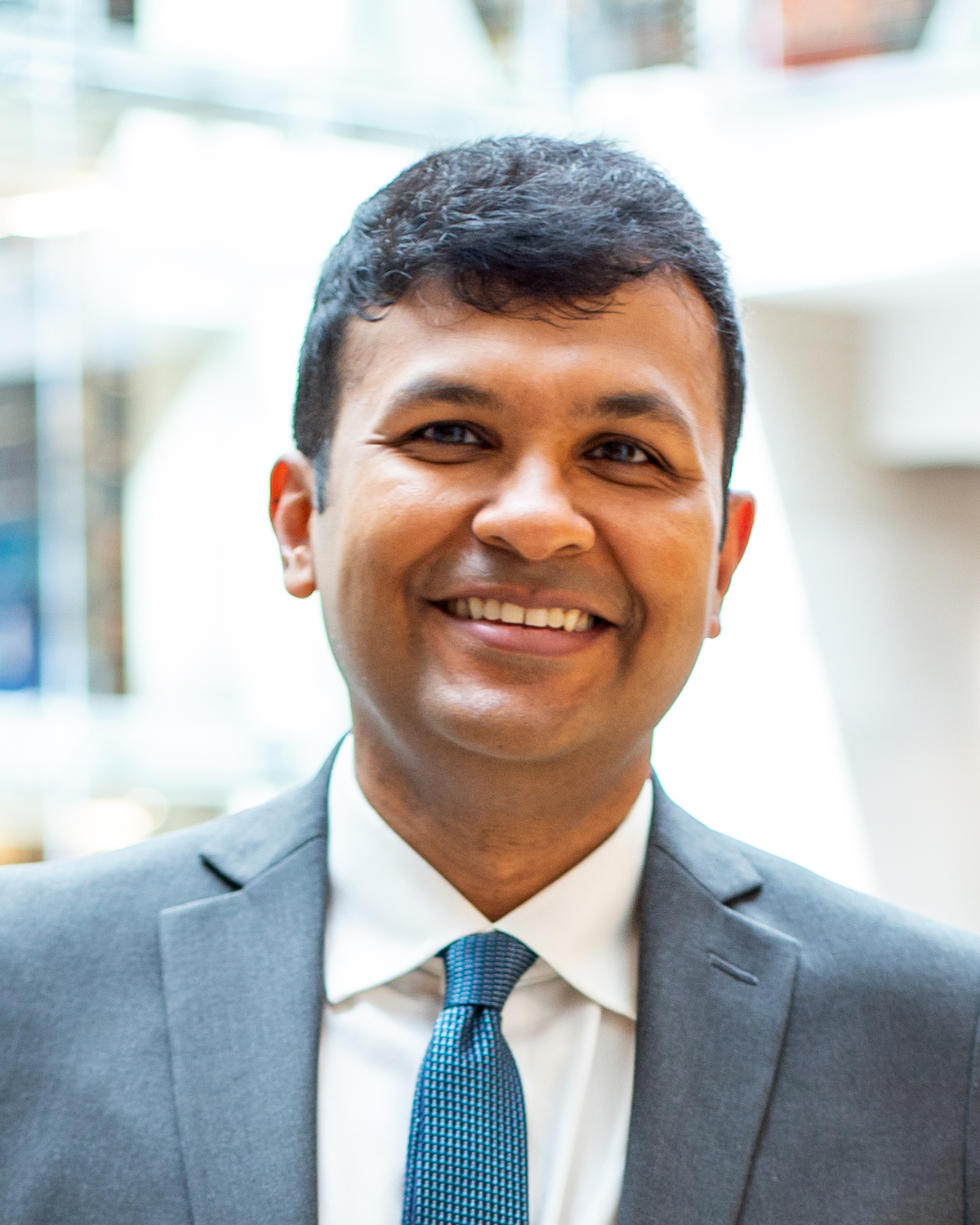
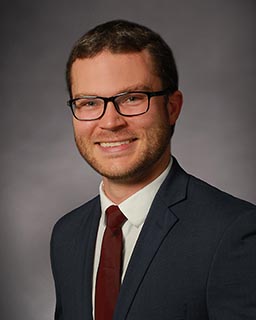
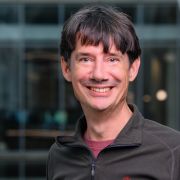
Prof. P. (Paris) Avgeriou is a full professor of Software Engineering at the Faculty of Science and Engineering , University of Groningen (RUG). His research focuses on software architecture , technical debt management , and self-adaptive systems through empirical studies and industrial collaborations. His work explores architectural decision-making using financial investment models, machine learning for debt detection, and dependency analysis in software systems. Recent projects include SDK4ED for energy-efficient embedded systems and DebtViz for debt visualization. Key article trends include technical debt lifecycle analysis (2023-2025), self-adaptive systems (2025), and modular architecture challenges (2024). Keywords span Computer Science , Machine Learning , and Software Systems . As an ancillary academic activity , he serves as editor for the Journal of Systems and Software (Elsevier). His collaborations extend to institutions in the Netherlands, Brazil, and Italy, with research outputs appearing in IEEE and ACM venues.
Professor Leah Morabito is a Professor (Research) - UKRI Future Leaders Fellow at Durham University, affiliated with the Department of Physics and the Institute for Computational Cosmology. She specializes in high-resolution imaging at low frequencies using the LOFAR telescope to study how supermassive black holes co-evolve with their host galaxies. As leader of the LOFAR Imaging of Resolved AGN (LIRA) group, she has made significant contributions to our understanding of active galactic nuclei and galaxy evolution through numerous high-impact publications. Professor Morabito's research primarily focuses on AGN physics, galaxy surveys, and radio interferometry. She has pioneered techniques for sub-arcsecond imaging at low radio frequencies, which has opened new windows for studying radio jets, galaxy evolution, and the interstellar medium. Her work reveals critical insights about AGN feedback mechanisms and the connection between supermassive black holes and their host galaxies across cosmic time. The analysis of her recent publications shows a strong emphasis on utilizing LOFAR's unique capabilities to study radio sources with unprecedented resolution at low frequencies. Scientific Recognition: UKRI Future Leaders Fellowship Professor Morabito actively mentors the next generation of astronomers, currently supervising PhD students Benite Tantely, Ciera Sargent, and Emmy Escott. Her research is supported by significant funding through her UKRI Future Leaders Fellowship and her role as co-Principal Investigator of the new LOFAR2.0 Large Programme, which extends her work on high-resolution low-frequency radio surveys. She has secured substantial research funding that enables cutting-edge observations and supports her research team. As leader of the LOFAR Imaging of Resolved AGN (LIRA) group, Professor Morabito oversees a collaborative research effort focused on advancing our understanding of how AGN help shape galaxy evolution. Her team utilizes unique high-resolution, low-frequency observations to study radio jets, AGN feedback mechanisms, and the connection between supermassive black holes and their host galaxies, contributing significantly to one of the most fundamental questions in modern astrophysics.
Pedro Roque is a Postdoctoral Researcher at KTH Royal Institute of Technology in Stockholm, affiliated with the Wallenberg AI, Autonomous Systems and Software Program (WASP) and associated with the Division of Decision and Control Systems (DCS). He obtained his Ph.D. in 2024 from the same division under the supervision of Prof. Dimos Dimarogonas, Prof. Mikael Johansson, and Prof. Jana Tumova. His research focuses on practically applicable theoretical results in robotics and control, with emphasis on space and aerial systems. Dr. Roque is particularly interested in developing algorithms that directly contribute to system performance and enhanced capabilities. He currently leads the setup of a Space Robotics Laboratory at KTH, associated with the Space Center and the WASP NEST DISCOWER project. He is an advocate for open-source software and hardware, contributing to NASA Astrobee and PX4 projects, with his research tested on the International Space Station and indoor flight arenas. Dr. Roque's work demonstrates a clear progression from theoretical foundations to practical implementation in space environments. His recent publications show an increasing focus on multi-agent coordination in microgravity, with significant contributions to model predictive control for space robotics applications. The research spans from fundamental control theory to complete system implementation, reflecting his commitment to bridging theory and practice. ICRA 2022 Outstanding Coordination Award for work on decentralized model predictive control for collaborative UAV bar transportation Dr. Roque actively mentors Master's students in Space Robotics, Control, and Vision, with supervision details available on his personal website. He has collaborated extensively with NASA Astrobee and PX4 projects, and his DISCOWER project involves collaboration with 3 Ph.D. students, 2 Master's students, 6 Professors, and one Post-doc. He also completed a 4-month internship at JPL within the Maritime and Multi-Agent Systems group. He leads the Space Robotics Laboratory at KTH, associated with the Space Center and the WASP NEST DISCOWER project, which has already demonstrated capabilities to Digital Futures, SAAB AB, SAAB Inc., and Purdue scholars. The laboratory focuses on weightless robotics, collaborative robotics (Space Cobot), and exploration robotics (MoonHopper), with practical testing on the International Space Station.
Arnab Nandi is a Professor in the Department of Computer Science & Engineering at The Ohio State University. His work bridges human interaction with data infrastructure, focusing on database systems, LLM-augmented analytics, and immersive query interfaces. Education: PhD in Computer Science & Engineering from the University of Michigan Leadership: Co-founder of OHI/O Hackathon Program and STEAM Factory interdisciplinary network Research spans human-in-the-loop data analytics , vibe querying (natural language + gestural interfaces), LLM integration into education, and climate response systems . Key projects include Omni (multimodal exploration), GestureDB , and Icarus (clinical pipelines). Recent publications analyze LLM-driven query stacks (HILDA 2025), video analytics (SIGMOD 2022), and data sunglasses for cognitive limits (HILDA 2025). Awards include NSF CAREER Google Faculty Research Award IEEE TCDE Early Career Award ACM Distinguished Member Advises students in database innovation , with alumni at Amazon, AWS, Roblox, and Meta. Teaches CSE 3241 (Database Systems), CSE 5889 (Software Startups), and CSE 5242 (Advanced Databases).
Christopher McComb is an Associate Professor in the Department of Mechanical Engineering at Carnegie Mellon University (CMU), specializing in AI-driven engineering design, human-AI collaboration, and sociotechnical systems. He has led and co-led numerous externally funded projects, including initiatives with DARPA, NVIDIA, NSF, and industry partners such as Rexnord Corporation and PA Manufacturing Innovation Program, focusing on machine learning applications in design optimization and additive manufacturing. His research emphasizes hybrid human-AI teaming platforms, geometric data representation, and simulation of complex systems. He teaches courses like EDSGN 561: Data-Driven Design and actively contributes to open-source projects in Rust, including libraries for natural language processing and machine learning. Current academic affiliation: Carnegie Mellon University Key research areas: AI/ML for engineering design, additive manufacturing, human-AI collaboration McComb maintains an active GitHub presence with repositories focused on Rust-based tools for AI and data analysis.
Yikun Ban is a tenure-track Associate Professor in the School of Computer Science and Engineering at Beihang University, where he is a member of the State Key Laboratory of Software Development Environment. He earned his PhD in Computer Science from the University of Illinois Urbana-Champaign (2023), MS in Computer Science from Peking University (2019), and BS in Software Engineering from Wuhan University (2016). PhD: University of Illinois Urbana-Champaign (2023) MS: Peking University (2019) BS: Wuhan University (2016) His research focuses on principled algorithms for reinforcement learning with human feedback, neural contextual bandits, and exploration-exploitation problems. He develops frameworks combining deep learning with bandit theory for applications in recommendation systems, disinformation detection, and dynamic graph learning. Recent publications address: Robust neural contextual bandits (NeurIPS 2024) Graph neural bandits (KDD 2023) Meta-learning for bandit scheduling (NeurIPS 2023) Clustering in contextual bandits (WWW 2021, AAAI 2021) Honors include the NeurIPS Scholar Award and recognition as ICML Outstanding Reviewer . His open-source LOCB repository provides Python implementations for contextual multi-armed bandit algorithms with local clustering, supporting applications in recommendation systems and online learning.
Professor Joanne Meehan is a faculty member at the University of Liverpool Management School, specializing in modern slavery, sustainable supply chains, corporate power, and social value. She serves as Director of the Centre for Sustainable Business and Associate Editor for the Journal of Purchasing and Supply Management . Her research focuses on: Strategic impacts of sustainable procurement on stakeholders Supply chain conflicts between equity and economic benefit Critical Action Research methodology Key article trends include modern slavery frameworks (2023) and institutional logic of sustainable organizations (2021). She has received multiple awards including UoL Staff Awards (2023) and best paper recognitions (2016-2023). Teaching areas: Strategic Procurement Management Collaborative Procurement Public Sector Procurement Professional roles: Director of Liverpool MBA program (2016-2018) PhD examiner at 10+ universities Editorial roles with JPSM , IJPSM , and IMM
Albéric Tellier is a University Professor of Innovation Management at Paris Dauphine University , part of PSL University . A Doctor of Management Sciences, he is affiliated with the M-Lab research team at the DRM (Decision Risk and Information Management) research center (UMR CNRS 7088). Research Focus: Innovation strategies and organizational dynamics, including corporate failure, industry evolution, and social network analysis. Methodology: Historical case studies (pinball, Kodak, music industry) and theoretical frameworks. Publication Trends : Recent articles analyze technological disruption (Kodak), ecosystem alignment , and social network roles in innovation streams . His work spans strategic management, business models, and institutional pressures. Labs/Teams : Active member of the M-Lab team at DRM, focusing on innovation management and organizational theory. His research bridges empirical and theoretical contributions, often in collaboration with scholars like Frédéric Simon and Marc Malherbe.
Tuomas Väisänen is a Postdoctoral Researcher at the University of Helsinki's Faculty of Science and Department of Geosciences and Geography . He contributes to multiple research initiatives including the Helsinki Inequality Initiative (INEQ), Institute for Urban Studies (Urbaria), and Institute of Sustainability Science (HELSUS). His academic work bridges computational geography with urban studies, focusing on multilingualism, digital data sources, and mobility patterns. Doctor of Philosophy (2019–2023), Multidisciplinary Doctoral Programme in Environmental Studies, University of Helsinki Master of Philosophy (2016–2018), Department of Geosciences and Geography, University of Helsinki Bachelor of Science (2012–2016), Department of Geosciences and Geography, University of Helsinki His research explores urban diversity through linguistic landscapes , dynamic populations , and residential area changes . He integrates sociolinguistics with geographical methods , emphasizing mobile phone data , social media analysis , and machine learning . Recent projects like BORDERSPACE and MOBI-TWIN investigate cross-border interactions and European territorial integration . His 15 most recent publications highlight trends in computational urban geography , geospatial datasets , and linguistic diversity mapping , with a focus on Erasmus+ mobility , national park interactions , and transnational functional areas . Contributions to open datasets (e.g., Mobi-Twin, Erasmus+ flows) underscore his commitment to digital methods and European regional development . While no formal awards are listed, his peer-review activities for journals like Computers, Environment and Urban Systems and Biological Conservation demonstrate academic engagement. He teaches spatial data methods to Master's students and provides guest lectures on computer vision and GIS . Collaborations span the European Commission, Academy of Finland, and University of Tartu Foundation.
Dr. Shabnam Sadeghi Esfahlani is an Associate Professor in Robotics at the School of Engineering and the Built Environment, Anglia Ruskin University , where she serves as Deputy Leader of the BORI research group and leads the Automation & Robotics MSc program. Her interdisciplinary expertise spans mechatronics, artificial intelligence, virtual reality, and serious games , with a focus on applications for rehabilitation, medical training, and autonomous systems . As a Chartered Engineer and Senior Fellow of the Higher Education Academy , she has secured significant funding from Innovate UK, Horizon 2020, and GCRF , with grants exceeding £3 million. Education PhD in Mechanical Engineering, Anglia Ruskin University BSc (First Class) in Statistics & Mathematical Science, Shahid Beheshty University Her research integrates AI with robotics for societal impact, exemplified by the open-source SROBO ground robot and projects like Rehabgame and the Assistive Feeding Robot . She has published over 45 peer-reviewed articles and contributes to academic communities as a journal guest editor and conference organizer . Key collaborations include IET, IMechE, and the Nuffield Foundation as a mentor for young students. Scientific Awards & Recognitions: Chartered Engineer (CEng), Engineering Council UK Senior Fellow (SFHEA), Higher Education Academy Student-Voted 'Made a Difference Award' (2018) Post-Graduate Certificate in Higher Education
Daniel Livingstone is a researcher at The Glasgow School of Art (GSA) specializing in the application of games and 3D technologies to enhance learning and public engagement. His work spans medical visualization, heritage interpretation, and broader educational technology domains. Current PGR supervisee: Shaojie Ni (AR & Gamification in Museums) Email: D.Livingstone@gsa.ac.uk Research Themes : Serious games, virtual reality, 3D anatomical modeling, disease education, digital heritage preservation, and AI-driven simulations. Highlights include AR tools for rheumatology engagement, VR applications in diabetes management, and digital reconstructions of historical surgical instruments. Article Trends : Focus on merging immersive technologies with healthcare education, heritage storytelling, and interdisciplinary applications of game engines. Recurring keywords: Augmented Reality , 3D Visualization , Medical Education , Public Health , Virtual Environments .
Kalina Bontcheva is a Senior Researcher in the Natural Language Processing Group within the Department of Computer Science at the University of Sheffield. She holds an EPSRC Career Acceleration Fellowship (working part-time since October 2015) focused on personalized summarization of social media content. Her research spans multiple EU-funded projects including PHEME (computing veracity of social media), TrendMiner, DecarboNet, and uComp, with significant contributions to the GATE (General Architecture for Text Engineering) open-source NLP infrastructure since 1999. Dr. Bontcheva's research interests focus on the intersection of natural language processing and social media analysis. Her work encompasses NLP for social media, semantic search, information extraction from social platforms, crowdsourcing of NLP corpora, collaborative text annotation, semantic technologies, and text mining and analytics. She has particular expertise in developing methods for personalized, abstractive multi-document summarization across different social media platforms, addressing the challenges of noisy, jargon-filled and dynamic content. Her interdisciplinary approach combines machine learning, semantic technologies, and social dimension analysis to create systems that adapt to individual users' information seeking goals. Analysis of her recent publications reveals a strong focus on social media processing challenges, with emphasis on Twitter analysis, temporal expression recognition, and handling noisy text. Her work consistently addresses the unique characteristics of social media content and develops specialized techniques for information extraction, sentiment analysis, and user geolocation within these platforms. The GATE framework serves as the foundation for much of her tool development, demonstrating her commitment to creating reusable, open-source NLP infrastructure. Her most significant award is the EPSRC Career Acceleration Fellowship, which supports her work on personalized social media summarization. This prestigious fellowship includes a substantial budget of £560k and involves collaborations with industry partners including The Press Association, British Telecom, and Fizzback. Dr. Bontcheva has led numerous major research projects throughout her career. She was Principal Investigator on three EU-funded projects (MUSING, TAO, and ServiceFinder) between 2006-2009, coordinating the TAO consortium with seven partner institutions. She currently leads the PHEME EU project and serves as PI for TrendMiner and DecarboNet European projects, while also contributing as Co-I on the uComp project. Her project portfolio demonstrates consistent success in securing competitive research funding across multiple domains within NLP and semantic technologies. She works within the Natural Language Processing Group at the University of Sheffield, which has been central to the development of the GATE infrastructure. Her work connects with various initiatives including the GATE Cloud platform and the TextVRE project for e-humanities textual studies. She has established collaborations with organizations including the Press Association, British Telecom, Oxford Internet Institute, and Sheffield's Department of Journalism to ensure her research addresses real-world needs across different user communities.
Ricardo Aguilera Echeverria is an Associate Professor at the University of Technology Sydney (UTS), School of Electrical and Data Engineering . With a Ph.D. in Electrical Engineering from the University of Newcastle (2012), he has held academic positions at UNSW Australia (2014-2016) and UTS since 2016. His research focuses on model predictive control (MPC) applied to power electronics , renewable energy integration , and microgrid control systems . He actively supervises Masters and PhD students and has developed courses such as Control Studio A and Control Studio B . Education: PhD in Electrical Engineering (University of Newcastle, 2012) MSc in Electronics Engineering (Universidad Tecnica Federico Santa Maria, 2007) BSc in Electrical Engineering (Universidad de Antofagasta, 2003) Research Interests: Model Predictive Control (MPC) for power converters Microgrid stability and cybersecurity Second-life battery integration Hybrid DC-AC microgrid solutions Recent Research Trends: Advancements in modular multilevel matrix converters (M3C) for LFAC systems Development of per-phase instantaneous power theories for LVRT compensation Sliding mode observers (SMO) for cyberattack mitigation in AC microgrids Optimal control strategies for delta-connected CHB converters in energy storage Grants & Projects: Lead investigator in HORIZON Europe (2024-2027) on digital solutions for renewable energy systems ARC Discovery Project (DP240102646) on extending second-life battery life (2024-2026) Collaborative grants with Sovereign Propulsion Systems Pty Ltd and NSW Department of Industry for hybrid-electric vehicle control
Professor Jon Barker is a faculty member at the University of Sheffield , where he holds a Personal Chair in the School of Computer Science . He leads the Speech and Hearing (SpandH) research group and co-founded the CHiME international workshop series on robust speech recognition. Education : PhD in Computer Science (University of Sheffield, 1999); BA in Electrical and Information Sciences (Cambridge University). Research Focus : His work bridges machine listening and human auditory perception , with key contributions to noise-robust speech recognition , speech intelligibility prediction , and hearing aid signal processing for speech and music. Recent projects include the Clarity Challenges and Cadenza Challenges , large-scale machine learning initiatives to improve accessibility for hearing-impaired users. Publication Trends : Recent articles emphasize machine learning for hearing aid optimization , dysarthric speech recognition , audio-visual integration , and music demixing algorithms . Collaborations span speech processing, psychoacoustics, and biomedical engineering. Scientific Awards : EURASIP Best Paper Award (2009) ISCA Best Paper Award (2008) Grants and Leadership : He has secured major EPSRC grants including EnhanceMusic (2022-2026) and Challenges to Revolutionise Hearing Device Processing (2019-2025). He co-led the TAPAS Marie Curie Training Network (2017-2022) and led projects like AV-COGHEAR (2015-2018) and CHiME (2009-2012). Labs and Teams : Barker collaborates closely with the Speech and Hearing Research Group and contributes to international initiatives like the CHiME Workshop . His lab develops open datasets such as the Clarity Speech Corpus and Audio-Visual Lombard Corpus .
Professor Cathryn Birch is a leading academic in Meteorology and Climate at the University of Leeds' School of Earth and Environment. She holds a Professorship specializing in high-impact weather systems and climate modeling, with extensive collaborations across international meteorological services including the Indonesian Met Service (BMKG) and the UK Met Office. Her research focuses on tropical meteorology , particularly thunderstorm formation and extreme rainfall mechanisms in Southeast Asia. She employs convection-permitting models , satellite observations, and machine learning techniques to develop nowcasting systems that predict severe weather 2-3 hours in advance. Key research areas include: Weather and climate extremes in tropical regions Flood forecasting and early warning system development Climate impacts on health (particularly humid heat extremes) Machine learning applications for weather prediction Her recent publications demonstrate strong trends in applied meteorology with emphasis on real-world implementation - 60% of her 2023-2025 work involves operational forecasting systems, while 40% focuses on climate-health linkages. Notable methodological innovations include satellite-based humid heat early warning systems and deep learning frameworks for convection initiation. Major scientific recognition includes: 2024 Emerging Environmental Impact Award for flood early warning systems 2021 Queen's Anniversary Prize for tropical community resilience 2014 European Meteorological Society Young Scientist Award Professor Birch actively supervises 6 PhD students and 3 postdocs while leading multi-million pound projects including the £6M National Hub on Net Zero, Health and Extreme Heat (HEARTH). Her team develops practical forecasting tools currently being tested with African meteorological services and the Indonesian Met Service. She also serves on the European Meteorological Society Awards Committee and the Met Office K-scale project steering group.