Dominique Devriese is an Associate Professor at the Department of Computer Science , Faculty of Engineering Science , KU Leuven . They serve as a promotor for multiple research projects focused on type theory, formal verification, and secure software systems. Faculty: Engineering Science Department: Computer Science Academic Rank: Associate Professor Their research explores multimodal dependent type theory , parametricity , logical frameworks like Agda, and secure compilation principles. Projects include formalizing RISC-V security guarantees, developing BiSikkel for multimode logic, and advancing substitution algorithms for type systems. Recent work demonstrates trends in formal methods , programming language theory , and hardware-supported security , with a strong emphasis on mathematical foundations and tool implementation. PhD Student Supervision: Joris Ceulemans Collaborations: Andreas Nuyts, Loes Deferme Active in academic governance, Dominique is a member of the Council of the Faculty of Engineering Science and POC Computerwetenschappen.
Navid Zeraatkar, PhD, is a Lecturer at the T.H. Chan School of Medicine within UMass Chan Medical School, specializing in Radiology. His research focuses on advanced imaging technologies and computational methodologies in nuclear medicine. BSc in Electronics Engineering from Ferdowsi University of Mashhad MSc in Medical Radiation Engineering from Shahid Beheshti University PhD in Molecular & Cellular Imaging from Tehran University of Medical Sciences Dr. Zeraatkar's work spans Medical Imaging , Nuclear Medicine , and Biomedical Engineering , with particular emphasis on: Optimization of SPECT/PET systems Image reconstruction algorithms Collimator design and radiation detection Deep learning applications in medical imaging Partial volume correction techniques Small-animal imaging systems His publications (2011-2025) demonstrate expertise in gamma camera technologies, computational modeling, and translational imaging research. Key collaborations include Michael A. King and other experts in biomedical instrumentation. Dr. Zeraatkar contributes to the King Lab at UMass Chan Medical School, working with teams on preclinical and clinical imaging solutions. Current projects focus on adaptive multi-pinhole SPECT systems and AI-driven image enhancement.
Dr. Alexander R Jensenius is a researcher at the University of Oslo's Department of Musicology, specializing in Embodied Music Cognition and New Interfaces for Musical Expression (NIME) . With multidisciplinary training in informatics, mathematics, musicology, and music technology, his work bridges music research with motion capture systems, sensor technology, and interactive performance tools. His research intersects with multiple subfields, including: Human movement analysis for musical applications using infrared and inertial sensors Web audio pedagogy through cross-campus team-based learning frameworks Open research practices addressing data handling challenges in musicology Dr. Jensenius has pioneered comparative studies between high-end (Qualisys) and affordable (OptiTrack) motion capture systems, examining their suitability for dance music research and live performance contexts. His technical contributions include synchronization tools for multimodal music data and the Dance Jockey System for full-body interaction with Xsens MVN suits. Recent publications demonstrate his focus on: Optimizing motion data reliability for music performance analysis Developing "good enough" open research practices in empirical musicology Enhancing team-based programming education through web audio technologies He also explores philosophical dimensions of music cognition, including sound-motion similarity theories and embodied memory in telematic performances with migrant communities.
John R. Lange is an Associate Professor in the Computer Science Department at the University of Pittsburgh's School of Computing and Information. Currently on leave at Oak Ridge National Laboratory, he has established himself as a leading researcher in high-performance computing and systems software. His work bridges academic research and practical supercomputing applications, with extensive collaborations across national laboratories and research institutions. PhD in Computer Science from Northwestern University (2006) M.S. in Computer Science from Northwestern University (2010) B.S. in Computer Engineering from Northwestern University (2003) B.S. in Computer Science from Northwestern University (2003) Dr. Lange's research centers on High Performance Computing systems, with particular expertise in operating systems for supercomputing environments, virtualization technologies, and network optimization. His work explores how specialized operating systems can enhance performance in large-scale computing infrastructures, addressing challenges in resource management, fault tolerance, and system composition. He investigates the intersection of traditional HPC architectures with emerging virtualization techniques to create more flexible and efficient computing environments. His publication record demonstrates a consistent focus on advancing the state of the art in high-performance systems, with recent work emphasizing exascale computing challenges, network optimization for leadership-class supercomputers, and innovative approaches to system composition. His research shows an evolution from foundational virtualization techniques toward more sophisticated solutions for next-generation supercomputing architectures, with increasing emphasis on practical implementations in real-world leadership computing facilities. Best Paper Finalist at SC 2024 for network cost optimization research Best Paper Finalist at SC 2023 for Frontier exascale supercomputer architecture Best Paper Nominee at HPDC 2012 for VNET/P overlay networking As an educator, Dr. Lange has taught numerous systems courses including Introduction to Systems Software (CS 0449), Computer and Network Security (CS 1652), and Operating Systems (CS 2510 and CS 3510). His teaching spans both undergraduate and graduate levels, focusing on practical systems knowledge with hands-on projects. His research has been supported by collaborations with Oak Ridge National Laboratory and other national computing facilities, enabling his work to directly impact real-world supercomputing infrastructure. Dr. Lange is actively involved with The Prognostic Lab and maintains strong connections with the Oak Ridge Leadership Computing Facility (OLCF), where his current leave appointment allows him to work at the forefront of exascale computing research and development.
Vikram Adve is the Donald B. Gillies Professor of Computer Science at the University of Illinois at Urbana-Champaign, with appointments in both the Computer Science Department and the Center for Digital Agriculture. He co-founded and co-leads the Center for Digital Agriculture and serves as the director of AIFARMS, a $20M National Artificial Intelligence Research Institute funded by USDA NIFA and NSF. Adve has been a professor at UIUC since August 2011 and previously served as Interim Head of the Computer Science Department from 2017 to 2019. Adve received his Ph.D. in Computer Science from the University of Wisconsin-Madison in 1993. His academic journey has been marked by significant contributions to compiler infrastructure and computer systems research, culminating in his current distinguished professorship at one of the world's leading computer science departments. Adve's research spans multiple cutting-edge domains in computer systems. His work on the LLVM Compiler Infrastructure has revolutionized how software is compiled and optimized across diverse hardware platforms. Currently, his research focuses on three primary thrusts: Digital Agriculture and AI : Through the Center for Digital Agriculture and AIFARMS Institute, he's developing AI solutions for agricultural challenges, including the CropWizard system for generative AI in farming Edge Computing : His HPVM, ApproxHPVM, and ApproxTuner projects address the programming challenges of heterogeneous computing at the network edge Compiler Innovation : His Hydride and MISAAL projects use program synthesis to automatically build compilers for complex hardware architectures His work bridges theoretical compiler research with practical applications in agriculture, autonomous systems, and distributed computing. Adve's publication record demonstrates a consistent trajectory from foundational compiler research to applied AI systems. Early work focused on memory safety (SAFECode), deterministic parallel programming (DPJ), and the LLVM infrastructure. More recently, his publications reflect a strategic pivot toward agricultural AI and edge computing, with significant contributions to generative AI applications, compiler techniques for heterogeneous systems, and multimodal data processing for precision agriculture. His work maintains strong theoretical foundations while addressing real-world challenges in resource-constrained environments. Adve's scientific recognition includes numerous prestigious awards: ACM Software System Award (2012) for LLVM ACM Fellowship (2014) NSF CAREER Award (2001) Multiple best paper awards at top conferences including PLDI 2005, SOSP 2007, and CGO 2004 (retrospective) University Scholar designation at UIUC (2015) Donald B. Gillies Professorship (2018) Distinguished Alumnus Award from IIT Bombay (2023) As an advisor, Adve has mentored numerous successful students, including Chris Lattner (co-creator of LLVM), Robert Bocchino (ACM SIGPLAN Outstanding Dissertation Award winner), and John Criswell (ACM Doctoral Dissertation Award Honorable Mention). His research group has secured significant funding from diverse sources including USDA NIFA, NSF, Intel Corporation, Amazon-Illinois AICE Center, and the state of Illinois through the Discovery Partners Institute. Current projects include the $20M AIFARMS institute and multiple edge computing initiatives focused on agricultural robotics and distributed AR/VR systems. Adve leads the Programming Languages, Systems, and Networking research group at UIUC, which maintains strong connections with industry partners. His group's work on LLVM has had widespread industry impact, with applications in Apple's iOS ecosystem, Android, NVIDIA GPUs, and numerous other commercial products. The group's current focus on agricultural AI through the Center for Digital Agriculture represents a strategic expansion into domain-specific applications of systems research.
Doctor Ajmal Abdul Azees is a Postdoctoral Research Fellow in Biomedical Engineering at the Menzies Institute for Medical Research , University of Tasmania. With a PhD in Biomedical Engineering from RMIT University, he specializes in neural engineering, auditory pathway research, and non-invasive diagnostic technologies. Education : B.Sc Eng (Hons) from University of Ruhuna, Galle, Sri Lanka PhD from RMIT University, Melbourne, Australia His research focuses on: Hybrid cochlear implants and spatial auditory activation Optogenetic stimulation in neural systems PPG signal analysis for hemoglobin monitoring Tactile sensing with machine learning Biomedical sensor development Medical device innovation Current research trends show expertise in auditory neuroscience applications (3 publications), non-invasive diagnostics (2 publications), and tactile sensing technologies (1 publication) spanning 2017-2025. His work aligns with UN Sustainable Development Goals #3 (Good Health) , #10 (Reduced Inequalities) , and #15 (Life on Land) . Availability : Open to collaborative projects, educational outreach, and industry partnerships. Offers supervision for Masters by research or PhD students.
Daniel M. Harris is an Associate Professor of Engineering at Brown University's School of Engineering, promoted to this rank in July 2024. His research focuses on fluid mechanics, microfluidics, interfacial flows, nonlinear systems, and vibration through experimental and theoretical approaches in the Harris Lab. Harris holds the following educational qualifications: PhD in Applied Mathematics, Massachusetts Institute of Technology (2015) BS, Cornell University (2010) Postdoctoral Research Associate and Lecturer, University of North Carolina at Chapel Hill, Mathematics (2015-2017) His research spans biomedical engineering applications, fluid-structure interactions, capillary phenomena, and nonlinear dynamics. He is renowned for pioneering work on walking droplets, microfluidic device development, and vibration dynamics, with strong emphasis on connecting art, craft, and science through experimental fluid mechanics and soft matter physics. Recent publications (2018-2022) reveal dominant themes in microfluidics (Taylor dispersion, device fabrication), interfacial phenomena (capillary attraction, droplet impact), and nonlinear systems (bouncing dynamics, wave-propelled robotics). His work bridges fundamental fluid mechanics with biomedical engineering applications, particularly in micro-robotics for biological propulsion studies and surface property control. Harris has received significant recognition including: Dedicated Faculty Award (2023) American Physical Society Gallery of Soft Matter Winner (2023) Excellence in Research Mentoring Award (2022) Dean's Award for Teaching Excellence (2021) Multiple APS Gallery of Fluid Motion awards (2009, 2012, 2015) NSF Graduate Research Fellowship (2011-2013) He mentors students through research projects as evidenced by his mentoring award, and teaches core engineering courses including Fluid Mechanics and Vibration of Mechanical Systems. His educational innovations include course-based undergraduate research experiences in engineering electives. The Harris Lab actively engages in scientific communication, winning NSF/Popular Science Visualization awards for fluid dynamics demonstrations. The Harris Lab conducts custom experiments in fluid mechanics and soft matter with strong integration of mathematical modeling. The lab emphasizes artistic connections to science and maintains active public outreach through visualizations and demonstrations that have won multiple APS Gallery awards.
Prof. Dr. Carsten Trinitis is a full professor at the Chair of Computer Architecture & Parallel Systems within the TUM School of Computation, Information and Technology. Specializing in high-performance computer architecture with a unique focus on spaceflight applications and informatics ethics, he leads the 'Gesellschaft für Informatik und Ethik' (Society for Informatics and Ethics). Ph.D. in Electrical Engineering from TUM (1998) Industry experience before returning to academia Former Assistant Professor in History of Science (2002-2010) at Universität der Bundeswehr München Full Professor of Distributed Computing at University of Bedfordshire (2010-2014) His research spans three major domains: High-Performance Computing: Focused on microprocessor architectures, hardware-oriented optimizations, and co-design approaches. Recent work includes GPU power capping strategies and Data Distribution Service (DDS) middleware enhancements. Space Systems: Pioneering computer architectures for nanosatellites with projects like MOVE-II mission and MicroPython-based satellite control systems. Digital Ethics: Through his 'Gewissensbits' initiative, he explores ethical decision-making frameworks for technology and contributes to the German Informatics Society's ethical guidelines. Key publication trends show interdisciplinary work connecting: HPC systems and edge AI applications FPGA-based verification and RISC-V processors Time series analysis at petascale performance Hardware-software co-design for extreme environments Continued emphasis on ethical computing frameworks Scientific Recognition: TeachInf Award for Outstanding Teaching (2023) Hans Meuer Award for Best Paper (2020) ZARM Master Thesis Awards (2016, 2017) Prof. Trinitis leads multiple research projects including: SEANERGYS (EuroHPC) - Energy-efficient computing systems PlasmaPEPS - Plasma physics simulation environments OpenCUBE - Open computing frameworks for space MUNIQC-ATOMS - Quantum computing integration
Carlo Gioia is a PhD researcher at Kunstuniversität Linz and Research Assistant at the Interuniversity Department of Regional and Urban Studies and Planning (DIST) at Polytechnic University of Turin. He serves as an external lecturer in Film and Media Engineering, teaching Interactive Media courses and delivering lectures on New Media Art and (S)low Technologies across multiple institutions including the University of Turin and A. Casella Conservatory. Educational Background: Master's degree in Cinema and Media Engineering from Polytechnic University of Turin Currently pursuing PhD at Kunstuniversität Linz Carlo investigates the intersection of art, science, technology, and marginal territories, examining computational cultures, landscape ecologies, and collective agency. His research engages strategies such as salvage, patchwork, and redundancy, exploring experimental models of (s)low-tech and benign computing that prioritize sustainability, accessibility, and the right to opacity in digital interactions. He approaches computation as a fragmented, relational, and context-aware practice deeply embedded within social and local fabrics, rejecting linearity in favor of iterative and collectively negotiated alternatives of experimental knowledge. His recent publications reveal a strong focus on rural technologies, sustainable computing practices, and the reimagining of traditional interfaces through contemporary digital technologies. A recurring theme is the exploration of how technologies reconfigure placemaking practices, community infrastructures, and spatial computing in marginal territories, with particular attention to the relationship between traditional knowledge systems and emerging technologies. His work often transforms vernacular tools into contemporary interfaces, creating what he terms 'technological disobedience' as a form of cultural and political resistance. Research Collaborations: Interuniversity Department of Science, Project and Policies of the Territory Department of Control and Computer Engineering at Polytechnic University of Turin Carlo co-founded the Radura collective in 2025, a research and open experimentation platform operating at the intersection of artistic practices, political ecologies, and emerging technologies in rural contexts. His work takes the form of multi-channel installations and experimental projects like 'Folk Interfaces' that explore the relationship between traditional rural practices and contemporary digital technologies, emphasizing sustainability, accessibility, and community-based knowledge systems.
Lorenzo Teppati Lose' is a Fixed-term Researcher at the Polytechnic University of Turin , affiliated with the Department of Architecture and Design (DAD) . He specializes in Geomatics within the domain of Civil Engineering and Architecture (CEAR-04/A - Scientific Disciplinary Sector). Research Interests : 360° cameras, 3D modeling, Digital cultural heritage, Emergency mapping, Geospatial data, Laser scanner, Photogrammetry, SLAM-based modeling, UAV photogrammetry ERC Skills : PE8_3 (Civil engineering, architecture), SH5_12 (Cultural digitization), PE6_8 (Computer graphics), PE10_14 (Remote sensing), PE2_17 (Metrology) His research focuses on photogrammetry and SLAM systems for cultural heritage documentation , with a strong emphasis on UAV technology , direct georeferencing , and 3D modeling . He has developed methodologies for metric surveys using 360° images and cloud platforms , and tested LiDAR sensors for heritage digitization . The trends in his 15 most recent articles highlight expertise in SLAM validation , UAV photogrammetry , HBIM (Historical BIM), and low-cost 3D tools for heritage documentation . His work bridges terrestrial and aerial surveying , with applications in underwater photogrammetry (POSER platform) and emergency mapping (e.g., flood analysis in Limone Piemonte). Scientific Awards : Quality of research activity (2019, 2018) - Doctoral School, Polytechnic University of Turin Best Poster Award SIFET2017 (2017) - Italian Society of Photogrammetry and Topography He serves as a Course Lecturer and Collaborator for modules on Geomatics , Point Clouds , and HBIM in degree programs related to Architecture for Sustainability and Heritage Conservation . His leadership in commercial research projects includes 3D metric surveys of cultural sites in Assisi and the development of a white paper on digital surveying for heritage protection .
David Mallasén Quintana is a Postdoctoral Researcher in Computer Engineering at the Embedded Systems Laboratory (ESL) of École Polytechnique Fédérale de Lausanne (EPFL). He completed his Ph.D. in Computer Engineering at Universidad Complutense de Madrid (UCM) in 2024. His research focuses on computer arithmetic, domain-specific accelerators, and RISC-V core customization, with a strong emphasis on energy-efficient and high-performance computing solutions. Key research contributions include the development of the PERCIVAL open-source RISC-V core integrating Posit and Quire arithmetic, energy-efficient MAC units, and the LiveChess2FEN framework for chessboard digitization using CNNs optimized for the Jetson Nano platform. His work bridges hardware design, algorithm optimization, and embedded systems applications. Publications highlight advancements in Posit arithmetic implementation, low-cost approximate computing units, and RISC-V architecture extensions. Current projects explore scientific computing applications of 64-bit Posit arithmetic and energy-efficient wearables through precision optimization. Lead developer of PERCIVAL RISC-V core Co-developer of LiveChess2FEN framework Contributor to IEEE Transactions on Computers and Emerging Topics in Computing
Guido Pagano is an Assistant Professor in the Department of Physics and Astronomy at Rice University, affiliated with the Wiess School of Natural Sciences. His research focuses on trapped-ion quantum systems, quantum simulation of chemical and high-energy physics phenomena, and open quantum systems. He leads the Pagano Lab, which pioneers experiments combining atomic physics, quantum optics, and interdisciplinary collaborations with chemistry and bioscience departments. Key research directions include precision measurements of atomic states, quantum simulation of electron transfer and exciton dynamics, and development of novel ion trap architectures. His work has led to breakthroughs such as observing Stark many-body localization without disorder and demonstrating dissipation-assisted quantum protocols. Pagano has been recognized with major awards including the DOE Early Career Award, ONR YIP, and NSF CAREER Award. Lab Group: Pagano Research Group Key Techniques: Trapped-ion systems, precision spectroscopy, quantum control, hybrid quantum-classical algorithms His team actively mentors undergraduates and graduate students in advanced quantum technologies, recently winning the 2025 Excellence in Undergraduate Mentoring Award. Ongoing projects include scaling trapped-ion simulators and exploring quantum field theory implementations through analog-digital hybrid approaches. Recent highlights include a 2025 paper on novel metastable states in Yb+ ions and a multi-author study on quantum simulations of charge transfer with tunable dissipation. These works bridge atomic physics with quantum chemistry and materials science, leveraging trapped ions' unparalleled coherence and control.
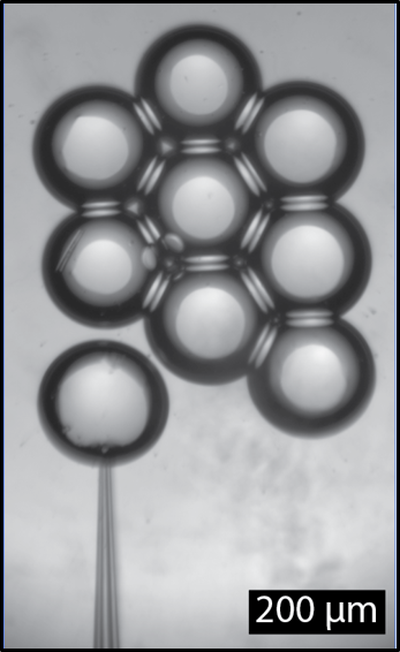
Alexander Mason is a DECRA Fellow at the University of Wollongong, leading the Synthetic Biomimetic Compartments research group. His work focuses on bottom-up synthetic cell design, integrating polymer chemistry, membrane engineering, and open-source hardware solutions like the DIB-BOT droplet interface bilayer robot. Mason holds a PhD and BSc in Nanotechnology from UNSW Sydney, with postdoctoral experience at Eindhoven University of Technology and UNSW. Educations: PhD in Chemistry, UNSW Sydney, 2017 BSc in Nanotechnology, UNSW Sydney, 2012 His research interests span synthetic cells, biomimetic compartments, and stochasticity in biological systems. Key projects include the DECRA-funded 'Building a synthetic chemical synapse through harnessed stochasticity' (2023–2027), exploring molecular fluctuations' impact on higher-order biological phenomena. Publications emphasize droplet-based systems (e.g., DIB-BOT), polymer vesicle engineering, and synthetic cell applications in tissue engineering. Notable recognition includes the 2023 ASB Best ECR Talk Award for his DIB-BOT work. Current supervision includes PhD projects on synthetic chemical synapses and neural progenitor cell guidance systems. The lab also develops DIY hardware solutions and collaborates on interdisciplinary biomaterials projects.
Stephanie R Jones is a Professor of Neuroscience at Brown University, affiliated with the Carney Institute for Brain Science. Her research integrates human brain imaging and computational neuroscience methods to study brain dynamics in health and disease. She works closely with animal neurophysiologists and clinicians to develop data-constrained neural models that are functionally and translationally relevant. Dr. Jones' primary research interests include: Computational neuroscience approaches to understanding brain function Electroencephalography (EEG) and magnetoencephalography (MEG) analysis Neural rhythms and their role in cognitive processes Transcranial magnetic stimulation (TMS) and other brain stimulation techniques Biophysically principled models of neural circuits Her work focuses on developing models that bridge the gap between human brain imaging signals (MEG/EEG) and their underlying cellular and network level generators. Current projects apply interdisciplinary techniques to study neural dynamics in healthy functions such as perception, attention, and decision making, as well as in neural pathologies including depression, autism spectrum disorders, aging, Alzheimer's, and schizophrenia. She also investigates the impact of brain stimulation and mind-body practices on brain dynamics with the goal of improving treatments for neuropathology. Dr. Jones has received numerous awards and honors throughout her career, including: Claflin Distinguished Scholar Award, Massachusetts General Hospital (2008-2010) Harvard Catalyst Advanced Imaging Award, Harvard Medical School (2012-2013) New Frontiers Fund Awards from the Brown Institute for Brain Science Brown University DEAN's Emerging Areas of New Science Award Invited Panel Advisor for NIH and NSF sponsored "BRAIN" Initiative Workshops As an advisor and collaborator, Dr. Jones works with a diverse team of researchers across multiple disciplines. Her lab, the Jones Laboratory for Human Electrophysiology and Computational Neuroscience, develops the Human Neocortical Neurosolver (HNN), a software tool for interpreting the cellular and network origin of human MEG/EEG data. She serves as an Associate Editor for the MIT Press Journal Neural Computation and as an NSF/NIH Panel Grant Reviewer for Collaborative Efforts in Computational Neuroscience. The Jones Lab bridges experimental and theoretical techniques to study human brain dynamics, with a mission to develop biophysically principled models of neural circuits that connect electrophysiological measures of brain function to underlying cellular and network dynamics. The lab collects MEG/EEG data non-invasively in humans and collaborates closely with animal electrophysiologists and clinicians to develop translationally relevant models.
Mert D. Pesé is an Assistant Professor of Computer Science and Founding Director of the TigerSec Laboratory at Clemson University's School of Computing. His research focuses on autonomous vehicle security, adversarial machine learning, generative AI applications in security, and automotive data privacy. He holds a PhD in Computer Science and Engineering from the University of Michigan (2022), an MSc in Electrical Engineering from Technische Universität München (2016), and dual BSc degrees in Electrical Engineering and Computer Science (2015). His work involves collaboration with automotive companies like BMW, General Motors, Ford, Audi, DENSO, and Harman, supported by grants from the US Army GVSC and NSA. Recent projects include DENSO-funded research with Purdue University and leadership in the TigerSec Lab, which has onboarded PhD students Alkim Domeke and David Fernandez and Master’s student Jan de Voor. Key research trends in his publications emphasize securing automotive networks (e.g., CAN Bus vulnerabilities), adversarial attacks on AI-driven systems, and privacy-preserving techniques for vehicular data. His frameworks like FuzzSense and AutoWatch showcase innovations in automotive software testing and driver behavior analysis. Grants and collaborations highlight applied security solutions for modern vehicles, while his TigerSec Lab serves as a hub for exploring cutting-edge automotive cybersecurity challenges.