Kristin-Yvonne Rozier is a Dennis and Rebecca Muilenburg Associate Professor in the Department of Aerospace Engineering and a Graduate Faculty member in Computer Science at Iowa State University. She holds positions as a Senior Member of IEEE and SWE, and an Associate Fellow of AIAA. Her research focuses on formal methods, verification of safety-critical systems, and autonomous systems, with applications in aerospace and cyber-physical systems. She earned a Ph.D. in Computer Science from Rice University and degrees from the College of William and Mary. Previously, she worked at NASA for 14 years in roles spanning formal methods, aeroacoustics, and systems health management. Her research interests include runtime verification, temporal logic (especially MLTL), fault tolerance, and safety-critical systems design. Notable awards include the NSF CAREER Award and the Women in Aerospace Initiative-Inspiration-Impact Award. Rozier has published extensively on topics like MLTL multi-type logics, SysML translation for verification, and safety-critical UAS systems. She leads projects such as OpenUAS and has developed tools like R2U2 for runtime monitoring. Her work bridges theory and practice, emphasizing reproducibility and ethical research dissemination. Grants and collaborations include NSF projects on resource-aware verification and open-source model-checking frameworks. She advises on system health management, autonomous systems, and formal methods education.
Miriam Leeser is a Professor and Associate Chair of Research in the Department of Electrical and Computer Engineering at Northeastern University. She leads the Reconfigurable and GPU Computing Lab, focusing on heterogeneous architectures, FPGA accelerators, and their applications in wireless communications, machine learning, and data privacy. Her work emphasizes practical implementations of theoretical advancements, such as cloud-edge computing frameworks and secure multi-party computation using FPGAs. Leeser holds a PhD in Computer Science from the University of Cambridge and a BS in Electrical Engineering from Cornell University. She has been at Northeastern since 1996 and is a Senior Member of both the IEEE and ACM. Notable recognitions include the National Science Foundation Young Investigator Award and her status as a Charter Member of the IEEE Computer Society Distinguished Contributor Program. Her research portfolio includes projects funded by the NSF on topics like resilient cloud infrastructure (CAREFREE), cross-layer wireless coexistence, and FPGA-enabled secure computation. The Reconfigurable Computing Lab develops tools and libraries to simplify accelerator usage, particularly for emerging applications in IoT, medical imaging, and 5G/6G systems. Key Projects: CAREFREE, P4-based FPGA Testbeds, Secure Function Evaluation via FPGAs, MIMO Systems Acceleration Grants: Over $2M in NSF awards for cloud infrastructure and cybersecurity Labs: Reconfigurable and GPU Computing Lab (RCL) Leeser’s publications span FPGA optimization, hardware-software co-design, and privacy-preserving technologies. Recent work highlights include accelerating large language models with token-adaptive quantization and low-latency optical wireless transceivers.
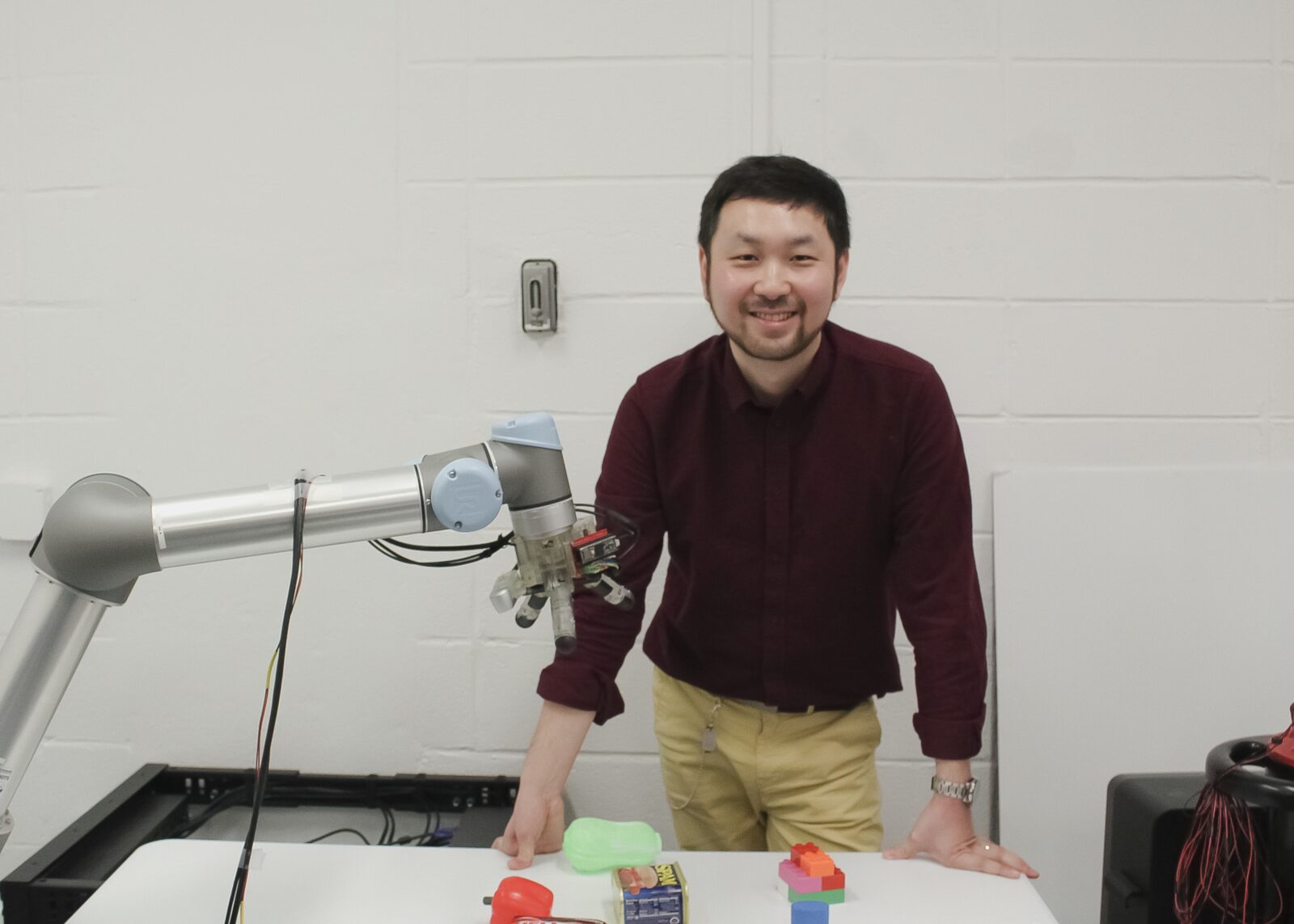
Long Wang is an Assistant Professor in the Department of Mechanical Engineering at Stevens Institute of Technology, part of the Charles V. Schaefer, Jr. School of Engineering and Science. He holds a Ph.D. in Mechanical Engineering from Vanderbilt University (2018), an M.S. in Mechanical Engineering from Columbia University (2012), and a B.S. in Mechanical Engineering from Tsinghua University (2010). His research focuses on building robots and intelligent machines for challenging environments, with expertise in telemanipulation, kinematic modeling, continuum robots, and robotic hand designs. Dr. Wang leads the Advanced Robot Manipulators Laboratory, which investigates applications in minimally invasive surgery, search and rescue operations, and remotely assisted tasks. Key research areas include compliant manipulator designs, collaborative robotics, and human-in-the-loop teleoperation systems. His recent publications demonstrate a strong focus on continuum robots, underwater manipulation systems, and surgical robotics. Trends show innovative approaches to admittance control, modular designs for aerial and marine applications, and educational robotics initiatives. Courses taught include Robot Manipulators (ME 650), Introduction to Modern Control Engineering (ME 621), and Engineering Graphics (E 120).
Birger Andersen is a Professor in the Department of Engineering Technology and Didactics at the Technical University of Denmark (DTU), specializing in Energy Technology and Computer Science. His research actively contributes to UN Sustainable Development Goals through IoT security, wireless communication, and machine learning applications. He leads multiple projects including Machine Learning for Beehives Monitoring and Towards The 6G Authentication Protocol. Andersen's research spans post-quantum cryptography for IoT devices, security vulnerabilities in autonomous vehicle infrastructures, and wireless protocol analysis (LoRaWAN/NB-IoT). His work integrates machine learning for environmental monitoring and addresses jamming attacks on critical communication systems. Key focus areas include cryptographic algorithm implementation on microcontrollers and securing next-generation 6G networks. Recent publications reveal strong trends toward hybrid post-quantum cryptography solutions for resource-constrained IoT devices and 6G authentication systems. His research emphasizes practical security implementations in wireless communication protocols, with significant attention to LoRa-based systems and autonomous vehicle infrastructures. The work consistently bridges theoretical cryptography with real-world hardware constraints. Andersen supervises PhD student Turnip, T. N. (6G Authentication Protocol) and Master's student You, L. (Nature Assessment via Remote Sensing). His research is funded through projects like Machine Learning for Beehives Monitoring (2023-2026) and Jamming Against Critical Wireless Communication (2022-2023), with industry collaborations through InnoTech - TaskForce and F2D2: The Community for Dynamic Data. He is integral to DTU's Cybersecurity Labs and contributes to the Summer School in Cyber Security. His F2D2 project builds smart city cybersecurity frameworks through the Community for Dynamic Data initiative, addressing urban security challenges while advancing green transition technologies.
Tianyi Zhou is an Assistant Professor of Computer Science at the University of Maryland, College Park, affiliated with UMIACS. His research focuses on machine learning, optimization, and natural language processing, with notable contributions to multimodal AI, curriculum learning, and generative models. He has published extensively in top venues like NeurIPS, ICML, and CVPR. Education: Ph.D. in Computer Science from the University of Washington (2013–2021), supervised by Prof. Jeff A. Bilmes. Prior research at UTS and NTU under Prof. Dacheng Tao, and internships at Microsoft Research and Yahoo! Labs. Research Interests: Human-inspired learning strategies, multimodal reasoning, vision-language models (e.g., BLIP3-o), federated learning, and embodied AI. Current projects include TurningPoint AI for trustworthy embodied agents and Tianyi Lab for hybrid intelligence research. Awards: 2020 IEEE TCSC Most Influential Paper Award (GoDec), 2013 ICDM Best Student Paper Award (Divide-and-Conquer Anchoring). Teaching: Instructs CMSC 421 (Introduction to AI) and CMSC 828A (Machine Learning paradigms).曾担任华盛顿大学机器学习课程助教。 Service: Area Chair for NeurIPS 2025, ICLR 2025, IJCAI 2025. Reviewer for TPAMI, JMLR, and multiple conferences.
Dr. Stephen Alty is the Head of the Department of Electronic Engineering at Royal Holloway, University of London. His research focuses on signal processing, machine learning, and biomedical applications. He has a strong background in advancing engineering education through technology-enhanced learning and open hardware projects. Alty holds a PhD in Electronic Engineering from Liverpool John Moores University (1998) and a BEng(Hons) from the University of Liverpool (1992). He is also a Senior Fellow of the Higher Education Academy (2016). Teaching Roles: Undergraduate Education Lead (2017–2022), currently teaches courses like Real-Time Digital Signal Processing and Biomedical Engineering fundamentals. External Roles: External Examiner at University College London (2023–present) and University of Hertfordshire (2016–2021). His research explores intersections between biomedical engineering and education technology. Recent work includes EMG signal classification and virtual learning analytics. Over 34 publications span conference contributions and journals like IEEE Signal Processing Magazine. Awards : Multiple teaching accolades including Outstanding Lecturer Awards (2015, 2016) and College Excellence Commendation (2020). Advising focuses on pedagogical innovation and curriculum design. Active in IEEE and Advance HE professional networks.
Professor Daniel Wigdor is a prominent academic and entrepreneur in Human-Computer Interaction (HCI), holding the rank of Professor at the University of Toronto’s Department of Computer Science. He also serves as Associate Chair for Industrial Partnerships and has held roles at Meta’s Reality Labs Research and Facebook Reality Labs. His research focuses on inventing technologies that enhance human capabilities through novel sensing systems, AI, and haptic interfaces. Key projects include VibraForge, AeroHaptix, and Nabokov’s Cards, emphasizing tactile feedback and creative AI tools. Wigdor has published over 130 peer-reviewed papers, holds 60+ patents, and received awards like the Alfred P. Sloan Fellowship and Ontario Early Researcher Award. Education & Affiliations: PhD in Computer Science (implied, though specific details not provided) Alumnus of the University of Toronto’s Department of Computer Science Former positions at Cornell Tech, Microsoft Research, and Harvard Research Interests: Wigdor’s work spans haptics, VR/AR interfaces, AI-assisted creativity, and multimodal interaction systems. His lab develops tools like TactileNet (digital touch systems) and Fidgets (predictive UI components), reflecting a focus on practical, user-centric innovations. Recent Work Trends: His publications emphasize scalable vibrotactile systems (e.g., VibraForge), UAV teleoperation safety (AeroHaptix), and AI-driven creative writing tools (Nabokov’s Cards). These projects highlight a blend of technical depth and societal impact. Awards: Alfred P. Sloan Foundation Research Fellowship (2015) Ontario Early Researcher Award (2014) Multiple Best Paper Awards at CHI Advising & Grants: Wigdor has mentored over 50 students and postdocs, many advancing to academic and industry roles. Notable advisees include Zhicong Lu (CityU Hong Kong) and Haijun Xia (UC San Diego). His grants support projects like the Symphony of Devices and cross-device software tools. Labs & Teams: Leads the University of Toronto’s HCI research group and co-founded Tactual Labs (2013) and Chatham Labs (2019). Current projects include predictive UI toolkits and AI-assisted creative systems.
Ed Cohen is an Associate Professor in Statistics at Imperial College London's Department of Mathematics (Faculty of Natural Sciences). His research focuses on statistical methodologies for analyzing signals and images, including point processes, time series analysis, and change-point detection. Applications span biological imaging, networks, and manifold-based domains. He leads the EPSRC Centre for Doctoral Training in Statistics and Machine Learning (StatML) and contributes to the EPSRC NeST Programme. His work integrates mathematical theory with computational tools for microscopy data analysis and interdisciplinary collaborations. Education & Professional Roles: Joint Director, EPSRC StatML CDT (Imperial/Oxford) Investigator, EPSRC NeST Programme Associate Editor, Statistics and Computing Vice-Chair, Royal Statistical Society's Emerging Applications Section Research Interests: Statistical methods for spatial and temporal data Bioimaging applications (e.g., super-resolution microscopy) Network analysis and community detection Bayesian online estimation and changepoint detection Interdisciplinary projects in neuroscience and microbiology PhD Opportunities: Current openings focus on computational/statistical methods for neuronal protein organization using microscopy data, with collaboration between Imperial College London and Bordeaux's Institute of Interdisciplinary Neuroscience. Labs & Teams: Active in Mathematics in Medicine and Time Series/Signal Processing groups at Imperial, contributing to collaborative projects bridging statistics, computer science, and biology.
Beat Signer is Professor of Computer Science at Vrije Universiteit Brussel (VUB) and Director of the Web & Information System Engineering (WISE) laboratory. His research focuses on cross-media information spaces and architectures (CISA) spanning interactive paper, dynamic data physicalisation, and tangible holograms. His educational background includes a Computer Science degree from ETH Zurich, where he completed his PhD thesis on fundamental concepts for interactive paper and cross-media information spaces in 2005. Key research areas include: Cross-media document formats and resource-selector-link (RSL) hypermedia metamodel Context-sensitive adaptation and cross-media transclusion Multimodal interfaces (Mudra, iGesture) and tangible computing Internet of Things interoperability and semantic middleware Recent publications (2023-2025) reveal strong trends in dynamic data physicalisation hardware, FAIR positioning systems (OpenHPS), end-user IoT development (eSPACE), and next-generation human-information interaction paradigms. His work increasingly integrates Solid protocols for decentralized data and explores thermal dimensions in tangible holograms. As Principal Investigator, he leads multiple EU-funded projects including OpenHPS, TangHo, and eSPACE. His team has developed influential frameworks like MindXpres for cross-media presentations and CMT for context modeling. He supervises 13 doctoral researchers including Dr. Maxim Van de Wynckel and Dr. Audrey Sanctorum, focusing on cross-media applications in education, IoT, and data visualization. His WISE laboratory develops innovative solutions bridging digital and physical information spaces through projects like ArtVis for collaborative data exploration and TangHo for physically augmented virtual objects.
Professor Yingli Wang is a Professor in Logistics and Operations Management and serves as Pro-Dean for Research, Impact and Innovation at Cardiff Business School, Cardiff University. She is an active researcher and supervisor, with a strong focus on digital transformation in supply chains. Her work is supported by major funding bodies including EPSRC, ERDF, Welsh Government, Highways England, and the Department for Transport. Education: PhD in Logistics and Operations Management, Cardiff University (2008) MBA in IT with Distinction, Coventry University (2003) BSc in Food Manufacturing, China (1995) Professor Wang’s research centers on the integration of emerging digital technologies—particularly blockchain, AI, IoT, 5G, and cloud computing—into logistics and supply chain systems to enhance efficiency, sustainability, and resilience. She explores how these technologies can be applied in maritime logistics, construction supply chains, and smart ports. Her work extends beyond traditional business contexts to address societal challenges, especially food poverty and health inequality, through innovative supply chain models such as community food redistribution systems. She is a key member of the South Wales Food Poverty Alliance and led the launch of Wales’ first Your local Pantr y social enterprise. Her recent publications demonstrate a strong trend toward blockchain applications in supply chains, digital material passports, BIM integration, and the role of 5G in enabling smart logistics. She has co-edited two influential books: E-Logistics: Managing Your Digital Supply Chains for Competitive Advantage (2nd ed., 2021) and the open-access Digital Supply Chain Transformation: Emerging Technologies for Sustainable Growth (2022). Scientific Awards and Recognition: James Cooper Memorial Cup (2009, CILT) for inventing Electronic Logistics Marketplaces 2020 Innovation and Impact Awards for work on food poverty Chartered Member, Chartered Institute of Logistics and Transport (CILT) Professor Wang collaborates extensively with industry partners such as Tesco, ASDA, BT, Tata Steel, and CEVA Logistics. She advises the World Economic Forum’s Centre for the Fourth Industrial Revolution on blockchain deployment and is a founding member of the Blockchain Connected Council in Wales. She has delivered blockchain masterclasses and webinars for global audiences and contributed white papers to the World Economic Forum. Her research on digital supply chains has informed policy and practice, including a guide on accelerating BIM adoption for Highways England and a foresight report for the UK Government Office for Science. Labs and Research Initiatives: Principal Investigator, Blockchain-Powered Digital Material/Product Passport: Accelerating Supply Chain Net Zero Goals (UKRI Innovation Launchpad) Key contributor to the development of the world’s first comprehensive blockchain deployment toolkit for supply chains Active in the Cardiff Business School research ecosystem, leading on digital innovation and societal impact projects
Frederik Görlitz is a researcher specializing in advanced optical microscopy techniques at the University of Freiburg's Institute for Microsystem Technology (IMTEK), part of the Faculty of Engineering. He holds a PhD from Imperial College London and conducted postdoctoral research at UC Berkeley's Advanced Bioimaging Center. His work focuses on super-resolution microscopy (STED, STORM, SIM), light sheet microscopy, and fluorescence lifetime imaging (FLIM), with applications in biomedical imaging and microscopy instrumentation development. Education: BSc in Physics, Heidelberg University (GER) PhD in Biophotonics, Imperial College London (UK) Research Interests: Development of modular, cost-effective microscopy platforms Optimization of lattice light sheets and super-resolution techniques Integration of machine learning for automated microscopy workflows Biomedical applications in kidney cell signaling and drug receptor analysis Recent Research Trends: His work emphasizes open-source microscopy solutions (e.g., openFrame platform) and high-throughput imaging tools for biological studies. Recent articles highlight advancements in optical autofocus systems, FRET-based signaling visualization, and dSTORM applications in glomerular disease analysis. Labs/Teams: Part of the Bio- und Nanophotonik group led by Prof. Alexander Rohrbach at IMTEK, collaborating with FAIM (Freiburg Center for Data Driven Modelling and Simulation) on interdisciplinary projects.
Adam Chlipala is the Arthur J. Conner (1888) Professor of Computer Science at the Massachusetts Institute of Technology (MIT), where he is a faculty member in the Department of Electrical Engineering and Computer Science (EECS), the Computer Science and Artificial Intelligence Laboratory (CSAIL), and leads the Programming Languages & Verification Group. He has been a faculty member at MIT since 2011, following a postdoctoral position at Harvard University. PhD in Computer Science, UC Berkeley (2007) BS in Computer Science, Carnegie Mellon University (2003) His research lies at the intersection of programming languages and formal methods, with a strong emphasis on using the Coq proof assistant to build verified compilers, cryptographic systems, and hardware-software stacks. His work spans from high-level language design to gate-level hardware verification, aiming for end-to-end correctness proofs. Recent efforts focus on high-performance parallel computing systems with full formal assurance. The 15 most recent publications highlight a consistent trend in verified compilation, cryptographic security, hardware verification, and tensor/ML program optimization. His work increasingly integrates software and hardware verification, emphasizing modular, extensible frameworks and end-to-end correctness. Key themes include side-channel resistance, automated proof techniques, and practical deployment of formally verified systems. Advisory Board Member, BlueRock Systems (formerly BedRock Systems) Member, DARPA Information Science and Technology (ISAT) Study Group (2018–2022) Advisory Board Member, SiFive Former Advisor, krypt.co (acquired by Akamai) Chlipala has advised numerous PhD and Master’s students and regularly teaches core MIT courses such as 6.009 (Fundamentals of Programming), 6.042 (Mathematics for Computer Science), and 6.822/6.5120 (Formal Reasoning About Programs). He is the author of the widely used textbook Certified Programming with Dependent Types and co-developer of the FRAP (Formal Reasoning About Programs) educational materials. He is also the founder of Nectry, a startup based on Ur/Web and UPO, aiming to democratize enterprise application development through AI-assisted, type-safe programming. His research group develops tools and frameworks for modular verification, verified compilation, and formal analysis of complex digital systems. The work is deeply collaborative, involving students, industry partners, and open-source contributions via GitHub. Projects like Fiat Cryptography have been deployed in major web browsers, demonstrating real-world impact.
Anders Christensen is a Professor at the Maersk Mc-Kinney Moller Institute, University of Southern Denmark (SDU), where he leads research in swarm robotics, autonomous systems, and drone technologies. He is affiliated with the SDU UAS Center and SDU Climate Cluster, contributing to interdisciplinary projects involving environmental monitoring and AI-driven robotics. His research focuses on swarm robotics , multi-agent coordination , and UAV-based environmental monitoring . He explores decentralized control, task allocation in drone swarms, and bio-inspired autonomous systems. His work bridges theoretical algorithms with real-world applications in wildlife conservation and search-and-rescue operations. The recent publications highlight a strong trend in drone swarm deployment , communication protocols , and decentralized pathfinding , primarily applying AI and distributed computing to robotics. These works span fields such as environmental science, emergency response, and embedded systems, demonstrating interdisciplinary impact. Anders Christensen is actively involved in research projects such as WildDrone , CloudBrain , and SpikeDrone , where he contributes as a project participant or supervisor. He has secured EU and national funding, enabling field trials and technological innovation in drone-based monitoring. He teaches courses including Bio-inspired Autonomous Systems and Introduction to Robotics, Computer Vision, and Artificial Intelligence , shaping the next generation of robotics researchers.
Fabio A. Cruz Sanchez serves as a Lecturer at the School of Systems and Innovation Engineering and a researcher at the ERPI Laboratory, University of Lorraine. His expertise lies in distributed recycling of plastics for 3D printing, circular economy applications in additive manufacturing, and development of open hardware platforms, with active contributions to innovation spaces like Fablabs and Third Places. His academic credentials include a Mechanical Engineering degree from Universidad Nacional de Colombia, a Master 2 in Innovation Management, and a Doctorate in Industrial Engineering, all from the University of Lorraine. Dr. Cruz's research spans Circular Economy, Additive Manufacturing, and Plastic Recycling, investigating technical-social dimensions of distributed recycling systems. He develops multi-scale evaluation frameworks for circular initiatives while examining open hardware integration and community-driven innovation in Fablabs. Analysis of his 2021-2024 publications reveals consistent focus on polymer recycling for additive manufacturing, including material extrusion techniques for HDPE/PET blends, life cycle assessments of filament production, and vibration damping optimization in printed structures. His work bridges engineering with socio-technical analysis of social innovation labs and open innovation ecosystems. He coordinates the ERASMUS+ project "TechTraPlastiCE" strengthening circular economy value chains for plastics in Latin America, and actively participates in the "Green Fablab" initiative connected to Nancy's territorial dynamics through the Lorraine Fab Living Lab platform.
Thomas P. Kersten is a Professor at HafenCity University Hamburg within the School of Geodesy and Geoinformatics , leading the Photogrammetry & Laser Scanning laboratory. His work bridges geomatics , 3D imaging , and cultural heritage preservation through cutting-edge UAV photogrammetry , terrestrial laser scanning , and virtual reality applications. Research interests focus on: Accuracy validation of photogrammetric and LiDAR systems Low-cost 3D sensor development (e.g., Raspberry Pi-based systems) Virtual Reality for cultural heritage sites (e.g., Al Zubarah Fortress, Michaelsen House) Historical building documentation using 4D modeling Mobile mapping for archaeological and urban contexts Article trends reveal expertise in UAV-based cadastral surveying , smartphone photogrammetry validation, and multi-sensor 3D reconstruction of archaeological and architectural sites. He leads fieldwork in Portugal, Qatar, and Germany while fostering academic collaboration through conference editorship (DGPF, ISPRS workshops).