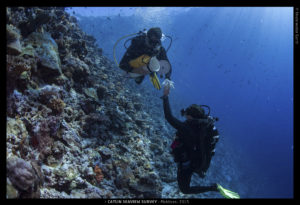
Dr. Veronica Radice is a Research Fellow at the University of Queensland and a member of the Australian Research Council Centre of Excellence for Coral Reef Studies. Her work focuses on coral physiology in relation to environmental conditions, particularly in mesophotic ecosystems, using biogeochemical techniques, genetics, and field experiments to study impacts of ocean warming and thermal stress on coral recovery from bleaching. Education: Bachelor’s degree in Biology from Johns Hopkins University, followed by research assistant and lab manager roles at Temple University. Research: Investigates coral trophic ecology, nutrient cycling, and gene expression under climate stress, with fieldwork in the Indo-Pacific and Maldives. Awards: XL Catlin Seaview Survey Ocean Scholar. Expertise: Mesophotic coral ecosystems, coral bleaching resilience, biogeochemistry, and oceanographic influences on reef productivity. Resources: Contributed to datasets and platforms like Mesophotic.org for coral reef research.
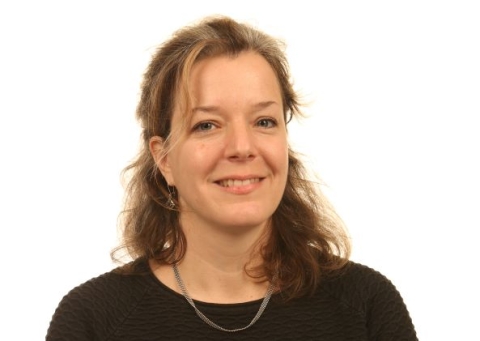
Hannah Cornish is a Lecturer in the Department of Psychology at the University of Edinburgh, affiliated with the School of Philosophy, Psychology and Language Sciences. Her research focuses on the cultural evolution of language and communication systems, particularly examining how structural complexity and adaptive design emerge through processes like iterated learning and social interaction. She employs experimental methods to study laboratory-based models of language evolution, exploring topics such as sequence memory constraints, metaphor-driven linguistic changes, and the dynamics of cumulative cultural transmission. Her work bridges linguistics, cognitive science, and evolutionary biology, with a focus on understanding how human communication systems develop without centralized design. Notable contributions include studies on the emergence of tense/aspect systems, the role of generation turnover in linguistic adaptation, and the interplay between compression and communication efficiency in evolving languages. Cornish’s articles consistently emphasize empirical approaches to uncovering the mechanisms behind language structure, often highlighting the importance of cognitive constraints and cultural dynamics. Her research has been published in venues like Evolution of Language and experimental linguistics journals, reflecting her interdisciplinary engagement with evolutionary linguistics and cognitive science.
Laine Nooney is an Associate Professor in the Department of Media, Culture, and Communication at New York University's Steinhardt School of Culture, Education, and Human Development. Their work focuses on the intersections of gender, technology, and cultural history, particularly in the context of personal computing and video game development. Nooney teaches courses such as History of Computing: How the Computer Became Personal , exploring the social and cultural forces shaping digital technology. Research interests include the hidden histories of computing’s gendered labor, the material culture of early computing devices, and the socio-technical narratives surrounding personal computing’s emergence. They emphasize critical analysis of technological progress narratives and the role of marginalized contributors in tech history. Publications span topics like the Apple II’s cultural impact, the uncredited labor in video game history, and the archaeology of early software ecosystems. Their work challenges mainstream historiography to include underrepresented perspectives in tech’s evolution. Awards and grants are not explicitly listed in the provided materials. Nooney advises via their courses but no specific advisee names are provided. Their research extends to digital humanities methodologies and speculative design pedagogies, as seen in works like A ‘speculative pasts’ pedagogy . Professional presence includes a dedicated website (www.lainenooney.com) and active engagement in academic conferences like SHOT. No specific lab or team affiliations are mentioned in the text.
Dirk K.J. Heylen serves as Full Professor at the Digital Society Institute within the University of Twente, holding a dual appointment in the Human Media Interaction department. His academic profile demonstrates extensive engagement in artificial intelligence research with particular focus on human-centered applications. Research interests span Artificial Intelligence, Autonomous Agent Systems, Natural Language Processing , and Knowledge Representation , with significant applications in healthcare, well-being, and social robotics. His work bridges technical AI development with societal context considerations, particularly examining human-AI interaction patterns in daily life scenarios. Recent publications reveal strong emphasis on conversational agents, virtual human interaction, and predictive health technologies. Notable scientific recognition includes the Best Student Paper award at the 22nd ACM International Conference on Multimodal Interaction (2018). His research activities demonstrate consistent output across conferences, journals, and datasets, with particular growth in healthcare applications since 2020. Professional activities include editorial work for major conferences (ICMI 2020), organization of specialized events (Narrative Matters 2018), and hosting academic visitors. His supervised work encompasses 22 research projects and multiple datasets supporting human-AI interaction studies.
Salvatore D'Oro is an Associate Research Professor in the Department of Electrical and Computer Engineering at Northeastern University, affiliated with the Institute for the Wireless Internet of Things (WIoT). He holds a PhD from the University of Catania (2015), with postdoctoral and visiting research stints at Ohio State University and Université Paris-Sud 11. His research focuses on Open RAN, network slicing, AI-driven networking, and 5G/6G security. He is a co-PI on CHIPS Act-funded projects like AutoRAN and DigiRAN, emphasizing automated testing and digital twins for O-RAN systems. He has authored numerous patents, including frameworks for drone network control and O-RAN efficiency. Recognized in the 2024 Stanford top 2% cited scientists and recipient of a 2019 Best Paper Award for HIRO-NET, his work spans theoretical advancements and practical implementations in wireless systems. Education: B.S./M.S. in Computer/Telecommunications Engineering, University of Catania (2011–2012) PhD in Telecommunications, University of Catania (2015) Postdoctoral Researcher at University of Catania (2016) Research Interests: Open RAN and O-RAN Network Slicing AI/ML for Network Intelligence 5G/6G Security and Private Connectivity Automated Testing and Digital Twins in Cellular Networks Key Projects: AutoRAN: Automated End-to-End Testing for Open Cellular Systems DigiRAN: Digital Twins for O-RAN Security and Performance Colosseum: Large-Scale Wireless Experimentation Platform Awards: 2024 Stanford Top 2% Cited Scientists 2019 IEEE WoWMoM Best Paper Award 2015 Francesco Carassa Award Labs/Teams: Wireless Networks and Embedded Systems Lab (Northeastern) Collaborations with industry partners on O-RAN and 5G/6G systems
Richard Watson is a Professor at the University of Southampton, where he conducts interdisciplinary research bridging evolutionary biology and computer science. His work explores fundamental questions about life, learning, evolution, cognition, and the emergence of complex systems. He is a member of the Agents, Interaction and Complexity research group and the Institute for Life Sciences. His primary research interests include evolutionary biology, computer science, evolutionary transitions in individuality, developmental plasticity, and collective intelligence. He investigates how adaptive systems, from biological evolution to artificial intelligence, exhibit goal-directed behavior and self-organization. His work often employs computational models to understand the principles underlying the evolution of complexity and the emergence of individuality. Recent publications (2019-2024) demonstrate a consistent focus on the intersection of evolutionary theory and computational approaches. His work explores how evolution and development interact to produce adaptive complexity, with particular attention to the role of plasticity, collective intelligence, and multi-scale organization. Key themes include the evolutionary transitions in individuality, the mechanisms of natural induction without selection, and the application of connectionist models to biological systems. Professor Watson currently supervises the following PhD student: Daniel James Sidney Bright (PhD Computer Science) His research is supported by grants from the following sponsors: Engineering and Physical Sciences Research Council (EPSRC) for the PhD Plus Scheme John Templeton Foundation for projects including "Putting the Extended Evolutionary Synthesis to the Test" and "The scaling-up of purpose in evolution (evo-ego)" He is an active member of the Agents, Interaction and Complexity research group within the Institute for Life Sciences at the University of Southampton. His collaborative projects involve interdisciplinary teams, including researchers from biology, computer science, and engineering, focusing on microbial community engineering, computational modeling of biofilms, and the role of developmental plasticity in speciation.
Mikhail Barash is an Associate Professor at the Department of Informatics, University of Bergen. His research focuses on software language engineering, domain-specific languages (DSLs), and graphical user interface (GUI) frameworks. He explores innovative approaches to DSL design, including spreadsheet-based workbenches and reusable GUI structures. His work emphasizes user involvement in language standardization, such as in ECMAScript/JavaScript evolution. He also investigates formal methods for GUI abstraction and constraint-based systems. Barash collaborates with industry and academia, notably through the Magnolia programming language ecosystem and teaching experiences with JetBrains' MPS tooling. His contributions span over 20 peer-reviewed publications in top conferences like ACM SIGPLAN and IEEE. Key research areas include declarative GUI manipulation, language workbench democratization, and legacy grammar modernization. He has presented at venues such as the International Symposium on Formal Methods and contributes to frameworks like Event-B IDE development. His work bridges theoretical advances with practical tooling, aiming to make language engineering accessible to broader audiences.
Phil Husbands is a Research Professor of Artificial Intelligence in the Department of Informatics at the University of Sussex, School of Engineering and Informatics. He is a co-founder of the Centre for Computational Neuroscience and Robotics (CCNR) and a founding member of the Evolutionary and Adaptive Systems group (now the AI Group), reflecting his deep interdisciplinary engagement across engineering, neuroscience, and computer science. His research interests span artificial life, evolutionary robotics, biologically inspired neural networks, computational neuroscience, machine learning, and the history and philosophy of AI. He has pioneered work on GasNets (neural networks with diffusible modulators), insect-inspired navigation, and bio-inspired optimization algorithms. His work often bridges theory and application, integrating insights from biology into adaptive robotic systems. The recent publications highlight a strong trajectory in bio-inspired computation, including evolutionary swarm algorithms, neuromodulation models, cognitive architectures, and tactile robotics. His work increasingly explores foundational questions in agency, time perception, and autonomy, suggesting a move toward more comprehensive models of artificial cognition. Scientific Awards: No specific awards listed in the provided text. Phil Husbands has been involved in numerous research grants from major funders including the European Union, EPSRC, BBSRC, and Wellcome Trust. He has supervised multiple doctoral students and collaborated widely, notably with Andy Philippides and Michael O’Shea. He is actively engaged in postgraduate research supervision and public dissemination of science through books like Robots: What Everyone Needs to Know . He leads and contributes to interdisciplinary research teams such as the Evolutionary and Adaptive Systems group and the Centre for Computational Neuroscience and Robotics, fostering collaboration between computer scientists, neuroscientists, and roboticists.
Simon Sherwood is a Senior Lecturer in Psychology at the University of Derby's College of Health, Psychology and Social Care, specializing in parapsychology and anomalous experiences. His research examines experimental parapsychology, dream ESP, and apparition phenomena. Dr. Sherwood's work includes meta-analyses of dream ESP studies, investigations into experimenter-participant dynamics in psi tasks, and cross-cultural studies of apparition experiences. His research incorporates methodological innovations in parapsychology and examines psychological factors influencing anomalous experiences. Analysis of his 15 most recent publications reveals sustained focus on methodological rigor in parapsychology, particularly regarding experimenter effects and replication challenges. Thematic evolution shows progression from laboratory-based ESP research to broader phenomenological studies of anomalous experiences, including cultural analyses of haunting phenomena and end-of-life visions. His scholarly contributions include critical reviews of experimental paradigms, development of theoretical models for psi phenomena, and cultural documentation of anomalous experiences. Dr. Sherwood maintains research collaborations exploring cognitive and personality correlates of paranormal experiences.
Mutian He is a PhD candidate and Doctoral Assistant at the École Polytechnique Fédérale de Lausanne (EPFL), Switzerland, affiliated with the Idiap Research Institute and the School of Engineering. He is pursuing his doctoral studies in Electrical Engineering under the supervision of Phil Garner. He holds a B.E. from Beihang University (BUAA) and an MPhil from the Hong Kong University of Science and Technology (HKUST). B.E., Beihang University (BUAA), 2019 MPhil, Hong Kong University of Science and Technology, 2022 PhD Candidate, École Polytechnique Fédérale de Lausanne (EPFL), ongoing His research focuses on spoken language understanding, speech synthesis, and the intersection of speech and language processing with machine learning. He explores efficient model architectures, pretraining strategies, multilingual and low-resource modeling, and the use of large language models in speech tasks. His work spans both theoretical and applied aspects, including distillation to linear-complexity models, robust TTS, and commonsense reasoning via conceptualization. His recent publications at top venues such as ICLR, EMNLP, Interspeech, and KDD demonstrate a strong trend towards efficient and scalable models for speech and language, with increasing emphasis on multilingualism, knowledge transfer, and real-world deployment in low-resource settings. He has also contributed to open-source implementations and community tools like Speech Rankings. Joint Fine-tuning and Conversion of Pretrained Speech and Language Models towards Linear Complexity (ICLR 2025) Acquiring and Modelling Abstract Commonsense Knowledge via Conceptualization (AIJ 2024) The Interpreter Understands Your Meaning: End-to-end Spoken Language Understanding Aided by Speech Translation (Findings of EMNLP 2023) Can ChatGPT Detect Intent? Evaluating Large Language Models for Spoken Language Understanding (Interspeech 2023) Multilingual Byte2Speech Models for Scalable Low-resource Speech Synthesis (2022) Mutian He has served as a teaching assistant for courses including Introduction to Natural Language Processing at HKUST and Introduction to Speech Processing at Idiap. He has also worked on speech synthesis at Microsoft, focusing on robustness and multilingual conditions. He is actively involved in research advising under Phil Garner and has collaborated with multiple researchers across institutions. He is affiliated with the LIDIAP (Laboratory of Intelligent Data Analysis and Pattern Recognition) at EPFL, where he contributes to research in deep learning for speech and language. His lab work involves developing novel neural architectures, conducting experiments on multilingual datasets, and open-sourcing code to promote reproducibility.
Vicente Castañeda Fernández is a Professor at the University of Cadiz (UCA) within the Department of History, Geography and Philosophy . He specializes in Prehistoric Archaeology , with a focus on the Strait of Gibraltar region and its role in human settlements from the Paleolithic to the end of Antiquity. Research Focus: Prehistoric societies, lithic technology (Modes 2-3), funerary archaeology, geoarchaeological techniques, and Mediterranean prehistory. Key Sites: Los Algarbes Necropolis (Tarifa, Cádiz), Algetares Paleolithic site (Algeciras), La Fontanilla Solutrean site, Benzú Cave (Ceuta). Publications Trends: His work spans 2024–2005 , emphasizing transitions between Paleolithic periods, symbolic landscapes, lithic resource management, and cultural exchanges across the Strait of Gibraltar. Collaborative projects often involve geological analysis, tool production, and societal mobility studies. Projects: Leads the research group HUM831: Archaeological Heritage in the Strait of Gibraltar , contributing to understanding human occupation from the Paleolithic to Antiquity.
Dr. Andrzej Kominek, DSc, is a Professor at Jan Kochanowski University (UJK) in Kielce, Poland, affiliated with the Department of Polish Philology. His academic career focuses on linguistic research with particular emphasis on cognitive approaches to language and communication patterns in neurodiverse populations. As a habilitated doctor and full professor, he represents a senior academic position within the Polish university system. Professor Kominek's research interests encompass multiple specialized areas of linguistics including: Cognitive Linguistics Linguistic Worldview Value Language Studies Theolinguistics Psycholinguistics Language of People with Autism Spectrum Disorder His work particularly emphasizes how cognitive processes shape language use, with significant contributions to understanding communication patterns in individuals with autism. Analysis of Professor Kominek's recent publications (2014-2020) reveals a consistent focus on autism spectrum disorders and cognitive linguistics. His research examines metaphorical thinking, communication challenges, and linguistic patterns among individuals with autism. The interdisciplinary nature of his work bridges linguistics, psychology, and special education, with particular attention to how language reflects cognitive differences. His publications appear in both Polish and international journals, demonstrating the broad relevance of his research to understanding neurodiverse communication. Professor Kominek has served as editor for several significant publications in his field: The world needs minds of all kinds. Stories about people with autism (2014) Aspirations. The scientific image of people with Asperger syndrome in cultural, therapeutic and communication aspects (2016) Let's open the world... About communication, contact with the world and disorders in people with autism spectrum disorder (2018) Through his editorial leadership and research contributions, Professor Kominek has established himself as a leading voice in the study of language and autism in Poland. His work bridges theoretical linguistics with practical applications for understanding and supporting neurodiverse communication patterns, particularly through his analysis of metaphor comprehension, non-verbal communication, and linguistic worldview in autism spectrum disorders.
Christos Masouros is a Professor of Signal Processing and Wireless Communications at University College London (UCL), affiliated with the Institute for Communications and Connected Systems. He holds a Ph.D. from the University of Manchester (2009) and has held research positions at Philips Research Labs, Queen’s University Belfast, and UCL. His expertise spans wireless communications, signal processing, and integrated sensing and communications (ISAC). Key roles include coordinating the EU-funded PAINLESS (2018–2022) and ISLANDS (2024–2028) projects, which focus on energy-autonomous networks and next-generation vehicular networks, respectively. Education: Diploma in Electrical and Computer Engineering, University of Patras (2004) MSc by Research, University of Manchester (2006) PhD in Electrical and Electronic Engineering, University of Manchester (2009) Research Interests: Green Communications Large-Scale Antenna Systems ISAC (Integrated Sensing and Communications) Interference Mitigation in MIMO and Multicarrier Systems Awards: 2024 IEEE SPS Best Paper Award 2023 IEEE ComSoc Stephen O. Rice Prize Fellow of IEEE, AIIA, and AAIA Leadership Roles: Vice-Chair, IEEE Emerging Technologies Initiative on ISAC Chair, IEEE SPS ISAC Technical Working Group Editorial roles in IEEE Transactions on Wireless Communications, IEEE Open Journal of the Communications Society, and others Labs/Teams: Active in UCL’s Information and Communication Engineering Research Group, contributing to standards development via IEEE and ETSI working groups.
Courtney Klepac is a Researcher at Stanford University's Hopkins Marine Station, focusing on coral resilience under climate change. She holds a B.S. in Marine Biology from Texas A&M University Galveston, an M.S. in Biology from Florida Atlantic University (Voss Lab), and a Ph.D. in Ecology and Evolution from Old Dominion University (Barshis Lab). Her postdoctoral work at More Marine Laboratory examined coral nursery resilience under stressors like temperature and acidification. At Stanford, she collaborates on the NSF-funded 'Super Reefs' project, mapping coral heat resistance across Pacific reefs and training local researchers. Her work integrates environmental factors, physiological plasticity, and genetic adaptation to predict coral responses to climate change and identify resilient strains for conservation. Research interests emphasize symbiotic associations, coral stress tolerance, and restoration strategies. She employs tools like the Coral Bleaching Automated Stress System (CBASS) and digital twin technology. Courtney actively engages in community science, particularly mentoring students in coral experiments. Beyond academia, she enjoys outdoor activities with her family. Education: B.S., Marine Biology, Texas A&M University Galveston M.S., Biology, Florida Atlantic University Ph.D., Ecology and Evolution, Old Dominion University Her NSF-funded projects underscore her commitment to bridging science and conservation, aiming to provide actionable insights for coral reef management.
Dr. Eszter Somogyi is a Senior Lecturer and Associate Head (Global Engagement and Education Partnerships) in the School of Psychology, Sport and Health Sciences at the University of Portsmouth. With a PhD in autism spectrum disorder research from Paris Descartes University, she has held positions at institutions including Eötvös Loránd University and Paris West–Nanterre University. Her work bridges developmental psychology, human-robot interaction, and educational interventions. Education: Health Psychology (MSc), PhD in Sociocognitive Development Key Research Themes Infant social learning and intention attribution Prosocial behavior in early childhood Mindfulness programs in schools Body awareness through tactile/motor training Recent publications focus on Child Development (2023), Mindfulness (2024), and Neurorobotics (2018). She received the Research in Paris award (2012) and leads international education partnerships. Scientific output trends reveal interdisciplinary work across Psychology, Robotics, and Public Health . Teaching includes undergraduate and Masters-level modules in Psychology and Health Psychology. Scientific Awards : Research in Paris award (2012) She coordinates international student recruitment , contributes to PhD supervision , and manages counselling course partnerships with Eastleigh College. Her lab explores infant motor development and human-robot interaction .