معرفی
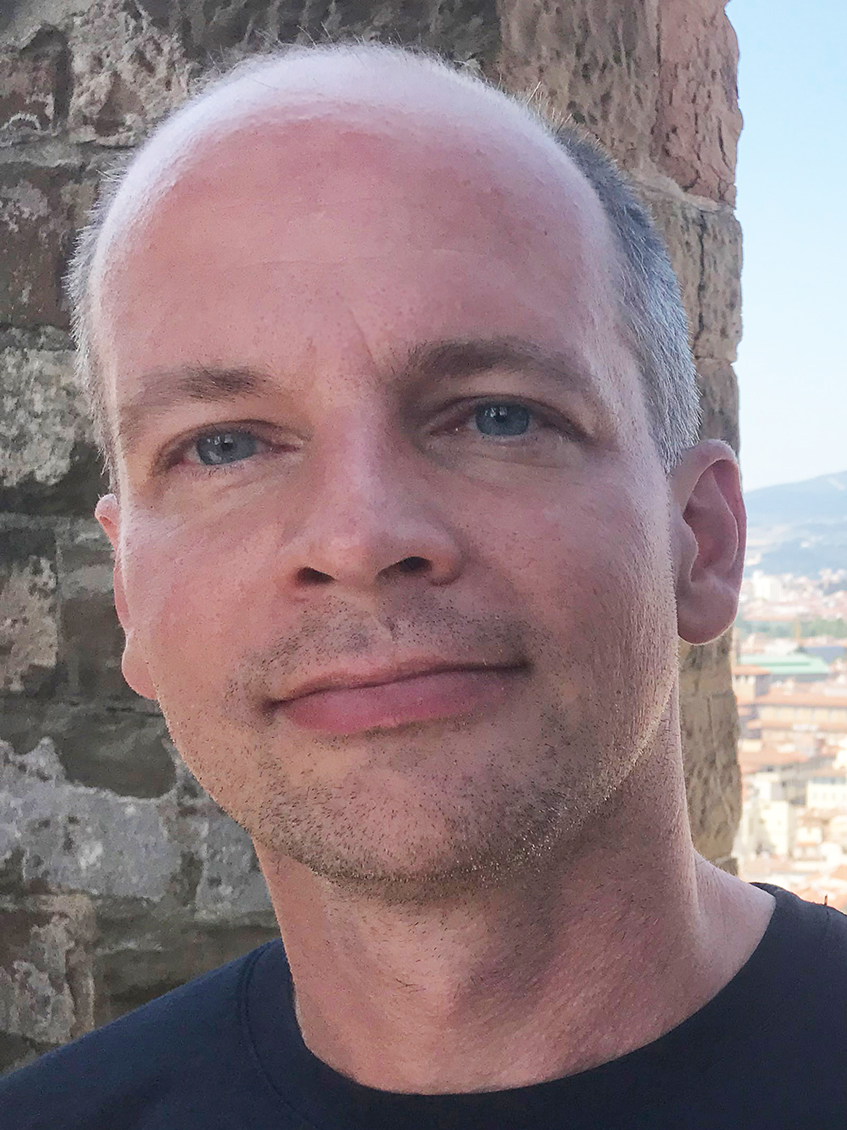
Richard Watson is a Professor at the University of Southampton, where he conducts interdisciplinary research bridging evolutionary biology and computer science. His work explores fundamental questions about life, learning, evolution, cognition, and the emergence of complex systems. He is a member of the Agents, Interaction and Complexity research group and the Institute for Life Sciences.
His primary research interests include evolutionary biology, computer science, evolutionary transitions in individuality, developmental plasticity, and collective intelligence. He investigates how adaptive systems, from biological evolution to artificial intelligence, exhibit goal-directed behavior and self-organization. His work often employs computational models to understand the principles underlying the evolution of complexity and the emergence of individuality.
Recent publications (2019-2024) demonstrate a consistent focus on the intersection of evolutionary theory and computational approaches. His work explores how evolution and development interact to produce adaptive complexity, with particular attention to the role of plasticity, collective intelligence, and multi-scale organization. Key themes include the evolutionary transitions in individuality, the mechanisms of natural induction without selection, and the application of connectionist models to biological systems.
Professor Watson currently supervises the following PhD student:
- Daniel James Sidney Bright (PhD Computer Science)
His research is supported by grants from the following sponsors:
- Engineering and Physical Sciences Research Council (EPSRC) for the PhD Plus Scheme
- John Templeton Foundation for projects including "Putting the Extended Evolutionary Synthesis to the Test" and "The scaling-up of purpose in evolution (evo-ego)"
He is an active member of the Agents, Interaction and Complexity research group within the Institute for Life Sciences at the University of Southampton. His collaborative projects involve interdisciplinary teams, including researchers from biology, computer science, and engineering, focusing on microbial community engineering, computational modeling of biofilms, and the role of developmental plasticity in speciation.