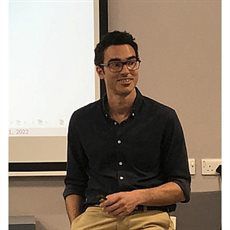
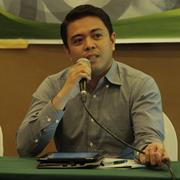
Yonghwi Kwon is a Visiting Assistant Professor in the Department of Computer Science at the University of Virginia. His research focuses on software systems security, cyber forensics, and software engineering. He received the CAREER Award for developing dynamic defenses against cyber threats. His work emphasizes securing software from cyber attacks, recovering forensic evidence, and improving software testing and reverse engineering techniques. Key research areas include memory safety mechanisms, automated vulnerability detection in web applications and mobile systems, and forensic analysis of phishing campaigns. He has pioneered frameworks like CMASan for memory allocator-aware sanitization and Racedb for detecting race conditions in database-backed systems. His contributions span cloud security automation, kernel exploitation analysis, and embedded system fuzzing. Notable achievements include the 2025 CAREER Award supporting his dynamic defense research, and impactful publications in areas like Android information leakage detection (DryJIN), Bluetooth protocol fuzzing (BTFuzzer), and autonomous driving bug discovery (Drivefuzz). His work bridges theoretical computer science with practical cybersecurity solutions.
Professor Elizabeth David-Barrett is Professor of Governance and Integrity (Politics) at the School of Law, Politics and Sociology at the University of Sussex, where she joined in 2014. She serves as Director of the Centre for the Study of Corruption (CSC), leading research, teaching, and policy impact activities. Previously, she spent four years at Saïd Business School, University of Oxford. Her educational background includes a DPhil in Politics from Oxford, an MA in Slavonic and East European Studies from the University of London, and a BA in Philosophy, Politics and Economics from Oxford. Prior to academia, she worked for think tanks including the Institute for Public Policy Research and the Centre for European Reform, political risk consultancy Oxford Analytica, and as a journalist in Croatia and Hungary for The Economist, Financial Times, BBC World Service, and Business Central Europe. David-Barrett's research focuses on corruption and policy responses to corruption, with particular expertise in clientelism and favoritism in government contracting, corruption risks in aid spending, and anti-corruption regulation. She leads the Curbing Corruption in Procurement project, exploring how big data analytics can identify corruption risks in public procurement, which has informed World Bank approaches to risk management. Her work also examines international norm diffusion in anti-corruption, including 'hard law' like anti-bribery laws and 'soft law' private regulation. Her recent publications demonstrate a clear trajectory toward analyzing state capture as a systemic threat to democracy, with increasing focus on the economic consequences of corruption, measurement methodologies for grand corruption, and context-specific definitions of corruption. Her work bridges academic research with practical policy applications, particularly in public procurement analytics and anti-corruption tool development. Chair of the first ever Academic Roundtable of the G20 Anti-Corruption Working Group (2020) Head of the Global Programme on Measuring Corruption at the International Anti-Corruption Academy, Vienna (2022-23) Chair of the Board of Spotlight on Corruption (2019-22) Trustee of Transparency International UK (2024) Specialist Adviser to the UK House of Commons Standards Committee David-Barrett has successfully secured substantial research funding from FCDO, DFID, British Academy, and other organizations, totaling millions of pounds for corruption research. She has advised the UK Department for International Development on its International Anti-Corruption programme and the UK Cabinet Office on the 2017-22 National Anti-Corruption Strategy. Her engagement extends globally through organizing 'hackathons' in Ghana, Uganda and Tanzania with civil society activists on data analysis for identifying grand corruption. She also co-hosts the Kickback the Global Anticorruption Podcast and has provided expert testimony to parliamentary select committees.
Dr. Amizan Omar is an Associate Professor in Strategic Management at the School of Management, University of Bradford, where she also serves as the Director of Accreditation for the Faculty of Management, Law and Social Sciences. With over 15 years of government experience in Malaysia, including roles as Assistant Director of Talent Management and Chief Assistant Director of Business Development, she brings practical insights to her academic work. Her interdisciplinary research focuses on the institutionalization of digital technology in organizations, particularly within the public sector. She examines how digital technologies interact with institutional actors and structures to drive public service transformation toward sustainable societies. Her work spans digital government, AI ethics in HRM, talent management in the circular economy, and public sector innovation. Dr. Omar has published over 30 scientific articles in leading peer-reviewed journals and conferences, including 12 journal articles, 6 conference publications, and 1 book chapter. Her research demonstrates consistent exploration of how digital transformation reshapes public sector institutions and service delivery, with recent work increasingly focusing on ethical implications of emerging technologies. Fellow of the UK Higher Education Academy (FHEA) Associate Member of the Chartered Institute of Personnel and Development (CIPD) Editorial advisory board member of Journal of Information Technology (JIT) Editorial advisory board member of Journal of Electronic Government Research (IJEGR) Chair of digital government mini-track for the 2022 Americas Conference on Information Systems As a Co-Investigator on multi-million-pound research projects funded by the European Commission (FP7 and H2020) and UK Local Government, Dr. Omar has secured significant research funding. She is an active member of the British Academy of Management (BAM) and the Association for Information Systems (AIS), contributing to the academic community through leadership roles and editorial work.
Alexandra Dmitrienko is a researcher at the University of Würzburg's Institute of Computer Science. Her work focuses on cybersecurity, privacy-preserving technologies, and secure machine learning systems. She has collaborated extensively with institutions like TU Darmstadt and the University of California. Her research spans federated learning security, IoT device protection, Tor network analysis, and mobile platform vulnerabilities. Key contributions include defenses against poisoning attacks in federated learning, analysis of contact discovery exploits in messengers, and practical SGX cache attack mitigations. She has authored over 90 publications across top conferences like NDSS, CCS, and USENIX Security, and contributed to open-source tools like DNNShield and ClearMark for model ownership verification.
Dr. Sami Bensassi is a Reader in Managerial Economics at the University of Birmingham, affiliated with the Birmingham Business School and the Department of Management. He serves as Head of the Business, Economics and Policy Group and is a member of the Centre for Crime, Justice and Policing. He has been at the university since January 2013 and holds a PhD in Economics from the University of Paris-Nanterre. BA in Economics, Université Toulouse I MA in Development Economics and International Trade, Université Panthéon Sorbonne (Paris I) PhD in Economics, Université Paris X Nanterre His research lies at the intersection of trade, development, and institutions, with a strong focus on informal trade, smuggling, corruption, and conflict zones. He also investigates return migration and trade-related fraud. His work combines empirical analysis with policy relevance, often drawing on data from Africa and the Middle East. His recent publications span topics such as informal trade measurement, trade policy effectiveness, climate impacts on historical trade, and public health interventions in developing countries. These reflect a consistent interdisciplinary and policy-oriented approach, often in collaboration with international organizations. He has received the University of Birmingham's Outstanding International Impact Award for his research on smuggling at Tunisian borders. Research funding from FCDO, European Union, Economic Research Forum, IFPRI Collaborations with World Bank, Food and Agriculture Organisation (FAO) Supervision of PhD and Master’s students (specific names not listed) He is actively involved in research dissemination through his personal website, Google Scholar, and other academic platforms.
Dr. Sanjeev Khagram is the Foundation Professor of Global Leadership and Global Futures at Thunderbird School of Global Management, Arizona State University. He previously served as Dean and Director-General of Thunderbird (2018–2024). A world-renowned expert in globalization, leadership, and sustainable development, he holds a Ph.D. in Global Political Economy from Stanford University. His research focuses on transnationalism, cross-sector collaboration, fiscal transparency, and the data revolution. Education: Ph.D. in Global Political Economy (Stanford University, 1999) Ph.D. Minor in Economics (Stanford University, 1998) M.A. in Economics and Policy (Stanford University, 1993) B.A. in Development Studies and Engineering (Stanford University, 1990) Research interests include governance, transparency, and global partnerships. He founded initiatives like the Global Partnership for Sustainable Development Data and the Global Initiative for Fiscal Transparency (GIFT). His work emphasizes leveraging data and multi-stakeholder networks to address global challenges. Key professional roles include: John Parke Young Professor of Global Political Economy at Occidental College (2012–2018) Wyss Visiting Professor at Harvard Business School (2008–2010) Director of the Transnational Studies Initiative at Harvard University (1998–2005) His publications span transnational governance, fiscal transparency, and development. He has advised global organizations, governments, and NGOs worldwide, with a focus on sustainable development and equitable governance.
Thomas Rauter is an Associate Professor of Accounting at the University of Chicago Booth School of Business , where he joined as an Assistant Professor in 2018. His research focuses on financial reporting and regulation, particularly at the intersection of accounting and economic development in low-income countries PhD from WU Vienna (Austria) MSc in Accounting and Finance from London School of Economics (UK) BSc in Business Economics from University of Mannheim (Germany) Rauter's research spans corporate transparency, ESG (Environmental, Social, and Governance) policies, and regulatory impacts in emerging markets. His publications address topics such as ESG disclosure effects, mandated ownership transparency, and anti-corruption laws, often leveraging field experiments and policy analysis His recent articles highlight trends in ESG-related consumer behavior, regulatory effectiveness in reducing corruption, and the cyclical dynamics of financial leverage. These works intersect disciplines like accounting, economics, and labor policy At Booth, Rauter teaches courses including Advanced Financial Analysis and Valuation for Global Firms , Financial Accounting , and Research Seminar in Accounting , targeting students in MBA, PhD, and executive education programs
Dr. Lemuel Didulo Lopez is a Lecturer in Law at RMIT University's School of Law, based at the City Campus in Melbourne, Australia. He holds a PhD in Private International Law from the University of Melbourne. His academic career includes roles as a Teaching Fellow at the University of Melbourne and UNSW, and sessional lecturer at Australian Catholic University. Dr. Lopez specializes in International Commercial Law, Contract Law, and Civil Procedure, with a focus on cross-border dispute resolution, private international law, and regulatory compliance in the Asia-Pacific region. His research explores choice-of-forum clauses, cross-border contract enforcement, and dispute resolution mechanisms, particularly in jurisdictions like Singapore, Hong Kong, China, Japan, Indonesia, the Philippines, and Malaysia. He also examines banking and finance (including Islamic banking) and energy sectors. His work contributes to policy discussions on legal certainty in global trade and corporate compliance with anti-corruption and data privacy laws. Dr. Lopez teaches Contract Law, International Commercial Law, and Civil Dispute Resolution at RMIT, emphasizing practical applications through case studies and comparative analysis. He has designed interactive curricula at Melbourne Law School, UNSW, and other institutions, focusing on Human Rights, Competition Law, and Media Law. His teaching philosophy centers on problem-based learning, bridging theory and practice for global legal careers. Dr. Lopez is open to supervising Masters and PhD students, collaborative projects, and industry consultations. He advises on cross-jurisdictional legal issues and has contributed to continuing legal education programs. His research aligns with UN SDGs like Quality Education, Peace and Justice, and Industry Innovation.
Andrea Garrido Juncal is a Professor of Administrative Law at the University of Santiago de Compostela, Spain. She holds a doctorate from the same institution (2015) with a thesis on social services management through concerts as an indirect governance mechanism. Her academic affiliations include the Faculty of Law, Department of Public Law and Theory of the State, and the Institute of Studies and Development of Galicia (IDEGA). Her research focuses on administrative law, public policy, anti-corruption measures, and public procurement frameworks. Key research interests include the legal regulation of social services, transparency in local governance, and comparative studies on whistleblower protection mechanisms. Her work often addresses tensions between regulatory compliance and market competition in public sector contracts. She has contributed to debates on municipal competencies under Spain’s Local Regime and Social Services Act (LRSAL). Recent publications analyze the evolution of administrative intervention in environmental impact assessments, contractual reservations in social services management, and legal safeguards for informants in public institutions. She participates in the GI-EA Business and Administration research group and has published extensively in peer-reviewed journals like Revista Catalana de Dret Públic and Cuadernos de Derecho Local . Her work emphasizes practical solutions to normative gaps in public policies, combining doctrinal analysis with proposals for legislative improvements. She is actively engaged in interdisciplinary discussions on modernizing public service delivery and enhancing administrative accountability mechanisms.
Dr. Alfredo Hernandez Sanchez is a Research Fellow at the Institute for International Relations and Political Science (TSPMI) at Vilnius University and a Senior Fellow at the Institute for Studies on the Mediterranean and the Middle East (IBEI). He holds a PhD in Political Science from Central European University and a BA in International Relations from UNAM, with expertise in Computational Social Sciences, Natural Language Processing (NLP), and Quantitative Text Analysis. His work bridges FinTech, International Political Economy, and anti-corruption research, including policy contributions for UNESCO, Transparency International, and the IADB. PhD in Political Economy, Central European University (2020) BA in International Relations, UNAM His research focuses on FinTech regulation , Big Data applications in governance, and corruption risk measurement using large-scale datasets. Current projects include the Political Economy of FinTech grant and the Water Integrity Risk Index initiative with UNESCO. Publications span Springer, Bloomsbury, and Emerald, covering topics like pandemic-era procurement ethics and defense corruption networks. Recent work highlights FinTech policy , anti-corruption metrics , and quantitative methods in political economy, with a trend toward AI-driven analysis of governance structures. He is also a Data Visualization enthusiast, contributing to the D·Viz blog and academic discourse via Bluesky. Notable affiliations include: Marie-Curie ERA Postdoctoral Fellow (Vilnius University) Research Fellow (IBEI) Contributor to UNESCO and IADB projects
Miroslav Minović is a Full Professor and Head of the Laboratory for Multimedia Communications at the University of Belgrade's School of Business Administration. He holds a PhD in Information Technology and has extensive experience in academia and research. His roles include Director of the Laboratory for Multimedia Communications and guest editor for the International Journal of Engineering Education . Education: PhD in Information Technology (2010), University of Belgrade M.Sc. in Information Technology (2002), University of Belgrade Visiting Researcher at University of the Balearic Islands (2015) and EBS Business School (2013) Research Interests: Human-Computer Interaction (HCI), Multimedia Systems, Biometric Technologies, Blockchain Applications, Computer Networks, and Gamification in Education. Notable Projects: TRAILER EU Project (2012–2013): Focused on informal learning recognition AI4WorkplaceSafety (2020–2022): AI-driven workplace safety solutions Blockchain Technology Research: Explored applications beyond cryptocurrencies Publications: Over 50 peer-reviewed articles in journals like IEEE Multimedia , Computers in Human Behavior , and Sensors . Key themes include gamification ecosystems, biometric systems, and e-learning analytics. Awards & Memberships: Member of IEEE and ACM National Contact Point for Serbia, European Association for Biometrics Grants & Labs: Directed multiple EU-funded and Serbian government projects Lab focuses on multimedia communications, blockchain, and biometric technologies
Mihaly Fazekas is an Associate Professor at the Department of Public Policy at the Central European University (CEU), where he focuses on applying data science to study government quality globally. He also serves as Scientific Director of the Government Transparency Institute, an innovative think-tank. His research integrates quantitative and qualitative methods to address corruption, favoritism, and public procurement inefficiencies, with a particular emphasis on Central and Eastern Europe. Education includes a PhD in Political Economy from the University of Cambridge, an MPP from the Hertie School of Governance, and degrees in Economics and Pedagogy from Corvinus University of Budapest. His work has been supported by projects like the Horizon 2020-funded DIGIWHIST initiative, analyzing corruption risks across 33 European countries. Research interests center on corruption dynamics, public spending efficiency, and the role of data science in governance. His publications span high-impact journals like the American Journal of Political Science and World Development , with policy reports for the World Bank, OECD, and European Commission. Awards include the 2020 IMF Anti-Corruption Challenge. He actively advises international organizations such as the UN, OECD, and World Bank, and collaborates with governments and NGOs worldwide. Recent work explores corruption risks during emergencies, legislative favoritism, and the design of open contracting systems. Key contributions include the Government Transparency Institute and the Global Public Procurement Open Competition Index . His interdisciplinary approach bridges academia and policy, addressing real-world challenges in governance and accountability.
Johannes Wachs is an Associate Professor (Docens) at the Institute of Data Analytics and Information Science, Corvinus University of Budapest, and a Research Fellow at the Institute of Economics, Centre for Economic and Regional Studies. He maintains an affiliation with the Complexity Science Hub Vienna, focusing on interdisciplinary research at the intersection of data science, network theory, and socioeconomic systems. His educational background includes a PhD in Network Science (summa cum laude, Central European University, 2019), an MS in Applied Mathematics with distinction (Central European University, 2012), and dual BS degrees in Mathematics and Economics (cum laude, Tulane University, 2009). Wachs specializes in analyzing social, technical, and economic networks, with recent emphasis on the societal impact of software systems—particularly open-source ecosystems and AI technologies. His work employs computational social science methods to investigate developer behavior, innovation diffusion, and network-driven inequality. Key research threads include software ecosystem dynamics, corruption detection in public procurement, and urban network segregation effects on socioeconomic disparities. His publication portfolio reveals a strong focus on open-source software geography, AI's societal implications, and network-based corruption analysis, with increasing attention to generative AI's impact on knowledge-sharing platforms and software development workflows since 2023. Scientific recognition includes: IMF Anti-Corruption Challenge (2020) He actively supervises doctoral candidates including Hannah Schuster (WU Wien/CSH) and Brigi Németh (Corvinus University), alongside mentoring numerous bachelor's theses on topics ranging from corruption analytics to Stack Overflow dynamics. Major funded projects include the Hungarian Research Funding Agency's Building Blocks of the Digital Economy (2024-2027) and the FFG-supported CRISP initiative (2021-2024) on crisis response through semantic data pooling. Wachs contributes to the Complexity Science Hub Vienna and leads Corvinus University's upcoming MSc in Social Data Science (launching 2025), positioning him at the forefront of computational social science education in Central Europe.
Dimo Todorovski is a Lecturer at the Department of Urban and Regional Planning and Geo-Information Management, Faculty ITC, University of Twente. He also serves as Secretary General of the School for Land Administration Studies (a joint initiative of the Netherlands Kadaster and ITC). His roles include Course Coordinator for the M-GEO Master's Land Administration Specialization and contributions to educational coordination, capacity development projects, and applied research in post-conflict land administration. He holds a PhD (2016) on 'Post-conflict land administration as a facilitator of post-conflict state building' and a Master of Science in Geo-Information Management (2006). Prior to academia, he served in managerial roles at the Agency for Real Estate Cadastre in North Macedonia, including Head of the Department for International Cooperation and European Integration. His research focuses on land governance in conflict-affected regions, with expertise in displacement, digital land systems, and academic curriculum development. Key areas include land administration in post-conflict contexts, transparency in land governance, and geomatics education. He actively contributes to regional initiatives like the Latin America Land Administration Network (LALAN) and promotes blended learning in surveying education. Recent publications (2023–2025) explore digital land systems in Ghana, machine learning for cadastral automation, and community land registration for displaced populations in Sudan. His work aligns with UN SDGs, particularly Goal 11 (Sustainable Cities) and Goal 16 (Peace, Justice, and Strong Institutions).
Kathleen Clark is a Professor at Washington University in St. Louis School of Law, holding the prestigious John S. Lehman Research Professor and Israel Treiman Faculty Fellow appointments. She has taught at the University of Michigan, Cornell University, Utrecht University, and the University of Economics and Law in Vietnam. Clark is licensed to practice law in Washington, DC, where she serves on the Rules of Professional Conduct Review Committee of the D.C. Bar. Her government service includes serving as an ethics lawyer for the District of Columbia government (where she wrote an Ethics Manual for 32,000 employees), counsel to the Senate Judiciary Committee, and clerk to Federal District Judge Harold H. Greene. She serves as a board member of the Association of Professional Responsibility Lawyers and as Associate Reporter for the American Law Institute's Principles of Government Ethics. Clark earned her B.A. in Physics & Philosophy cum laude from Yale College in 1984 and her J.D. from Yale Law School in 1990. She expanded her international perspective by studying Russian in the Soviet Union and Spanish in Guatemala. Professor Clark's research focuses on legal ethics, government ethics, whistleblowing law, and national security law, examining the intersection of ethics, transparency, and accountability in government operations. Her scholarship addresses conflict of interest standards, intelligence oversight mechanisms, and legal frameworks governing whistleblowers, often taking a comparative approach between the United States and Canada. With work cited in hundreds of articles and books and excerpted in legal ethics textbooks, Clark has shaped national conversations about government ethics through contributions to major publications including the New York Times, Washington Post, Wall Street Journal, and Economist. Her publication record reveals consistent focus on government accountability mechanisms, evolving from foundational work on legal ethics to specific applications in intelligence oversight and whistleblowing protections. Recent scholarship addresses contemporary challenges including presidential ethics executive orders, congressional oversight of national security matters, and financial incentives for whistleblowers, demonstrating practical application of ethical principles to real-world governance challenges with concrete reform recommendations. Her significant honors include: John S. Lehman Research Professor at Washington University Israel Treiman Faculty Fellow at Washington University Professor Clark has led extensive anti-corruption and ethics workshops internationally across six continents and has conducted comprehensive ethics training for government agencies at all levels. Her service as Associate Reporter for the American Law Institute's Principles of Government Ethics represents a major contribution to shaping ethical standards for government officials nationwide, reflecting her commitment to advancing ethical governance through both theoretical scholarship and practical implementation.