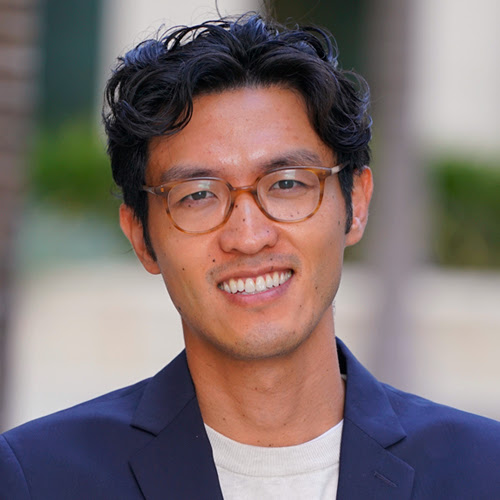
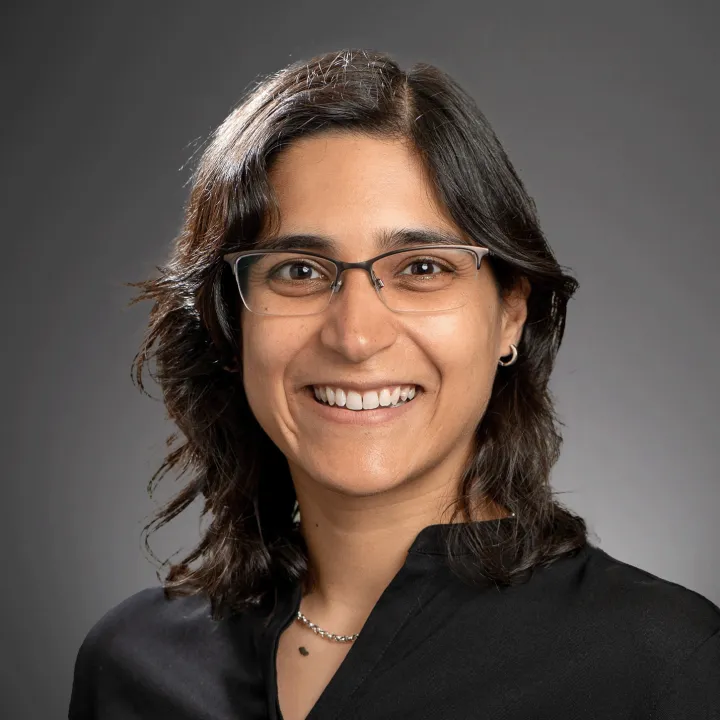
Julian Fierrez is a Full Professor at the School of Engineering, Universidad Autonoma de Madrid. With an h-index of 74 and over 20,000 citations, his work spans biometrics, signal/image processing, artificial intelligence, and human-computer interaction. Key research areas include: Biometric anti-spoofing and DeepFakes detection Mobile and behavioral biometrics Bias/fairness in AI systems Biometric applications in e-health and education Security in multimodal biometric systems His recent publications show strong focus on deep learning applications for biometric security, with specific subfields including fake detection, keystroke authentication, facial analysis for Parkinson detection, and privacy-preserving AI. He serves as Associate Editor for multiple IEEE and Elsevier journals. Scientific distinctions include: IAPR Young Biometrics Investigator Award (2017) Miguel Catalan Award to Best Researcher under 40 (2017) EURASIP Best PhD Award (2012) EBF European Biometric Industry Award (2006) Prof. Fierrez leads the BiDA Lab and supervises students like Ruben Tolosana and Aythami Morales. Current projects include BBforTAI (Biometrics and Behavior for Unbiased & Trustworthy AI) and PRIMA (Privacy Matters). He also contributes to standardization efforts in biometric evaluation.
Dr. Shweta Singh serves as an Assistant Professor of Information Systems and Management at Warwick Business School, University of Warwick. She concurrently holds prestigious appointments as a Fellow at the Warwick Institute for Global Sustainability Development (IGSD) and a Behavioral Data Science researcher at The Alan Turing Institute in London. Her academic journey includes a Ph.D. in Information and Decision Sciences from the Carlson School of Management at the University of Minnesota, complemented by dual Master's degrees in Computer Science and Applied Economics from the same institution. Ph.D. in Information and Decision Sciences, University of Minnesota Master's in Computer Science, University of Minnesota Master's in Applied Economics, University of Minnesota Dr. Singh's research centers on developing ethical and responsible artificial intelligence systems that address societal challenges. Her work specifically targets mitigating AI bias, creating explainable AI frameworks, and leveraging technology to combat societal injustice. She investigates how digital platforms, sharing economy models, and IT outsourcing create business value while ensuring these technologies promote sustainability and reduce inequalities. Her innovative approach combines technical AI expertise with deep social awareness, particularly focusing on gender equality and child protection in digital spaces. Her publication record demonstrates consistent high-impact contributions to Information Systems Research, International Conference on Information Systems, and related venues. The trajectory of her work shows increasing focus on practical applications of responsible AI, with recent projects addressing online child safety and human trafficking prevention. Her research increasingly intersects with policy development, as evidenced by her contributions to UK Parliamentary Office of Science and Technology briefs. Doctoral Dissertation Fellowship, University of Minnesota McNamara Fellowship, University of Minnesota Social Impact Project of the Year shortlist (2023) Asian Women of Achievement Award finalist (2023) British Indian Awards finalist (2019) Top 5 Women in Tech for Good Award shortlist (2022) Inspiring 50 UK recognition (2025) Dr. Singh actively mentors students and has been recognized with the Staff Social Inclusion Award (2024) for her teaching excellence. Her advisory roles extend beyond academia to include the UN Women UK delegation for the Commission on the Status of Women and the Advisory Board of AI retail company 'Love the Sales'. She serves as an external collaborator for Boston Consulting Group's Henderson Institute, bridging academic research with industry applications. Through her leadership in the ISM-Analytics (ISMA) Group at Warwick, Dr. Singh fosters interdisciplinary collaboration focused on creating socially responsible technological solutions. Her work with the IGSD specifically targets UN sustainability goals related to reducing inequalities and promoting inclusive societies through responsible AI implementation.
Zhe Zhang is an Assistant Professor of Innovation, Technology, and Operations at the Rady School of Management, University of California San Diego (UCSD). He holds a Ph.D. in Information Systems and Management from Carnegie Mellon University's Heinz College and dual bachelor's degrees in Economics and Statistics from Stanford University. His research focuses on the societal and spillover impacts of information technology, including fairness in algorithmic decision-making, sharing economy dynamics, and digital transformation effects. Ph.D., Carnegie Mellon University (Heinz College) B.S. in Mathematical and Computational Sciences, Stanford University B.A. in Economics (with honors), Stanford University His work spans disciplines like machine learning, applied microeconomics, and operations management. Current research includes analyzing cashierless retail technology's operational and behavioral impacts, algorithmic bias mitigation strategies, and the economic implications of Amazon Prime adoption. Key findings highlight how digital innovations reshape consumer demand, manufacturer strategies, and algorithmic fairness outcomes. Recent publications address: Bias amplification through data imputation in healthcare Strategic overfitting in data science contests Sharing economy's effect on durable goods markets He has presented at top conferences in information systems (CIST, WISE), economics (NBER), and computer science (KDD, FAccT). Awards include runner-up for the ACM SIGMIS Doctoral Dissertation Award (2019) and a POMS 2017 Supply Chain Management best paper finalist. Prior to his current role, Zhang worked as a part-time Data Creative staff member at DataKind (NYC) and was a 2016 fellow at the Data Science for Social Good Summer Fellowship (Chicago). He has also contributed to fairness methods in AI at Facebook and nonprofit research at NRDC and Union of Concerned Scientists.
Giorgia Ramponi is an Assistant Professor with Tenure Track at the Faculty of Business, Economics and Informatics at the University of Zurich. She is also an affiliated professor at the ETH AI Center and the Data Science and AI, Computer Science and Engineering department at Chalmers University of Technology. Her educational background includes a Ph.D. in Information Technology from Politecnico di Milano (completed June 2021 with honors), advised by Marcello Restelli, and a Master of Science in Computer Science with Honours Programme (110/110 cum laude) from la Sapienza (July 2017), advised by Flavio Chierichetti and Alessandro Panconesi. Dr. Ramponi's research focuses on machine learning and mathematical modeling, with particular emphasis on reinforcement learning and multiagent learning. Her work bridges theoretical foundations with practical applications, exploring how learning algorithms can make optimal decisions in complex environments. She has made significant contributions to areas including inverse reinforcement learning, multi-agent systems, constrained Markov decision processes, and human-AI interaction through preference learning. Her recent publications demonstrate a strong trend toward addressing fundamental challenges in reinforcement learning, particularly in multi-agent settings, constrained optimization, and learning from human feedback. Her work combines theoretical rigor with practical applications across robotics, economics, and decision-making systems. Hassler Research Grant for "Unified Feedback Integration Framework for Reinforcement Learning" Dr. Ramponi actively contributes to the academic community through conference participation, invited lectures (including at the Mediterranean Machine Learning Summer School), and teaching. She designed and taught the "Data Science and Machine Learning" course for the ETH-Ashesi Master program. She is also a member of the ELLIS community, which connects excellence in AI research across Europe. Her research group focuses on developing frameworks for reinforcement learning with various feedback types, including preferences, rewards, and demonstrations. The group aims to advance the theoretical understanding of learning algorithms while addressing practical challenges in real-world applications.
Prof. Dr.-Ing. Richard Membarth is a Research Professor for System-on-a-Chip and AI at the Edge Computing at Technische Hochschule Ingolstadt (THI). He is affiliated with the Hardware-Software Co-Design group and holds a secondary position at the German Research Center for Artificial Intelligence (DFKI) Saarbrücken. Co-creator of DSL frameworks like AnyDSL and Hipacc Key contributor to MetaDL (AI metaprogramming) and PRIME (predictive rendering) His research bridges GPU computing , domain-specific languages , and compiler technology , with recent work on Vulkan SPIR-V compilation and device-driven SpMV algorithms . Notable awards include the HiPEAC Paper Award (2018) and multiple Best Paper Awards for his compiler frameworks.
Bhushan Gopaluni is a Professor in the Department of Chemical and Biological Engineering at the University of British Columbia, where he also serves as Associate Dean for Education and Professional Development in the Faculty of Applied Science. He holds associate faculty positions in multiple interdisciplinary institutes including the Institute of Applied Mathematics, Institute for Computing, Information and Cognitive Systems, Pulp and Paper Center, and Clean Energy Research Center. He previously held the Elizabeth and Leslie Gould Teaching Professorship from 2014 to 2017. Education: Ph.D. in Chemical Engineering, University of Alberta (2003) Bachelor of Technology in Chemical Engineering, Indian Institute of Technology, Madras (1997) Research Interests: Professor Gopaluni's research spans several critical areas at the intersection of chemical engineering, machine learning, and process control. His primary focus includes the development of advanced process control strategies using reinforcement learning and machine learning techniques. He has made significant contributions to battery technology research, particularly in capacity estimation and remaining useful life prediction for lithium-ion batteries. His work also encompasses sustainable energy systems, industrial process monitoring, fault diagnosis, and the application of digital twin technology in chemical processes. His research methodology emphasizes the integration of data-driven approaches with fundamental process understanding, leading to practical solutions for complex industrial challenges. This includes the development of interpretable machine learning models for industrial applications, real-time optimization strategies, and advanced monitoring systems for process industries. Publications and Research Impact: Professor Gopaluni's recent publications demonstrate a strong focus on cutting-edge applications of machine learning in chemical engineering. His work prominently features battery technology and energy systems, with multiple papers addressing lithium-ion battery capacity estimation and management. He has also contributed significantly to process control applications, including drilling process monitoring, greenhouse gas reduction in marine transport, and renewable carbon tracking in biofuel processing. His research extends to advanced computational methods including deep learning, reinforcement learning, and causal discovery in industrial processes. Awards and Recognition: Killam Teaching Prize (University of British Columbia) Dean's Service Medal (University of British Columbia) D.G. Fisher Award in Process Control (Canadian Society for Chemical Engineers) Elizabeth and Leslie Gould Teaching Professor (2014-2017) Professional Service and Editorial Roles: Professor Gopaluni currently serves as Associate Editor for three prestigious journals: Journal of Process Control, The Journal of Franklin Institute, and Results in Control and Optimization. His service to the academic community extends through his role as Associate Dean for Education and Professional Development, where he oversees educational initiatives across the Faculty of Applied Science. Industry Experience: From 2003 to 2005, Professor Gopaluni worked as an engineering consultant at Matrikon Inc. (now Honeywell Process Solutions), where he designed and commissioned multivariable controllers for British Columbia's pulp and paper industry and implemented controller performance monitoring projects across oil & gas and chemical industries.
Molly Crockett is a Professor at Princeton University's Department of Psychology and affiliated with the University Center for Human Values . Her research integrates cognitive science, social psychology, philosophy, and data science to examine how systems of power shape knowledge production, and how technologies like artificial intelligence reinforce social inequalities. Education: Ph.D. from the University of Cambridge Her lab focuses on epistemic injustice , using behavioral experiments, computational modeling, and machine learning to study moral cognition, narrative testimony, and the cultural evolution of ethics. Recent work highlights AI's role in distorting scientific understanding and explores how social norms constrain self-knowledge. Key article trends include analyses of algorithmic bias in social networks, moral outrage dynamics, and the interplay between self-perception and societal expectations. She actively mentors postdoctoral, PhD, and undergraduate researchers, emphasizing diversity and inclusion in scientific practice. Publications span topics from neurobiological markers of guilt to positive illusions in relationships , reflecting her interdisciplinary approach. Her lab avoids tech industry funding to maintain research autonomy.
Sadegh Talebi is a Tenure Track Assistant Professor in the Machine Learning Section at the Department of Computer Science, University of Copenhagen . His research focuses on theoretical aspects of reinforcement learning, Markov decision processes, online learning, stochastic multi-armed bandit problems, and resource allocation in networks. Education BSc in Electrical Engineering (minor: Electronics) from Iran University of Science and Technology (IUST) (2004) MSc in Electrical Engineering (minor: Communication Systems) from Sharif University of Technology (2006) PhD in Electrical Engineering from the Department of Automatic Control at KTH Royal Institute of Technology (supervised by Alexandre Proutiere and Mikael Johansson) Research Specializes in theoretical foundations of reinforcement learning and online learning Key contributions in stochastic optimization, MDPs, and bandit algorithms Collaborates on applications in resource allocation and quantum computing Publications include high-impact work on offline RL, differentially private exploration, and scalable MDP solutions in journals like Neural Processing Letters and conferences such as NeurIPS and UAI.
Ming Jin is an Assistant Professor in the Bradley Department of Electrical and Computer Engineering at Virginia Tech. He holds a PhD from UC Berkeley and a B.Eng. from Hong Kong University of Science and Technology. His research focuses on trustworthy AI, CPS security, and energy systems, with affiliations to the Power and Energy Center and Autonomy and Robotics @ VT. Education: PhD in Electrical Engineering and Computer Science (UC Berkeley, 2017), B.Eng. (Honors) in Electronic and Computer Engineering (HKUST, 2012). Postdoc in Industrial Engineering and Operations Research at UC Berkeley. Research interests include safe reinforcement learning, foundation models, cybersecurity, and power systems. Awards include the Siebel Scholarship (2018) and first place in the 2021 CityLearn Challenge. Active in conference organization (e.g., ICML, AAAI) and tutorial development on topics like Safe RL and CPS security. Grants include NSF support for embodied optimization (2025), Amazon-VT Initiative (2023), and Commonwealth Cyber Initiative projects. Involved in labs focused on AI, robotics, and energy systems. Publications span AI safety, RL frameworks, and CPS resilience, with over 50 peer-reviewed articles since 2015.
A.S. Richterich is an Associate Professor in Digital Cultures at Maastricht University’s Faculty of Arts and Social Sciences (FASoS), Department of Literature & Art. Their research focuses on social practices involving digital technology, particularly in hacker/maker communities and feminist technocultural spaces. They hold a PhD in Digital Media Studies from the University of Siegen (2012) and conducted postdoctoral research at the University of Sussex as a Marie Skłodowska-Curie Fellow (2019-2021). Key areas of expertise include hacker/makerspace dynamics, digital literacy, feminist technology activism, and ethnographic methods. Richterich has published widely in journals such as *Information, Communication & Society* and *Learning, Media, & Technology*, examining topics like data solidarity, design thinking critiques, and gendered participation in tech communities. Recent projects include investigating feminist automation ethics and the socio-political implications of hackathons. They received the Marie Skłodowska-Curie Fellowship (2019-2021) for research on experiential learning in maker cultures. Current work explores marginalized groups’ engagement with digital technologies, including women-only developer communities and feminist hackerspaces.
Alan Rubel is a Professor and Director of the Information School at the University of Wisconsin-Madison. He also serves as a member of the Department of Medical History & Bioethics and an affiliate of the UW Law School. His research focuses on information ethics, policy, and law, particularly addressing privacy, surveillance, algorithmic decision-making, and bioethics. Rubel holds a PhD in Philosophy (2006) and a JD (2003), both from the University of Wisconsin-Madison. He has held academic positions since 2010, including visiting researcher roles at the 4TU Centre for Ethics and Technology in the Netherlands. His work bridges philosophy, law, and technology, emphasizing ethical challenges in automated systems and data-driven societies. Education: PhD in Philosophy (2006), JD (2003), both from UW-Madison. Professional roles include former Director of the Center for Law, Society & Justice, and prior fellowships at Johns Hopkins and Georgetown Universities. Rubel’s interdisciplinary approach addresses contemporary issues like learning analytics, neurotechnology ethics, and digital privacy. His research highlights privacy in higher education, ethical implications of AI, and bioethical dilemmas in emerging technologies. Notable contributions include the book Algorithms and Autonomy: The Ethics of Automated Decision Systems (2021) and influential articles on algorithmic transparency, surveillance, and information fiduciaries.
Yee Man (Margaret) Ng is an Associate Professor in Journalism and the Institute of Communications Research at the University of Illinois. She combines data science methodologies with communication research to study social media dynamics, digital journalism, and technology adoption patterns. Her research interests include: Computational social science Social media analytics Data visualization techniques Communication technology impacts Journalism innovation Post-adoption technology behavior Ng's methodology integrates big data analysis, machine learning algorithms, and traditional survey/experimental approaches. Current work extends diffusion of innovations theory by examining social media users' discontinuance and readoption behaviors. Academic contributions span both empirical research and educational practice. She has taught courses like: JOUR 460 - Data Storytelling JOUR 410 - Data Storytelling for Journalism JOUR 425 - Multimedia Editing and Design JOUR 199 - Hands-on Media Technology Her publications analyze topics ranging from YouTube's recommendation algorithms to digital sustainability in news media, with particular focus on: Platform migration patterns Algorithmic content moderation Political communication dynamics Media technology adoption Regional web usage differences Incivility measurement techniques
David Jensen is a Professor in the College of Information and Computer Sciences (CICS) at the University of Massachusetts Amherst. He directs the Knowledge Discovery Laboratory and the Computational Social Science Institute. His research focuses on machine learning, causal modeling, and analyzing large social, technological, and computational systems. Jensen's work is supported by organizations like the National Science Foundation and DARPA. Education: DSc in Engineering and Policy, Washington University in St. Louis (1992) MS in Engineering and Policy, Washington University in St. Louis (1988) BS in Mechanical Engineering, University of Nebraska (1986) Research Interests: Causal inference in relational and dynamic systems Machine learning applications in security and privacy Computational social science Large-scale network analysis Achievements: Recipient of teaching awards from UMass College of Natural Sciences (2011) and CICS (2022) 2017 IEEE INFOCOM Test of Time Paper Award Leadership roles in conferences and journals, including action editor for the Journal of Machine Learning Research Labs and Affiliations: Founder of the Knowledge Discovery Laboratory (2000) Director of the Computational Social Science Institute (2018-2022) Member of the Computing Community Consortium (CCC) Council
Marynel Vázquez is an Assistant Professor in Yale University's Computer Science Department, leading the Yale Interactive Machines Group (IMG). Her research focuses on Human-Robot Interaction (HRI), particularly in multi-party settings, advancing perception and decision-making algorithms for socially aware robots. She holds a PhD from Carnegie Mellon University and previously worked at Stanford and Disney Research. Her research combines computer science, behavioral science, and design, emphasizing interdisciplinary approaches. Key projects include the social robots Chester and Shutter, and frameworks like SEAN-VR for evaluating robot navigation in virtual reality. Vázquez has received prestigious awards including the NSF CAREER Award (2022) and AFOSR YIP Award (2024). Teaching includes courses on interactive machines, robotics, and human-computer interaction. She actively mentors students and emphasizes ethical and socially responsible robotics development.
Yudong Chen is an Assistant Professor in the Department of Statistics at the University of Warwick, starting September 2024. Previously, he was an LSE Fellow (2023–2024) and a postdoctoral researcher at the London School of Economics. He holds a PhD in Statistics from the University of Cambridge (2023), with a thesis on High-dimensional Online Changepoint Detection, supervised by Richard J. Samworth and Tengyao Wang. His research focuses on changepoint detection, high-dimensional statistics, robust methods, and machine learning. Education: PhD in Statistics, University of Cambridge (2023) MA & MMath in Mathematics, University of Cambridge (2018) BA in Mathematics, University of Cambridge (2018) Teaching: University of Warwick: Module leader for ST420 Statistical Learning and Big Data (2024/25) LSE: Taught ST202/6 Probability, ST447 Data Analysis, and ST449 Artificial Intelligence His research interests span statistical methodologies including online algorithms, robust statistics, and spatial models. He has published in top journals like the Journal of the American Statistical Association and presented at venues such as the IMS Annual Meeting. Awards include the LSE Class Teacher Award (2023) and the Smith–Knight Prize (2020). Grants: Worked on EPSRC-funded research on 'Change-point analysis in high dimensions' at LSE. Labs/Teams: Engaged in collaborative projects on online changepoint detection and statistical methodologies.