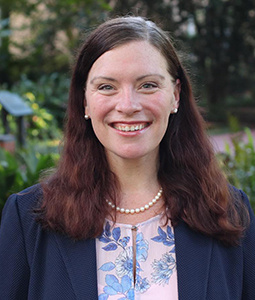
Jennifer Gunter Reeves serves as Professor and Director of Dissertation Support Services at Nova Southeastern University's Department of Education within the Abraham S. Fischler College of Education and School of Criminal Justice. Her academic credentials include: Ph.D. in Educational Psychology (with emphases in Sport Psychology, Counseling Psychology, and Statistics and Measurement) from Florida State University M.S. in Educational Psychology from Florida State University B.S. in Health Psychology from Rhodes College Dr. Reeves specializes in developing dissertation support frameworks and advancing online educational methodologies, with significant contributions to social presence theory in digital learning environments, statistics pedagogy, and program evaluation. Her research bridges educational psychology with practical applications in distance education and mobile learning technologies. Her distinguished service has been recognized through: Rod Rose Award FCE&SCJ Professor of the Year As an active researcher, she currently serves as Lead Evaluator for an NSF IRES Track II Grant (2021-2025) and Co-Principal Investigator on two Quality of Life Grants, demonstrating sustained leadership in federally funded educational research initiatives focused on doctoral student success and learning outcomes assessment.
Dr. Ying Zhu is an Associate Professor in the Department of Marketing and Consumer Studies at the Lang School of Business and Economics, University of Guelph. She holds a Ph.D. in Marketing from Texas A&M University, alongside master’s degrees in Computer Science (Minzu University, China) and Management (University of Lethbridge, Canada). Previously, she served as an Associate Professor at UBC Okanagan. Her research focuses on digital marketing, consumer behavior, marketing analytics, and the impact of technology (e.g., AI, Metaverse) on consumer decisions. She has published 19 peer-reviewed articles since 2017, many in top-tier journals like American Psychologist and European Journal of Marketing . Her work explores themes such as brand extension strategies, digital advertising effectiveness, and sustainability initiatives. Dr. Zhu has received significant funding through SSHRC grants and has been recognized for her teaching excellence, including the Golden Apple Award. She actively advises graduate students and volunteers with community organizations like the Kelowna Museums Society. Her research on smartphone-induced consumer behavior has garnered media attention in outlets like Time Magazine , Global News , and Science Daily .
Katherine Ryker is an Associate Professor at the University of South Carolina, affiliated with the School of the Earth, Ocean & Environment within the McCausland College of Arts and Sciences. She leads the Ryker Research Lab, which focuses on geoscience education research, emphasizing inquiry-based learning, student-centered teaching practices, and the integration of augmented/virtual reality in education. Her work explores how teaching methods impact student engagement, spatial skill development, and academic persistence in geoscience disciplines. Her research interests include: Geoscience education reform Teacher professional development Role of technology in STEM education Student learning strategies in large introductory courses Outreach strategies to correct public misconceptions about geoscience Ryker’s lab maintains a structured environment with documented protocols for onboarding, data management, diversity initiatives, and collaborative authorship. She advises graduate and undergraduate students, supporting their academic and career development through grants such as NSF GRFP and SEOE Travel Awards. Her lab also emphasizes work-life balance, professional mentorship, and ethical standards in academia. Her students have pursued roles in academia (e.g., Senior Lecturer at Vanderbilt University) and applied geoscience fields (e.g., National Park Ranger). Ryker’s contributions to geoscience education include advancing pedagogical frameworks, publishing influential research, and advocating for inclusive teaching practices across institutions.
Thomas Schlag is Professor of Practical Theology at the University of Zurich , with research foci in religious education, church theory, and pastoral theology . He directs the university-wide research focus "Digital Religion(s): Communication, Interaction and Transformation in the Digital Society" , exploring the intersection of theology and digital culture. His career includes roles as Chairman of the Center for Church Development (ZKE) and Dean of the Faculty of Theology (2014–2016). Key Research Areas : Digital religion, public theology, interreligious education, confirmation work, church development, and socio-political theology. Academic Leadership : Directed international studies on confirmation work, co-edited interdisciplinary theological compendiums, and contributed to debates on state religious education and digital ethics. Recent Publications (2024–2025) examine digital media in religious education, Swiss church reform, theological responses to polarization, and interfaith educational models. His "Digital Religion(s)" program analyzes church-state-civil society dynamics in digital societies. He teaches courses on existential religious education , digital transformation , and ecclesiological-practical semesters . Collaborations include the European Network for Confirmation Work , International Academy of Practical Theology , and projects with Swiss and international theological institutions. His work bridges digital innovation , democratic education , and pastoral care in virtual environments .
Rebecca Nugent is the Stephen E. and Joyce Fienberg Professor of Statistics & Data Science and Department Head at Carnegie Mellon University. She holds a PhD in Statistics from the University of Washington (2006), an MS in Statistics from Stanford (2006), and a BA in Mathematics, Statistics, and Spanish from Rice University (2002). Her research spans clustering methodology , record linkage , educational data mining , public health , and semantic organization , with a focus on high-dimensional data and adaptive learning environments. She leads the Integrated Statistics Learning Environment (ISLE) and Corporate Capstone programs, emphasizing low-barrier data platforms for education and industry collaboration. Academic Roles : Department Head, Carnegie Mellon; Affiliated Faculty, Block Center for Technology and Society Research Grants : NSF (2017-2019), NIH (2018), Carnegie Mellon ProSEED/Simon Initiative (2020, 2018), Berkman Fund (2014) Her 15 most recent publications focus on data science pedagogy, clustering algorithms, record linkage applications in historical and medical data, educational data mining, and semantic organization studies. Awards include the ASA Waller Education Award (2015) and the William H. and Frances S. Ryan Award (2015) . She mentors a diverse group of PhD, Master's, and undergraduate students, with alumni pursuing careers in academia, industry, and sports analytics.
Sophie Othman is a Lecturer at the University of Franche-Comté, affiliated with the Centre de Linguistique Appliquée (CLA) and the DEFLET department. She is actively engaged in research and teaching in language didactics, digital education, and innovative pedagogical practices. Her work spans multiple roles in research coordination, program leadership, and international academic collaboration. Research Interests: Her primary research areas include digital technology in language teaching and learning, design of online and distance learning environments, digital engineering in education, pedagogical innovation, comodal and hybrid training models, MOOCs, e-portfolios, and teacher training in ICT. She explores how digital tools transform language education, especially in multilingual and multicultural contexts. The recent scholarly output shows a consistent focus on post-pandemic educational transformation, AI integration in learning systems, and the design of flexible pedagogical scenarios. Her publications appear in journals such as ALSIC and in international conference proceedings, reflecting a strong engagement with digital pedagogy and language education innovation. Leadership and Service: Vice-President, Scientific and Pedagogical Commission, CLA – University of Franche-Comté (2021–present) Co-Responsible, TIPED Research Program, ELLIADD (2017–present) Scientific Coordinator, Innov'FLE Thematic Thursdays (2022–present) Former Coordinator, Master 2 FLE 'Political and Digital Environments' and FLE Track at CTU Besançon (2018–2020) Scientific Committee Member for international conferences (e.g., ADCUEFE, CEDIL, UBEST, EIAH) Expert reviewer for language didactics journals and collective works International trainer for the French Ministry and OIF in over 15 countries Projects and Grants: #ApproprIA: AI Appropriation in Education (2025–...) UNPEAA: Digital Use by Allophone Adults (2024–...) Innov'FLE: Innovation in FLE Teaching (2022–...) HUMANE: Digital Humanities for Education (2019–2022) ANR-IDEFI Innovalangues (2013–2016) Advising and Grants: While no formal students are listed, she has supervised research teams and mentored junior researchers through collaborative projects and editorial roles. She has secured national and international funding, notably through the ANR-IDEFI program, and contributes to large-scale educational initiatives supported by governmental and Francophone institutions. Labs and Teams: She is affiliated with the ELLIADD research laboratory (University of Franche-Comté) and was previously associated with LIDILEM (Université Grenoble Alpes). She leads and participates in interdisciplinary research groups focused on digital language education, teacher training, and innovation in didactics.
Jorge Peña is a Professor at the University of California, Davis, specializing in computer-mediated communication and virtual environments. His research explores cognition, affect, and behavior in video games and VR/AR contexts, with a focus on avatar customization, social comparison, and health outcomes. He serves on the editorial board of the Journal of Computer-Mediated Communication and previously chaired the National Communication Association's Game Studies Division. Education: Ph.D. in Communication, Cornell University (2007) M.S. in Communication, Cornell University (2004) B.A. in Social & Organizational Psychology, Universidad de Santiago de Chile (2002) Research Interests: Peña investigates how digital environments shape social interactions, including priming effects in virtual contexts, avatar embodiment, and the impact of video games on empathy and prosocial behavior. His work combines quantitative methods like experiments and linguistic analysis. Publications Trends: Recent studies focus on VR/AR health applications (e.g., pain reduction, social connection), avatar appearance influencing physical activity, and the Proteus Effect. His work bridges communication studies with emerging technologies like AR and EEG hyperscanning. Awards & Grants: $25,000 UC Davis CAPR seed grant (2021) $63,000 UC systemwide Innovative Learning Technology Initiative grant (2018) His lab ( Victr Lab ) develops interventions using immersive technologies to address mental health and social issues. Current projects explore VR-based pain management and avatar-driven behavioral interventions.
Dr. Atsusi Hirumi is a Professor of Instructional Technology at the University of Central Florida (UCF), affiliated with the College of Community Innovation and Education and the Department of Learning Sciences and Educational Research. Born in New York and raised in Nairobi, Kenya, he holds a B.S. in Biology from Purdue University, an M.A. in Educational Technology from San Diego State University, and a Ph.D. in Instructional Systems from Florida State University. His research focuses on advancing e-learning systems, particularly in medical education, instructional design, and game-based learning. Key areas include the design of virtual patient simulations (e.g., InterPLAY), evidence-informed curriculum frameworks (AVIDesign), and the impact of multimedia elements like background music on learner performance. He has published over 100 articles and presented globally on topics such as blended learning strategies and competency-based education. Dr. Hirumi has received notable awards, including the Star Faculty Award for teaching and service, and is a two-time recipient of the WebCT Exemplary Online Course Award. His work emphasizes bridging theory and practice, collaborating across institutions to train educators in innovative teaching methods. His recent research highlights include exploring medical students' use of curriculum resources, analyzing the role of background music in learning, and advancing virtual patient simulation methodologies. These efforts aim to optimize educational outcomes in K–12, higher education, and corporate training settings.
Rob Simon is an Associate Professor of Practice in the Department of Marketing at the University of Nebraska-Lincoln's College of Business. He has taught full-time since 2008, specializing in Marketing Principles, Retailing, and experiential learning through industry partnerships with corporations like Union Pacific. He advises the American Marketing Association (AMA) Collegiate Chapter and serves as Collegiate Relations Chair for the AMA Lincoln Professional Chapter. MBA in Marketing and Management Information Systems, University of Nebraska-Lincoln BA in Psychology and Political Science, University of Nebraska-Lincoln His research focuses on experiential learning and marketing education , with publications in the Journal of Marketing Education . He explores the role of simulations in teaching and the impact of pedagogical methods on student engagement. His work bridges digital commerce and retail management with innovative instructional strategies. His recent publications analyze the importance of experiential learning in higher education survival, the integration of digital tools in business education, and the effectiveness of simulations in large marketing classes. These works highlight trends in modern pedagogy and curriculum design. Scientific Awards National AMA Faculty Advisor of the Year (2007) Outstanding Article of the Year (Journal of Marketing Education, 2015) Dean's Coin (2020, 2021) Certificate of Recognition for Contributions to Students (UNL Parents Association, 2015, 2017, 2020) Mr. Simon has served on numerous departmental and university committees, including the Assistant Professor of Practice Search Committee and the Center for Sales Excellence Professor of Practice Search Committee. He co-organized the Marketing Advisory Board and evaluated transfer credits for the Marketing Department. His professional service includes judging national marketing competitions and reviewing conference papers for the Association for Business Simulation and Experiential Learning.
Dr. Sabine Graf is a Full Professor at the School of Computing and Information Systems, Athabasca University. She holds a PhD in Computing and Information Systems from Vienna University of Technology (2007) and has been a faculty member since 2009. Her research focuses on user adaptive systems, learning/academic analytics, personalization, and game-based learning, with over $2.3M in external funding and 130+ peer-reviewed publications (cited 8,200+ times). She leads the OMEGA+ educational game project and the User Adaptive Systems (UAS) research cluster. Education: PhD in Computing and Information Systems, Vienna University of Technology, 2007 MSc in Computing and Information Systems, University of Vienna, 2003 Research Interests: Dr. Graf specializes in making learning systems more intelligent through adaptive interfaces, AI-driven recommendations, and data analytics. Her work bridges educational technology, artificial intelligence, and collaborative learning. Recent projects include developing OMEGA+, analyzing student behavior in online courses, and enhancing adaptive learning systems with context-aware features. Grants & Funding: NSERC Discovery Grant ($205,000), 2020 CFI John R. Evans Leaders Fund ($164,573), 2020 AU IDEA Lab Grant ($5,000), 2021 Multiple Mitacs Globalink Internships, NSERC awards, and AU-funded projects. Advising & Team: Dr. Graf has mentored over 30 students, including PhD, MSc, and postdoctoral fellows. Notable advisees include Moustafa Mahmoud (NSERC Scholar) and Mohammad Belghis-Zadeh (3MT Competition winner). The research team collaborates globally, with members from Brazil, Taiwan, Spain, and beyond. Labs & Initiatives: The Academic Analytics Tool (AAT) project and the OMEGA+ game platform are central to her work. The UAS cluster connects researchers worldwide to advance adaptive systems research.
Feng Chen is an Associate Professor in the Department of Computer Science at The University of Texas at Dallas (UT Dallas), part of the Erik Jonsson School of Engineering & Computer Science. He directs the AI Safety Laboratory and holds tenure. His research focuses on AI safety, ethical machine learning, uncertainty quantification, and fair algorithms. He earned a Ph.D. from Virginia Tech (2012), M.S. from Beijing University of Aeronautics & Astronautics (2004), and B.S. from Hunan University (2001). His research spans AI safety frameworks, resilient AI systems, fairness in healthcare and finance, cybersecurity, and environmental AI applications. Key contributions include uncertainty-aware deep learning, causal representation learning, and adversarial vulnerability analysis. He has authored over 150 peer-reviewed publications, including top venues like NeurIPS, ICML, KDD, and ICDM. Grants: $4.2M+ in funding from NSF, Army Research Office, IARPA, and industry partners. Teaching: Courses in data mining, anomaly detection, and artificial intelligence since 2014. Notable achievements include an NSF CAREER Award (2018) and leadership in projects like EMBERS (social media event prediction). His work bridges theory and practice, addressing societal challenges through ethical AI principles. Labs/Teams: AI Safety Laboratory (UT Dallas), collaborative projects with Virginia Tech, Carnegie Mellon, and industry partners on software vulnerability analysis and causal AI. Awards: Multiple best paper nominations, including 2nd Place in NAE Security Category (2009) and UT Dallas Outstanding Research (2021-2022).
Christian Unkelbach is Professor of Social Psychology at the Department of Psychology, Faculty of Humanities, University of Cologne, where he leads the Unkelbach Group. His research spans multiple domains of social and cognitive psychology with significant contributions to understanding evaluative processes. His primary research interests include Social Cognition, Evaluative Judgments, Information Ecologies, Stereotypes and Prejudice, Evaluative Learning, Fluency Effects, and Sport Psychology. Unkelbach's work examines how humans process evaluative information in social contexts, with particular focus on the truth-by-repetition effect , evaluative conditioning , and cognitive ecological frameworks that explain why certain information patterns dominate social cognition. His research demonstrates how repetition increases belief in information , how attributes become associated through mere pairings , and why positive information is processed more efficiently than negative information. Analysis of his recent publications reveals a consistent trajectory examining the relativity of social cognition , truth effects across contexts , and metacognitive awareness of cognitive biases . His work increasingly integrates cross-linguistic perspectives and examines real-world applications in media consumption and social judgment. Honorary Doctorate from UCLouvain (2025) ISCON Best Paper Award 2020 Speaker of DFG Research Unit FOR2150 'Relativity in Social Cognition' (2017-2021) Emmy Noether Research Grant (DFG, 2009-2013) Feodor Lynen Research Scholarship (Alexander von Humboldt Foundation) Fulbright Scholarship Unkelbach has advised numerous doctoral researchers including Andreas Miculka, Anne Irena Weitzel, Felix Speckmann, Lea Sperlich, and Tabea Zorn. His research group has secured multiple C-SEB grants for projects examining social cognition phenomena. The Unkelbach Group maintains active collaborations with international researchers across Europe and North America, with recent work funded through the DFG Research Unit on Relativity in Social Cognition. The Unkelbach Group laboratory at Richard-Strauss-Str. 2 in Cologne comprises postdoctoral researchers, doctoral candidates, and student assistants working on experimental paradigms examining evaluative learning, truth effects, and social judgment processes. Current projects investigate cross-linguistic truth effects, metacognitive monitoring of repetition effects, and ecological validity in social cognition frameworks.
Paolo Prandoni is a Lecturer at École Polytechnique Fédérale de Lausanne (EPFL) in the School of Computer and Communication Sciences (IC). He serves as a Scientist in the Audiovisual Communications Laboratory (LCAV) and teaches in the SSC-ENS and SIN-ENS units, focusing on signal processing theory and practical applications in audiovisual communications. He earned his PhD from EPFL after completing all prior education there, driven by childhood fascination with long-distance telephony. His doctoral work established foundations in communication systems that continue to inform his research. Prandoni's research spans audio/image processing, machine learning for media analysis, and DSP education. Key areas include computational photography (e.g., spectral imaging, stained glass rendering), speech quality assessment via transfer learning, music information retrieval (e.g., fingering prediction), and audience analytics through his company Quividi. His work consistently bridges theoretical signal processing with real-world implementation. Recent publications reveal a strategic shift toward machine learning integration in signal processing tasks, particularly non-intrusive speech assessment and lensless imaging reconstruction. Simultaneously, he advances DSP pedagogy through MOOC development and hands-on teaching tools using off-the-shelf hardware, emphasizing accessibility and practical skill development. No scientific awards are documented in the provided materials. He has advised PhD student Thanikachalam Niranjan (thesis: Image Based Relighting of Cultural Artifacts , 2016) and teaches Communication Systems and Computer Science courses. His educational impact extends through the open-access textbook Signal Processing for Communications (2008) and tools like MultiPub for maintainable online classes. Industry engagement includes Quividi co-founding (2006) and ongoing CSO role in attention analytics. As a core LCAV laboratory member, he collaborates on interdisciplinary projects including cultural heritage digitization, embedded signal processing systems, and real-time audience measurement, leveraging EPFL's infrastructure for both academic and commercial applications.
Dr. Niharika Singh is a Lecturer in the UniSQ College (Pathways) at the University of Southern Queensland. She holds a BEd from the South Pacific, an MSc from the South Pacific, and a PhD from USQ. Her research spans two primary areas: educational technology and fluid dynamics. In education, she focuses on student engagement in online learning environments, interactive technologies, and widening participation programs. In fluid dynamics, her work examines solitary waves, nonlinear wave behavior, and oceanographic models. She received Seed Funding Early Research Career grant in 2023 and serves as an Associate Supervisor for doctoral research exploring effective teaching practices for remote students. Her educational research includes studies on Panopto video analytics, embedded quizzes in lecture videos, and the impact of filmic 'dark academia' on academic identity. Her fluid dynamics work analyzes modulational instability in rotating oceans and soliton dynamics in two-layer systems. Dr. Singh contributes to the academic community through affiliations with UniSQ College and collaborations on projects like Third Space Theory applications in pathways education. She has published extensively across these fields, with recent work appearing in journals like Technology, Pedagogy and Education and Wave Motion .
Ulf Hedestig is a Senior Lecturer at the Department of Informatics, Umeå University. Based in MIT building, Umeå, Sweden, he focuses on technology-mediated education and digital government research. Contact: ulf.hedestig@umu.se , +46 90 786 61 32. Research Themes : IoT in public spaces, user-centered design, digitalization in education and government, mobile learning environments, knowledge transfer challenges Recent Trends : 2020 work on IoT urban applications, 2018 publications on China's digital strategies and O2O business models Key Collaborations : Mikael Söderström, Daniel Forest, Victor Kaptelinin Scientific Recognition : Excellent Teacher pedagogical qualification Distinguished University Teacher educational qualification