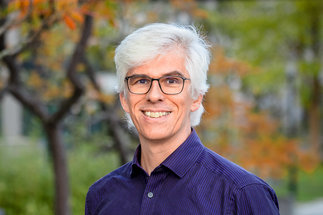
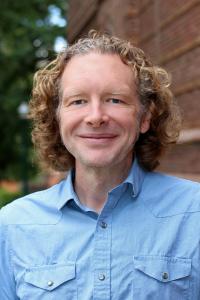
Jordan Knapp-Wilson is a Researcher affiliated with the Institute of Plant Breeding, Genetics and Genomics (IPBGG) within the College of Agricultural & Environmental Sciences. Their work focuses on advancing 3D phenotyping techniques for fruit tree architecture using terrestrial laser scanning (TLS) and computational modeling. Specializes in peach tree morphology and crown architecture analysis Develops novel quantitative indices for plant phenotyping Applies TLS technology for high-resolution agricultural monitoring Recent research emphasizes computational modeling of tree architecture to improve genetic trait mapping and precision agriculture strategies. Their work bridges plant biology with advanced imaging technologies to enhance crop breeding programs. Focus areas: Genotype-phenotype correlations, precision phenotyping, agricultural robotics integration
Ali Moghimi is an Assistant Professor of Teaching in the Department of Biological and Agricultural Engineering at the University of California, Davis, within the College of Engineering. He specializes in remote sensing, artificial intelligence, and digital agriculture, with a strong focus on the food-water-energy nexus. His work integrates UAVs, LiDAR, and hyperspectral imaging for agricultural innovation. Research Interests: Remote Sensing and AI in Agriculture Precision and Digital Agriculture Unmanned Aerial Systems (UAS) Machine Learning and Deep Learning for Plant Phenotyping Food-Water-Energy Nexus LiDAR and Multispectral/Hyperspectral Imaging His recent publications show a consistent trend in applying deep learning and remote sensing to crop monitoring, yield prediction, and disease detection, particularly in wheat and grapevines. The work bridges engineering, computer science, and agricultural science, emphasizing automation and data-driven decision-making in farming. Scientific Contributions: Developed machine learning models for nitrogen estimation in grapevines Applied deep neural networks for Fusarium head blight detection Advanced hyperspectral imaging for salt stress assessment in wheat Innovated in fruit quality assessment using NIR spectroscopy Dr. Moghimi teaches ABT 060, "Introduction to Unmanned Aerial Systems for Agriculture & Environmental Science," and is passionate about interdisciplinary education. He advises graduate students as part of the graduate faculty and conducts research supported by interdisciplinary collaborations. His work contributes to sustainable agricultural practices through technological innovation.
Griffiths G. Atungulu is an Associate Professor in the Department of Food Science at the University of Arkansas, where he also serves as the Director of the University of Arkansas Rice Processing Program. His work bridges grain processing, post-harvest systems engineering, and food safety, with a strong emphasis on innovative technologies like infrared and microwave drying. He is actively involved in research, teaching, and outreach, contributing significantly to advancements in rice quality, safety, and processing efficiency. Doctor of Philosophy, Agricultural Engineering, Iwate University, Japan Masters of Science, Agricultural Engineering, Iwate University, Japan Bachelor of Science, Agricultural Engineering, Jomo Kenyatta University of Agriculture and Technology, Kenya Dr. Atungulu’s research focuses on engineering solutions for grain and rice processing, particularly in drying, storage, aeration, and mycotoxin mitigation. His interests include infrared heating , microwave drying , automated quality monitoring , and post-harvest system optimization . He applies lab and field experiments, mathematical modeling, and simulation tools to improve food safety and processing efficiency across the food, feed, and pet food industries. His teaching includes Advanced Food Engineering, Cereal Science, and Alternatives to Conventional Food Processing. The most recent publications highlight a strong trend in microwave and infrared drying technologies , moisture and quality monitoring , and mycotoxin control in grains . His work spans from fundamental studies on rice microstructure and protein functionality to applied engineering of drying systems and storage technologies. The interdisciplinary nature of his research integrates food physics, agricultural engineering, and food safety. Associate Editor, Transactions of ASABE Associate Editor, Applied Engineering in Agriculture Associate Editor, Cereal Chemistry Journal, AACCI Dr. Atungulu has advised numerous graduate students, particularly in drying and storage technologies, and has secured significant research funding to support his program. His grants often focus on improving the efficiency and safety of grain processing systems. He leads a multidisciplinary research team working on both fundamental and applied aspects of food engineering. His outreach includes extension publications and collaborations with industry stakeholders to implement new technologies on farms and in processing facilities. He directs the University of Arkansas Rice Processing Program, overseeing a research, teaching, and outreach initiative focused on advancing rice processing technologies. His team conducts experiments in controlled environments and in the field, utilizing advanced instrumentation and modeling software to develop scalable solutions for the agricultural sector.
Dr. Joachim Kopka is a Research Group Leader at the Max Planck Institute of Molecular Plant Physiology in Potsdam, Germany, where he heads the Applied Metabolome Analysis group. His research focuses on developing cutting-edge technologies for metabolome and fluxome analysis, particularly GC-EI-TOF-MS-based metabolite profiling and stable isotope labeling techniques. He investigates plant physiological responses to environmental stimuli, with emphasis on root metabolism and stress adaptation mechanisms. Kopka completed his Staatsexamen (1988) and PhD (1992) at Wilhelms University of Münster, followed by postdoctoral research in the USA and Germany. He co-founded Metanomics GmbH before joining MPI-MP in 1996, where he established his research group in 2001. He received his Habilitation from the University of Potsdam in 2009. His research integrates metabolomics, isotope labeling, and computational biology to study: Metabolic plasticity in response to environmental changes Development of GC-MS and data analysis pipelines (e.g., TagFinder software) In vivo stable isotope labeling for flux phenotyping Plant-microbe interactions and stress physiology Kopka's recent publications demonstrate strong emphasis on metabolic adaptations to abiotic stresses (drought, cold), plant-microbiome interactions, and advanced analytical methodologies. His work frequently combines metabolomics with proteomics and transcriptomics to unravel complex plant physiological processes. He leads infrastructure development for metabolome analysis and maintains collaborative projects across plant science disciplines. His group contributes to public resources like the Golm Metabolome Database (GMD), facilitating metabolite identification and data sharing in the scientific community.
Zafar Kurbanov is a Researcher at the Leibniz Institute of Agricultural Development in Transition Economies (IAMO), where he joined the Department of Agricultural Sector Framework Conditions and Policy Analysis in January 2019 as a doctoral student within the SUSADICA project. He previously taught economics and research methods at Westminster International University in Tashkent (WIUT) and holds a master's degree in environmental and resource economics from the University of Rhode Island, USA, funded by a Fulbright scholarship. His educational background includes: Master's in Environmental and Resource Economics, University of Rhode Island (USA), Fulbright Scholarship recipient Kurbanov's research centers on agricultural decision-making in Central Asia, employing experimental economics and econometric methods to analyze how social, institutional, economic, and behavioral factors shape farmer behavior. His primary focus areas include land property rights, time/risk preferences, sustainable agricultural practices, and digital tools like social media groups for agricultural extension. His work bridges behavioral economics with practical agricultural policy, emphasizing evidence-based solutions for Kazakhstan and Uzbekistan. His 15 most recent publications (2020-2025) reveal a cohesive research trajectory: early work established methodologies for measuring time preferences and investment behavior, while recent studies expand into digital agriculture (social media adoption) and institutional analysis (land tenure systems). Key trends include methodological rigor through field experiments, regional specificity to Central Asia, and policy-oriented outputs targeting agricultural resilience and sustainable development. As an active participant in the SUSADICA structured doctoral program, Kurbanov contributes to IAMO's Central Asia research cluster through conference presentations (e.g., IAMO Annual Meeting, REECAP) and policy briefs. His work operates within collaborative frameworks involving IAMO colleagues and international partners like Akmal Akramkhanov and Nodir Djanibekov.
J. Terrence McCabe is a Professor in the Department of Anthropology at the University of Colorado. With over 30 years of fieldwork experience, his research focuses on livelihood strategies, land use, and social-ecological dynamics among pastoral communities in Eastern Africa, particularly the Turkana of Kenya and Maasai of Tanzania. Education: PhD in Anthropology from SUNY Binghamton (1985) Current Projects: Principal Investigator on a multi-country study (Tanzania, Uganda, Namibia, Botswana) examining social, economic, and ecological impacts of conservation parks on adjacent communities Grants: Funded by the National Science Foundation and MacArthur Foundation His work bridges ecological anthropology, conservation studies, and development research, emphasizing: Drought resilience and climate adaptation Livelihood diversification through cultivation and migration Gender dynamics in technology adoption (e.g., mobile phones) Conflict and resource management in arid regions Recent publications highlight mobile technology's role in pastoral economies and the integration of agroforestry into traditional systems. His research demonstrates how: Pastoral communities navigate extreme climatic events Conservation policies affect human wellbeing Technological innovations reshape social networks Scientific Recognition: 2005 Julian Steward Award for Cattle Bring Us to Our Enemies , a seminal work on Turkana ecological systems As a scholar, he contributes to: Anthropological theory development Conservation policy evaluation Longitudinal studies of pastoralist transitions
Bram Bos is a researcher at Wageningen University & Research specializing in Animal Farming Systems . His work focuses on improving animal husbandry practices through innovative sustainability frameworks , particularly in temperate agricultural zones. Active collaborations span multiple disciplines including environmental engineering and land use policy . Research Interests Reducing ammonia emissions via urease inhibition in dairy housing Agroforestry implementation barriers in Europe Particulate matter reduction in poultry systems Sustainable transition pathways for livestock farming Climate-resilient agricultural systems Farmer-led sustainability initiatives Scientific Contributions Recent publications examine disinfectant application for ammonia control (2025) and agroforestry services in temperate zones (2025). His work combines technical innovation with socio-environmental systems analysis.
Lenora Ditzler serves as a PE&RC Assistant Professor at Wageningen University & Research, actively engaged with the Lighthouse Farm Team. Her work bridges theoretical agroecology with practical farming innovations, focusing on crop diversity and sustainable food systems across Dutch and Vietnamese contexts. Her research expertise spans agroecological design, strip cropping implementation, and policy frameworks for sustainable agriculture. She investigates how spatial crop arrangements enhance ecosystem services like soil fertility and pest regulation, emphasizing systems thinking to address agricultural complexity. Recent work explores automation potentials in diversified farming while critiquing monocultural technological approaches. Analysis of her publication trajectory reveals evolving focus from empirical crop diversity studies (2022-2023) toward integrated food system transformations and knowledge exchange mechanisms (2024). Her work consistently connects field-level practices with policy-scale solutions, highlighting Vietnam-Dutch comparative insights. As a PhD graduate from Wageningen (2022), Ditzler now leads the Lighthouse Farm Team initiative—a living laboratory for innovative agricultural practices. Her outreach includes policy-relevant guidelines development, media engagement on pixel farming concepts, and keynote presentations framing agriculture as a design discipline. She actively contributes to knowledge exchange networks referenced in European agricultural policy documents.
Aurelio Soma is a Full Professor in the Department of Mechanical and Aerospace Engineering (DIMEAS) at the Polytechnic University of Turin, where he has served as a faculty member since at least the early 2000s. His academic career spans over two decades, with continuous involvement in teaching Mechanical Engineering doctoral programs since the 19th cycle (2003/2004). He teaches courses including Machine Construction and Product and Process Design with Numerical Methods. Professor Soma's research spans several critical areas of mechanical engineering with a strong focus on sustainable technologies. His primary research interests include Battery Electric Vehicles, Hybrid Electric Vehicles, Internet of Things (IoT) applications, MEMS technology, Railway Vehicles, and Working Vehicles. His work aligns with Sustainable Development Goals 9 (Industry, Innovation, and Infrastructure), 11 (Sustainable cities and communities), and 13 (Climate action), demonstrating his commitment to environmentally conscious engineering solutions. His research bridges theoretical mechanical design with practical industrial applications, particularly in energy harvesting and sustainable vehicle technologies. The analysis of his recent publications reveals a strong trend toward sustainable transportation systems, with particular emphasis on lithium-ion battery technology, energy harvesting for railway diagnostics, and electrification of agricultural machinery. His work consistently combines mechanical engineering principles with cutting-edge sustainable technologies, focusing on practical implementations that address real-world challenges in transportation and industrial systems. The interdisciplinary nature of his research spans mechanical engineering, materials science, electrical engineering, and environmental science. Professor Soma actively supervises PhD students, currently guiding nine doctoral candidates across multiple cycles of the Mechanical Engineering program. His research is supported by numerous competitive funding sources including PNRR Mission 4 (AGRITECH Spoke 6), national research projects, regional innovation centers, and commercial contracts. He has served as Scientific Manager for over 20 research projects spanning from 2006 to 2027, demonstrating sustained research productivity and leadership. His research group focuses on the Design and Experimentation of Industrial and Railway Systems and Microsystems (DIMEAS), developing innovative solutions for energy harvesting, vehicle diagnostics, and sustainable machinery. Professor Soma's work has resulted in numerous patents related to hybrid working vehicles, railway diagnostics systems, energy harvesters, and lithium battery applications, translating academic research into practical industrial solutions.
Professor Zhe Chen is a distinguished academic at Aalborg University's Faculty of Engineering and Science, where he leads research in Electric Power Systems and Microgrids within the Intelligent Energy Systems and Flexible Markets department. With an extensive publication record spanning over two decades and more than 1,200 publications, he has established himself as a leading expert in power engineering and renewable energy systems. Professor Chen's research focuses on Wind Turbine Engineering, Power Engineering, Control Strategy, Wind Power Engineering, Energy Engineering, and Reinforcement Learning. His work bridges theoretical advancements with practical applications in smart grid technology and microgrid systems. His research interests center around developing innovative solutions for renewable energy integration, power system stability, and efficient energy management. His recent publications demonstrate a strong trend toward integrating artificial intelligence with traditional power engineering, particularly in applying deep reinforcement learning to power system control, state estimation with noisy data, and optimization of power electronic converters. His work shows increasing focus on carbon emissions optimization, thermal management in power electronics, and the application of advanced neural network architectures to energy systems. MPCE 2023 Best Paper Award for research on reinforcement learning applications in electric vehicles MPCE 2022 Best Paper Award for distribution network optimization MPCE 2021 Best Paper Award for reinforcement learning in energy systems WATAB Best Paper Award 2005 for offshore wind farm research IEEE Fellow recognition for contributions to power electronics and renewable energy systems Professor Chen has supervised 27 PhD students throughout his career, demonstrating his commitment to academic mentorship. His current research is supported by significant grants including the Erasmus+ funded S3SF project (Smart Energy Solutions for a Sustainable Future) and multiple projects focused on machine learning-based stability analysis for multi-energy systems. His collaborative work spans numerous international partnerships, with recent projects involving researchers from China, Europe, and other global institutions. Professor Chen leads a research team focused on intelligent energy systems, working on advanced control strategies for microgrids, power quality analysis, and the integration of renewable energy sources into existing power infrastructure. His team is particularly known for innovative approaches to wind power integration and DC microgrid technologies.
Dr. Sharif Rasel is a Senior Lecturer of International Business at Flinders University's College of Business, Government and Law. Previously, he held academic positions at Monash Business School in Melbourne, served in the Ministry of Public Administration in Bangladesh, and conducted research at Wageningen Economic Research (LEI) in the Netherlands. He joined Flinders University in December 2019 and has received recognition for his teaching excellence, including the Student-Led Teaching Award for College of Business, Government and Law in 2022. Dr. Rasel's educational background includes: PhD in International Business from Monash University, Australia MSc in International Development Studies from Wageningen University, Netherlands MSc in Economics from Jahangirnagar University, Bangladesh BSc in Economics (First Class with Second Place in order of merit) from Jahangirnagar University, Bangladesh His research spans international business, economic geography, and strategic management, with particular focus on regional competitiveness, reshoring of businesses, and the effects of locational factors on business performance. He employs interdisciplinary approaches that bridge international business literature with economic geography to examine spatial dimensions of business strategy. His recent publications reveal consistent research themes across economic geography, international business, and development studies. His work examines how regional characteristics influence business decisions, with special attention to reshoring, entrepreneurial diversification in agriculture, and the impact of institutional quality on resilience during crises like the COVID-19 pandemic. His research often incorporates subnational analysis, examining how location choices within countries affect firm performance and regional development. Professional recognition includes: Student-Led Teaching Award (SLTA) for College of Business, Government and Law in 2022 Dr. Rasel serves on the Editorial Advisory Board of the Review of International Business and Strategy and is actively involved in research grants and international collaborations, including a competitive Australian government grant received in 2021 through collaboration with World Vision India, IIM Udaipur, and Monash University. He also participates in the GLOBE 2020 Project as Country Co-Investigator for Bangladesh. He is a member of several professional organizations including the Regional Studies Association, Academy of International Business, and Australia and New Zealand International Business Academy, demonstrating his active engagement in both academic and policy communities.
Adam Drosik serves as Associate Professor and Rector at the University of Opole, affiliated with the Institute of Political Science and Public Administration. His academic career spans political communication, public administration, and sustainable development research with interdisciplinary connections to environmental science and agricultural policy. His research interests focus on political communication with special attention to social media in electoral campaigns, issue management in public administration, and the intersection of sustainable development with agricultural practices. His work on biochar applications demonstrates how environmental concerns intersect with political decision-making processes in farming communities. Analysis of his recent publications reveals a clear trajectory toward interdisciplinary research combining political science with environmental sustainability. His work increasingly examines digital campaign strategies while maintaining strong connections to practical applications in agricultural policy and crisis management. The research shows particular strength in Polish and comparative contexts, including studies of Brazilian agricultural practices. Professor Drosik has secured funding for 6 research projects and has accumulated 34 publications with an h-index of 4 according to Web of Science citations. His total impact factor stands at 20.931 with a ministerial score of 1,180, reflecting substantial scholarly contribution within the Polish academic system. As Rector of the University of Opole, he oversees institutional strategy while maintaining active research engagement. His leadership position suggests significant administrative responsibilities alongside his scholarly work in political science and public administration.
Dr. Stavros Sakellariou serves as a Research Fellow (Marie Curie) in Civil and Environmental Engineering at Brunel University London's College of Engineering, Design and Physical Sciences. His expertise centers on geospatial analysis of natural disasters, particularly wildfires and droughts, leveraging remote sensing and AI for risk management. His educational background includes: PhD in Environmental Hazards Management and Spatial Planning, University of Thessaly (2016) MSc in Geospatial Technologies (Erasmus Mundus Joint Degree), 2016 MSc in Spatial Planning & Development, University of Thessaly (2010) MEng in Spatial Planning and Regional Development, University of Thessaly (2008) Dr. Sakellariou's research integrates geographic information systems , remote sensing , and artificial intelligence to address wildfire dynamics, drought/flood modeling, and climate change impacts. His work emphasizes spatial decision support systems for disaster prevention and resilience engineering in Mediterranean ecosystems, with significant contributions to early warning frameworks and urban-wildland interface safety. Recent publications reveal a concentrated focus on wildfire risk assessment (40% of works), drought monitoring (30%), and climate adaptation modeling (20%), predominantly utilizing satellite data fusion and spatiotemporal analytics. Key innovations include optimization methods for firefighting resource deployment and vulnerability assessments of agroecosystems. His accolades include: Marie Skłodowska-Curie Postdoctoral Fellowship (FIREWISE project, 2024) 7 national/international scholarships and awards With 11.5 years of teaching experience across undergraduate and master's programs at Greek universities, he has contributed to 8 multi-partner research projects on disaster management. His service includes reviewing for 25+ journals and guest-editing special issues on natural hazards. Current work centers on the FIREWISE project's integrated framework for proactive wildfire resilience.
Richard York serves as Professor of Sociology and Environmental Studies at the University of Oregon's College of Arts and Sciences, where he has held faculty positions since 2002. His interdisciplinary work bridges sociological theory with environmental science to address pressing ecological crises. His academic foundation includes: B.S. in Psychology from Southern Oregon State College (1994) M.S. in Environmental Studies from Bemidji State University (1997) Ph.D. in Sociology from Washington State University (2002) York's research integrates human ecology and political economy through quantitative analysis, examining how demographic, economic, and technological structures drive resource consumption and pollution. He pioneers materialist approaches to animal and plant studies while critically analyzing energy systems, climate policy, and the limitations of technological solutions to environmental crises. His work consistently challenges assumptions about efficiency and growth within capitalist frameworks. Analysis of his 2022-2025 publications reveals dominant themes: critiques of climate 'tipping points' discourse, rebound effects in energy efficiency, settler colonial dimensions of wildlife management, and the social construction of biodiversity loss. These works demonstrate increasing interdisciplinary convergence between environmental sociology, animal studies, and critical energy scholarship. His scholarly impact is recognized through major awards: Frederick H. Buttel Distinguished Contribution Award (2017) from the American Sociological Association's Environmental Sociology Section Distinguished Scholarship Award (2015) for co-authored work on macrosociological animal studies University of Oregon's Faculty Excellence Award and top teaching honor (2013) While the available text confirms York's active teaching role (Spring 2025 office hours listed), it contains no details about student advising or specific research grants. Similarly, no information about laboratories or research teams was provided in the source materials.
Shen-Shyang Ho is a Full Professor in the Department of Computer Science at Rowan University's College of Science & Mathematics. His work spans machine learning, data mining, and edge computing with applications in urban mobility, precision agriculture, and data privacy. He leads NSF-funded research projects on dynamic graph analysis and spatiotemporal anomaly detection. Ph.D. in Computer Science, George Mason University Post-Doctoral Associate, Caltech & NASA JPL B.S. in Mathematics with Computational Science, National University of Singapore Research expertise includes graph-based machine learning, conformal prediction, cooperative inference, and privacy-preserving ML. Current work focuses on federated learning for edge devices and anomaly detection in evolving systems. He has developed tools like SplitTracer for cooperative inference evaluation and ParkGauge for urban mobility monitoring. Recent publications highlight his contributions to 2026 Pattern Recognition journal (martingale-based graph analysis), 2025 IEEE ICAIC conference (blockchain gas optimization), and 2024 ACM SAC symposium (shared mobility systems). His work integrates machine learning with real-world constraints across energy grids, transportation, and agricultural technology. NSF Grant (2022) for Dynamic Graph Anomaly Detection NSF Grant (2018) for Spatiotemporal Analysis Google Scholar Classic Paper Recognition (2017) for 2006 Radar Micro-Doppler Study Professional memberships include the Association for Computing Machinery (ACM). His teaching portfolio ranges from introductory programming to advanced ML courses. He previously held positions at Nanyang Technological University before joining Rowan in 2016.