- Neuroscience
- Olfaction
- Neural Coding
- +۶ مورد دیگر
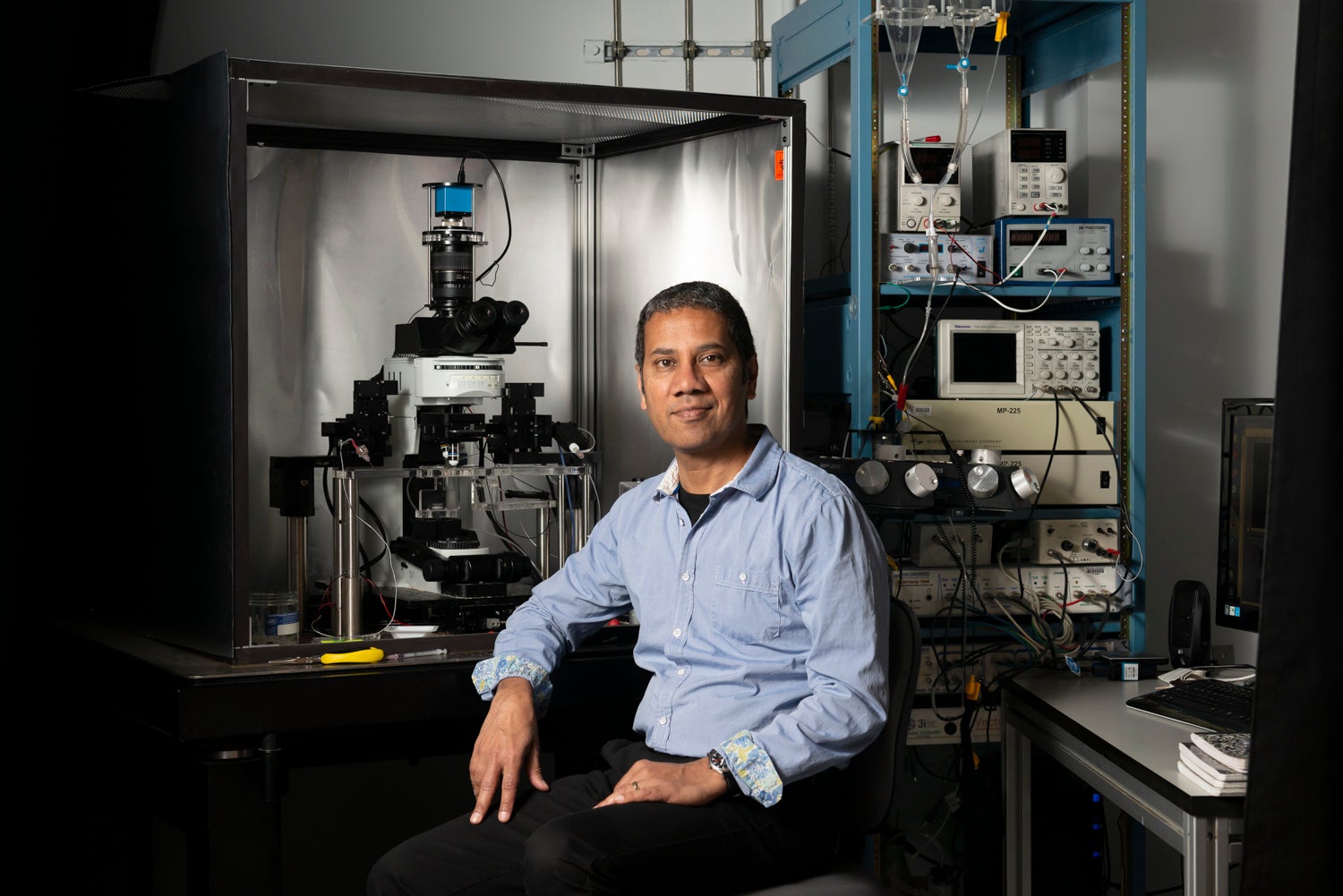
Timothy Holy, PhD is the Alan A. & Edith L. Wolff Professor of Neuroscience and Vice Chair of Research at Washington University School of Medicine. He leads the Holy Lab, which focuses on the neural mechanisms of olfactory coding and the development of innovative imaging technologies for neuroscience research. His educational background includes a BA in Mathematics and Physics (summa cum laude) from Rice University (1991), an MA in Physics from Princeton University (1992), and a PhD in Physics from Princeton University (1997) under thesis advisor Stanislas Leibler. Dr. Holy's research spans multiple domains of neuroscience with particular emphasis on the olfactory system of mice. His lab has pioneered light sheet microscopy for calcium imaging, enabling simultaneous recording from tens of thousands of neurons. More recently, they developed PhOTseq, a technique for optically tagging neurons for later sequencing. His work bridges physics, neuroscience, and computational approaches to understand how sensory systems process information. He is also among the world's foremost creators of the Julia programming language, which has gained exponential adoption in scientific computing. Analysis of his recent publications reveals a strong focus on neural coding in decision-making circuits, olfactory processing, and the development of computational tools for biological research. His work increasingly integrates machine learning approaches with traditional neuroscience techniques. Distinguished Teaching Service Award (2005, 2008, 2014) McKnight Technological Innovation in Neuroscience Award (2007) St. Louis Academy of Sciences Innovation Award (2009) NIH Director's Pioneer Award (2009) Society for Neuroscience Research Award for Innovation in Neuroscience (RAIN) (2009) Dr. Holy has mentored numerous students and postdoctoral researchers who have gone on to establish their own research programs. His lab has secured significant grant funding supporting technology development and fundamental neuroscience research. Current projects include investigating cellular mechanisms of individuality and plasticity, navigation using olfactory cues, and developing new mathematical tools for optimization and machine learning. The Holy Lab combines a focus on understanding neural circuits and behavior with a willingness to pioneer new technologies. It maintains strong collaborations across disciplines, particularly in the development and application of the Julia programming language for biological research.