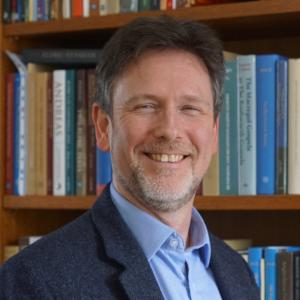
Dr Helen Gittos is a Senior Lecturer and Fellow in Medieval History at Balliol College and Brasenose College, University of Oxford. She holds a PhD in early medieval history from Oxford, following an undergraduate degree in English Literature at Newcastle University. Her research focuses on medieval church history, liturgy, and the role of language in religious practices, with expertise in archaeological evidence and textual analysis. She teaches British and European medieval history at both undergraduate and graduate levels, including the MSt and MPhil programs in Medieval History. Her major publications include Liturgy, Architecture and Sacred Places in Anglo-Saxon England (2013) and co-edited volumes on medieval liturgy. Current projects explore the use of English in medieval liturgy and collaborative research on Cerne Abbas’s early medieval history with archaeologists. She leads the Oxford Centre for Early Medieval Britain and Ireland and participates in interdisciplinary initiatives like the Worked in Stone project. Dr Gittos actively supervises DPhil students in areas related to her research, with recent advisees focusing on topics like shrines, liturgical charms, and Anglo-Saxon burial practices. She is also a media commentator, appearing in BBC News and podcasts discussing Anglo-Saxon history and archaeological discoveries.
Elaine Treharne serves as the Roberta Bowman Denning Professor of Humanities at Stanford University, holding primary appointment in the Department of English with courtesy appointments in German Studies and Comparative Literature. She concurrently acts as Senior Associate Vice Provost for Undergraduate Education and Director of Curriculum, while directing Stanford Text Technologies—a major initiative exploring textual transmission across historical periods. Her leadership extends to co-directing SILICON and spearheading NEH-funded projects that redefine digital approaches to manuscript studies. Her academic foundation includes a B.A. in English Language and Literature (First Class Honors) from the University of Manchester (1986), a Master of Archive Administration from the University of Liverpool (1987), and a Ph.D. in English from the University of Manchester (1992). This archival training underpins her dual expertise in traditional manuscript scholarship and digital innovation. Treharne's research pioneers intersections between medieval materiality and contemporary technology, investigating the haptic experience of medieval books, AI applications for manuscript analysis, and the long history of text technologies. She challenges conventional periodization through projects like 'Disrupting Categories, 1050-1250' while developing computational frameworks for fragmentology and textual distortion. Her work consistently bridges paleography with digital methodology to examine how writing systems shape cultural memory. Recent publications reveal a decisive shift from foundational medieval scholarship toward integrative digital-humanities frameworks, with increasing emphasis on phenomenological approaches to both physical and digital texts. This trajectory culminates in current projects applying machine learning to manuscript transmission patterns and developing ethical guidelines for digital archival tools. Her scientific recognition includes: Fellow of the Society of Antiquaries Fellow of the Royal Historical Society Honorary Lifetime Fellow of the English Association (former Chair and President) Fellow of the Learned Society of Wales American Philosophical Society Franklin Fellow Princeton Procter Fellow Fellow of the Stanford Clayman Institute for Gender Studies Treharne actively supervises graduate students in early literature, Book History, and Digital Humanities while securing major grants including NEH funding for Stanford Global Currents, AHRC support for the Production and Use of English Manuscripts project, and Stanford Impact Labs fellowship for archival tool development. She maintains commitment to ethical scholarly environments through her leadership in VPUE initiatives and digital pedagogy. She directs the Stanford Text Technologies initiative hosting the annual Collegium series, co-directs SILICON for internet longevity research, and leads specialized projects including 'Digital Ker' for Anglo-Saxon manuscript cataloging and 'Medieval Networks of Memory' analyzing mortuary rolls. These interconnected efforts form a comprehensive ecosystem for advancing textual scholarship across temporal and technological boundaries.
Dr. Hannah Zdansky is an Assistant Professor of English at Belmont Abbey College, specializing in medieval languages, literatures, and manuscript studies. Her research focuses on cross-cultural connections in medieval Britain and Ireland, particularly exploring multilingualism, religion in literature, and medieval reading practices. She holds a B.A. from Baylor University, an M.A. from the National University of Ireland, Galway, and a Ph.D. from the University of Notre Dame. Her expertise spans Old and Middle English, French, Irish, Welsh, and Latin, with a methodological focus on digital humanities and the history of the book. Dr. Zdansky’s work examines how medieval literary and material cultures were shaped by multicultural interactions, including studies on medieval manuscripts, the role of women in literary production, and the intersection of religion with secular narratives. Her recent scholarly engagements include presentations on topics like the transnational dimensions of medieval texts, the interplay between sacred and secular themes in works such as Gui o Bharbhuic , and comparative analyses of Welsh and English manuscript traditions. Her publications span peer-reviewed articles, encyclopedia entries, and book reviews, reflecting her commitment to interdisciplinary medieval studies. Dr. Zdansky teaches a wide range of courses, from Old English Language and Literature to Irish History, emphasizing close textual analysis and historical context. She has advised numerous students through independent studies and thesis work, fostering academic rigor and intellectual curiosity in her classroom.
Brita Wårvik is a Professor in the Department of Languages at Åbo Akademi University, affiliated with the Faculty of Humanities, Psychology and Theology. She holds a Doctor of Philosophy (Phil. Dr.) from the same institution, awarded in 2013, and has been actively contributing to linguistic research for decades. Doctor of Philosophy (Phil. Dr.), Åbo Akademi University, 2013 Her research centers on discourse analysis, pragmatics, and historical English linguistics, with a particular focus on Early Modern and Medieval English texts. She investigates discourse interaction, textual structures, and pragmatic conservatism in religious prose, often employing corpus-based and textual analysis methods. Her work bridges micro and macro perspectives in discourse, exploring how semantic units contribute to broader text worlds. Analysis of her recent publications reveals a consistent trajectory in historical discourse studies, with increasing emphasis on corpus linguistics, manuscript variation, and the evolution of discourse markers. Her editorial work, such as the 2024 volume Structures in Discourse , highlights her leadership in synthesizing interdisciplinary perspectives on language use. Scientific Awards: Teacher of the Year (2001) ÅAU Student Union's Rose (2007) Brita Wårvik actively supervises and mentors academic visitors and collaborators, as seen in her hosting of scholars like Carmen Lee and Lieselotte Anderwald. She is the coordinator of the ongoing Project ICLE (International Corpus of Learner English) , securing research continuity and international collaboration. Her involvement in organizing workshops, such as the ICLE+30 FI-subcorpus Workshop in 2024, underscores her role in fostering academic exchange. In terms of research infrastructure, she is deeply embedded in the ICLE network, contributing to the development of learner language corpora. Her activities reflect strong international collaborations, particularly in the fields of historical linguistics and discourse studies, with a visible presence in both research and academic community-building.
State University of New York at OswegoUnited States
Erik Wade is an Assistant Professor in the Department of English and Creative Writing at SUNY Oswego. He holds a PhD from Rutgers University and has taught at Rheinische Friedrich-Wilhelms-Universität Bonn in Germany. His research focuses on race, sexuality, and national identity in early medieval English literature, with a particular emphasis on how these themes intersect with religious texts and cultural narratives. He currently directs the Medieval and Renaissance Studies minor and serves on the advisory board for Exemplaria: Medieval, Early Modern, Theory . Educational Background: PhD in English, Rutgers University (2018) MA in English, University of Oregon (2011) BA in English and History with a minor in Medieval and Renaissance Studies, SUNY Oswego (2009) AA in Humanities, Onondaga Community College (2007) Research Interests: Interrogates racial and sexual discourses in medieval literature Examines how early English texts constructed national identity through contested themes like rape culture and racial hierarchies Investigates global influences (e.g., Byzantine theology) on medieval English thought Challenges Eurocentric narratives in medieval studies Recent Publications Highlight: His work analyzes trans and queer themes in medieval hagiography, the racialized language of 'Anglo-Saxon' terminology, and the intersections between animal studies and gender relations. He co-authored a Smithsonian Magazine article deconstructing the term 'Anglo-Saxon.' Teaching and Advocacy: Teaches courses on medieval global literature, critical theory, and premodern identity. Actively promotes inclusive pedagogy and addresses systemic racism in academic disciplines through published opinion pieces and collaborative projects like the upcoming Race in Early Medieval England (Cambridge UP).
Stephen Spector is a Professor of English at Stony Brook University since 1972, with a PhD from Yale University (1973). His work bridges medieval literature, religious studies, and language history. He has held visiting positions at the Hebrew University (Jerusalem, 1996–97) and fellowships at the National Humanities Center and Wesleyan University. His research focuses on medieval English literature, particularly mystery plays and biblical texts, alongside modern topics like Christian Zionism and the Ethiopian Jewish rescue operation (Operation Solomon). He has authored influential books such as Evangelicals and Israel (2009), which won the London Book Festival Prize, and Operation Solomon (2005), honored with the JDC-Herbert Katzki Award. Education: B.A. in English and Psychology from Penn State University (1968), M.Phil. and Ph.D. from Yale University (1973). He has taught courses ranging from the history of the English language to medieval literature and the Bible as literature. Research highlights include pioneering studies on anti-Semitism in medieval mystery plays, textual editing of the N-Town Play, and modern analyses of religious-political intersections. His recent work explores biblical prophecy’s influence on US foreign policy and contemporary grammar usage guides. Awards include the Van Courtlandt Elliott Prize (1980) for medieval scholarship, National Endowment for the Humanities grants, and SUNY Research Foundation fellowships. He has also contributed op-eds on topics like Sarah Palin’s religious influences and Israel-Evangelical relations. Grants and fellowships span decades, including directing NEH summer seminars on Jewish presence in early English literature (1993, 1996). His work often integrates historical methodologies with contemporary cultural analysis. Labs/Teams: Not explicitly listed, but his research collaborations are evident in co-edited volumes like The Olde Daunce (1991) and contributions to interdisciplinary projects like the Early English Text Society.
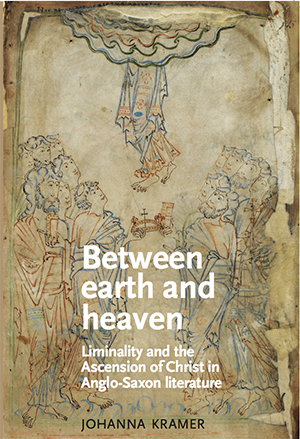
Johanna Kramer is an Associate Professor in the Department of English at the University of Missouri, affiliated with the College of Arts and Science. She specializes in medieval literature, particularly Old English religious texts, hagiography, and proverb studies. Her research explores intersections between patristic theology, folklore, and literary cultures. She is a key contributor to the Medieval and Renaissance Studies (MARS) program at MU and leads the Sources of Old English and Anglo-Latin Literary Culture (SOEALLC) project. Educational Background: PhD in Medieval Studies (Cornell University, 2006); MA in Medieval Studies (Cornell, 2002); MA and BA in English (Oregon State University, 1998 and 1995). Additional studies at the University of Munich and the University of East Anglia. Research Interests: Old English religious literature (saints' lives, homilies), medieval theology, folklore, and the role of proverbs in shaping intellectual history. Current projects include analyzing proverbs in Chaucer’s Canterbury Tales and editing Old English saints’ lives. Recent Awards: 2025 NEH Summer Stipend, 2024 Bentzinger Fellowship, and multiple grants for research and travel. Her 2014 monograph Between Earth and Heaven won the 2016 Best First Book Prize from the Southeastern Medieval Association. Grants and Collaborations: Active in collaborative editorial projects like the Dumbarton Oaks Medieval Library and interdisciplinary initiatives such as the Vetusta Monumenta digital edition. Supported by grants from the Research Council, SEC, and Mellon Foundation. Labs/Teams: Co-leads the SOEALLC project documenting medieval British literary sources. Engaged with MU’s MARS program, offering undergraduate and graduate minors in Medieval Studies.
Kevin Moberly is an Associate Professor in the Department of English at Old Dominion University (ODU), affiliated with the College of Arts & Letters. He holds a Ph.D. in English from the University of Louisiana at Lafayette (2005), an M.A. in Creative Writing (2000), and a B.A. in English from Berry College (1995). His research focuses on medievalism, digital humanities, and computer game studies, with notable grants including a 2011 College of Arts & Letters Summer Research Fellowship ($6,000) and a 2015 Center for Learning and Teaching Faculty Innovator Grant ($3,000). Moberly’s work bridges medieval scholarship and modern digital media, addressing themes like fan culture, corporate revisionism, and virtual economies. His publications span journals such as Studies in Medievalism , Computers and Composition , and Eludamos , alongside book chapters on game studies and technical communication. He has received numerous teaching awards, including the 2010 Shining Star Teaching Award and recognition for co-organizing the 2007 Computers and Writing Online Conference. His research interests include the intersection of medieval narratives with contemporary cultural phenomena, digital pedagogies, and the rhetoric of free speech in online spaces. Moberly has contributed to initiatives like the Examining the Evolution of Gaming anthology and co-authored studies on modding in technical classrooms. His work often critiques societal structures through interdisciplinary lenses, blending literary analysis with digital media theory.
Grace O'Duffy is a DPhil Candidate at the University of Oxford and a Stipendiary Lecturer at Keble College. She teaches medieval literature, including Early Medieval Literature (Prelims Paper 2) and Old Norse options for FHS papers. Education: Undergraduate at University of St Andrews (English, Russian, French, Comparative Literature, Classics, Philosophy), MPhil at Queen’s College, Cambridge (Anglo-Saxon, Norse and Celtic), and DPhil at Oxford funded by AHRC OOC DTP. Her research focuses on sexual violence in Old Norse literature, particularly in the Íslendingasögur and fornaldarsögur. She combines close reading of Old Norse texts with feminist theory to analyze how sexual violence functions as a narrative device. Notable contributions include co-founding the ADAM network for scholars addressing 'difficult' medieval topics and publishing in leading journals like Saga-Book and Scandinavian Studies . Scientific Awards: Wallenberg Prize, Associate Fellow of the Higher Education Academy (AFHEA). Her teaching spans Old Norse literature, medieval romance, and modern languages, emphasizing rigorous analysis of gender, violence, and literary traditions.
Yoshiko Matsumoto is the Yamato Ichihashi Professor in Japanese History and Civilization and Professor of East Asian Languages and Cultures at Stanford University, with a courtesy appointment in Linguistics. She has been a faculty member at Stanford since 1992, progressing from Assistant Professor to her current distinguished position. Matsumoto also serves as coordinator of the Japanese Language Program and has held significant administrative roles including Chair of the Department of Asian Languages (2003-2005) and Interim Chair of the Department of East Asian Languages and Cultures (2016). Matsumoto earned her Ph.D. in Linguistics from the University of California, Berkeley (1989), following M.A. degrees in Linguistics from UC Berkeley and General and Applied Linguistics from the University of Tsukuba, an M.I.A. in American Studies from the University of Tsukuba, and a B.A. in English Language & Literature from Japan Women's University. Professor Matsumoto's research focuses on linguistic pragmatics from cross-linguistic perspectives, with particular expertise in Japanese language. Her work spans structural and sociocultural aspects of language in use, including noun-modifying clause constructions, honorifics, discourse markers, and the intersection of language with gender and aging. She has pioneered research on conversational narratives of older adults, examining how ordinary framing strategies help individuals navigate difficult experiences. Her current projects explore intergenerational communication through haiku, communicative abilities of people with dementia, and noun-modifying constructions across Eurasian languages. Matsumoto's scholarship consistently bridges theoretical linguistics with practical applications for understanding human communication in diverse social contexts. Matsumoto's recent publications reveal a growing focus on practical applications of linguistic research for social benefit, particularly in intergenerational communication and dementia care. Her work increasingly integrates arts-based approaches, especially haiku poetry, to bridge generational divides and enhance communication with elderly populations. The research shows a consistent trajectory from theoretical linguistic frameworks toward applied, human-centered language studies that address real-world challenges in aging societies, with particular attention to how ordinary language practices help individuals navigate life transitions and difficult experiences. Dean's Award for Distinguished Teaching, School of Humanities and Sciences, Stanford University (2000) Richard E. Guggenhime Faculty Scholar, Stanford University (2000-2003) Violet Andrews Whittier Fellow, Stanford Humanities Center (2019-2020) Faculty Research Fellow, Michelle R. Clayman Institute for Gender Research (2014-2015) Research Fellow, Japan Foundation (2002) Internal Fellow, Stanford Humanities Center (2005-2006) Presidential Fund for Innovation in the Humanities, Stanford University (2009-2011) Professor Matsumoto has mentored numerous students through her teaching in Japanese language and linguistics courses, including specialized offerings on language and aging, points in Japanese grammar, and haiku-based communication. Her research has been supported by prestigious grants from the National Endowment for the Humanities, the Japan Foundation, and Stanford's Presidential Fund for Innovation in the Humanities. She has served on multiple editorial boards including the Journal of Pragmatics since 1992, demonstrating long-standing leadership in her field. Matsumoto has also advised students through individual studies and thesis projects in East Asian Languages and Cultures. Matsumoto leads several collaborative research initiatives including the 'Sharing Conversations' project which examines intergenerational communication through haiku, and research on communicative abilities of people with dementia. Her work often involves interdisciplinary teams spanning linguistics, gerontology, and creative arts, with fieldwork conducted in both Japan and the United States. The 'Noun-Modifying Constructions in Languages of Eurasia' project represents a major international collaboration examining linguistic structures across cultural boundaries. She also directs the 'Language, Old Age and Gender in Japan' project supported by the Stanford University/Japan Foundation, and the 'Difficult Conversations Continue: Memories of the 3.11 Disaster and Bereavement Narratives' project focused on post-disaster communication.
Professor Richard Dance serves as Professor of Early English in the Department of Anglo-Saxon, Norse & Celtic (ASNC) at the University of Cambridge's Faculty of English, and is a Fellow of St Catharine's College where he holds positions as Director of Studies in ASNC, Praelector, and Clerk to the Governors of the Skerne Exhibition Foundation. He joined the university in 1997 after completing his studies at Oxford and has established himself as Cambridge's principal teacher of Old English, lecturing and supervising extensively in Old English language and literature and Germanic Philology for the ASNC Tripos. His research focuses on Old and Middle English language and literature with particular emphasis on Germanic Philology, English etymology, and the profound influence of Old Norse on early English vocabulary and poetic style. His work spans critical editions of texts like 'Ancrene Wisse' and 'Sir Gawain and the Green Knight', extensive etymological surveys of Scandinavian loanwords, and investigations into medieval multilingualism. His publications reveal consistent engagement with historical semantics, dialectology, and the linguistic interface between Norse and English during critical transition periods. Dance's scholarly impact is evidenced by major awards including the British Academy's 2021 Sir Israel Gollancz Prize for 'The Gersum Project' and the University of Cambridge Pilkington Prize for Excellence in Teaching (2023). His editorial roles include Secretary of the Early English Text Society, Council membership in The Philological Society, and etymological consultancy for the Oxford English Dictionary. As Principal Investigator for The Gersum Project (2016-2020), he led significant research into Scandinavian influence on English vocabulary, securing substantial academic recognition. British Academy's 2021 Sir Israel Gollancz Prize University of Cambridge Pilkington Prize for Excellence in Teaching (2023) Editorial Secretary, Early English Text Society Consultant for Oxford English Dictionary (etymology) International Advisory Committee member, Dictionary of Old English Dance maintains active leadership in academic communities through roles on the British Academy/Royal Historical Society Joint Committee on Anglo-Saxon Charters and as Series Editor for Exeter Medieval Texts and Studies (2008-24). His supervisory work encompasses graduate students in Old English language and literature, while his departmental responsibilities include Director of Studies for multiple Cambridge colleges. Current projects indicate ongoing research into medieval multilingualism, with several forthcoming publications addressing etymological methodology and lexical evolution in the medieval period.
Susan Irvine is a Professor of English Language & Literature at University College London , where she has held the Quain Professorship since 1992. Educated at the University of Otago and the University of Oxford, she specializes in Old English prose and poetry, teaching across undergraduate and graduate programs including the MA in Medieval and Renaissance Studies. Education: Doctor of Philosophy (University of Oxford, 1987), Bachelor of Arts (Honours, University of Otago, 1981) Her research focuses on Old English literature and language , particularly works associated with King Alfred's court (9th century) and the transitional period between Old and Middle English. She explores manuscript studies, textual reconstruction, and the interplay between linguistic and literary analysis. Recent publications examine topics like Anglo-Saxon micro-texts, the protean form of the Old English Boethius, and prefatory traditions in Old English. These works highlight her expertise in medieval manuscript culture , translation studies , and historical linguistics . Scientific Awards: 2011 Publication Prize (International Society of Anglo-Saxonists) AHRC Research Leave Scheme Award (2007) Irvine also contributes to professional activities as an editor and academic officer, with roles at the Fontes Anglo-Saxonici Project and external examining appointments. Her teaching emphasizes the relevance of Old English to modern literary theory and encourages engagement with UCL's Special Collections.
Professor Richard North (University College London, Department of English Language and Literature) is a leading expert in Anglo-Saxon and Old Norse studies. His career spans teaching and research in Old English, Middle English, and Old Icelandic literatures, with particular focus on Beowulf , medieval sensory perception , and pre-Christian Germanic religions . Affiliated with UCL since 1989, he was promoted to Reader in 1999 and Professor in 2007. Research interests include: Anglo-Saxon paganism and Christian syncretism Old Norse mythological analysis (Freyr, Loki, Baldr) Viking Age cultural exchange between England and Scandinavia Historical linguistics across Germanic languages Medieval manuscript studies His publications demonstrate interdisciplinary approaches combining literary analysis with archaeology, agronomy, and sensory studies. Recent works explore Cnut's political ideology , Old English poetic meter , and medieval animal symbolism .
Professor Laura Ashe is a leading scholar in medieval English literature and culture (c. 1000–1550), holding the David Woods Kemper Family Fellowship at Worcester College, Oxford. Her work bridges literary analysis with historical and philosophical inquiry, focusing on the intersections of medieval ethics, subjectivity, and literary innovation. She is particularly noted for her studies on Chaucer, the development of romance genres, and the cultural impacts of medieval conquests. Her research explores multilingual literary traditions in post-Conquest England, the invention of fiction, and the evolution of chivalric ideals. Key projects include Chaucer's Ethical Philosophy (2025) and co-edited volumes like Conquests in Eleventh-Century England (2020). She has held prestigious fellowships including the Morton Bloomfield Visiting Fellowship at Harvard (2016). Public engagement includes the Penguin Classics volume Early Fiction in England (2015) and contributions to interdisciplinary histories like Penguin Monarchs: Richard II (2016). Current projects include a major study on the history of love across medieval and early modern periods. Awarded the Philip Leverhulme Prize (2009) and Leverhulme Research Fellowship (2015), her work appears in top journals like Studies in the Age of Chaucer and Journal of English and Germanic Philology . She co-edits New Medieval Literatures , fostering scholarly collaboration in the field.
Dr Mark Atherton is a Senior College Lecturer at Regent's Park College and a Stipendiary Lecturer at Mansfield College, both at the University of Oxford. He specializes in medieval literature, focusing on Old English and Anglo-Latin texts, with particular attention to tenth-century English cultural and political identity. His research explores the intersections of literature, war, and religious typology, as seen in works like The Battle of Maldon . Research areas: Medieval Studies, Old English Literature, Anglo-Latin Literature, War and Literature, Cultural Identity Teaching: Old English language and literature through his textbook Complete Old English His publications include The Making of England (2017), The Battle of Maldon (2020), and studies on J.R.R. Tolkien's linguistic influences. Recent work examines manuscripts, poetics, and early medieval cosmological thought. He contributes to interdisciplinary discussions on language history, including Henry Sweet’s philological methods and Victorian language pedagogy. His edited works and critical editions further highlight engagement with medieval manuscript culture and textual transmission.