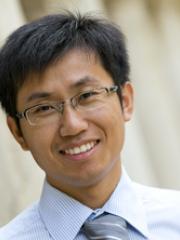
Associate Professor Wenhua Zhao is a globally recognized expert in offshore hydrodynamics and renewable energy technologies at The University of Queensland , School of Civil Engineering. With over 110 publications and 30 million AUD in secured research funding, his work bridges theoretical and practical advancements in marine engineering. Research focuses on Clean Energy , Artificial Intelligence , and Climate Change , specifically floating wind energy, floating solar, offshore aquaculture, and green hydrogen production. His 15 most recent articles (2024-2025) emphasize wave-structure interactions, gap resonance dynamics, and AI-driven wave prediction, published in top journals like Journal of Fluid Mechanics and Ocean Engineering . Scientific awards include the prestigious ARC Future Fellowship (2024-2028) and DECRA Fellowship (2019-2022) , recognizing his contributions to academia and industry. He teaches the 'Design of Offshore Energy Systems' course , training hundreds of students in coastal and ocean engineering, and serves as Deputy Editor for Ocean Engineering and Associate Editor for ASME's Journal of OMAE . Available for research supervision, Zhao actively collaborates with editorial boards of Applied Ocean Research and other Q1 journals.
Professor Phil Purnell is a Professor of Materials and Structures at the School of Civil Engineering, University of Leeds. His expertise spans materials science, infrastructure systems, circular economy, and interdisciplinary research. He leads projects addressing decarbonization, waste-to-resource systems, and sustainable construction materials. His roles include Deputy Head of School and advisor to UKRI, DEFRA, and the UK Government’s Circular Economy Taskforce. He holds visiting positions at the Royal College of Art and University of Cambridge. Education: PhD, BEng (Civil), and teaching qualifications (PCPCE, ACTLHE). His research focuses on circular economy applications in textiles, offshore wind, and foundational industries. Notable projects include the Textiles Circularity Centre, Yorkshire Circular Economy Living Lab, and Complex Value Optimisation for Resource Recovery (C-VORR). He advocates for systemic approaches to sustainability, integrating economic, technical, and environmental values. Research outputs emphasize decarbonization pathways, material lifecycle assessments, and robotics in infrastructure management. Collaborations with industry and policy bodies drive practical solutions for resource efficiency. His work bridges engineering, economics, and environmental science to address global challenges like waste management and climate change.
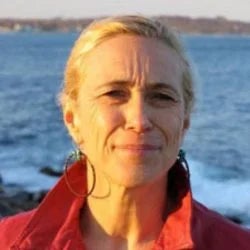
Annette R. Grilli is a Research Professor in the Department of Ocean Engineering at the University of Rhode Island , focusing on ocean renewable energy and coastal hazard assessment. Her work integrates numerical modeling and statistical analysis to study extreme events like tsunamis and storms. Ph.D. in Climatology, University of Delaware (2000) M.S. in Oceanography, University of Liege (1984) B.S. in Geography & Education, University of Liege (1983) Her research spans offshore wind farm siting optimization , tsunami propagation modeling , and coastal erosion dynamics . Recent publications highlight applications of phase-resolving wave models and machine learning to coastal resilience and marine renewable energy systems. Grants include collaborations with NOAA , Department of Energy , and NSF , focusing on coastal hazard visualization , tsunami detection algorithms , and design elevation mapping under climate change scenarios. She contributes to digitalCommons@URI with over 100 publications in Ocean Engineering and Civil Engineering domains.
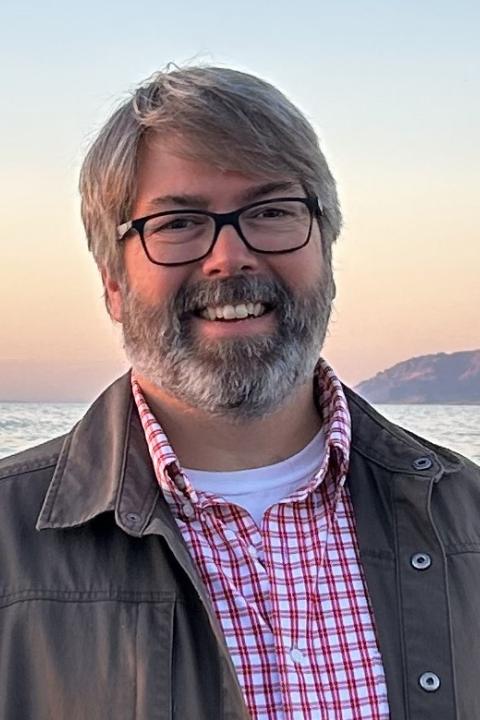
Joel Johnson is a Professor in the Department of Earth Sciences at the University of New Hampshire. He teaches courses in Earth History, Structural Geology, Sedimentology, Geotectonics, Geological Oceanography, and research-focused classes. With a Ph.D. in Geological Oceanography from Oregon State University and an M.S. in Structural Geology & Tectonics from the University of Illinois at Urbana-Champaign, his research spans gas hydrate systems, sedimentology, and methane cycling in marine environments. Ph.D., Geological Oceanography, Oregon State University M.S., Structural Geology & Tectonics, University of Illinois at Urbana-Champaign B.S., Geology, University of Minnesota Duluth His work examines gas hydrate dynamics in settings like Hydrate Ridge (Cascadia margin) and Svyatogor Ridge (Fram Strait), focusing on crustal processes , fluid flow mechanisms , and authigenic carbonate formation . Studies in the Gulf of Mexico and Indian continental margins analyze hydrate accumulation controls, while Arctic lake research explores methane emission temperature sensitivity and microbial influences . Collaborative projects include 3D seismic analysis , tectonic stress modeling , and monsoon-driven sedimentation in the Bay of Bengal and Andaman Sea. Recent publications highlight earthquake-enhanced carbon cycling in deep sediments (2023), primary deposition controls on gas hydrate reservoirs (2022), and crustal-scale methane systems in Arctic regions (2022). His 15 most recent articles span 2023-2014, emphasizing gas hydrate systems , methane seepage , sedimentary diagenesis , and tectonic influences on fluid flow. Subfields include authigenic carbonate formation , 3D seismic imaging , isotopic geochemistry , and late Quaternary climate reconstructions . Contact: Joel.Johnson@unh.edu
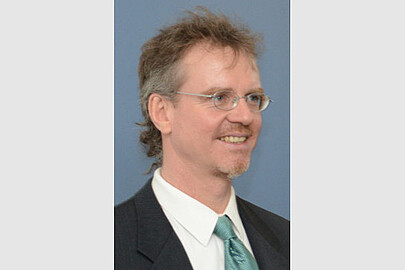
Jesper Liniger is an Associate Professor at AAU Energy within the Faculty of Engineering and Science at Aalborg University. He works in the Esbjerg Energy Section focusing on Offshore Renewable Energy Systems and is affiliated with AAU BLUE – Marine & Maritime Research. His office is located at Niels Bohr Street 8, 6700 Esbjerg, Denmark. Research Interests Marine Growth Engineering and automated cleaning solutions for offshore structures Underwater robotics including Remotely Operated Vehicles (ROVs) and autonomous inspection systems Wind turbine engineering with emphasis on hydraulic pitch systems and fault detection Fluid power engineering applications in marine environments Development of robotic solutions for offshore renewable energy infrastructure Research Trends Dr. Liniger's recent publications demonstrate a strong focus on developing robotic solutions for offshore renewable energy infrastructure. His work bridges theoretical control systems with practical marine applications, particularly addressing marine growth (biofouling) challenges on offshore structures. The research shows increasing interdisciplinary collaboration, combining robotics, fluid mechanics, and wind energy systems to create integrated solutions that improve operational efficiency and reduce maintenance costs in offshore environments. Scientific Awards Innovation Project of the Year (2024) - For underwater robotics development Esbjerg Universitetspris (2018) - University award recognizing research excellence Advising and Research Leadership Dr. Liniger actively supervises PhD students and serves as principal investigator or supervisor on multiple major projects including "NextGen Robotics" for offshore wind farms and "Towards Enhancing Perception and Navigation for Autonomous Underwater Inspection Drone." His research portfolio includes collaborations with industry partners like Vattenfall and Business Center Funen, demonstrating strong industry-academia connections focused on practical applications with economic impact. Research Teams and Facilities Liniger is part of AAU BLUE – Marine & Maritime Research, which provides specialized facilities for marine robotics testing and development. His work involves close collaboration with researchers in control systems, fluid mechanics, and renewable energy. The research group has developed experimental frameworks for testing underwater and surface vehicle operations, with recent media coverage highlighting their innovative approaches to solving marine growth challenges on offshore structures.
Jim Chen is a Professor at the Department of Marine and Environmental Sciences and holds an affiliation with the College of Engineering's Civil and Environmental Engineering at Northeastern University. His research focuses on coastal engineering and science, emphasizing numerical modeling to address coastal resiliency and sustainability, particularly in the context of hurricanes and sea-level rise. Education details are not explicitly provided in the text, but his expertise includes advanced modeling techniques applied to coastal systems. His work integrates field observations with computational methods, such as deep learning and physics-informed neural networks, to analyze wave dynamics, sediment transport, and vegetation effects on coastal processes. Key research areas include hurricane impact analysis on wetlands and engineered infrastructure, living shoreline restoration effectiveness, and the morphological evolution of coastal systems. His studies often involve rapid deployment of sensors during storms (e.g., Hurricane Laura) to monitor wave, current, and sediment dynamics, contributing to disaster preparedness and mitigation strategies. Notable collaborations include projects with the Shinnecock Indian Nation, Gandys Beach (New Jersey), and Chesapeake Bay, focusing on sustainable coastal management. His work bridges engineering and environmental science to enhance coastal resilience in vulnerable regions.
Professor Peter Macreadie is a global leader in marine science and sustainability at RMIT University, where he serves as Director of the Centre for Nature Positive Solutions and founder of the Blue Carbon Lab. He holds a professorial appointment in the School of Science and has held prior roles at Deakin University (2016–2024). His research focuses on leveraging nature-based solutions to mitigate climate change, including blue carbon ecosystems (mangroves, seagrasses, tidal marshes) and teal carbon innovations. He leads interdisciplinary projects in ecosystem restoration, coastal protection, and natural capital accounting, collaborating with governments, industries, and communities. Macreadie’s work spans over 250 publications in top journals like Science and Nature Climate Change , and he has attracted over $35M in research funding. His awards include the 2023 Frontiers Planet Prize and 2020 Premier’s Sustainability Award. He emphasizes translating science into actionable policies and practices, addressing challenges like microplastics, offshore infrastructure decommissioning, and citizen science engagement. Research Themes: Blue Carbon, Climate Mitigation, Ecosystem Restoration Key Projects: Mangrove restoration cost-benefit analysis, ocean alkalinity enhancement, and hybrid green-grey infrastructure He actively supervises PhD and industry projects, such as investigating microplastic impacts on blue carbon systems and feasibility of ocean alkalinity projects. His work aligns with UN Sustainable Development Goals 13 (Climate Action), 14 (Life Below Water), and 15 (Life on Land).
Professor Bela Buck is a Marine Biologist and Head of the Unit for Marine Aquaculture within the Shelf Sea System Ecology department at the Alfred Wegener Institute. He also holds a professorship for Applied Marine Biology at the University of Applied Sciences Bremerhaven, has the right to award doctorates at the University of Bremen, and serves as an Affiliated Professor at Klaipeda University. His leadership extends to chairing the ICES Working Group on Open Ocean Aquaculture (WGOOA). Professor Buck's research focuses on applied marine biology and maritime technologies , with particular expertise in offshore and exposed aquaculture systems . His work addresses critical challenges in multi-use of offshore wind farms , shellfish and seaweed cultivation , culture techniques and system design , and site selection for marine aquaculture operations. His research bridges biological sciences, engineering, and policy development to advance sustainable marine resource utilization. An analysis of his recent publications (2022-2024) reveals a clear trend toward standardizing terminology and metrics for exposed aquaculture environments, developing integrated multi-use platforms combining renewable energy infrastructure with aquaculture, and optimizing cultivation techniques for shellfish and seaweed. His work increasingly addresses sustainability challenges, focusing on circular economy principles, resource efficiency, and climate change adaptation in marine food production systems. Professor Buck leads the AWI-Working Group 'Marine Aquaculture' and collaborates extensively with international research teams across Europe and beyond. His work has significant implications for marine spatial planning, sustainable food production, and blue economy development. He maintains strong connections with both academic institutions and industry partners to ensure practical applications of research findings. His laboratory and field work focuses on developing and testing aquaculture systems for exposed environments, with particular emphasis on site assessment methodologies, structural design for high-energy marine environments, and optimizing cultivation protocols for various marine species. The research group maintains close ties with offshore energy developers, aquaculture operators, and policy makers to ensure research addresses real-world challenges.
Dr. Anne Marie O'Hagan is a Senior Research Fellow at MaREI Centre in University College Cork, with over 20 years of expertise in coastal and marine research. Specializing in Marine Spatial Planning, Coastal Management, and Offshore Renewable Energy governance, she serves as Principal Investigator for the Marine Institute-funded CoCoMar project and coordinates the SIMAtlantic project. Dr. O'Hagan holds a PhD on the legal framework for integrated coastal management and a law degree from National University of Ireland, Galway. Her research program examines: Legal and policy frameworks for ocean energy development Marine spatial planning implementation Coastal resilience and climate adaptation Ecosystem-based management approaches Blue carbon potential and valuation Dr. O'Hagan's recent publications demonstrate extensive contributions to marine governance literature, with particular focus on regulatory frameworks for offshore renewables, integrated coastal management, and transboundary marine planning. Her work combines legal analysis with spatial planning approaches to address complex environmental challenges. She actively participates in international working groups including IEA-OES and ICES, and chairs the law and governance sub-group of Ireland's Expert Advisory Group on Marine Protected Areas. As an educator, Dr. O'Hagan guest lectures on marine law and policy in UCC's LLM and MSc programs, bridging scientific and legal perspectives on marine governance.
Rodrigo Riera Elena is a University Professor in the Department of Biology at the University of Las Palmas de Gran Canaria. His research focuses on marine biodiversity, climate change impacts, and the ecological dynamics of coastal and oceanic ecosystems. He is affiliated with the GIR ECOAQUA research group (Biodiversity and Conservation) and the IU of Sustainable Aquaculture and Ecological Research. Key research interests include: marine invertebrate ecology, effects of human activities on coastal ecosystems, limpet and mollusc population dynamics, and the conservation of seagrass and macroalgal habitats. He leads studies on the resilience of rhodolith beds and their ecosystem services in oceanic archipelagos, as part of the 2022-2025 project Hábitats Popcorn funded by Spain's Ministry of Science and Innovation. His work integrates field observations, experimental approaches, and modeling to address pressing ecological questions. Notable contributions include studies on invasive species, fisheries sustainability, and the effects of warming oceans on marine communities. He maintains an active presence in science communication through public outreach initiatives and collaborations with international research networks. Laboratory and fieldwork affiliations include the Department of Biology's marine ecology lab and collaborations with institutions in Chile, Iran, and the Arabian Gulf. His research has been published in high-impact journals and presented globally at conferences focused on marine conservation and climate change adaptation.
Hachem Kassem is a Lecturer in Ocean Engineering at the University of Southampton, affiliated with the School of Ocean and Earth Science. He specializes in coastal hydrodynamics, sediment dynamics, and nature-based solutions to climate-mediated geohazards. His current roles include leading the MSc Programme in Applied Coastal and Offshore Geoscience and managing coastal research laboratories equipped with flumes and sediment analysis facilities. Education and Career: Hachem holds a PhD and MSc in relevant fields, and has been a Fellow of the Higher Education Academy (FHEA). His career includes: 2022–present: Lecturer in Ocean Engineering, University of Southampton 2017–2021: Teaching and Research Fellow in Coastal Morphodynamics 2015–2017: Part-time Teaching Fellow in Coastal Morphodynamics and GIS 2010–2012: Lecturer in Civil Engineering at The London College Research Interests: Focus on coastal engineering, flow-structure interactions, and adaptive solutions for hazards like erosion and flooding. Key projects include Environment Agency-funded work in Pevensey Bay using X-band radar and autonomous systems, and collaborations on eco-reefs and subsea cable protection with industry partners. Teaching: Coordinates modules on coastal sediment dynamics and applied oceanography. Contributes to geoscience curricula and supervises student projects on coastal processes and engineering. External Roles: Serves as consultant for projects involving scour protection, seagrass health, and tidal interactions at nuclear sites. Leads the Nature-based Ocean Solutions Special Interest Group under the Southampton Marine and Maritime Institute. Labs & Infrastructure: Oversees coastal teaching/research labs with flumes and field monitoring equipment. Collaborates on geospatial data projects for nature-based solutions in Studland Bay.
Jesse LeCavalier is Associate Professor in the Department of Architecture at Cornell University's College of Architecture, Art, and Planning (AAP), where he also serves as Director of the Master of Science in Advanced Urban Design (M.S. AUD) program. Based in New York City, his academic work bridges architectural design, theory, and urbanism with a specialized focus on logistics and infrastructure. His research explores the spatial, architectural, and social implications of logistical systems, particularly those of large-scale retailers like Walmart. He is the author of The Rule of Logistics: Walmart and the Architecture of Fulfillment (University of Minnesota Press, 2016), a seminal work that investigates how retail logistics reshape buildings, cities, and human behavior. His design research has been exhibited internationally, including at MoMA PS1, the Oslo Architecture Triennale, and the Seoul Biennale for Architecture and Urbanism, with projects such as SHELF LIFE , Alimentary Urbanism , and Machinic Wilderness . LeCavalier’s scholarly writings have appeared in prominent journals such as Places , Public Culture , Harvard Design Magazine , and Cabinet . His recent articles reflect a consistent thematic focus on the intersection of architecture, technology, and material flows, exploring topics from automated fulfillment centers to speculative urban futures. The body of work demonstrates a deep engagement with how digital and physical infrastructures co-constitute contemporary urban environments. Core77 Design Award, Writing & Commentary (2013) ACSA New Faculty Teaching Award (2014) Finalist, MoMA PS1 Young Architects Program (2018) Finalist, Sudbury 2050 Urban Design Competition (2020) Finalist, Tromsø Waterfront Laboratory Open Call (2019) LeCavalier has advised and collaborated with students and design teams on numerous projects, particularly through seminars and design studios such as the Landscapes of Fulfillment seminar at Yale. While formal PhD or Master’s advisees are not listed, his leadership roles indicate active mentorship. He has received funding and support from institutions such as the New York State Council for the Arts. His research is conducted both independently and in collaboration with interdisciplinary teams, often involving engineers, designers, and technologists. His work is supported by a network of labs and collaborative initiatives, including the Landscapes of Fulfillment seminar and projects like Milgram and Test Bed Urbanism , which explore smart cities and digital infrastructure. Future research directions include regenerative urbanism, post-anthropocene landscapes, and the transformation of industrial legacies into public and ecological assets.
Pieter Rauwoens is a Professor at the Department of Civil Engineering within the Faculty of Engineering Technology at KU Leuven. His work focuses on coastal engineering, hydraulics, and sustainable material applications, particularly in dune dynamics and nature-based coastal defense systems. He leads multiple long-term projects and serves as promotor for interdisciplinary research initiatives. Coastal & Ocean Basin (COB) wind tunnel system development Sustainable sand management for hybrid dune-dike systems Vegatation impact on coastal dune stability Supplementary cementitious materials from recycled aggregates His research integrates field monitoring, numerical simulations, and laboratory experiments to address coastal resilience challenges under climate change. Key methodologies include CFD modeling, sediment transport analysis, and material reactivity studies. Current research trends emphasize: Hybrid blue-grey coastal defense systems Mechanochemical activation of recycled materials Wave-structure interactions around monopiles Aeolian transport dynamics in vegetated dunes Sustainable sediment management Climate adaptation infrastructure
Matthias Becker is a Professor at the Institute for Practical Computer Science within the Faculty of Electrical Engineering and Computer Science at Leibniz University Hannover, where he has been a core member of the Human-Computer Interaction group since 2019. He serves as Internship Coordinator for Computer Science and Computer Engineering and holds key roles in the Computer Science Examination Board and Selection Committee, actively shaping academic governance and student development. His academic journey began with PhD studies at the University of Bremen (1996-2000) supported by a DFG grant, followed by a postdoctoral permanent position at Leibniz University Hannover (2000-2019), an Associated Assistant Professor role at École des Mines de Nantes (2000), and a Habilitation in Computer Science in 2013. This foundation enabled his transition to a full professorship in 2019. Becker's research spans Human-Computer Interaction, Simulation and Modeling, and Bio-inspired Computing, with applications in agriculture, renewable energy, and manufacturing. His work integrates distributed systems, optimization algorithms, and wireless sensor networks to solve complex real-world problems, such as greenhouse monitoring, wind farm logistics, and tire noise reduction. Recent publications reveal a strategic focus on practical validation of simulation models and cross-domain applications of nature-inspired algorithms. His 15 most recent publications (2018-2024) demonstrate consistent innovation in applying simulation techniques to offshore wind farm installation, agricultural pest management, and sports science. These works emphasize real-world validation, collaborative problem-solving, and the development of domain-specific optimization frameworks that bridge theoretical algorithms and industrial implementation. As Internship Coordinator, Becker facilitates critical industry-academia connections for students, while his examination board responsibilities ensure rigorous academic standards. His leadership in the Human-Computer Interaction group drives research on interactive systems for agriculture, energy, and health, with particular emphasis on user-centered design in complex operational environments like wind farm logistics and greenhouse automation.
Dr. Eoin O'Gorman is a Senior Lecturer in the School of Life Sciences at the University of Essex. His research investigates the impacts of global change across multiple levels of ecological organisation, from individual metabolism to ecosystem processes, with a particular focus on food web dynamics and body size as a functional trait. BSc, University College Cork (2004) PhD, University College Cork (2009) Current research projects include: Warming effects on trophic interactions Anthropogenic stressors in marine and freshwater systems Body size scaling in ecological networks Food web stability under climate change Recent work demonstrates how warming alters plankton body-size distributions (2025), simplifies freshwater food webs through multiple stressors (2025), and reduces trophic diversity in high-latitude ecosystems (2024). His studies span marine, freshwater, and terrestrial habitats, seeking universal responses to environmental change. Current grants include: 2024 WebDNA: Food web reconstruction through environmental DNA analysis (Leverhulme Trust) 2023 Predicting Impacts of Global Environmental Change on Ecological Networks (NERC) 2022 ORBIT: Offshore Renewables and Benthic Communities (NERC) Supervises PhD candidates studying: Zelin Chen: Offshore structures' impacts on North Sea biodiversity Patrick Eskuche Keith: Southern Ocean food web dynamics Anamika Poyil: Environmental biology of marine communities