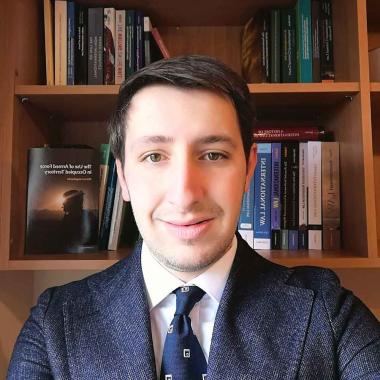
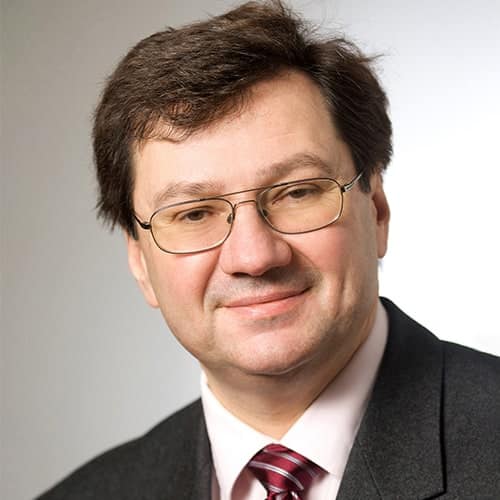
Dr Rod Thornton is a Senior Lecturer in Russian Defence and Security Studies at King’s College London, affiliated with the Defence Studies Department and School of Security Studies. He specializes in the Russian military's kinetic and sub-threshold warfare, with a focus on cyber capabilities, space warfare, and UK homeland resilience. His research includes recent British Academy-funded work on UK civil defense capacity during the pandemic, advocating for dedicated civil defense organizations. He has published extensively on Russian military tactics in Ukraine, AI-cyber integration, and space-based deterrence. Russian military cyber operations Space warfare dynamics UK resilience capacity gaps Scientific awards include a British Academy grant (2020). His students focus on asymmetric warfare, AI, cyber, and regional security issues. He teaches at the UK Defence Academy and has collaborated with institutions in Finland, South Korea, and the Freeman Air and Space Institute.
Dr. Herb Lin is the Hank J. Holland Fellow in Cyber Policy and Security at the Hoover Institution and Senior Research Scholar for Cyber Policy and Security at the Center for International Security and Cooperation (CISAC), both at Stanford University. He also serves as Chief Scientist, Emeritus for the Computer Science and Telecommunications Board of the National Academies, where he worked from 1990 to 2014, and as Adjunct Senior Research Scholar and Senior Fellow in Cybersecurity at Columbia University's Saltzman Institute for War and Peace Studies. Dr. Lin received his doctorate in physics from MIT, providing him with a strong technical foundation that informs his policy work at the intersection of technology and national security. His academic background bridges the gap between deep technical understanding and policy application in the cybersecurity domain. Dr. Lin's research focuses on the policy dimensions of cybersecurity and cyberspace, with particular emphasis on offensive cyber operations as instruments of national policy, information warfare, and influence operations affecting national security. His work addresses critical challenges at the intersection of emerging technologies like artificial intelligence, quantum computing, and their implications for nuclear security, election integrity, and democratic processes. He has been instrumental in analyzing how cyber capabilities are transforming traditional security paradigms and how policy frameworks must adapt to these changes. His extensive publication record reveals a consistent focus on the evolving relationship between cyber capabilities and national security strategy. Lin's work demonstrates increasing attention to the implications of artificial intelligence for warfare, the vulnerabilities created by quantum computing for current cryptographic systems, and the growing threat of cyber-enabled information warfare to democratic institutions. His research trajectory shows a progression from traditional cybersecurity issues toward the broader implications of digital technologies for national and international security. Member of Science and Security Board of Bulletin of the Atomic Scientists Served on President Obama's Commission on Enhancing National Cybersecurity (2016) Regular congressional testimony on cybersecurity matters Contributor to Stanford Emerging Technology Review As a mentor and collaborator, Dr. Lin works extensively with policymakers, military officials, and technology experts to translate complex cybersecurity concepts into actionable policy recommendations. His approach emphasizes practical solutions to emerging threats while recognizing the technical limitations and policy constraints that shape real-world security outcomes. Dr. Lin is associated with multiple research initiatives including Stanford's Center for International Security and Cooperation and the Stanford Emerging Technology Review, which aim to connect technological advances with policy considerations for national security decision-makers.
Dr. Marina Miron is a post-doctoral researcher at King’s College London’s Department of War Studies and Honorary Research Fellow at the Centre for Military Ethics. Her work focuses on military strategy, cybersecurity, and ethical education in conflict contexts. She holds a PhD from the University of New South Wales (Australian Defence Force Academy) and has taught at institutions like the NATO School and Colombian War College. Current projects include analyzing Russia/China’s information warfare strategies and developing country-specific military ethics programs for Colombia’s armed forces. She also advises on cyber defense, AI in military contexts, and drone technology impacts. Research interests span counterinsurgency, hybrid warfare, cyber operations, and ethical dilemmas in modern conflict. She co-leads a British Academy-funded project on Western countermeasures against information warfare and contributed to NATO’s counterterrorism training programs. Her work bridges technological advancements with ethical considerations, particularly in unmanned systems and medical ethics. Publications analyze Russian cyber capabilities, drone public perception, and historical conflict resolution cases like Peru. She frequently appears in media discussions on Ukraine and cybersecurity threats. Professional networks include King’s Cybersecurity Centre and Freeman Air & Space Institute.
Dr. Nerijus Maliukevičius serves as an Assistant Professor at Vilnius University's Institute of International Relations and Political Science, where he conducts research and teaching within the Department of Political Behavior and Institutional Studies. His expertise centers on information warfare, strategic communication, and Russian geopolitical strategies, with extensive publications analyzing disinformation campaigns targeting Baltic and European states. Maliukevičius' research interests focus on Information Warfare , Russian Studies , and Propaganda Countermeasures , examining how technological advances reshape conflict dynamics. His work investigates Kremlin influence operations across media ecosystems, emphasizing social resilience frameworks and psychological defense mechanisms against hybrid threats. Key contributions include foundational studies on Russian information geopolitics and contemporary analyses of operations like Ghostwriter that exploit digital vulnerabilities in democratic societies. His publication trajectory reveals a strategic evolution from theoretical frameworks (2002-2008) toward actionable counter-strategies, with recent work prioritizing social resilience metrics and Nordic-Baltic defense coordination. This shift reflects escalating geopolitical tensions following Crimea's annexation and Ukraine's invasion, where his analyses of Russian media tactics have gained critical policy relevance across NATO and EU institutions. Maliukevičius has secured major research funding including the IARPA-funded SAGE project (2016-2019) for geopolitical forecasting and Lithuania's national disinformation study (2021). He regularly advises governments through high-impact presentations at NATO StratCom CoE, NED forums, and Lublin Triangle initiatives, translating academic insights into operational countermeasures against active measures. As co-leader of Vilnius University's Politics of Technology Research Group and Belarus Research Group, he directs collaborative investigations into AI-driven disinformation and authoritarian influence networks. His teams develop early-warning systems for hybrid threats while training next-generation analysts through specialized courses like Information Warfare and Strategic Political Communication.
Dr. Marco Longobardo is a Reader in International Law (equivalent to Associate Professor) at the University of Westminster's School of Law. He holds a master's degree from the University of Messina (2012) and a PhD from Sapienza University of Rome (2016). In 2023, he served as a Visiting Professor at the University of Trento, University of Messina, and Université Libre de Bruxelles. He is a Fellow of the Higher Education Academy. His research specializes in Public International Law , with emphasis on International Humanitarian Law, International Criminal Law, Law of Armed Conflict, and Peacekeeping. Current projects examine military occupation, ICC jurisdiction, and ICJ procedures for community interests. His work is cited by the ICC Prosecutor, UN Special Rapporteurs, and national courts. Longobardo has published monographs with Cambridge University Press and articles in leading journals including the American Journal of International Law and European Journal of International Law . His scholarship analyzes trends in occupation law, IHL compliance, peacekeeping legitimacy, and human rights in conflict zones. Awards & Honors: Paul Reuter Prize (ICRC, 2021) Lieber Prize Honorable Mention (ASIL, 2023) Italian Society of International Law Prize (2021) Rosalyn Higgins Prize (Third Place, 2020) He mentors PhD students in international law topics and serves on editorial boards for the Journal of International Humanitarian Legal Studies and International Community Law Review . He is a member of the European Society of International Law and International Law Association.
Mr. Mark De Bels is an NSA Visiting Professor at the Center for Cyber Security Studies, United States Naval Academy. He holds an M.S. in Computer Science with an Emphasis on Network Security and a B.S. in Mathematics. His research focuses on Trust Infrastructure and Security of Software Cryptographic Applications. Mr. De Bels has extensive experience in both defensive and offensive NSA missions. He previously served as Chief of a 100-person Signals Intelligence analysis team targeting cryptographic applications, and as a technical SME at the Department of Defense Cyber Crime Center (DC3). His career spans roles such as Information Assurance Analyst, Operating Systems Analyst, and Cryptographic Application Analyst at NSA from 1994–2016. His professional contributions include leadership in securing defense contractor networks against foreign cyber attacks and advancing cryptographic application analysis methodologies. He currently engages in academic cybersecurity research and education through the Center for Cyber Security Studies, integrating his operational expertise into academic training programs.
Kaushik Nagarajan Muthusamy Ragothaman is an Assistant Professor in the Department of Computer Science at the University of Wisconsin-Parkside. His teaching portfolio includes courses such as Operating Systems, Network Security, Cybersecurity Program Planning, and Offensive Security/Threat Management. His research focuses on cybersecurity, IoT security, access control systems, and trusted data processing within information systems. Ragothaman has published works addressing IoT access control dynamics, organizational vulnerability to advanced persistent threats (APTs), and systematic studies of IoT security frameworks. His recent publications emphasize future directions in IoT security policies and paradigm shifts for APT mitigation. He teaches both undergraduate and graduate courses related to computer architecture, programming languages, and security risk management. No scientific awards or grants are explicitly listed in the provided material. His academic contributions are primarily through教学 and research in cybersecurity domains without noted funded projects or lab affiliations mentioned.
Alfred Taudes is a Full Professor at the Department of Information Systems and Operations, Institute for Production Management, Vienna University of Economics and Business (WU Vienna). He holds a doctoral degree and a Habilitation from WU Vienna in Business Administration and Management Information Systems, and a Magister degree from Vienna University. He has held assistant professorships at WU and visiting professorships at Augsburg, Münster, Essen, and Tsukuba University, Japan. He joined WU permanently in 1993 and served as head of the Department of Information Systems and Operations from 2010 to 2016. His research spans Operations and Supply Chain Management , Marketing Engineering , Knowledge Management , and the impact of Big Data and Blockchain on production systems. Using Complexity Science and Cryptoeconomics , he investigates digital production, integrated value chains, and market designs. He teaches undergraduate and graduate courses including Operations Strategy, Data Science, and IT seminars in WU’s International Supply Chain Master program, and has also taught at Japanese universities. His recent publications focus on blockchain privacy (e.g., CoinJoin analysis), CBDCs, MiCAR regulation, decentralized federated learning, and digital custody, reflecting a strong trend toward cryptoeconomics and blockchain-based systems in operations and finance. These works appear in top journals and conferences in information systems, security, and operations research. Cooperation Officer of the Year 2013/14 Distinguished Paper Award WI 2009 VHB Best Paper Award Nomination VHB Best Paper Award Dr. Wolfgang Houska - Recognition Award Alfred Taudes has coordinated major research projects such as the WWTF-project “Integrated Demand and Supply Chain Management” and the Special Research Area Adaptive Models in Economics and Management Science. He currently leads the research group on Cryptoeconomics at WU and chairs the scientific board of the Austrian Internet Offensive . His leadership extends to project management in initiatives like the Austrian Blockchain Center and research on decentralized finance and digital assets. He is actively involved in academic service, including organizing conferences like DEXA 2022, serving on editorial boards, and advising on research policy. His lab and research group focus on blockchain applications, digital transformation in operations, and the societal implications of big data.
Dr. Michael Ham is an Associate Professor and Coordinator for Cyber Operations Initiatives at Dakota State University's Beacom College of Computer & Cyber Sciences. He leads the NSA-designated Center of Academic Excellence in Cyber Operations (CAE-CO) and oversees DSU's Cyber Operations bachelor's program and Ethical Hacking Certificate. His roles include teaching advanced cybersecurity courses, advising doctoral students, and coordinating cyber events like DakotaCon and GenCyber camps. Education: All degrees from Dakota State University — D.Sc. in Cybersecurity (202X), M.S. (20XX), and B.S. (20XX). Research focuses on cybersecurity education, penetration testing, malware analysis, and developing experiential learning tools. Key projects include open-source platforms for hardware reverse engineering and wireless security training using software-defined radios. He emphasizes cyber hygiene practices and offensive security principles in both teaching and industry consulting. Grants highlight his leadership in addressing cybersecurity workforce shortages, including NSF CyberCorps SFS programs (PI), GenCyber camps (Co-PI), and DoD scholarships. Recent publications address ransomware prevention, X.509 certificate validation, and pandemic-era ICT systems. Dr. Ham also serves as an independent security consultant, advising on infrastructure security, vulnerability remediation, and policy development for organizations. His work bridges academia and industry through practical, hands-on cybersecurity education and tool development.
Dr Duncan Hodges is a Senior Lecturer in Cyberspace Operations at Cranfield University, affiliated with the Centre for Electronic Warfare Information and Cyber within Cranfield Defence and Security. His research spans cybersecurity, digital identity, offensive cyber operations, and natural language processing applications in security. His research interests include: Identity in cyber and natural spaces Offensive cyber activity and information warfare Natural Language Processing in cybersecurity Insider threat detection Smart home and IoT security Hodges' recent publications (2015–2022) reflect a strong focus on behavioral biometrics, identity cues, privacy, and cyber-enabled crime. His work combines technical innovation with social science insights, especially in understanding human factors in cybersecurity. Key themes include keystroke dynamics, smart home vulnerabilities, and personality inference from digital behavior. Scientific Awards and Fellowships: ESRC NCRM Fellow on Digital Identity Visitor at the Alan Turing Institute Research Leadership and Grants: Lead PI on EPSRC project: 'People Powered for Desirable Social Outcomes' CO-I on EPSRC project: enabling sensitive disclosures via conversational agents Two projects funded by the Centre for Research and Evidence in Security Threats (CREST) Collaborations with EPSRC, ESRC, Innovate UK, and Defence Science and Technology Labs (DSTL) Labs and Research Groups: He is part of the Information Operations Group at Cranfield and collaborates with the Cyber Security Centre at the University of Oxford and the Alan Turing Institute .
Konstantinos Markantonakis is a Professor of Information Security in the Department of Information Security at Royal Holloway, University of London, where he also serves as Director of the Smart Card and IoT Security Centre and the Transformative Digital Technologies, Security and Society Catalyst. He is a leading figure in embedded systems and IoT security, with extensive research and consultancy experience. BSc (Hons) in Computer Science, Lancaster University, 1995 MSc in Information Security, Royal Holloway, 1996 PhD in Smart Card Security, Royal Holloway, 2000 MBA in International Management, Royal Holloway, 2005 His research focuses on securing embedded and cyber-physical systems, including smart cards, mobile devices, drones, automotive systems, and IoT. He investigates trusted execution environments, side-channel analysis, secure protocols, and hardware-software binding. His work bridges theoretical security and practical implementation, often uncovering zero-day vulnerabilities in consumer devices. The recent publications highlight a strong trend in trusted computing, remote attestation, secure embedded systems, and privacy-preserving technologies. His research integrates blockchain for secure energy trading, develops frameworks for edge machine learning, and advances forensic techniques for damaged storage media. He also explores covert channels in mobile and cloud environments, demonstrating a deep understanding of both offensive and defensive security. Best Paper Award Markantonakis has led major research projects such as EXFILES (forensic extraction from encrypted smartphones), Future TPM (quantum-resistant trusted modules), and the Academic Centre of Excellence in Cyber Security Research. He has supervised numerous PhD students and delivered keynotes at international conferences. His consultancy work has impacted financial institutions, transport operators, and mobile platform security. He leads the Smart Card and IoT Security Centre, a research hub focusing on practical security for connected devices. The centre conducts cutting-edge research in side-channel attacks, secure application execution, and forensic analysis, contributing significantly to both academic and industrial advancements in cybersecurity.
Dr. Martin Libicki holds the Keyser Chair of cybersecurity studies at the U.S. Naval Academy (USNA). He teaches and researches cyberwar, information technology's impact on security, and global cyber norms. He earned his Ph.D. in 1978 from UC Berkeley. His recent work includes the 2016 textbook Cyberspace in Peace and War , and papers on information warfare convergence and cyber strategy. His research focuses on cyber-espionage norms, cyber-sovereignty implications, and Russian cyber strategy. Notable works include RAND monographs such as Cyberdeterrence and Cyberwar and How Terrorist Groups End . Prior roles include 12 years at National Defense University, Navy Staff service, and GAO positions. Current research explores global cyber-espionage norms, U.S. cyber-sovereignty policy, and Russian cyber tactics. He contributes to the Center for Cyber Security Studies at USNA, advancing interdisciplinary cyber education and policy analysis.
Eugenio Benincasa is a Senior Researcher in the Cyberdefense Project with the Risk and Resilience Team at the Center for Security Studies (CSS) at ETH Zurich. His work focuses on cybersecurity policy with particular attention to Asia-Pacific cybersecurity issues, China's cyber ecosystem, and the application of international law to cyberspace. His educational background includes: MA in International Affairs from Columbia University in New York with a focus on international security and conflict resolution Executive Master in Cybersecurity from LUISS University in Rome BA in Politics, Philosophy and Economics from LUISS University in Rome One-semester exchange program at Sciences Po University in Paris during undergraduate studies Benincasa's research spans multiple critical areas in cybersecurity, with particular emphasis on China's offensive cyber ecosystem, the applicability of international law to cyberspace, and cyber non-proliferation. His work analyzes ASEAN-EU cybercrime cooperation, Japan's cyber defense capabilities, and the role of regional organizations in building cyber resilience. He has conducted extensive research on how different Asia-Pacific countries have managed cybersecurity challenges and pandemic responses, identifying transferable best practices. His publications reveal a strong focus on practical cybersecurity policy solutions, with particular attention to cross-border cooperation mechanisms, cyber attribution transparency, and regional cybercrime frameworks. Benincasa has examined how countries like Taiwan, South Korea, Singapore, Japan, New Zealand, and Australia have approached cybersecurity challenges, identifying effective strategies in early action, technological innovation, and community-based measures. His notable contributions include analyses of: The gaps in ASEAN-EU cybercrime cooperation and recommendations for harmonizing cybercrime laws Japan's cyber defense limitations and proposals for vulnerability disclosure processes China's offensive cyber ecosystem through hacking contests and bug bounty programs The application of international law to AI-enhanced disinformation campaigns Benincasa has held diverse professional experiences that inform his research perspective, having worked as a Government Officer at the Italian Presidency of the Council of Ministers, a Research Fellow at the Pacific Forum, and a Crime Analyst at the NYPD. He has also completed internships at the EU Delegation to the UN, Morgan Stanley's Financial Crimes Unit, and the Asia-Pacific Center for Security Studies.
Benjamin Jensen is Professor of Strategic Studies at Marine Corps University School of Advanced Warfighting and holds dual roles as Director of the Futures Lab and Senior Fellow in the Defense and Security Department at the Center for Strategic and International Studies (CSIS). At CSIS, he leads AI/machine learning research on warfare evolution and designs scenario-based wargames. At MCU, he researches future conflict and teaches operational art. His research explores military innovation, AI integration in battle networks, cybersecurity, geopolitical competition, and gray-zone tactics. Recent work analyzes landpower evolution, China-Taiwan tensions, and Russia-Ukraine dynamics through data-driven frameworks. Jensen holds a PhD from American University and MA/BA from University of Wisconsin-Madison. He serves as a U.S. Army Reserve officer with command experience and authored five books including Information at War: Military Innovation, Battle Networks, and the Future of Artificial Intelligence (2022). Scientific Awards: Frank E. Petersen Chair for Emerging Technology (current) He directs CSIS Futures Lab pioneering AI-wargaming integration and leads MCU's future war research program. Previously served as Senior Research Director for the U.S. Cyberspace Solarium Commission.
Dr. Arthur PB Laudrain is a Research Associate in Cyber Diplomacy at the Department of War Studies, King's College London. He holds a Doctorate in Cybersecurity from the University of Oxford and is part of the Cyber Statecraft in an Age of Systemic Competition (CyCraft) project led by Prof. Tim Stevens, funded by EPSRC and Dstl. Doctorate in Cybersecurity (University of Oxford, 2024) Master of Laws (Leiden University, 2018) Master of Arts (King’s College London, 2016) Bachelor of Science (Université de Montréal, 2015) His research bridges emerging technologies and international affairs, focusing on foreign interference in democratic processes, information manipulation, and cyber strategies/doctrines. He contributes to debates on cyber sovereignty, technological sovereignty, and the intersection of cybersecurity with corporate law and human rights frameworks. Arthur’s recent publications analyze India's cyber statecraft, French cybersecurity policy, and the implications of 5G and smart-city technologies. His work emphasizes systemic competition, digital diplomacy, and institutional decision-making models. Scientific awards include: 35-under-35 Future Young Leaders List (2022) 360/Digital Sherlock Fellowship (2021) European Cyber Security Fellowship (2022) Global Grant (Peace, Conflict Prevention and Resolution, 2018) Fellow of the European Cyber Conflict Research Initiative (2022-2023) He serves as an Hourly-Paid Lecturer at King’s College London and collaborates with institutions like the Carnegie Endowment for International Peace and the European Initiative for Security Studies. His network includes experts in China, Russia, and the Global South, reflecting cross-border research in cybersecurity and international security.