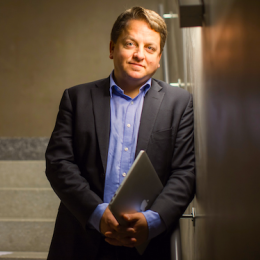
Name: Fredrik Blix Academic Rank: Associate Professor Affiliation: Department of Computer and Systems Sciences at Stockholm University Specializations: Information Security, Cybersecurity, Cyber Resilience, Cyber Policy, and Threat-Led Penetration Testing Research Interests: Dr. Blix focuses on advanced cybersecurity frameworks, including adaptive security models for multi-stage cyber attacks and systematic engineering approaches for cyber-physical systems. His work addresses compliance standards like NIS2 and GDPR, particularly within the Swedish automotive industry and cloud services. Notably, he developed the ASFA framework for DORA-compliant threat analysis and contributes to security-SLA monitoring in cloud environments. Notable Contributions: His research spans risk quantification models (e.g., FAIR in logistics), attack behavioral pattern analysis for critical infrastructure, and validation of offensive cyber operations frameworks. He also explores intersections between informal, formal, and technical cybersecurity components through case studies like "Special Commando Move".
Jim Jones is an Associate Professor in the Department of Electrical and Computer Engineering at George Mason University's Volgenau School of Engineering. His work integrates cybersecurity, digital forensics, and practical applications, focusing on digital artifact analysis, malware detection, and data persistence. He holds a PhD in Computational Sciences and Informatics from George Mason University, an MS in Mathematical Sciences from Clemson University, and a BS in Industrial Engineering from Georgia Tech. Education: PhD, Computational Sciences and Informatics, George Mason University MS, Mathematical Sciences, Clemson University Bachelor's, Industrial Engineering, Georgia Tech Research Interests: Cybersecurity, Digital Forensics, Data Persistence, Malware Analysis, Machine Learning in Cybersecurity. His research is funded by agencies like DHS, NSF, and DoD, addressing challenges such as supply chain disruption detection, deleted file decay analysis, and cyber deception. Notable projects include the 'Digital Body Farm' for studying data decay and the 'Cyber P3 Scholarship Program.' He has advised numerous funded initiatives, including work on network topology discovery and insider threat evaluation. Collaborative efforts with industry and government emphasize bridging theory and practice in cybersecurity education and research.
Richard Harknett serves as Professor and Director of the School of Public and International Affairs at the University of Cincinnati, where he also directs the Center for Cyber Strategy and Policy and co-directs the Ohio Cyber Range Institute. He maintains affiliate roles with UC's School of Information Technology and the Diplomatic Academy Vienna, Austria, having previously served as Fulbright Professor there in 2001 and at Oxford University in 2017. His educational background includes: PhD in Political Science, The Johns Hopkins University (1991) MA in Political Science/International Relations, The Johns Hopkins University (1989) BA in Political Science, cum laude, Villanova University (1985) Harknett's research centers on international relations theory and cybersecurity, with pioneering work on cyber strategy rejecting deterrence models in favor of persistent engagement frameworks. His scholarship examines structural realism's application to cyberspace, cost imposition dynamics, and strategic competition, arguing that traditional security paradigms require fundamental rethinking in the digital domain. Current projects explore the theoretical foundations of cyber persistence and intelligence contests in strategic competition. Analysis of his 15 most recent publications reveals consistent thematic development across cyber strategy, with increasing sophistication in conceptualizing persistent engagement, tacit bargaining, and strategic competition dynamics. His work demonstrates strong interdisciplinary connections between political science, security studies, and cybersecurity practice, particularly in translating theoretical frameworks to operational contexts. Harknett has received significant recognition for his contributions: Ohio Board of Regents Faculty Innovator Award (2010) Ohio Senate Resolution No. 248 (2010) J. William Fulbright Scholar in Cyber Studies at Oxford (2017) Provost Career Award and multiple University of Cincinnati service awards Edith C. Alexander Award for Distinguished Teaching As a dedicated mentor, he has chaired dissertations for Hasan Yalcin and Tiest Sondaal while advising Igor Kovac. His substantial grant portfolio exceeds $6 million as Principal Investigator, including major awards from the Department of Homeland Security (OPCI project, $2M), National Science Foundation (CSI:UC, $1.4M), and Ohio Department of Higher Education (Ohio Cyber Range, $5M+). He has secured funding from NSA, Air Force Research Laboratory, and private foundations like Koch Foundation. Harknett co-directs the Ohio Cyber Range Institute, a statewide cybersecurity education initiative serving over 30 Ohio institutions, and leads the Center for Cyber Strategy and Policy which develops strategic frameworks for government and industry partners. These centers position UC as a national leader in cybersecurity education infrastructure and policy research, directly supporting Ohio's cybersecurity workforce development and national security objectives.
Maurice E. Dawson is an Associate Professor and Director of the Center for Cyber Security and Forensics Education (C²SAFE) at Illinois Institute of Technology's College of Computing. He holds multiple advanced degrees, including a Ph.D. in Cybersecurity from London Metropolitan University and a Postdoc in Information Science from Universidade Fernando Pessoa. His research focuses on software assurance, IoT security, and critical infrastructure protection, with over 150 peer-reviewed publications and book chapters. Affiliations: Illinois Tech, Fulbright Specialist Program, IEEE Senior Member Grants: Over $100K in grants from U.S. State Department, USAID, and others for cybersecurity initiatives in Africa and the Middle East. Research Interests: Explores hyperconnectivity risks, dark web extremism, and cross-border cybersecurity collaboration. His work bridges academic research with practical applications in developing nations, focusing on IT training and infrastructure resilience. Awards & Recognition: Recipient of Teaching Excellence Awards (2019, 2021), Fulbright Specialist grants (Botswana, Saudi Arabia), and volunteer service medals. Media engagements include ABC7 Chicago and Illinois Public Media for cybersecurity commentary. Advising & Grants: Supervised multiple USAID-funded ICT projects in Senegal and Guinea, training local agricultural and tech professionals. Served on advisory boards for CTU and VIU, and editorships for journals like International Journal of Hyperconnectivity and IoT . Labs & Teams: Leads C²SAFE lab at Illinois Tech, specializing in incident response, digital forensics, and AI-driven security solutions. Collaborates with international institutions on cybersecurity education frameworks.
Dr. James Lewis serves as the Distinguished Visiting Professor of Cyber Studies at the United States Naval Academy's Center for Cyber Security Studies. He concurrently holds the position of Senior Vice President at the Center for Strategic and International Studies (CSIS). Previously, he had extensive diplomatic experience in the U.S. Foreign Service and Senior Executive Service, focusing on political-military issues such as satellite policy, encryption, and internet governance. His diplomatic roles included leading the U.S. delegation to the Wassenaar Arrangement Experts Group and participating in critical negotiations like the Cambodia Peace Process and Five-Power arms transfer talks. Lewis has also held leadership roles in major initiatives, including directing CSIS's Commission on Cybersecurity for the 44th Presidency and serving as Rapporteur for UN Group of Government Experts on Information Security (2010, 2013, 2015). His current research explores the intersection of the internet and politics, surveillance/espionage dynamics, and how military innovation impacts global stability. Lewis earned his Ph.D. from the University of Chicago. He has authored influential works such as *Assessing the Risk of Cyber Terror* and *The Role of Offensive Cyber Operations in NATO’s Collective Defence*. While no formal awards are listed, his impactful contributions to cybersecurity policy and international governance are widely recognized.
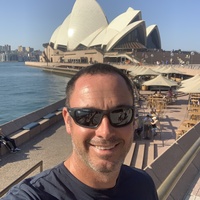
Dr. Jamie Cleland is a Senior Lecturer in Sport and Management at the University of South Australia's School of Management. With over two decades of academic experience across multiple UK institutions including Loughborough University, Staffordshire University, and Liverpool Hope University, Cleland has established himself as a leading scholar in the sociology of sport. His academic journey culminated with a PhD from Liverpool University in 2008. Cleland's research spans a diverse range of contemporary social issues in sport, with particular expertise in race and racism, masculinity studies, terrorism and security, LGBTQ+ issues, and sport fandom culture. His work frequently employs Bourdieu's theoretical framework to analyze power dynamics and social structures within sporting contexts. Cleland has made significant contributions to understanding fan behavior, athlete activism, and the intersection of sports with broader societal issues. His research output demonstrates consistent engagement with pressing contemporary issues in global sports, from examining the impact of terrorism on elite sporting events to analyzing the complexities of racism across different football codes in Australia and the UK. Cleland's work often bridges theoretical frameworks with practical implications for sport governance and policy development. Cleland maintains an active presence in academic discourse with his Twitter account @drjamiecleland, connecting with both academic and public audiences. His research has been published in high-impact journals across sociology, sport studies, and cultural studies fields, reflecting the interdisciplinary nature of his work.
Kristan Stoddart is an Associate Professor of Cyber Threats at Swansea University's School of Social Sciences, with additional affiliation at the Hillary Rodham Clinton School of Law. He serves as a member of the Cyber Threats Research Centre (CYTREC) and has previously held positions as a Reader in International Politics at Aberystwyth University, where he also served as Deputy Director of the Centre for Intelligence and International Security Studies. His research spans cybersecurity, cyberwarfare, cyberespionage, cyber terrorism, cybercrime, international security, intelligence studies, and nuclear weapons. Stoddart's work bridges historical analysis of Cold War nuclear strategy with contemporary cyber threats, creating a unique interdisciplinary approach to security studies. His expertise is particularly focused on the intersection of cyber operations with critical national infrastructure protection and geopolitical conflicts. Stoddart's publications reveal a clear evolution from historical nuclear strategy research to contemporary cyber security challenges. His recent works focus on Russian cyber campaigns against Ukraine, Chinese offensive cyberespionage, and threats to critical infrastructure. This progression demonstrates his ability to apply historical understanding of strategic competition to emerging cyber domains, with particular emphasis on the 'gray zone' between peace and war where cyber operations increasingly occur. Professional Recognition: Fellow of the Higher Education Academy Fellow of the Royal Historical Society Fellow of the Royal Society of Arts (FRSA) since 2022 Research Leadership: Stoddart has secured significant research funding including a €30,000 EU grant for 'EU Resilience Against Hybrid Warfare' (2021) and served as Principal Investigator for a £1.2 million project on 'SCADA Systems and Cyber Security Lifecycles' (2014-2017) funded by Airbus Group and the Welsh Government. He has supervised multiple PhD students working on topics including social media evidence, voluntary sector regulation, and crypto-crimes. Professional Engagement: Stoddart is an active member of the Project on Nuclear Issues at the Center for Strategic and International Studies in Washington DC. He has spoken at major international conferences including NATO, GCHQ, and US Strategic Command, and has provided expert commentary for media outlets including the BBC. His public engagement includes keynote lectures such as 'Edward Snowden and You: Negotiating the Post 9/11 Surveillance State' broadcast on C-Span.
Megan McKernan serves as Associate Director of the Acquisition and Technology Policy Program within RAND's National Security Research Division, a Senior Defense Researcher, and Professor of Policy Analysis at the RAND School of Public Policy. Her expertise spans Department of Defense (DoD) requirements, budgeting, and acquisition of weapon systems, with a focus on data governance, analytics, and rapid acquisition frameworks. She holds an M.A. in International Trade and Investment Policy from George Washington University and a B.A. in Economics from William Smith College. Her research encompasses PPBE reform, Space/Cyber rapid acquisition, software acquisition pathways, Nunn-McCurdy cost breach analyses, contractor performance evaluation, and adaptive acquisition frameworks. Methodologically, she employs case studies, policy reviews, and mixed-methods analysis. Prior to RAND, she worked as an economic analyst for U.S. policymakers focusing on global economic issues in emerging markets. Key contributions include assessing Department of Defense use of data analytics, benchmarking private-sector data practices, and evaluating acquisition reforms for space and cyber capabilities. Current work emphasizes integrating environmental considerations into defense acquisition and measuring performance of adaptive acquisition pathways.
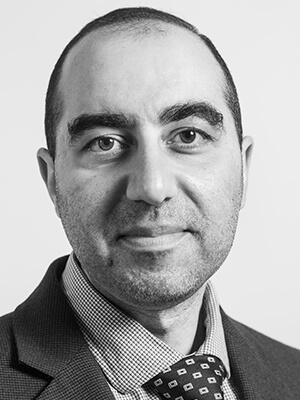
Dr. Ashraf Tantawy is a Senior Lecturer in the School of Computer Science and Informatics at De Montfort University (DMU), UK. He holds a PhD and MSc in Electrical Engineering from Vanderbilt University, USA, and has previously served as an Assistant Professor at Virginia Commonwealth University (VCU). His industrial experience includes roles at British Petroleum, Qatar Gas, and Schneider Electric, focusing on embedded and safety-critical systems. He is affiliated with the Cyber Technology Institute (CTI) and the Institute of Artificial Intelligence (IAI) at DMU. Education: Ph.D. in Electrical Engineering, Vanderbilt University, USA M.Sc. in Electrical Engineering, Vanderbilt University, USA Engineering Management, University of Manchester, UK, 2015 Dr. Tantawy's research lies at the intersection of Cyber Physical Systems (CPS), Artificial Intelligence, Cyber Security, and Data Science. His work emphasizes the development of AI-driven methods for securing CPS, including reinforcement learning for autonomous systems, safety-security co-design, and decision-making under uncertainty. Application domains include autonomous vehicles, drones, smart cities, and industrial automation. He teaches courses such as Embedded Systems, Cyber Physical Systems, AI for Cyber Security, and Industrial Automation. His recent publications demonstrate a strong focus on model-based and data-driven approaches to CPS security, attacker modeling, intrusion detection, and risk assessment. The research spans both defensive and offensive security strategies, with increasing emphasis on machine learning and adaptive control in complex systems. Scientific Awards and Certifications: Safety Instrumented Systems (SIS) Expert, International Society of Automation (ISA), 2015 Dr. Tantawy has secured and contributed to multiple externally funded research grants totaling over $1.5 million. As Principal Investigator (PI) and Co-Investigator (CO-PI), he has worked on projects funded by NASA, Commonwealth Cyber Initiative (CCI), Virginia Catalyst, and Commonwealth Center for Advanced Manufacturing (CCAM). His research leadership includes projects on adversarial attack detection in connected vehicles, smart city testbeds, renewable energy systems, and smart manufacturing. He is an active member of the IEEE and ISA, contributing to both academic and industrial advancements in secure and dependable systems. He is involved with the Cyber Technology Institute (CTI) and the Institute of Artificial Intelligence (IAI) at DMU, contributing to interdisciplinary research in cyber security and intelligent systems. These labs support projects in AI-driven security, autonomous systems, and industrial IoT, fostering collaboration across academia and industry.
Dr. David Mount is a Lecturer in Criminology at the University of Queensland’s School of Social Science, Faculty of Humanities, Arts and Social Sciences. His career spans military intelligence, consultancy, and academia. He previously served as Commandant of Australia’s Defence Intelligence Training Centre (2003) and has 30 years of experience in the Australian Intelligence Community. He holds a PhD from UQ (2018) on investigative interviewing in policing. Education: Bachelor of Arts (Honours) from UNSW, Master of Justice from QUT, and a PhD from UQ. He teaches Global Security Regulation and cyber criminology components in UQ’s Master of Cyber Security program. Research interests focus on countering Child Exploitation Material (CEM) and offensive cyber techniques in law enforcement. Notable collaborations include work with the Australian Federal Police (AFP) on CEM triage tools and cyber policy analysis. Recent projects examine legal frameworks for 'offensive cyber' operations and privacy implications of surveillance powers. Key achievements include the TRIST decision support tool for law enforcement prioritization and the QUANTEM study on alcohol-related violence. Awards include the Commander Training Command Commendation for his leadership in intelligence training. He advises on cybersecurity education risks and has published on topics ranging from cybercrime triage to legal aspects of hacking powers. Current research explores domestic application of offensive cyber tactics under Australian law.
Heidi B. Demarest serves as the Head of the Department of Social Sciences and an Associate Professor of American Politics at the United States Military Academy. A 2001 graduate of West Point, she earned her Ph.D. in Political Science from Harvard University in 2011. Her military career includes significant roles such as Deputy Brigade Commander of the Army's offensive cyber brigade and military assistant in Afghanistan, blending academic expertise with operational experience. Her educational background includes: Ph.D. in Political Science, Harvard University (2011) M.A., Harvard University B.S., United States Military Academy (2001) Professor Demarest's research centers on defense budgeting, bureaucratic politics, and Congressional oversight, with a focus on the interaction between the Army and Congress. Her current work examines the executive versus legislative power of the purse, highlighting the complex dynamics of defense funding and acquisition practices in the U.S. political system. Her scholarly output, spanning over a decade, demonstrates a consistent trajectory in U.S. national security policy and institutional analysis. From her 2013 contributions on defense spending to the 2024 publication on cyber coercion, her work bridges political science theory with practical military and legislative challenges, emphasizing bureaucratic behavior and inter-branch relations.
Claire Finkelstein is the Algernon Biddle Professor of Law and Professor of Philosophy at the University of Pennsylvania. She is the founder and faculty director of the Center for Ethics and the Rule of Law (CERL), a nonpartisan institute affiliated with the University's Annenberg Public Policy Center. She also holds positions as a distinguished research fellow at APPC and senior fellow at the Foreign Policy Research Institute (FPRI). Her expertise spans national security law, democratic governance, professional ethics, and the law of armed conflict. Finkelstein’s research focuses on ethical and legal dimensions of national security, including targeted killings, cybersecurity, and Guantanamo Bay policies. She co-edits the Oxford Series in Ethics, National Security, and the Rule of Law, publishing volumes such as Targeted Killings (2012) and Cyber War (2015). She advises U.S. military and policymakers, frequently contributes to media outlets like The New York Times and Washington Post , and has testified before Congress on national security issues. Her work addresses hybrid legal frameworks for asymmetric conflict, preservation of cultural heritage during war, and presidential accountability under the rule of law. Finkelstein has led interdisciplinary initiatives, including a working group on closing Guantanamo Bay and reports on civilian harm mitigation in military operations. She is a sought-after commentator on ethics in governance and the intersection of law, morality, and national security policy.
Ricardo Gregorio Lugo is an Associate Professor at the Department of Welfare, Management and Organisation at Oslo Metropolitan University. His research focuses on behavioral aspects of cyber defense operations, human factors in cybersecurity, and cognitive engineering. He holds a PhD in Psychology from Johannes Gutenberg University Mainz (2018), a Master’s in Philosophy from the University of Oslo (2009), and a Bachelor’s in Family and Developmental Psychology from Lillehammer University College (2007). Dr. Lugo collaborates with institutions globally, including NTNU Gjøvik, Tallinn University of Technology, and Vilnius University. His work bridges cybersecurity with psychology, exploring decision-making under pressure, stress in caregiving contexts, and the application of technology in education and healthcare. He has published extensively on cyber threat identification, workforce training, and AI security. His research emphasizes interdisciplinary approaches, using experimental methods to study human behavior in cyber defense exercises. He also contributes to projects like ACDICOM, advancing human performance in cybersecurity. Despite no listed awards, his work has been published in journals like Journal of Cases on Information Technology and Frontiers in Computer Science . Dr. Lugo’s research interests span cybersecurity, behavioral science, and health psychology, with a focus on applying psychological principles to improve cyber defense strategies. He has advised on numerous projects and co-authored over 30 publications. His collaborations include national and international institutions, emphasizing practical applications of research in real-world scenarios.
Lt Col Wayne Chris Henry is an Assistant Professor in the Department of Electrical and Computer Engineering at the Air Force Institute of Technology (AFIT), part of Air University. He is actively engaged in teaching, research, and leadership in cybersecurity, particularly in space systems and offensive cyber operations. Education: Ph.D., Electrical Engineering, Air Force Institute of Technology, 2020 M.S., Computer Engineering, Air Force Institute of Technology, 2011 B.S., Computer Engineering, Pennsylvania State University, 2004 His research focuses on cutting-edge cybersecurity challenges, including software reverse engineering, vulnerability analysis, IoT/embedded security, and human-machine teaming. He emphasizes practical applications in military and space contexts, aiming to strengthen cyber resilience in critical infrastructure. The most recent articles show a strong trend in space system cybersecurity, secure data distribution (DDS-Cerberus), satellite intrusion detection, and offensive cyber techniques like ROP attacks and script smuggling. His work bridges theoretical analysis with operational defense strategies. Scientific Awards: 2023 Field Grade Officer of the Year - Air University 2023 Graduate School of Engineering Management Dean's Distinguished Professor Award 2022 Field Grade Officer of the Quarter - AFIT 2019 Inducted into Tau Beta Pi (Top 20% students) 2019 Inducted into Eta Kappa Nu (Top 33% students) He mentors numerous students and researchers, particularly through collaborative publications and leadership in AFIT's first Capture the Flag team. While specific grants are not listed, his extensive publication record in defense and cybersecurity suggests active involvement in funded research projects. He is also deeply involved in cybersecurity education and curriculum development for military professionals. Dr. Henry leads and contributes to research teams focused on space cybersecurity, software analysis, and cyber education. His lab work includes developing testbeds for satellite security, designing intrusion detection scenarios, and analyzing cyber threats in RF SATCOM and embedded environments.
Stefan Soesanto is a Senior Researcher at the Center for Security Studies (CSS) at ETH Zurich. He leads the Cyberdefense Project and serves as Co-Team Head of the Risk and Resilience Team . His work focuses on cybersecurity, cyber defense, and international law, with extensive experience in designing cyber wargame exercises and organizing defense conferences. Education: MA from Yonsei University (South Korea) in Security Policies and International Law BA from Ruhr-University Bochum (Germany) in Political Science and Japanese Research Interests: Cyberwarfare and Digital Conflict Hybrid Threats and Cyber Deterrence International Cyber Norms and Policy Implementation Ukraine’s Cyber Defense Strategies Space Economy Security Key Publications: 2024: Analysis of Ukraine’s Digital Warfighting Ecosystem 2023: Insight into Ukraine’s IT Army and Counter-Hybrid Campaigns 2022: Studies on EU Norm Erosion and Cyber Deterrence 2021: Exploration of Cyber-Electromagnetic Activities and Space Security 2020: Critique of EU Cyber Sanctions and Cyber Terrorism Trends