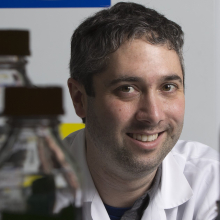
Simone Kühn serves as Director of the Research Center for Environmental Neuroscience at the Max Planck Institute for Human Development in Berlin and holds the position of Heisenberg Professor at the University Medical Center Hamburg-Eppendorf since 2016. Previously, she led the Lise Meitner Group for Environmental Neuroscience at the Max Planck Institute (2019-2024) and currently directs the Psychiatric Environmental Neuroscience (PEN) working group, a collaboration between the MPIB and Charité-Universitätsmedizin Berlin since 2025. Her academic credentials include a Dipl.-psych from the University of Potsdam (2006), Dr. rer. nat. from the University of Leipzig (2009), and Habilitation in Psychology from Humboldt-Universität zu Berlin (2012). These qualifications established her expertise in the neural mechanisms underlying human-environment interactions. Dr. Kühn's pioneering research examines how natural versus built environments impact mental health, cognitive processes, and neural structures across the lifespan. Her work integrates environmental psychology, neuroscience, and clinical psychiatry to investigate how exposure to different environments shapes brain function and psychological well-being. She employs advanced methodologies including structural and functional MRI, virtual reality environments, and longitudinal study designs to uncover the neural pathways connecting physical environments to mental health outcomes. Her research has demonstrated that natural environments can reduce stress, enhance cognitive restoration, and positively influence brain structure, particularly in regions associated with emotion regulation and memory. Analysis of her extensive publication record reveals a consistent trajectory toward increasingly sophisticated investigations of environmental influences on the brain. Her recent work has expanded into virtual reality applications for mental health treatment, the neural mechanisms of architectural design preferences, and the impact of air pollution on brain health. She has pioneered experimental approaches to study environmental effects through controlled exposure studies, including the development of virtual nature environments that can be precisely manipulated to isolate specific environmental features. Her scientific contributions have been recognized through prestigious appointments: Election to the German National Academy of Sciences Leopoldina Membership in the DFG-Network WAS (Wirkungsforschung in Architektur und Städtebau) Service on the Psychology Review Board of the German Research Foundation (DFG) Fellowship at the German Institute for Economic Research (DIW) Early recognition through admittance to Studienstiftung des deutschen Volkes (2005) Dr. Kühn has mentored numerous doctoral and master's students whose theses explore diverse aspects of environmental neuroscience, from the impact of natural environments on stress physiology to the neural correlates of architectural preferences. Her research has been supported by substantial funding that has enabled large-scale investigations of environmental influences on brain health across different age groups and populations, including vulnerable individuals with mental health conditions. As leader of the Center for Environmental Neuroscience, she directs a multidisciplinary team of researchers who employ cutting-edge methodologies to investigate how environmental factors shape brain development, function, and mental health. The center's work has significant implications for evidence-based urban planning, therapeutic interventions using nature exposure, and understanding the neural basis of human-environment interactions in an increasingly urbanized world.