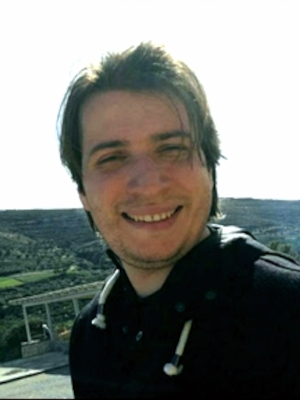
Andrea Saracino is an Associate Professor specializing in cybersecurity, privacy-preserving technologies, and machine learning applications. His research focuses on enhancing security in IoT systems, smart homes, and mobile devices, with a particular emphasis on Android malware detection and usage control frameworks. He has received the IEEE TCCPS Early-Career Award 2023 for his contributions. Key projects include the SIFIS-Home initiative for privacy in globalized smart homes and the ACE framework for access control. His work addresses challenges in balancing privacy, utility, and explainability in machine learning models, particularly in image and tabular data analysis. He actively explores cybersecurity in emerging domains like software-defined vehicles and industrial control systems.
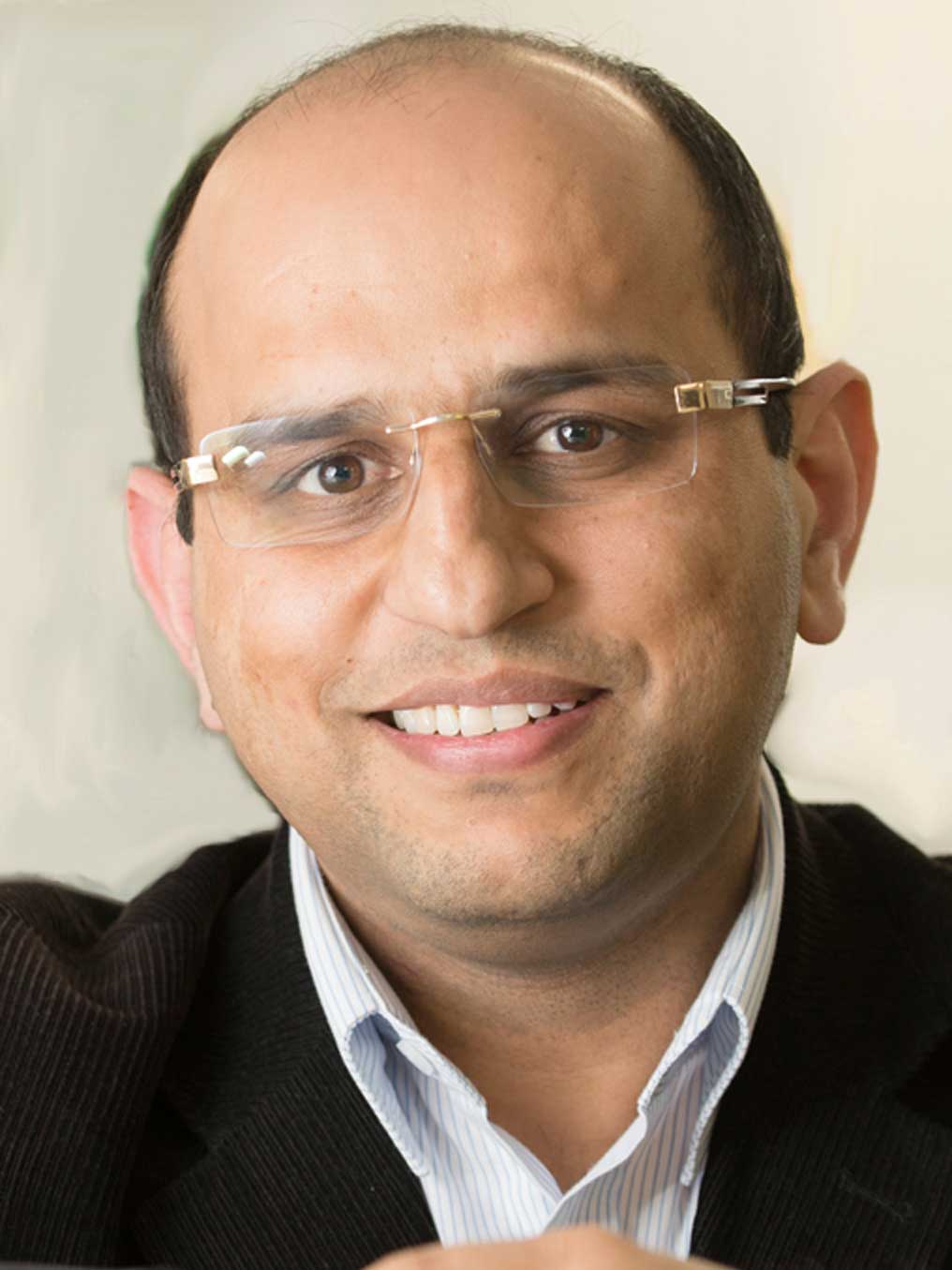
Ravinder Dahiya is a Professor in the Department of Electrical and Computer Engineering at Northeastern University's College of Engineering. He is also an Affiliated Researcher at the Dublin Innovation Institute. His research focuses on flexible printed electronics, soft robotics, electronic skin, and sustainable technologies, emphasizing biodegradable materials and energy-efficient systems. Education: PhD in Microelectronics from the Italian Institute of Technology (2009). Awards include Fellowships from IEEE, The Royal Society of Edinburgh, and The Institution of Engineers in Scotland, alongside the Microelectronic Engineering Young Investigator Award (2016). Research interests span tactile sensing, haptics, and wearable systems, with a lab (BEST Group) developing multidisciplinary solutions for societal challenges like electronic waste reduction. Key projects include self-powered energy harvesters and biodegradable triboelectric nanogenerators. Recent grants include a $230,000 NSF EAGER award for robotic e-skin integration. Media highlights include features in TechXplore and Chemical & Engineering News, along with speaking roles at global summits like the AI for Good Global Summit (2023). Labs/Teams: Bendable Electronics and Sustainable Technologies (BEST) Group, focusing on printed electronics, material science, and robotics.
Ana Lucia Caneca Cavalcanti is a Professor of Computer Science at the University of York, leading the SER research group with expertise in formal methods for safety-critical systems. Her work bridges theoretical software engineering with practical applications in robotics and autonomous systems, emphasizing verification and reliability. BSc in Computer Science, Universidade Federal de Pernambuco, Brazil (1987) MSc in Computer Science, Universidade Federal de Pernambuco, Brazil (1990) DPhil in Computer Science, Oxford University (1997) Her research centers on formal methods, safety-critical software engineering, and real-time systems, with recent focus on robotics. She develops semantic frameworks for refining and verifying complex systems, particularly in adaptive robotic control. Her methodologies address concurrency, object-orientation, and tooling to ensure correctness in high-stakes environments like autonomous vehicles. Current publications reveal a cohesive trend: applying process algebra and architectural patterns to robotic software verification. This work targets safety assurance in adaptive systems, integrating formal semantics with physical robot modeling to mitigate risks in autonomous decision-making. Scientific recognition includes: Royal Society Wolfson Research Merit Award She directs major funded initiatives including RoboSapiens (European Commission, 2024-2026) on human-robot symbiosis, DOMINOS (EPSRC, 2024-2025) for AI disruption mitigation, and the UK Trustworthy Autonomous Systems Verifiability Node (EPSRC, 2020-2024). These projects involve industrial collaborations with Labman Automation and RoboTest, focusing on verifiable safety frameworks. As SER research group lead, she oversees a team advancing formal verification techniques for next-generation autonomous systems, with active partnerships in the High Integrity Systems ecosystem at York.
Paul Siebert is a Reader in Computing Science at the University of Glasgow, specializing in computer vision and robotics. He leads the Computer Vision and Graphics research group and teaches Digital Image Processing and Computer Systems. His research focuses on 3D vision systems, biologically inspired vision, and cognitive robot vision, with applications in clinical and media domains. He has pioneered commercial 3D surface scanning technology and collaborated with clinical groups such as Glasgow Dental School. Affiliations: University of Glasgow (Computing Science Department) Roles: Reader, Group Leader (Computer Vision and Graphics) Research interests include active binocular robot vision, 2D/3D sensing, and visual perception for robotics. Notable projects include work on driver attention monitoring, virtual character creation, and clinical anatomical imaging. Siebert previously directed the 3D-MATIC Faraday Partnership and served as Chief Executive of the Turing Institute, developing commercial vision systems. Publications span over 140 works, emphasizing applications like rain removal algorithms, continual learning in robotics, and foveated imaging. His work integrates deep learning, biological vision models, and real-world robotics challenges. Awards and recognitions are not explicitly listed, but his contributions to 3D vision commercialization and robotics research highlight significant impact in the field.
Medhanie Gaim is an Associate Professor at the Umeå School of Business, Economics and Statistics (USBE), Umeå University. He holds a Docent (higher doctorate) and is a Recognised University Teacher. His primary affiliation is within the Department of Business Administration and Management, focusing on organizational paradoxes and entrepreneurial ecosystems. Research interests include managing contradictions in organizations, startup-corporate collaboration strategies, refugee entrepreneurship, and innovation ecosystems. He leads the 'Entrepreneurial Ecosystems and New Venture Creation' research group and has secured grants from Forte and Handelsbanken. Notable achievements include the USBE Scientific Awards 2020. Key contributions address paradox persistence in projects (e.g., Sydney Opera House), Volkswagen's emissions scandal analysis, and pandemic-driven organizational adaptations. His work spans interdisciplinary dialogues, cultural management (Ubuntu case), and design thinking applications in creative industries. Publications emphasize frameworks for synthesizing paradoxical tensions, ecosystem orchestration strategies, and routines balancing stability/innovation. Current projects include refugee entrepreneurship studies and interactive spaces for venture creation support.
Prof. Bahattin Koç is a Professor at Sabancı University's Faculty of Engineering and Natural Sciences, coordinating the Manufacturing Engineering Program. He holds a Ph.D. and has extensive experience in academia and industry, including roles at The State University of New York at Buffalo. His research focuses on 3D bioprinting, additive manufacturing, computational geometry, and nanotechnology-driven manufacturing processes. Research Interests: 3D bioprinting for tissue engineering, computational geometry for additive manufacturing, heterogeneous and multi-functional object modeling, nano-micro additive manufacturing, and hybrid manufacturing processes. His work integrates advanced design and manufacturing techniques to address challenges in biomedical and industrial applications. Grants and Funding: Secured significant grants including £815,625 from UK EPSRC (2018-2021), €1.4M from DiCoMI H2020 RISE (2018-2022), and $5M from the Turkish Ministry of Development. Projects include bone defect repair, bioprinting of patient-specific scaffolds, and advanced composite manufacturing. Students and Collaborations: Advised over 30 graduate students and researchers. Notable collaborations include work with Penn State University, University of Buffalo, and industry partners like TUSAS Engine Industries. He is a founding member of Sabancı University's Integrated Manufacturing Center and serves on TÜBİTAK advisory boards. Awards and Recognition: Co-inventor of patents such as the 'Method For Three Dimensional Printing Of Heterogeneous Structures' and 'Resorbable Laminated Repair Film'. Recognized for contributions to biofabrication and manufacturing innovation.
Xing-Dong Yang is an Associate Professor of Computer Science at Simon Fraser University (SFU) and holds an adjunct appointment as Assistant Professor at Dartmouth College. He directs the XDiscovery Lab and focuses on Human-Computer Interaction (HCI), particularly in developing interactive systems for smart everyday objects such as wearables, garments, and appliances. His research emphasizes accessibility for visually impaired users and prototyping tools for non-specialists. He earned his PhD from the University of Alberta, following degrees from the University of Manitoba and University of Alberta. Affiliations: Simon Fraser University (School of Computing Science), Dartmouth College (Adjunct) Education: PhD, Computer Science, University of Alberta MS, Computer Science, University of Alberta BS, Computer Science, University of Manitoba His research explores novel interactive systems, including tactile interfaces for education, assistive technologies for visual impairments, and innovative input methods for wearables. Key projects include MakeBronze (cultural preservation through interactive crafts), AccessibleCircuits (inclusive electronics for blind users), and systems like iWood and MicroFluID that merge materials science with HCI. His work has been recognized with awards such as the Best Paper Award at UIST'19 and multiple Honorable Mentions at CHI and UIST conferences. He advises a dynamic team of PhD and MSc students, emphasizing hands-on prototyping and industry collaborations through internships at companies like Google, Microsoft, and Apple. Yang has secured grants including an NSF CRII grant for device modulation and an NSF CSR Large grant for health-focused earpiece technology. His lab fosters interdisciplinary innovation, bridging computer science with design, engineering, and cultural studies.
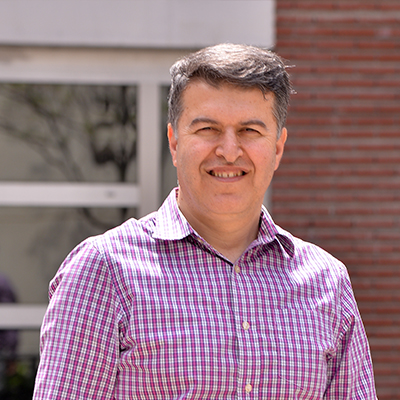
Ahmet Tekalp is a Professor in the Department of Electrical and Computer Engineering at Koc University's College of Engineering since 2001. He holds dual citizenship in Turkey and the USA, with prior academic roles at the University of Rochester (1986-2005) and research positions at Eastman Kodak (1984-1987) and Rensselaer Polytechnic Institute (1981-1984). He chairs the Electronics and Informatics Group at TUBITAK since 2004 as a part-time position. B.S. (1980) in Electrical Engineering & Mathematics, Bogaziçi University M.S. (1982) and Ph.D. (1984) in Electrical, Computer, and Systems Engineering, Rensselaer Polytechnic Institute His research focuses on digital image and video processing, including video compression, motion-compensated filtering for high-resolution applications, video segmentation, object tracking, content-based video analysis, multi-camera surveillance processing, and digital content protection. He has led numerous European and U.S. grants, including FP7 STREP projects and NSF awards, emphasizing applications in sensor networks, visual databases, and medical imaging. His scholarly work spans diverse areas such as superresolution reconstruction, head gesture animation, 3DTV streaming, and reversible data hiding. He has played pivotal roles in editorial boards, including serving as Editor-in-Chief of Signal Processing: Image Communication, and has contributed to major standards bodies like ISO MPEG and ANSI NCITS. Member, Turkish Academy of Sciences (TUBA) Fellow, IEEE Fulbright Senior Scholarship (1999) TUBITAK Science Award (2004) IEEE Signal Processing Society Distinguished Lecturer (1998) He has led multiple international research collaborations and projects, including European FP6/FP7 networks and NATO programs, with substantial grant funding from NSF, NYSTAR, and industry partners like Eastman Kodak, Xerox, and Siemens.
Salvatore Livatino is an Associate Professor in Virtual Reality and Robotics at the University of Hertfordshire, UK. He holds a MSc in Computer Science from the University of Pisa (1993) and a PhD in Computer Science and Engineering from Aalborg University, Denmark (2003). His academic journey includes roles as Research Fellow and Associate Professor at Aalborg University, as well as visiting positions at institutions like INRIA Grenoble and the University of Edinburgh. He leads the Communications and Intelligent Systems research group and directs the Virtual Reality and Robotics Laboratory. His research focuses on immersive technologies (VR/AR/XR), stereoscopic 3D visualization, and teleoperation systems for applications in robotics, healthcare, and command-and-control interfaces. He has contributed to over 30 peer-reviewed publications and secured funding for projects such as the Innovate UK-backed 'iDOC: AI Empowered Document Authoring' (2023–2025) and 'Immersion for Care: Using Extended Reality in Healthcare Training' (2025–2027). Teaching expertise includes problem-based learning, 3D visualization, and immersive game design. His work spans interdisciplinary collaborations in robotics, AI, and healthcare, emphasizing practical applications of virtual environments.
Professor TAN Ah Hwee is a Full-time Faculty member and Lee Kong Chian Professor of Computer Science at the School of Computing and Information Systems (SCIS) at Singapore Management University (SMU). He serves as the Associate Dean (Research) in SCIS and leads research in Artificial Intelligence, Machine Learning, and Health Informatics. His work spans neural networks, multi-agent systems, and healthcare applications such as Mild Cognitive Impairment prediction. He holds a PhD from Boston University (1994). Research Focus: His research integrates adaptive resonance theory, federated learning, and spatial-temporal modeling. Key areas include knowledge graph refinement, episodic memory systems for Activity of Daily Living (ADL) prediction, and explainable AI in multi-agent reinforcement learning. He also develops technologies for aging-in-place support and social media analytics. Recent Contributions: Recent work emphasizes hierarchical multi-agent models (HiSOMA), federated learning frameworks (FedART), and AI-driven health monitoring systems. His publications address challenges in self-organizing neural networks, context-aware reinforcement learning, and medical diagnostics through ambient sensing. Advising & Impact: Advises students like TEH Seng Khoon and Cassandra TAN Hui Ming. His projects include the eHealthPortal for elderly support and Silver Assistants for aging-in-place solutions. Research outputs bridge theoretical advancements in AI with real-world applications in healthcare and smart environments.
Aaron J Molstad is an Assistant Professor in the Department of Statistics at the University of Minnesota – Twin Cities, within the College of Science and Engineering. His research lies at the intersection of statistical methodology and genomic data science, with a focus on developing rigorous and scalable methods for modern high-dimensional datasets. His research interests include high-dimensional statistics, covariance and precision matrix estimation, regression modeling with structured responses, variable selection, and integrative analysis of omics data. He develops methods tailored for compositional data, multivariate responses, and ancestry-specific genetic association studies, contributing to both theoretical statistics and public health applications. The recent publications and funded projects highlight a strong trend in developing objective, reliable, and heterogeneous-aware statistical frameworks for genomics and biomedicine. His work emphasizes methodological innovation with direct applicability to complex biological data, particularly in diverse populations and multi-omics integration. Awarded grants from the National Science Foundation and the National Institutes of Health demonstrate recognition of his research’s significance and impact. These include projects on inference from omics data, new regression models for categorical responses, and integrative genomics in African American populations. Objective and reliable methods for inference from modern omics data (NSF, 2024–2027) Collaborative Research: New Regression Models for Multiple Categorical Responses (NSF, 2024–2025) Integrative Genomics into Genetic Association Studies of Blood Pressure and Stroke in African Americans (NIH/Fred Hutchinson, 2023–2024) Dr. Molstad advises and collaborates on major genomic studies involving protein expression, blood pressure, stroke, and ancestry-specific effects. While specific PhD students are not listed, his role as Principal Investigator on multiple grants indicates mentorship of graduate researchers and postdoctoral scholars. He is also active in the broader statistical community, with publications in top-tier journals such as Biometrika , Biometrics , and Genome Biology .
Dr. Kamil Waldemar Lemanek is a Polish-American academic affiliated with Maria Curie-Skłodowska University as an Assistant Professor in the Department of Logic and Cognitive Science under the Faculty of Philosophy and Sociology. He also holds an adjunct position at the University of Warsaw Institute of Philosophy. His scholarly focus bridges philosophy of language , philosophy of mind , and ontology , with significant contributions to inferentialism, semantic theory, and pedagogical innovation. PhD in Philosophy (2023), University of Warsaw Research on natural language architecture, delusion frameworks, and educational technology Extensive editorial collaboration and grant acquisition His publications reveal a thematic interplay between linguistic finitism , semantic atomism , and social epistemology . Notably, he explores unconventional pedagogical tools like ancient astronaut theory for teaching informal logic. Though no specific scientific awards are listed, his national/international grants (e.g., NCN grant for research on language architecture) demonstrate institutional support. Teaching innovations include AI-assisted peer review simulations in academic writing instruction.
Włodzimierz Kasprzak is a Professor at the Institute of Control and Computation Engineering, Faculty of Electronics and Information Technology, Warsaw University of Technology. His research focuses on computer vision, robotics, human-computer interaction, and machine learning. He has contributed to advancements in human action classification, skeleton-based feature analysis, and multimodal interface design. Research Highlights: Development of lightweight classification models for human actions in video using skeleton-based features. Advances in multi-stream fusion techniques for image and video analysis. Design of embodied agent systems for cybersecurity event visualization and control. Awards and Recognition: 2024: Individual First Class Rector's Award for Scientific Achievements (2022-2023) 2021: Medal of the Commission of National Education 2011: Golden Cross of Merit His work integrates theoretical contributions with practical applications in robotics, surveillance systems, and human-centered technologies.
Michael R. Vanner is a Professor at Imperial College London leading the Quantum Measurement Lab. His research focuses on experimental and theoretical quantum optomechanics, quantum photonics, and hybrid quantum systems. He explores foundational questions in quantum mechanics and develops quantum technologies for sensing and entanglement generation. Key projects include laser cooling of mechanical resonators, Brillouin scattering in optical fibers, and generating non-Gaussian mechanical states. Vanner has supervised over a dozen PhD/MSc students and postdocs, many of whom have transitioned to prestigious academic and industry roles. His lab has secured £multi-million grants, including a UKRI Future Leaders Fellowship and EPSRC Strategic Capital Equipment funding. Notable awards include Australia's National Measurement Institute Prize (2018) for contributions to precision measurement in cavity quantum optomechanics. Research Highlights: Developed techniques for enhanced laser cooling via zero-photon detection Explored quantum-to-classical transition interfaces with mechanical systems Pioneered single/multiphonon subtraction to engineer non-Gaussian states Collaborated with global institutions like AMOLF, ANU, and NPL Awards & Recognition: 2018: Australia's National Measurement Institute Prize 2019: Royal Society Research Grant 2022: EPSRC Strategic Capital Equipment Grant (£1.6M) Labs/Teams: Quantum Measurement Lab at Imperial College London, collaborating with the Del'Haye Lab (Erlangen), ANU Quantum Optics Group, and ORCA Computing. Current facilities include dilution refrigerators and advanced optomechanical setups.
James F. Peters is a faculty member in the Department of Electrical and Computer Engineering at the University of Manitoba, Winnipeg, Canada. His research lies at the intersection of computational topology, proximity theory, rough sets, and digital image analysis, with applications in computer vision, pattern recognition, and biologically-inspired computing. He has made foundational contributions to the theory of near sets and computational proximity, publishing extensively in journals and book series by Springer. His research interests include computational proximity, near sets, rough sets, digital image analysis, pattern recognition, and topological models of perception. These are evident from his numerous publications in theoretical and applied computer science, often in collaboration with researchers such as Andrzej Skowron, Sheela Ramanna, and Arturo Tozzi. His work spans mathematical foundations, computational models, and real-world applications in biomedical imaging and rehabilitation systems. The recent articles (2017–2025) show a strong trend toward integrating topology, physics, and neuroscience in the analysis of digital images and brain activity. Topics include proximal nerves, optical vortices, thermodynamics of emotions, and entropy in cosmology, indicating a broad interdisciplinary approach. His publications frequently appear in journals such as Entropy , Information Sciences , and Transactions on Rough Sets , as well as in Springer’s Lecture Notes in Computer Science and Intelligent Systems Reference Library series. He has authored or co-authored several books and special issues, notably in the Transactions on Rough Sets series, and has contributed to encyclopedic works on rough sets and computational intelligence. His editorial and collaborative roles highlight his leadership in the rough and near sets research community. Dr. Peters has advised or collaborated with several researchers, though specific student names are not listed in the provided text. He has been involved in projects related to adaptive learning, telerehabilitation gaming systems, and image classification using tolerance near sets. His work often involves grants and interdisciplinary teams, especially in computational intelligence and biomedical applications. He is associated with research groups and labs focused on computational intelligence, rough sets, and digital image analysis, often in collaboration with the University of Warsaw and other international institutions. His ongoing work continues to explore the mathematical foundations of perception and proximity in both artificial and biological systems.