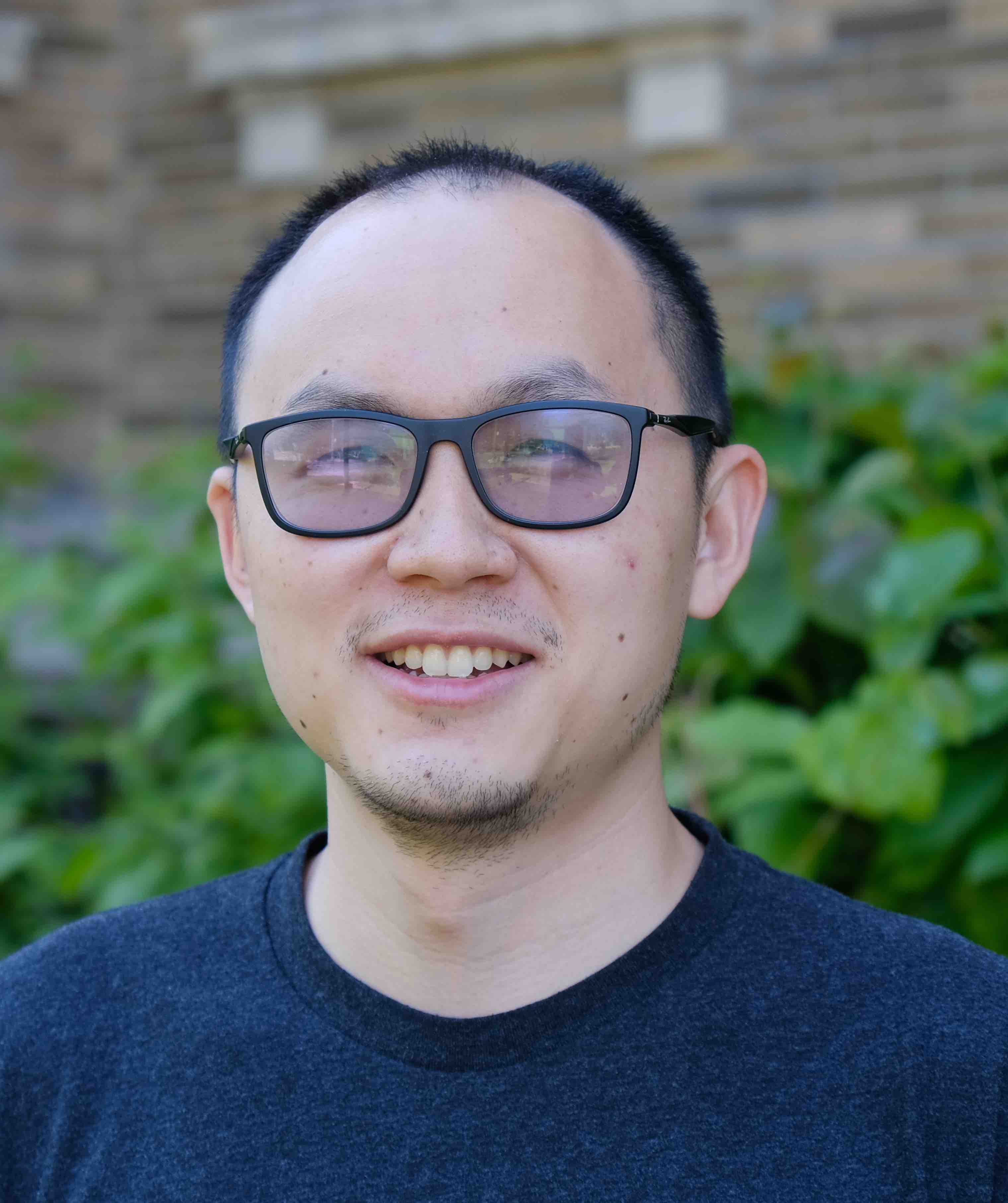
Dr. Shohei Mori is a Junior Research Group Leader at the Visualization Research Center (VISUS) of the University of Stuttgart, Germany, and a Guest Associate Professor at Keio University, Japan. His research focuses on computational Mediated Reality, combining Augmented and Diminished Reality to address human-centered visual computing challenges. Key applications include education, entertainment, and cinematography. He has received numerous awards, including the IEEE ISMAR 2023 Best Journal Paper Award, IEEE VR 2022 Best Journal Paper Award, and multiple presentation/demonstration awards. His work spans grants such as the FWF-funded 3DDR project and collaborations with institutions like TU Graz, NTT Laboratories, and AVL List GmbH. Mori has taught courses on topics like Neural Rendering, Mixed Reality, and Computer Vision at institutions including TU Graz and FH Salzburg. His teaching emphasizes practical assignments and student research presentation management. His research interests include 3D reconstruction, light field displays, and perceptual aspects of mixed reality. He actively contributes to conferences like IEEE VR and ISMAR as a reviewer, chair, and committee member.
Ivan Gavran is a Researcher at the Max Planck Institute for Software Systems (MPI-SWS), focusing on foundational and applied aspects of computer science. His primary research interests include formal verification, reinforcement learning, multi-robot systems, and cyber-physical systems. He explores the intersection of formal methods with machine learning and robotics, aiming to create robust, provably correct systems. His work emphasizes practical applications such as smart contract verification, human-robot collaboration, and distributed task planning. He has developed tools like Lassie for interactive theorem proving and Antlab for multi-robot task coordination. Gavran’s contributions bridge theoretical computer science with real-world systems, addressing challenges in security, reliability, and scalability. While no formal awards are listed in the provided text, his publications reflect significant engagement with leading conferences in formal methods and robotics. His research often involves collaborative projects, leveraging MPI-SWS’s interdisciplinary environment to tackle complex problems in distributed systems and artificial intelligence.
Mihai ANDRIES is an Associate Professor in Computer Science (specializing in Artificial Intelligence and Robotics) at IMT Atlantique, Brest, France. He holds a PhD in Artificial Intelligence from the University of Lorraine (2015), an M.Sc. in Software and Data Engineering from the University of Strasbourg (2012), and a B.Sc. in Computer Science from the same institution (2010). His research focuses on cognitive robotics, ambient systems, and automated functional design, emphasizing human-centric technologies such as assistive robots and healthcare applications. He has held postdoctoral positions at Inria Nancy, Institute for Systems and Robotics (Lisbon), and Institute of Intelligent Systems and Robotics (Paris), with industry experience at PSA Peugeot Citroën and Dassault Systèmes. His work integrates artificial intelligence, robotics, and sensor systems to enhance quality-of-life solutions, including robotic rehabilitation assessment and dementia detection through speech analysis. Key projects include the DiscoBot (mental health chatbot), Veggie Breizh Bot (cooking assistance robot), and SUMMA-Sound (sound-based activity recognition). He has secured grants totaling over €1M for projects like HEAP sorting, RoboErgoSum (robotic consciousness), and Mementop (sound-based mental health diagnosis). His software contributions include tools for 3D model conversion (stl2sdf, binvox2sdf) and multi-robot simulators.
Paolo Burelli is a Lecturer and Head of the brAIn Lab at the IT University of Copenhagen. He also serves as a Senior Data Scientist at Tactile Entertainment A/S since 2016. His research focuses on Game AI, Player Experience, Machine Learning, and Neuroscientific approaches to gaming. Key affiliations include the Creative AI Lab and The Maritime Hub. Research interests span adaptive game systems, player modeling, and the intersection of neuroscience with game design. Notable projects include the Pioneer Centre for Artificial Intelligence (2021–2034), ALGO (2019–2022), and CREATE (2023–2025). Projects emphasize creative AI applications in education, difficulty modeling in games, and maritime safety through alarm-handling practices. Publications highlight work on LLM emotion generation, EEG-based neural decoding, and player frustration tolerance. Collaborations include institutions like Springer and the Danish National Research Foundation. His datasets, such as the Uncanny Valley Face Questionnaire, contribute to facial perception studies. Labs under his leadership include the brAIn Lab, exploring AI ethics, game analytics, and human-centered computing. Projects emphasize practical applications of AI in education and industry.
Håkon Fyhn is an Associate Professor at the Department of Geography and Social Anthropology at NTNU. He leads the NRC-funded AUTOWORK project investigating robotization and digitization in industries, and is Head of the EMERGE Centre exploring emerging educational technologies. His PhD (2011) focused on 'Meeting with presence' in product development and anthropology. Research areas include anthropology of technology, robotization, presence in mediated interactions, control room societies, collaborative processes in work organizations, and climate policy. He has conducted studies on craftsmanship in construction, energy retrofitting challenges, and organizational culture in space operations. Current projects examine automation's societal impact and innovative learning environments. Key outputs include studies on safety management's bureaucratic challenges, classroom integration of real-world experiences, and digitalization's sociotechnical implications. He has contributed to policy analyses on low-carbon transitions and authored textbooks on classroom laboratory methodologies. His work bridges social sciences with technical fields through ethnographic and collaborative approaches. Teaching focuses on applying anthropological methods to technological and organizational contexts. Collaborations include interdisciplinary projects with industry partners and international research networks like CURE (studying resistance to energy policies) and BIAS (AI ethics in labor markets).
Chi-Wing FU, Philip is a Professor in the Department of Computer Science and Engineering at The Chinese University of Hong Kong (CUHK). He holds dual roles in research and education, including Associate Editor-in-Chief of IEEE Computer Graphics and Applications. His research focuses on computer graphics, 3D vision, and human-computer interaction, with over 100 publications in top venues like SIGGRAPH, CVPR, and IEEE Visualization. Education: B.Sc. (1st Hons), Computer Science & Engineering, CUHK M.Phil., Computer Science & Engineering, CUHK PhD, Indiana University, Bloomington Research Interests: Dr. Fu's work spans 3D shape generation, computational LEGO design, AR visualization, and robotic interaction. He has pioneered projects like Make-A-Shape (large-scale 3D modeling) and DreamStone (text-driven 3D creation). His team also develops tools for medical data visualization and hand-object pose estimation. Recent Trends in Articles: Recent work emphasizes AI-driven creativity (e.g., LEGO art, text-to-3D systems) and real-time AR applications. His publications often bridge theory (e.g., generative models) with practical systems (e.g., user interfaces for design). Awards: Postgraduate Research Output Award (2023) MSRA Fellowship Nomination (2022) Best Associate Editor (IEEE CG&A) Outstanding Reviewer (ICCV 2021, CCF CAD/CG 2023) Advising & Grants: Supervised over 40 PhD/Master students and postdocs. Active in securing grants for projects like computational LEGO design (with Autodesk), medical AR visualization, and 3D generative AI. Collaborates with industry partners like Adobe and Huawei. Labs & Teams: Leads the Computational Design and Visualization Lab, focusing on 3D systems, robotics, and creative AI. Key projects include the LEGO Sketch Art toolchain and the HandShadowPoser AR system.
Dirk Fahland is an Associate Professor in Process Analytics on Multi-Dimensional Event Data at the Analytics for Information Systems group, Eindhoven University of Technology (TU/e), School of Mathematics and Computer Science. He combines formal methods with data-driven approaches to analyze complex distributed systems through event data. His current research focuses on process mining, data engineering, and multi-dimensional analysis of business processes. Academic Background: PhD from Humboldt-Universität zu Berlin and TU/e under Profs Wolfgang Reisig and Wil van der Aalst Post-Doc at TU/e on EU-funded ACSI project Research stays at Weizmann Institute, HPI Potsdam, and National University of Singapore Appointments: Assistant Professor (2013), Tenure (2016), Associate Professor (2019) Research Interests: Dirk's work centers on analyzing complex systems through event data by developing techniques for large-scale preprocessing, model synthesis, and multi-angle behavioral analysis. He explores object-centric process mining, anomaly detection, and knowledge graph applications for auditing. His research emphasizes balancing model accuracy with simplicity and integrating domain knowledge for explainable process analysis. Scientific Awards: Best Paper Award BIS 2011 Best Paper Award BPM 2011 Best Paper Award ICPM 2020 Best Paper Award ICPM 2021 Best Reviewer Award ICPM 2019 Educational Contributions: He manages the "Data Science in Engineering" Master's program, leads the "Data Challenge" course series at JADS, and teaches advanced process mining courses. He also contributes to BPMN visualization and performance monitoring education.
Renjie Liao is an Assistant Professor (tenure-track) in the Department of Electrical and Computer Engineering (ECE) at the University of British Columbia (UBC), with an associated appointment in the Department of Computer Science. He is also a Faculty Member at the Vector Institute and a Canada CIFAR AI Chair. Prior to UBC, Dr. Liao was a Visiting Faculty Researcher at Google Brain and held a Senior Research Scientist position at Uber Advanced Technologies Group during his PhD. He earned his B.Eng. (Automation) from Beihang University, M.Phil. (CS) from the Chinese University of Hong Kong, and PhD (CS) from the University of Toronto. His research focuses on probabilistic and geometric deep learning , with key contributions in deep generative models, geometric deep learning, neural algorithmic reasoning, and generalization bounds. Notable areas include 3D point cloud analysis, self-driving systems, and healthcare applications using graph neural networks. His work bridges theoretical foundations (e.g., PAC-Bayes bounds) with practical applications like motion forecasting and medical imaging. Education: B.Eng. in Automation, Beihang University (2011) M.Phil. in Computer Science, CUHK (2015) PhD in Computer Science, UofT (2021) Dr. Liao has received awards such as the RBC Graduate Fellowship and Connaught International Scholarship. His lab (Deep Structured Learning Lab) emphasizes principled mathematical approaches to solving complex problems. He advises students in machine learning, computer vision, and robotics, encouraging applications from those with strong coding/mathematical backgrounds. Labs/Teams: Deep Structured Learning Lab (UBC) Vector Institute Collaboration
Christopher L. Buckley is Professor of Neural Computation (Informatics) at the School of Engineering and Informatics, University of Sussex, where he has been a faculty member since 2014. He was promoted from Lecturer to Senior Lecturer in 2018 and to Professor in 2022. His research bridges theoretical neuroscience and artificial intelligence, with a focus on active inference, predictive coding, and embodied cognition. Master of Physics (First Class), University of Edinburgh, 2000 MSc in Evolutionary and Adaptive Systems, University of Sussex, 2001 PhD in Cognitive Robotics, University of Southampton, 2008 His research interests center on understanding how neural systems give rise to robust behavior and how such principles can inform AI. He investigates machine learning models grounded in neuroscience, particularly through the lens of the free energy principle and active inference. His work spans artificial intelligence, machine learning, theoretical neuroscience, cognitive robotics, and artificial life , with applications in planning, perception, and adaptive systems. His recent publications reveal a strong trend in scaling predictive coding, hybrid active inference models, and rate-distortion theory for action representation. He frequently collaborates with leading researchers like Karl Friston and explores topics such as tool use, synthetic awareness, and ecosystem-level intelligence. His work appears in high-impact journals and preprint servers including Neural Computation , Frontiers in Network Physiology , and arXiv. He has received multiple research grants from prestigious funders including Innovate UK, the John Templeton Foundation, BBSRC, and the European Union, supporting projects on synthetic awareness, neural abstraction, and brain-wide dynamics in vertebrates. A metapredictive model of synthetic awareness for enabling tool invention (Innovate UK) Modelling Abstractions in Deep Reinforcement Learning and Rate-Distortion Theory (VERSES INC) The Scaling-up of Purpose in Evolution (John Templeton Foundation) DIMENSIVE: Data-driven Inference of Models from Embodied Neural Systems (EU) Distributed neural processing of self-generated visual input (BBSRC) Christopher Buckley leads an active research group at Sussex, contributing to the development of next-generation AI systems grounded in biological principles. He has no listed students in the provided data, but his collaborative network is extensive. He is not part-time, not retired, and not a former staff member, indicating ongoing active engagement in research and teaching.
Clay Palmeira Da Silva is a Lecturer in Computing at the Department of Computer Science, School of Computing and Engineering, University of Huddersfield (United Kingdom). His research bridges foundational web technologies and emerging AI applications, with a focus on distributed systems, service interoperability, and deep learning. Research Interests: His work spans: Core Web Technologies: Web services, mobile computing, synchronization, and QoS optimization. User-Centric Systems: Multi-device UX, interoperability, and edge computing. Applied AI: Deep learning for ecological conservation (e.g., Amazonian bird detection). Publication Trends: Earlier research focused on web engineering and distributed systems (e.g., service migration, synchronization). Recent work demonstrates a pivot toward AI-driven applications in environmental science, utilizing computer vision for biodiversity monitoring.
Alexei Efros is a Professor of Electrical Engineering and Computer Science at UC Berkeley , affiliated with the Berkeley Artificial Intelligence Research Lab (BAIR) . Previously, he was a faculty member at the Robotics Institute, Carnegie Mellon University , and a postdoc at Oxford University with Andrew Zisserman. His work spans data-driven computer vision , self-supervised learning , and applications to computer graphics , computational photography , and human-AI interaction . Research Themes : Self-supervised visual learning 3D scene understanding Vision-language multimodal systems Teaching : CS 180/280A: Intro to Computer Vision CS 280: Graduate Computer Vision CS 294-192: Visual Scene Understanding Recent Publication Trends : Focus on diffusion models and self-guidance 3D perception and rendering Interpretability of vision-language models Temporal and sequential learning Scientific Collaborations : Extensive partnerships with institutions like MIT, CMU, Stanford, and NVIDIA Mentorship of PhD students now at TTIC, OpenAI, Anthropic, and academia Labs & Teams : BAIR Lab (UC Berkeley) Collaborations with Adobe Research, Google, and NVIDIA
Dr. Yining Hua is a Lecturer (Assistant Professor) in the School of Natural and Computing Sciences at the University of Aberdeen, where he is actively involved in research and teaching in computing science. He also holds an honorary researcher position at the University of Glasgow. His academic journey includes a B.Eng. in Information Security from Northeastern University, China, and a PhD in Computer Science from Loughborough University, UK. Prior to joining Aberdeen, he served as a postdoctoral researcher at the University of Glasgow and as a lecturer at the University of Roehampton and the University of Lincoln. His research focuses on cutting-edge areas in computing, including: Applied Artificial Intelligence and Machine Learning Robotics and Autonomous Systems Computer Vision Information Security and Blockchain Future Computer Networks and Internet of Things Dr. Hua's recent publications reveal a strong trend in applying AI to medical imaging, autonomous driving, and IoT systems. His work spans biomedical informatics, energy-efficient EV systems, and domain adaptation techniques for real-world deployment. He frequently publishes in high-impact IEEE journals and conferences, demonstrating consistent contributions to both theoretical and applied AI. His scientific contributions are reflected in numerous peer-reviewed articles, though no specific awards or fellowships are mentioned in the provided text. Dr. Hua is actively mentoring and accepting new PhD students in computing science, indicating a vibrant research group. He has not received any named grants in the text, but his publication output suggests active research funding. He is affiliated with research teams working on AI for healthcare, autonomous systems, and secure distributed networks, particularly within the University of Aberdeen’s computing science environment.
Sihem Amer-Yahia is a distinguished Research Professor at the University of Grenoble Alpes (affiliated with Grenoble Informatics Laboratory ), with significant contributions to database systems , data exploration , and fairness in AI . Her work bridges human-computer interaction and machine learning to create systems that enhance data-driven decision-making. Research Pillars : Algorithmic fairness, interactive data mining, recommender systems, and human-AI collaboration Recent Advances : 2023-2025 publications focus on statistically sound hypothesis testing , multi-objective recommendation , and conversational analytics Leadership : Co-organized major conferences (DASFAA 2024) and led DEI initiatives in database communities Her 15 most recent articles (2020-2025) span topics like producer fairness in recommendation , statistical hypothesis frameworks , and AI-powered education systems , with keywords covering database optimization , reinforcement learning , and ethical data mining . She actively contributes to ACM/IEEE journals and VLDB/SIGMOD conferences.
Nikos Komodakis is a Professor in the Computer Science Department at the University of Crete, Greece, where he develops efficient, scalable and mathematically well-grounded algorithms for analyzing visual data including static natural images, video, and medical image data. His research spans deep learning, computer vision, machine learning, and artificial intelligence with significant contributions to self-supervised learning, few-shot learning, and knowledge distillation techniques. His work demonstrates a strong theoretical foundation combined with practical applications, particularly in medical imaging. Komodakis has published extensively in top-tier computer vision venues including CVPR, ICCV, ECCV, and IEEE Transactions on Image Processing. His recent publications (2022-2025) show a growing emphasis on medical image analysis applications while maintaining strong contributions to fundamental computer vision problems. Notable contributions include novel approaches for unsupervised representation learning that surpass state-of-the-art methods, effective techniques for knowledge distillation (such as the QUEST framework), and innovative frameworks for few-shot visual learning. Komodakis serves on the editorial boards of prestigious journals including the International Journal of Computer Vision, Computer Vision and Image Understanding Journal, and Computational Intelligence Journal. He has been a frequent area chair for major computer vision conferences including CVPR, ICCV, ECCV, and BMVC. Spyros Gidaris received the Ponts Foundation Best Thesis Prize and the University Paris-Est Best Thesis prize under Komodakis' supervision Sergey Zagoruyko received the AFRIF 2018 Thesis Prize for his PhD work supervised by Komodakis His research group has developed influential techniques including Online Bag-of-Visual-Words Generation for Unsupervised Representation Learning, which surpassed previous state-of-the-art methods. The group maintains active GitHub repositories for many of their publications, demonstrating commitment to reproducible research. Current research directions include advancing medical image analysis through deep learning, improving self-supervised learning frameworks, and developing more efficient neural network architectures.
Ali Cengiz Beğen is a Professor in the Computer Science Department at Ozyegin University in Istanbul. He is also the founder of Networked Media , a technology consulting firm specializing in IP video systems. His career includes technical leadership roles at Comcast and Cisco , where he developed advanced video delivery solutions. Education: PhD in Electrical and Computer Engineering (Georgia Tech, 2006), BSc in Electrical Engineering (Bilkent University, 2001) Research Interests focus on network support for real-time media , including optimized content encoding, low-latency live streaming, and protocol innovation for IP video. His work bridges academic research with industry standards like ISO/IEC JTC1/SC29 (MPEG/JPEG), where he serves as Head of the Turkish National Body . Current projects explore Media-over-QUIC transport , multi-CDN streaming , and reinforcement learning for adaptive streaming. His scientific contributions include 40+ US patents and publications in IEEE Transactions on Multimedia , IETF RFCs, and ACM SIGMM. Awards highlight his impact: Emmy® Award for Technology and Engineering (2020) ACM SIGMM Test of Time Award (2021) SVTA Industry Fellow (2021) ACM Distinguished Member (2020) IEEE Senior Member (2019) Microsoft Bandwidth Estimation Grand Challenge Runner-up (2021) Professional Service includes IEEE Communications Society Distinguished Lecturer (2016-2020) and keynotes at conferences like IEEE ICME and SVTA Webinars . He actively consults for media-tech companies and law firms on video transport standards.