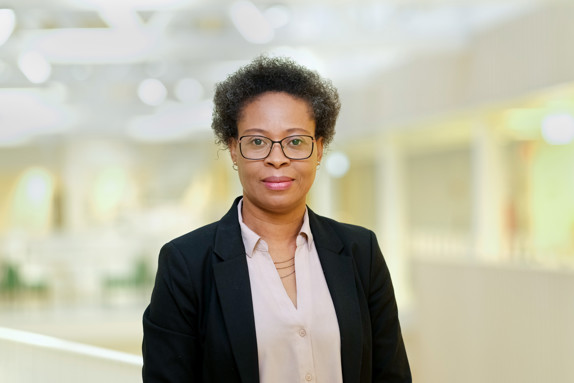
Kerstin Nilsson is a Professor of Public Health Sciences at Kristianstad University , Faculty of Health Sciences, and holds associate professorships in Public Health Epidemiology at Lund University and Work Science at the Swedish University of Agricultural Sciences (SLU). Her research focuses on creating healthy workplaces , sustainable working lives , and person-centered healthcare practices . Key Research Areas: Aging workforce, salutogenesis, nature-assisted rehabilitation, pandemic response in healthcare, and sustainable work environments. Leadership: Developer of the SwAge model for sustainable working life across ages. Scientific Contributions: Over 188 publications, with recent projects analyzing nurses' mental health during the pandemic, workplace relationships in healthcare, and nature-based interventions. Collaborates with international networks like the EU COST Action 'DIGI-net' and the Pufendorf Advanced Study Group. Awards: No explicit awards listed, but recognized through leadership roles and interdisciplinary research. Students: Supervises doctoral candidates like Cicilia Nagel and Sophie Schön Persson, focusing on person-centered care and staff well-being. External Affiliation: Associate Professor at Lund University (2007–present) and SLU (until 2007).
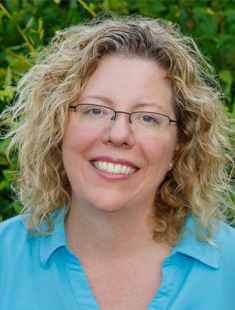
Jennifer Gray, Ph.D., is the Dean of the College of Sciences and Education at Oklahoma Christian University (OC) and holds the rank of Professor of Nursing. She has over four decades of experience in nursing, research, and education, with a focus on global health, HIV/AIDS care, and evidence-based practice. Her career includes roles as Associate Dean at the University of Texas at Arlington (UTA), where she developed courses and led international outreach programs in Uganda. She is a Fellow of the American Academy of Nursing (2013) and a Professor Emeritus of the UTA System (2015). Her research spans nursing education, healthcare disparities, and international collaboration, with notable work in Africa. She co-authors influential nursing research textbooks, including Burns & Grove’s The Practice of Nursing Research . Education: BSN from the University of Central Oklahoma (1977), Master’s and Ph.D. from UTA (1989–1993). She has pioneered nurse-led interventions in hypertension, HIV/AIDS, and maternal health in Uganda, Rwanda, and Tanzania. Her leadership emphasizes innovation in education and maintaining OC’s mission-driven values. She also advocates for healthcare workforce development and healthy work environments in acute care settings. Awards include her American Academy of Nursing Fellowship and recognition for her textbook contributions. She has supervised numerous research initiatives and serves in her church community. Her work bridges academic rigor with practical, community-focused healthcare solutions.
Kerryn Butler-Henderson is an Adjunct Professor in the Department of Health and Biomedical Sciences at RMIT University. Her research focuses on digital health transformation, healthcare informatics, and workforce education. She actively contributes to understanding the integration of artificial intelligence, predictive analytics, and electronic health records (EHR) into healthcare systems. Her work emphasizes improving clinical outcomes through data-driven approaches and addressing challenges in workforce digital literacy. She holds an ORCID identifier (0000-0002-6082-2108) and is open to supervising PhD and Masters students. Research interests include: Learning health systems and AI applications Prediction modeling for musculoskeletal disorders Digital health workforce development Value-based healthcare frameworks Educational innovations in nursing and healthcare Key publications from 2024-2025 explore topics like EHR generalizability, digital health literacy measures, and global digital health workforce roles. Her interdisciplinary collaborations span occupational health, gerontology, and healthcare accounting. Dr. Butler-Henderson is engaged in curriculum development for digital health competencies and has contributed to national surveys on nursing education trends. She maintains strong industry connections through RMIT's Health and Biomedical Sciences research networks.
Marco Tomietto is a Professor at Northumbria University's Nursing Midwifery and Health Department. He also holds a Professorship at the University of Oulu. His expertise spans clinical learning environments, mentorship, newcomer organizational socialization, and VR in healthcare. He earned a PhD in Work and Organizational Psychology from the University of Verona, a Master's in Nursing Science from the University of Udine, and a Nursing degree from the University of Udine. His research focuses on nursing workforce sustainability, vaccine hesitancy, VR applications, and healthcare organizational dynamics. He has published over 80 articles and secured grants like the MONARCH project for veteran healthcare needs analysis. Awards include the 2010 Editor’s Award in Nursing Science and the 2022 Sigma Global Nursing Research Award. Key projects include developing mentoring frameworks, analyzing vaccine hesitancy among nurses, and leveraging VR for clinical training. He advises PhD students on topics like healthcare workforce retention and VR implementation. Education: PhD in Work and Organizational Psychology (2014), MSc Nursing Science (2008), BSc Nursing (2001) Grants: Partnership for Workforce Sustainability, MONARCH, and RAF Families Federation initiatives Labs/Teams: Collaborates with international networks on healthcare policy, public health, and nursing education
Leah Okenwa Emegwa is an Associate Professor of Public Health Sciences at the Swedish Red Cross University (part of Red Cross College), where she has worked since 2017. She holds a PhD in Public Health (2011, Karolinska Institutet), a Master's degree in Public Health (2006), and a Doctor of Optometry (2000). Her work experience spans clinical optometry (primary care, aviation vision care) and academic roles including program directorships and vice-dean assignments. Her research focuses on social determinants of health, emphasizing interpersonal violence (gender-based/family violence), workplace health promotion, refugee/migrant health, and human rights-based approaches. She also explores innovative teaching methods in higher education for addressing social change. Key activities include: Representing the Swedish Red Cross University in ASPHER (European public health network) and the Flemingsberg Science Foundation Guest editing journals like Frontiers in Public Health and Socialmedicinsk Tidskrift Peer review for multiple scientific journals Teaching responsibilities include epidemiology, research methods, gender equity, and occupational health at both undergraduate and graduate levels. Her work emphasizes global health challenges such as violence prevention and health equity in vulnerable populations. Publications highlight themes like refugee mental health, workplace violence mitigation, and educational strategies for addressing gender-based violence. Her 2011 doctoral thesis investigated intimate partner violence and reproductive health in Nigeria.
Rosemary Morgan, PhD, MSc, is a Research Professor at Johns Hopkins Bloomberg School of Public Health in the Department of International Health. She holds primary affiliations with the International Health Department and is associated with the Johns Hopkins Center for Global Women's Health and Gender Equity and the Johns Hopkins Center for Women's Health, Sex, and Gender Research. Dr. Morgan's educational background includes a PhD from the University of Leeds (2012), an MSc from the University of Edinburgh (2007), and a BA from the University of British Columbia (2006). Prior to joining Johns Hopkins, she served as a Lecturer in Global Health Policy at the University of Edinburgh's Global Public Health Unit and as a Research and Teaching Fellow at the Nuffield Centre for International Health and Development at the University of Leeds. Her research focuses on gender inequities in health systems, women's health and wellbeing, and the impact of gender on public health interventions. Dr. Morgan specializes in qualitative research methods and has conducted extensive work on gender analysis in health systems, reproductive health, and the gendered effects of pandemics. Her work often examines how gender norms and power relations affect health outcomes and system performance, particularly in low- and middle-income countries. Dr. Morgan's publication record shows consistent scholarly output from 2014 through 2025, with a notable increase in productivity in recent years. Her research spans multiple domains including gender-responsive monitoring and evaluation, moral distress among healthcare workers, vaccine hesitancy (particularly among pregnant individuals), and the intersection of gender with various health conditions. She has developed methodologies for gender analysis in health systems research and has contributed significantly to understanding how gender influences health outcomes across diverse contexts. Faculty Advisor of the 2023-2024 academic year award from the Global Health: Policy and Evaluation DrPH Program Concentration, JHSPH Excellence in Teaching, Johns Hopkins Bloomberg School of Public Health Excellence in International COVID-19 Public Health Practice, 2021 Nominated for Canadian Women Leaders in Global Health, 2018 and 2020 Selected for 300 Women Leaders in Global Health, 2014 Dr. Morgan serves as co-Editor in Chief of the journal SSM - Health Systems and is a current board member of Health Systems Global. She has advised numerous major research projects including those funded by the Bill & Melinda Gates Foundation, CIHR, USAID, and TDR. Her current leadership roles include being Principal Investigator on the Monitoring for Action and Learning (MAGE) project supporting the Global Financing Facility for reproductive, maternal, newborn, child and adolescent health initiatives. She also leads the Gender and Health Certificate program at JHSPH and co-directs the Gender and Health Summer Institute. Dr. Morgan teaches courses on Gender Analysis in Health Research and Interventions, Foundations in Gender and Health, and Health Systems in Low- and Middle-Income Countries. Her teaching reflects her research expertise, emphasizing practical applications of gender analysis in global health settings.
Amanda Fallin-Bennett, Ph.D., is an Associate Professor at the University of Kentucky College of Nursing , with affiliations in the Cancer Prevention and Control Research Program and the Markey Cancer Center. Her work focuses on substance use , harm reduction , and health equity , particularly for vulnerable populations. Education: Doctor of Philosophy (2011), University of Kentucky Master of Science in Nursing (2009), University of Kentucky Bachelor of Science in Nursing (2007), University of Kentucky Her research explores polysubstance use , recovery frameworks , and public health policy , with recent articles addressing fentanyl test strip utilization , recovery capital in justice-involved women , and reproductive health access for recovery communities. She emphasizes health equity in tobacco control and social justice in substance use prevention. Scientific Awards: Nursing Grant Scholars (2016) Research Protégé of the Year (2019) Vernon Johnson Recovery Advocate of the Year (2019) Scholar Award (2017) Research Award (2019) She actively leads grants like the UK Harm Reduction Hub and Smoke-Free Policy and Behavioral Health initiatives, collaborating with Vital Strategies and KY Cabinet for Health and Family Services. Her work spans opioid use disorder , tobacco cessation , and policy implementation in rural Southern states.
Dr. Shingisai Chando is a Research Fellow at the Sydney School of Public Health within the Faculty of Medicine and Health at the University of Sydney. They hold degrees including BA, MA, MPH, DN, and PhD. Their research focuses on Indigenous health, child and adolescent health, health services management, and workforce dynamics, employing qualitative and translational research approaches. Key research interests include evaluating health programs for Aboriginal and Torres Strait Islander children, stakeholder engagement in health interventions, and addressing health disparities through policy and program design. They collaborate with interdisciplinary teams on projects such as the Study of Environment on Aboriginal Resilience and Child Health (SEARCH) and have contributed to understanding diagnostic practices in pediatric otitis media. No scientific awards are listed for Dr. Chando. Their work has been published in journals such as the Health Promotion Journal of Australia , Health Services Research , and Medical Journal of Australia . While no advising or grants are explicitly mentioned, their research demonstrates expertise in Indigenous health equity, child development, and healthcare system optimization.
Prof. Dr. Michael Gerfin is a Professor of Public Economics at the University of Bern, affiliated with the Center for Regional Economic Development (CRED). His research focuses on health economics, labor economics, and tax-benefit models. He holds an office at A315 and can be reached via email. His work examines topics such as healthcare demand, physician incentives, and policy design, with recent contributions analyzing drug pricing, pandemic response strategies, and educational interventions in developing countries. Key themes in his publications include understanding how financial mechanisms influence provider behavior and designing effective social policies. Gerfin's research spans empirical studies on healthcare utilization, wage dynamics, and household decision-making. His analysis often integrates microsimulation techniques to evaluate policy impacts, such as in-work benefits and active labor market policies. Collaborations with Swiss statistical agencies highlight his engagement with real-world data, such as studies on adverse healthcare events and nursing staff ratios. His work bridges theoretical economic models with practical policy applications, emphasizing evidence-based solutions for public welfare challenges. Labs/Teams: Core member of the Center for Regional Economic Development (CRED), contributing to interdisciplinary projects on regional economic trends and public policy evaluation.
Prof. Brenda S.A. Yeoh is the Raffles Professor of Social Sciences and Professor of Geography at the National University of Singapore (NUS), leading the Asian Migration Cluster at the Asia Research Institute. She holds adjunct roles at institutions like the London School of Economics and serves on international bodies such as the International Geographical Union and the United Nations University Council. Her research focuses on migration, transnationalism, and gender in postcolonial contexts, with notable contributions to care migration, skilled mobility, and citizenship issues. Recognized with awards like the Vautrin Lud Prize (2021) and Public Service Medal (2022), she sits on numerous national and global committees, including Singapore's National Heritage Board and the World Cities Summit Urban Resilience Knowledge Council. Her academic leadership includes editorial roles for journals like Asian Population Studies and Population, Space and Place , and she mentors through critical cultural geography initiatives within NUS. Teaching interests span migration geographies, gender studies, and Singapore’s urban history.
Louise Hunter is an Associate Lecturer at the Oxford School of Nursing and Midwifery, Oxford Brookes University, where she contributes to both undergraduate and postgraduate teaching in midwifery. She is actively involved in research, supervision, and professional development, with a strong focus on improving maternity care and the experiences of women and midwives. Education: PhD MA (Oxon) RM (Registered Midwife) Her research interests revolve around enhancing midwifery care through innovative models such as mindfulness training and group antenatal care. She has investigated mindfulness as a tool to improve workplace culture and support women during labor and early parenthood. Her work on the NIHR-funded REACH project explored group antenatal care, and she continues to research water birth feasibility, anemia in pregnancy, and equity in midwifery education. Her recent publications demonstrate a consistent focus on maternal and newborn health, midwifery education, and service user empowerment. Themes across her work include health equity, particularly for Black, Asian, and Minority Ethnic (BAME) students and birthing people, evidence-based practice, and the integration of psychological and social support into maternity care. Scientific Awards and Recognition: Fellow of the Higher Education Academy Louise Hunter is also a member of the Royal College of Midwives (RCM) and actively supervises research students, including Claire Litchfield, whose work examines water immersion in labor for obese women. She is involved in the Maternity Care (OxMater) research group and contributes to developing initiatives that involve service users in midwifery recruitment and training. Her work bridges clinical practice, education, and research, aiming to create more inclusive, effective, and compassionate maternity services.
Edward J. Schumacher is a Professor at Trinity University's Health Care Administration department. His work focuses on healthcare labor markets, health economics, and quantitative methods. Education: Ph.D. from Florida State University, M.A. and B.A. from University of North Carolina at Greensboro Research Interests include empirical analysis of unions, labor markets for workers with disabilities, hospital competition, and technological change in healthcare. His publications explore wage differentials, monopsony power, and skill dynamics in nursing labor markets. Notable trends in publications involve union wage premiums, disability labor mobility, and hospital technology investment. His research spans labor economics, health informatics, and institutional finance. Professional Memberships include Academy Health, International Health Economics Association, and Society of Labor Economists.
Tiffany A. Radcliff, PhD , is Professor of Health Policy & Management in the Texas A&M University School of Public Health and concurrently serves as the Senior Associate Dean for Research . In this dual role she guides the school’s strategic research agenda while maintaining an active, federally funded research portfolio. Education PhD, Health Services Research, Policy & Administration – University of Minnesota BS (Magna Cum Laude), Economics; Minor, Political Science – Texas A&M University Research Interests Radcliff’s work lies at the intersection of health economics , health policy , and health-services research . Her overarching goal is to improve the quality, accessibility, and affordability of care—particularly for rural and underserved populations . Current emphases include: Economic evaluation of behavioral interventions for obesity and diabetes in rural settings Post-acute care transitions and long-term care quality Industrial organization of healthcare markets and provider responses to policy Disaster preparedness and health-system resilience Publication Trends Across 200+ peer-reviewed articles spanning 1997–2025, Radcliff’s scholarship shows a clear evolution from foundational work on rural hospital markets to large-scale comparative-effectiveness and implementation-science studies. Recent clusters (2020–2025) focus on COVID-19 policy impacts, telehealth cost-effectiveness, and VA transitional-care programs, reflecting a sustained commitment to policy-relevant, methodologically rigorous research. Scientific Awards & Honors (No specific awards listed in the provided text; extensive federal funding and invited lectureships implied by CV and publication record.) Grants & Advising Principal or Co-Investigator on multiple NIH, AHRQ, and VA Health Services Research & Development grants Faculty mentor for PhD, MPH, and post-doctoral trainees in health policy, economics, and implementation science Serves on dissertation and thesis committees for students across Texas A&M and collaborating institutions Labs & Teams Radcliff leads an active research group of graduate research assistants, post-docs, and biostatisticians housed within the Center for Health Organization Transformation (CHOT) and collaborates closely with the VA Health Services Research Center of Innovation and the Southwest Rural Health Research Center at Texas A&M.
Beth Smith, PT, DPT, PhD is an Associate Professor of Pediatrics and Biokinesiology & Physical Therapy at the University of Southern California. She directs the Infant Neuromotor Control Laboratory, where she leads research on neural control of movement during infancy and develops interventions for infants with or at risk for developmental delay. Dr. Smith's research focuses on several critical areas in pediatric development: Neural mechanisms underlying infant motor development Application of wearable sensor technology for objective movement measurement Early identification of developmental delays through quantitative analysis Evaluation of intervention effectiveness for at-risk infants Cross-cultural studies of infant development in diverse settings including rural Guatemala Her work demonstrates a strong integration of technology and clinical practice, with recent publications highlighting innovative approaches to measuring infant movement in natural environments. Dr. Smith's research on algorithmic detection of developmental disabilities using wearable sensors represents a significant advancement in early identification methods. Her studies on telehealth administration of developmental assessments have gained particular relevance following the COVID-19 pandemic, potentially expanding access to early intervention services globally. As director of the Infant Neuromotor Control Laboratory, Dr. Smith oversees a research program that bridges neuroscience, engineering, and clinical practice to improve outcomes for infants with developmental challenges. Her work has important implications for developing evidence-based interventions that can be implemented across diverse healthcare settings.
Dr John Owens is a Senior Lecturer in the School of Education, Communication & Society at King's College London. He co-directs the Centre for Public Policy Research and previously founded the BA Social Sciences programme. His research focuses on applying philosophical and sociological theories to policy challenges in education, healthcare, and environmental sectors, emphasizing critical realism and the capabilities approach. He teaches modules on social justice, environment-society relations, and education policy at undergraduate and postgraduate levels. Research Interests: John explores ethical, social, and political dimensions of public policy through interdisciplinary lenses. His work addresses autonomy, equity, and justice in contexts like environmental pedagogy, healthcare professionalism under austerity, and disability service personalization. He has led projects funded by the Health Foundation and Wellcome Trust, investigating topics like self-management support for long-term conditions and interdisciplinary bioethics training. Publications: His recent works include studies on wearable technology's impact on autonomy, medical professionalism in challenging environments, and the financialization of public services. He has contributed to journals like *Health Care Analysis*, *BMJ Leader*, and *Frontiers in Education*, with over 30 peer-reviewed articles and book chapters. Advising & Grants: John supervises doctoral research on topics like pediatric professionalism and environmental youth engagement. He co-led projects on healthcare ethics and self-management strategies, supported by major health foundations. His work aligns with UN Sustainable Development Goals on health, education, and climate action. Labs/Teams: Active in King's Climate & Sustainability Research and the Centre for Public Policy Research, focusing on policy analysis for social justice in education, healthcare, and environmental policy.