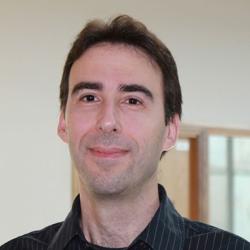
Dr. Jurgen Becque is an Associate Professor in Structural Engineering at the University of Cambridge's Department of Engineering. He specializes in cold-formed steel structures, stainless steel structural behavior, and stability analysis, with a focus on local-overall buckling interaction and innovative design methodologies. His work bridges experimental investigations with computational modeling and machine learning applications. Research Interests: Cold-formed steel structural systems Stainless steel column stability Local and overall buckling interaction Mechanics-based design optimization Machine learning for structural behavior prediction Recent publications demonstrate expertise in cross-sectional stability, connection mechanics, and composite systems like UHPC-confined stainless steel columns. His work addresses both monotonic and cyclic loading scenarios, contributing to Eurocode 3 design standards.
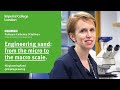
Prof. Catherine O'Sullivan is a Professor of Particulate Soil Mechanics at Imperial College London's Department of Civil and Environmental Engineering, part of the Faculty of Engineering. She leads the Geotechnics Section and serves as Editor-in-Chief of the ASCE Journal of Geotechnical and Geoenvironmental Engineering. Her research focuses on particulate soil mechanics, employing Discrete Element Modelling (DEM) and micro-CT imaging to study sand behavior, reservoir sandstones, and internal erosion. Notable recognitions include the 2016 Shamsher Prakash Research Award and the 2021 President’s Teaching Innovation Award. Education : PhD in Civil Engineering, University of California, Berkeley (2002) MEngSc in Civil Engineering, University College Cork (Ireland) BEng (Civil Engineering), University College Cork (Ireland) Research Interests : Prof. O'Sullivan's work integrates computational and experimental methods to explore granular material behavior. Key areas include DEM validation, μCT analysis, and pore network modeling. Her group collaborates across disciplines, involving physicists and mechanical engineers alongside civil engineers. Awards & Recognition : 2015 Geotechnique Lecture Student Choice Supervision Award (nominated twice) 2023 Alert Geomechanics Special Lecture Advising & Grants : She supports PhD and postdoctoral researchers through Imperial scholarships and fellowships. Her students often explore particulate soil behavior, with many securing prestigious awards. Labs & Teams : Leads the Geotechnics Section at Imperial, fostering interdisciplinary research in geomechanics and computational modeling.
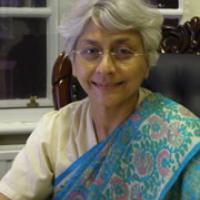
Professor Aditi Lahiri is a Research Professor of Linguistics at the University of Oxford's Faculty of Linguistics, Philology and Phonetics. She holds positions in the Centre for Linguistics and Philology and directs the Language and Brain Laboratory. Her research focuses on phonology, phonetics, historical linguistics, psycholinguistics, and neurolinguistics, with special expertise in metrical theory, feature theory, and morphological complexity. Education : BA (Mathematics, Economics) from University of Calcutta (1971); MA (Comparative Philology) from University of Calcutta (1973); DPhil (Comparative Philology and Linguistics) from University of Calcutta (1979); PhD (Linguistics) from Brown University (1982). Research Interests : Her work spans experimental and theoretical linguistics, including prosodic phrasing, lexical representation, language change, and neural correlates of phonological processing. Key areas include: Metrical phonology and historical sound change Cognitive representation of speech sounds Morphological complexity in the mental lexicon Speech perception and production mechanisms Recent Research Trends : Over the past decade, her publications emphasize cross-disciplinary approaches, integrating experimental psycholinguistics with computational modeling (e.g., ERC-funded projects on morphophonological alternations). Recent work explores language processing in multilingual speakers and the neural basis of phonological features. Awards : Recipient of prestigious awards including the Leibniz Prize (2000), Max Planck Research Prize (1994), and Fellow of the British Academy (2010). She serves as Vice President of the British Academy and President of the Philological Society. Grants & Leadership : Secured over €8 million in research funding, including ERC Advanced Grants (e.g., MORPHON, WORDS). Directed the DFG-funded Sonderforschungsbereich 471 (2006-2008). Established key partnerships in India through endowed scholarships and academic outreach initiatives. Labs & Collaborations : Leads the Language & Brain Laboratory, collaborating internationally on projects combining neurolinguistic methods with historical and experimental linguistics. Supervised numerous PhD students who have become leading academics globally.
Professor Manolis Gavaises is a leading academic in the field of mechanical engineering and computational fluid dynamics at City St George's, University of London, where he holds the position of Professor in the School of Engineering and Mathematical Sciences. He earned his PhD from Imperial College London and has been a faculty member since 2001, progressing to full Professor in 2009. His research is centered on advanced modeling of multi-phase flows, cavitation, and fuel injection systems, with extensive collaborations across Europe and industry partners such as Delphi, Caterpillar, and BP. Education: DIC, Mechanical Engineering, Computational Fluid Dynamics, Imperial College London, 1997 PhD, Mechanical Engineering, Computational Fluid Dynamics, Imperial College London, 1997 Diploma (5 years), Mechanical Engineering, National Technical University of Athens, 1992 His research interests span computational fluid dynamics, cavitation, fuel injection, atomization, high-pressure and supercritical flows, and alternative fuels . He has developed advanced numerical models and experimental techniques, including X-ray phase contrast imaging and high-pressure test rigs. His work integrates fundamental DNS and LES simulations with industrial applications in automotive, marine, aerospace, and medical devices such as heart valves. The recent publications reflect a strong trend toward real-fluid thermodynamic modeling (e.g., PC-SAFT), multi-component fuel behavior, cavitation erosion, and advanced diagnostics . His research increasingly incorporates machine learning and high-fidelity imaging to understand complex flow phenomena across energy, transportation, and biomedical domains. Scientific Awards and Recognitions: Richard Way Prize (1998) Arch T. Collwell Merit Award (1998) Best Oral Paper, SAE World Congress (2006) PE Publication Award, IMechE (2007) Best Presentation Award, Engine Combustion Processes (2009) Fellow, IMechE (2013) Fellow, IMA (2015) As a dedicated mentor, Professor Gavaises has supervised 13 PhDs to completion and currently guides 23 doctoral students. He has secured over €16 million in EU and UK funding, including multiple Horizon 2020 Marie Skłodowska-Curie ITN projects (CAFÉ, HAOS, IPPAD), which support 46 early-career researchers globally. He has created academic opportunities for post-docs and junior faculty, significantly advancing the research profile of his institution. He leads the International Institute of Cavitation Research (IICR), co-founded in 2011 with partners from Loughborough University, TU Delft, and Imperial College, supported by The Lloyd’s Register Foundation. His lab maintains strong experimental capabilities, including a 2000bar pressure flow rig with micro-transparent nozzles and collaborations with Argonne National Laboratory for X-ray imaging.
Professor David Thompson is a globally recognized expert in railway noise and vibration reduction at the University of Southampton's Institute of Sound and Vibration Research (ISVR). He holds a part-time role in ISVR Consulting while continuing full-time research. His research focuses on low-noise railway design, ground vibration control, and aerodynamic noise from high-speed trains. He leads collaborative EU projects and advises industry partners. David earned his MA and PhD from the University of Cambridge and the ISVR, respectively. His career includes roles at British Rail Research and TNO in the Netherlands, where he developed the influential TWINS rolling noise model. He has authored over 250 papers and a seminal textbook translated into Chinese, with a second edition in 2024. Awards include the 2018 Rayleigh Medal for outstanding contributions to acoustics. Research Highlights: Modelling noise sources (rolling, aerodynamic, curve squeal), vehicle interior noise transmission, and ground-borne vibration. Collaborations: Partnerships with EU initiatives, Korean Railroad Research Institute, and Chinese universities. Teaching: Courses on noise control engineering, railway systems, and acoustic design. His work bridges theoretical models with practical solutions, aiming to reduce railway noise through innovative designs and mitigation strategies.
Professor B M Azizur Rahman is a distinguished academic in the field of photonics at City University London, where he has served as Professor of Photonics in the Department of Electrical and Electronic Engineering since 2000. Previously, he was Reader in Photonics (1996-2000) and Lecturer (1988-1996) at the same institution. His academic journey began with a BEng (1971-1976) and MSc (1976-1979) from Bangladesh University of Engineering and Technology, followed by a PhD from University College London (1979-1982). His educational background laid the foundation for his extensive research career focusing on photonics, integrated waveguides, and optical sensors. Professor Rahman has made significant contributions to fields including plasmonic biosensors, fiber optic sensing technologies, supercontinuum generation, and metamaterial-based sensing systems. His research bridges theoretical modeling with practical applications in environmental monitoring, healthcare diagnostics, and engineering solutions. An analysis of his most recent publications (2022-2025) reveals a strong focus on advanced sensing technologies with applications across multiple domains. His work demonstrates expertise in combining photonics principles with nanotechnology, artificial intelligence, and novel materials to develop highly sensitive detection systems. Key research trends include the integration of deep learning with optical sensing, development of plasmonic-enhanced biosensors, and innovative waveguide designs for improved optical performance. Professor Rahman has maintained a highly productive research career with over 443 publications documented in his ORCID profile. His work shows extensive international collaboration with researchers from institutions in the UK, Bangladesh, Thailand, and other countries. While specific grant information is not provided in the available data, his sustained publication record across high-impact journals indicates successful research funding and supervision of numerous research projects over his career. His research group appears to focus on experimental photonics, computational modeling of optical systems, and development of novel sensing platforms.
Dimitrios E. Anagnostou is Associate Professor in the Institute of Sensors, Signals & Systems within Heriot-Watt University’s School of Engineering & Physical Sciences, Edinburgh. He directs an anechoic-chamber & microwave characterisation facility, leads a thriving research group, and is currently recruiting PhD candidates. Education & Career: BSEE, Democritus University of Thrace, Greece (2000) MSEE, University of New Mexico, USA (2002) PhD, University of New Mexico, USA (2005) Post-doc, Georgia Tech (2005-2006) Assistant → tenured Associate Professor, South Dakota School of Mines & Technology (2007-2016) Associate Professor, Heriot-Watt University (2016-present) Research Focus: His work spans compact & reconfigurable antennas, 5G Massive-MIMO arrays, metasurfaces, metamaterials, functional materials (VO 2 ), RF-MEMS, microwave packaging, radar sensing for assisted-living, and AI/deep-learning applications in electromagnetics. He pursues “green” RF electronics printed on paper/organic substrates and hybrid integration of antennas on solar cells. Recent Publication Trends (2022-2025): Output is dominated by metasurface-enabled beam-steering antennas, VO 2 -based reconfigurable devices, radar absorbers/rasorbers, biomedical radar for vital-sign monitoring, and AI-assisted signal processing, with strong emphasis on experimental validation and open-access dissemination. Scientific Awards & Fellowships: IEEE John D. Kraus Antenna Award DARPA Young Faculty Award Marie Skłodowska-Curie Individual Fellowship (H2020) ASEE Campus Star Award Young Alumni Award, University of New Mexico Honored Faculty Award, SDSMT (×4) Distinguished Scientist Living Abroad, Hellenic Ministry of Defense Advising & Grants: He has mentored numerous PhD and MSc researchers; his students have won Best PhD Thesis and faculty-wide Engineering Prizes. He is supported by EU and UK research grants and continuously seeks motivated doctoral applicants. Facilities & Teams: He manages the Microwave Facility (anechoic chamber, mm-wave measurement systems) and collaborates with international academic/industry partners across Europe, North America and beyond.
Professor Guy Woodward is a Professor of Ecology at Imperial College London's Department of Life Sciences (Silwood Park), part of the Faculty of Natural Sciences. He leads the NERC ERCITE Programme and holds affiliations with the Freshwater Biological Association, serving on its Board of Directors. His research focuses on the impacts of stressors like chemical pollution, climate change, and habitat alteration on aquatic ecosystems, particularly food web dynamics and metabolic theory. Woodward has secured over £13M in grants, including a £2.5M ERCITE grant, and collaborates with international experts such as Dr. Jose Montoya and Prof. Owen Petchey. His work emphasizes individual-based approaches to ecological networks and the application of allometric scaling laws. Key contributions include studying geothermally heated streams in Iceland and experimentally warming mesocosms to understand climate impacts. Woodward has supervised numerous PhD students, including Dr. Gabriel Yvon-Durocher, Dr. Julia Reiss, and Dr. Eoin O'Gorman. Education: PhD in Ecology from the University of London and BSc (Hons) in Ecology & Environmental Management from Cardiff University. His research spans over 20 years, with notable grants from NERC, the European Science Foundation, and AXA Insurance. He co-authored the Next Generation Biomonitoring series and serves as Series Editor for Advances in Ecological Research (Elsevier). Current affiliations include the Georgina Mace Centre for the Living Planet and the Grantham Institute. Research highlights include quantifying climate-warming effects on food webs, developing metabolic theory applications, and investigating synergistic stressor impacts. His team explores ecological resilience, with projects like 'Restoration of Chalk Rivers' and 'Climate Change Impacts on Freshwater Food Webs'. Woodward's work bridges theoretical and applied ecology, aiming to inform conservation and ecosystem restoration strategies.
Dr. Esmaeel Esmaeeli is a Senior Lecturer in Civil and Environmental Engineering at Brunel University London, serving as Course Director for the MSc in Structural Engineering. His work focuses on sustainable structural retrofitting solutions, safety, and resilience of concrete and masonry structures. Brunel University London (Current: Senior Lecturer) Queen’s University Belfast (Postdoctoral Fellow, Horizon 2020 MSC Fellowship) University of Minho (PhD research on Hybrid Composite Plate) K. N. Toosi University (MSc research on seismic strengthening) His research spans advanced materials like Strain-Hardening Cementitious Composite (SHCC) and Carbon Fibre Reinforced Polymer (CFRP) for seismic retrofitting, computational modeling of FRP-concrete interfaces, and dynamic response under extreme loads. Recent work includes the SMArtPlate and Hybrid Composite Plate (HCP) systems. Scientific recognition includes the Horizon 2020 Marie Skłodowska-Curie Individual Fellowship and a Portuguese Foundation for Science and Technology (FCT) scholarship. He has advised on structural vulnerability assessments and leads teams in consultancy projects.
Dr. Charles Rougé is a Senior Lecturer in Water Resilience at the Department of Civil and Structural Engineering, School of Mechanical, Aerospace and Civil Engineering, University of Sheffield. He holds an MSc and PhD, and his career spans top institutions in France, the US, Canada, and the UK. 2018–present: University of Sheffield (Lecturer → Senior Lecturer) 2023–2026: Principal Investigator, EPSRC-funded project on water-energy systems under climate change and energy transition Research Focus: Modelling complex water resource systems to enhance resilience against climate change, with a growing emphasis on water-energy nexus challenges. His work integrates hydrology, power systems engineering, economics, and decision theory. Key Trends: 15 most recent articles span climate-perturbed hydrological models, water-energy system coupling, socio-hydrology applications, and transboundary water governance. Many showcase interdisciplinary approaches to water infrastructure flexibility and uncertainty quantification. Scientific Awards: 2019 Quentin Martin Best Practice Award (JWRPM) 2015 Editor's Citation for Excellence (WRR) Grants: EPSRC grant (UKRI) for 'Flexible design and operation of water resource systems' (2023–2026) Team Leadership: Leads the 'Water resilience' research group at Sheffield, mentoring early-career researchers in water system sustainability and low-carbon energy transition.
Professor Hing-Ho Tsang is the Chair in Civil and Structural Engineering at the University of Dundee, with over a decade of academic experience in Australia and Hong Kong. His research focuses on advancing sustainable infrastructure solutions, earthquake resilience, and green technologies to enhance building and infrastructure safety against natural disasters. He holds a Chartered Professional Engineer (CPEng) certification and advises governments and industries on building codes and seismic design guidelines. Tsang chairs the Global Network for Geotechnical Seismic Isolation (GSI) and serves as the Australian National Delegate to the International Association for Earthquake Engineering (IAEE). His expertise spans geotechnical seismic isolation, recycled materials in construction, and structural dynamics, contributing to UN Sustainable Development Goals (SDGs) like resilient infrastructure, circular economy, and climate action. With over 200 publications and a career-long impact ranking in Civil Engineering, Tsang has received prestigious awards including the R W Chapman Medal and Research Impact Award. Research Focus: Seismic design, sustainable construction, bio-inspired materials, and geotechnical isolation systems. Awards: Top Cited Article (2021–2022), Teaching Excellence Award (2022), and multiple international recognitions. Leadership Roles: Editorial board member for Geosynthetics International , organizer of the 18th World Conference on Earthquake Engineering technical session. His work emphasizes equity-driven engineering solutions, fostering inclusive and disaster-resilient communities. Current projects include innovative modular building systems and AI-driven seismic response models.
Eralp Demir is a Post-Doctoral Researcher at the Department of Engineering Science, University of Oxford. His research focuses on materials mechanics, crystal plasticity, and finite element methods. He holds a PhD from RWTH Aachen University and has conducted research at institutions including Carnegie Mellon University, Max Planck Institute, and Cornell University. His current work involves developing the OXFORD-UMAT framework for fusion energy materials in collaboration with UKAEA. He specializes in in-house finite element code development and commercial software integration (e.g., Abaqus, MSC Marc). His expertise spans computational materials modeling, microstructural analysis, and experimental validation using techniques like 3D XRD. Education: PhD in Engineering Science, RWTH Aachen University Advanced Studies at Carnegie Mellon University (Mechanical Engineering), Cornell University (MAE), and others Research Interests: Crystal plasticity modeling, fusion energy materials, finite element method development, microstructural mechanics, and additive manufacturing. His work bridges computational simulations with experimental techniques to understand material behavior under extreme conditions. Labs/Teams: Collaborates with the Tarleton Research Group at Oxford and UKAEA on fusion energy projects. Active in developing open-source tools for material modeling.
Dr. Danfeng Wu is a Research Fellow at Magdalen College, University of Oxford, conducting interdisciplinary research in syntax-semantics and syntax-prosody mappings. Her work focuses on ellipsis, focus in coordination, and the empirical interplay between syntactic structure and prosody, employing experimental phonetic methods. She investigates languages like English and Mandarin Chinese to explore the cognitive and computational aspects of linguistic structure. Her research themes include phonetics, prosody, semantics, and syntax, with a particular emphasis on how syntactic configurations interact with prosodic phrasing and stress patterns. She has contributed to studies on corrective constructions, clitic climbing in Wolof, and vowel lengthening in Zulu, demonstrating a broad methodological approach combining theoretical linguistics with experimental and computational methods. Dr. Wu is affiliated with the Phonetics Lab and Language & Brain Lab within the Faculty of Linguistics, Philology & Phonetics. She has organized interdisciplinary events such as the Oxford workshop on AI language models and developed linguistics courses for computer scientists and cognitive scientists at MIT. Her work bridges formal linguistics with cognitive science and computational linguistics, emphasizing realistic models of language acquisition and evolution.
Professor Rebecca Hodge is a Professor in the Department of Geography at Durham University, where she has served since 2011 after progressing from Lecturer (2011-2016) to Associate Professor (2016-2022). Her academic foundation includes a PhD in Geography from the University of Cambridge (2007) and prior postdoctoral work at the University of Glasgow (2007-2011). Her educational background: PhD, Geography, University of Cambridge (2007) Professor Hodge's research centers on fluvial geomorphology , specializing in sediment transport mechanics within gravel-bed and bedrock-alluvial river systems. She pioneers the integration of high-resolution measurement techniques —including Terrestrial Laser Scanning, CT scanning, and 3D printing—with advanced numerical modeling (e.g., Cellular Automaton frameworks) to investigate how grain-scale interactions govern reach-scale sediment flux. Her work critically examines sediment cover dynamics, critical shear stress thresholds, and the upscaling of small-scale processes in river morphology. Analysis of her 15 most recent publications (2019-2025) reveals a dominant focus on quantifying river bed roughness , sediment cover dynamics , and innovative measurement methodologies . Key trends include the application of 3D point cloud analysis for critical shear stress estimation, acoustic monitoring of river systems, and network-scale modeling of alluvial processes across diverse environments from Antarctic ice shelves to U.S. bedrock rivers. Her significant recognition includes: Gordon Warwick Medal from the British Society for Geomorphology (2022) for excellence in geomorphological research within 15 years of her doctorate Professor Hodge actively mentors PhD candidates including Holly Wytiahlowsky, Jiao Chen, and Mel Oliveira Guirro, with research spanning Antarctic glacial channels, bedrock-alluvial transitions, and gravel-bed river mechanics. Her collaborative projects involve institutions across the UK, USA, and Brazil, addressing fundamental questions in sediment transport and river response to environmental change. Her laboratory work emphasizes experimental flume studies and field deployments of cutting-edge sensors, directly informing theoretical models of river evolution and sediment dynamics.
Dr. David Evans is a Royal Society University Research Fellow at the University of Southampton with expertise in paleoclimate reconstruction and marine geochemistry. His research focuses on understanding climate-Earth surface interactions through geochemical proxies, experimental culturing of marine organisms, and numerical modeling. He leads several major projects funded by the Royal Society and UKRI aimed at refining paleoclimate reconstructions. Dr. Evans investigates Cenozoic warm periods (particularly the early Eocene) to evaluate climate model performance and understand climate-biosphere interactions. His work centers on: 1) Reconstructing boundary conditions affecting geochemical proxies, especially seawater composition; and 2) Understanding biomineralization processes in key archives like foraminifera to ensure accurate proxy applications through geologic time. His publications (2024-2025) predominantly focus on marine biomineralization, paleoclimate proxies, and carbonate geochemistry, with frequent applications of isotope techniques and experimental approaches. Research consistently emphasizes methodological improvements in geochemical analyses and proxy validation. He currently supervises four PhD students across biological sciences and oceanography. His research group is part of the Geochemistry unit and Southampton Marine and Maritime Institute. Major active projects include Horizon Europe's AMOEBA initiative and a correlative cryo-analytical center development.