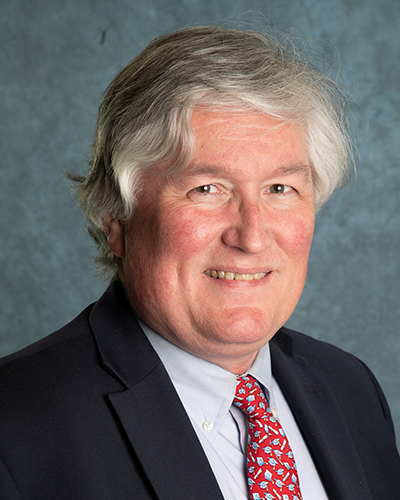
Gernot Grabher is a Professor at HafenCity University Hamburg, where he is affiliated with the School of Urban Planning. He is a leading scholar in economic geography and urban studies with extensive research on innovation, platform economies, and project ecologies. His work bridges theoretical and empirical approaches to understanding contemporary economic transformations. Grabher's research interests focus on the intersection of economic geography, urban planning, and digital transformation. He explores how platformization reshapes industrial production, how urban futures are made through professional agency, and how project ecologies cope with ignorance and uncertainty. His work combines theoretical innovation with empirical rigor, particularly in studying temporary organizations and their role in economic development. His recent publications reveal a strong focus on platform economies, showing how digital platforms transform industrial production, urban governance, and knowledge creation. The research demonstrates a consistent interest in the spatial dimensions of economic processes, particularly how digital transformations interact with geographical contexts. His work often takes a critical perspective on technological disruption, revealing how new forms of platformization are embedded in existing social and economic structures rather than representing clean breaks from the past. Best Paper Award 2024 of the Project Management Journal Fellow of the Regional Studies Association (FeRSA) Top 2% of the most cited researchers worldwide in his field (Elsevier and Standford University Data Base) Member of the Selection Committee for the Alice Amsden Award (SASE) Most cited economic geographer in German-speaking area (ZitArt 2020 ranking) Professor Grabher has successfully supervised numerous PhD students whose work spans urban biodiversity, former industrial neighborhoods, global garment production, smart city participation, and creative processes. He leads the DFG-Research Training Group 'Urban future-making: Professional agency across time and scales' and frequently organizes international workshops on creativity and innovation. His research has been supported by significant grants including DFG funding for projects on the temporal structuring of creative processes. Grabher is actively involved in major international conferences, regularly hosting special sessions at the Global Conference of Economic Geographers and other venues. He serves on editorial boards and selection committees for prestigious academic organizations, reflecting his standing in the field of economic geography and urban studies.