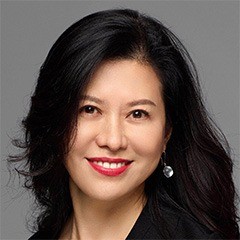
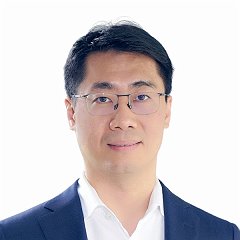
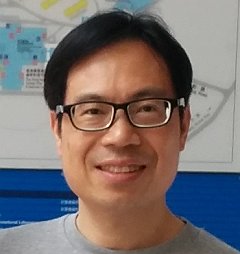
Manolis Zampetakis is an Assistant Professor of Computer Science at Yale University. Previously, he was a postdoc at UC Berkeley's EECS Department working with Michael Jordan, and earned his PhD from MIT's EECS Department under Constantinos Daskalakis. His research spans Theoretical Machine Learning, Statistics, Optimization, Computational Complexity, Game Theory, and Mechanism Design. He has received the ACM SIGEcom Doctoral Dissertation Award and a Google PhD Fellowship. Current affiliation: Yale University (Assistant Professor) Prior affiliations: UC Berkeley (Postdoc), MIT (PhD student), NTUA (Undergraduate) His research focuses on algorithmic game theory, robust statistics, and optimization challenges in machine learning. He explores computational complexity in multi-player games, truncated linear regression, and strategy-proof mechanisms. Recent work includes backdoor attacks in neural networks and jailbreaking black-box LLMs, with publications in top venues like NeurIPS, COLT, FOCS, and STOC. Notable scientific contributions have been recognized through awards and special issues. He co-organized workshops at FOCS 2018, WALE 2019, and WALE 2022. His students include Anay Mehrotra, Jane Lee, Katerina Mamali, Shuchen Li, and Nikolaos Koumpis, often co-advised with prominent researchers like Amin Karbasi and Tuomas Sandholm.
Dr. Steven G. Cumming is a Professor in the Department of Wood and Forest Sciences at Laval University's Faculty of Forestry and Geomatics. He holds a Ph.D. in Forest Ecology from the University of British Columbia (1997), complemented by advanced degrees in Computer Science from Simon Fraser University (M.Sc., 1986) and the University of Alberta (B.Sc., 1981). He served as the Holder of the Canada Research Chair in Boreal Ecosystem Modelling from 2006 to 2016, reflecting his national prominence in this field. Dr. Cumming's research spans spatial analysis and modeling of ecological processes, with particular expertise in forest stand dynamics and fire disturbances in boreal forests. His work bridges theoretical ecological modeling and practical applications for conservation and forest management. He has made significant contributions to the Boreal Avian Modeling Project, developing statistical models to predict bird distribution and abundance across the boreal region. His recent work focuses on climate change impacts, developing dynamic models for Quebec's boreal forest and methodological tools for modeling nearly 100 bird species. His publication record demonstrates consistent productivity through 2025, with multiple high-impact papers annually addressing critical issues in boreal ecology, climate change, and conservation. Dr. Cumming actively supervises both doctoral and master's students, maintaining a robust research program with numerous ongoing projects. Major Research Projects: Canadian Forest Resource Inventory Data The Canadian Beacons Project The Boreal Avian Modeling Project Vegetation plot data for modeling, mapping and forecasting understory vegetation Dr. Cumming's work shows a clear progression from foundational ecological research to leadership in large-scale modeling initiatives addressing urgent environmental challenges. His unique background in both computer science and forest ecology has positioned him as a leader in developing innovative modeling approaches for complex ecological systems.
Yun Lin is an Associate Professor and Deputy Head of the Department of Computer Science and Technology at Shanghai Jiao Tong University's School of Computer Science. Prior to joining SJTU, Lin served as a Research Assistant Professor at the National University of Singapore working with Prof. Dong Jin Song. Lin leads the CoPhi ("Code Philia") research group, which focuses on the intersection of Software Engineering, AI, and Security. Lin's research spans three major areas: Automatic Programming (including code editing, software testing, and debugging), Explainable AI (focusing on representation interpretation and training data attribution), and Web Misinformation (particularly phishing and scam detection). The research has resulted in numerous tools including CoEdPilot for code editing recommendation, DeepDebugger for interactive debugging of deep classifiers, and Phishpedia for phishing webpage detection. Lin's recent publications demonstrate a strong trend toward integrating AI techniques, particularly large language models and vision language models, with traditional software engineering and security tasks. The work shows increasing sophistication in understanding project context, handling interactive nature of programming tasks, and addressing security challenges in the age of generative AI. Key themes include consistency-based approaches for anomaly detection, agent-based frameworks for complex tasks, and hybrid models that combine symbolic reasoning with neural approaches. ACM Distinguished Paper Award in ICSE'18 for "Towards Optimal Concolic Testing" Distinguished Reviewer Award in FSE'25 2nd prize Research Prototype Award in ChinaSoft'24 Lin advises a large team of PhD, Master's, and undergraduate students, with several publications co-authored with students appearing in top venues. Current research is supported by collaborations with National University of Singapore, particularly with Prof. Dong Jin Song, and includes projects on code editing, GUI testing, and phishing detection. The CoPhi group maintains active development of multiple research tools and datasets. The CoPhi research group under Lin's leadership focuses on building practical tools that bridge the gap between theoretical advances and real-world programming and security challenges. The group's work spans from fundamental program analysis techniques to applied security solutions, with an increasing emphasis on leveraging AI capabilities while maintaining explainability and reliability.
Eugénie Petitprez is a Lecturer at the University of Picardy Jules Verne's Faculty of Law and Political Science since 2022, with prior academic roles at the same institution including Contractual Lecturer and Researcher (2020-2022), ATER (2018-2020), and Contractual Doctoral Student (2015-2018). Her academic credentials include: Doctorate in Private Law, University of Picardy (2019) Master 2 in Advanced Private Law, University of Picardy (2015) Dr. Petitprez's research spans civil law, private law, and digital law with particular expertise in suretyship, product liability, and insurance law. She investigates AI applications in health and media, e-sport regulations, and family law custody issues. Her interdisciplinary approach addresses critical legal challenges at technology-society intersections, evidenced by numerous publications in specialized journals. She is affiliated with the Amiens Center for Private Law and Criminal Sciences (Antoine Loisel Research Unit), contributing to advanced research in private law frameworks. While specific grant details aren't public, her active publication record indicates robust research activity. As a lecturer, she likely supervises graduate students in civil law and digital law specializations, providing mentorship in contemporary legal analysis and scholarly writing.
Professor John McCall is a distinguished academic and researcher at Robert Gordon University's School of Computing, Engineering & Technology, where he previously served as Head of School. He currently serves as Director of the National Subsea Centre, leading initiatives to accelerate energy transition through smart technologies applied to industrial and environmental challenges in subsea and related marine sectors. With over 25 years of research experience in nature-inspired computing and artificial intelligence, Professor McCall has established himself as a leading expert in optimization algorithms and explainable AI. Professor McCall's research interests span data science, artificial intelligence, nature-inspired computing, and optimization, with significant applications in energy transition and subsea technologies. His work bridges theoretical foundations with practical implementations, having founded two spinout companies that deliver real-world optimization solutions to industry. He leads both the Complex Optimisation Research Group and the Computational Intelligence Research Group, where his team explores cutting-edge approaches to solving complex computational problems. Analysis of Professor McCall's recent publication record (2023-2025) reveals a strong focus on explainable AI, particularly in the context of evolutionary computation and metaheuristics. His research demonstrates an increasing emphasis on practical applications in energy systems, transportation, and subsea technologies, reflecting his commitment to addressing real-world challenges related to climate change and industrial transformation. The interdisciplinary nature of his work is evident in publications spanning computer science, operations research, renewable energy, and transportation planning. Lead of the Computational Intelligence Research Group ResearcherID: G-1423-2011 Scopus Author ID: 36797474900 ORCID: https://orcid.org/0000-0003-1738-7056 Professor McCall is actively involved in mentoring the next generation of researchers, currently supervising multiple PhD students across diverse topics including explainability of non-deterministic solvers, optimization of electrical machines, and computational intelligence applications in hydrocarbon systems. His research is supported by numerous grants from industry and government sources, with projects totaling millions of pounds focused on solving challenges in energy transition and smart technologies. At the National Subsea Centre, Professor McCall leads a multidisciplinary team working on digital twin technologies, subsea AI applications, and data-driven solutions for the energy sector. His work emphasizes collaboration between academia and industry to develop transformative solutions that address both current challenges and future opportunities in the subsea domain.
Yannick Le Pen is a Lecturer at Université Paris Dauphine-PSL, affiliated with LEDa (Laboratoire d'Economie de la Défense). His research focuses on energy economics, commodity markets, and economic convergence, with particular attention to European electricity markets and financial dynamics of energy commodities. His research interests span energy economics, financial econometrics, and economic convergence analysis. Le Pen has developed specialized expertise in analyzing price dynamics in commodity and energy markets, with numerous publications examining electricity price convergence between France and Germany, volatility patterns in energy markets, and the relationship between oil prices and economic growth. His methodological approach frequently employs advanced econometric techniques including pair-wise convergence testing and time-varying cointegration analysis. Le Pen's publication record demonstrates consistent research output from 1995 to 2018 across high-impact journals including Review of Finance, The Energy Journal, and Energy Economics. His work shows strong collaboration patterns, particularly with co-author Sévi B., and addresses critical issues in energy market integration, price formation mechanisms, and the economic implications of renewable energy deployment in European markets. His professional activities include presenting research at major conferences such as the International French Finance Association Conference and the IAEE International Conference, demonstrating active engagement with the academic community in energy and financial economics.
Dr. Chen Yaru serves as Nicholas H. Noyes Professor of Management and Professor of Global Business at Cornell University's Johnson School of Management, concurrently holding a Visiting Professorship at Cheung Kong Graduate School of Business (CKGSB). Her interdisciplinary research integrates organizational behavior and cross-cultural psychology to examine how cultural contexts shape negotiation dynamics, status hierarchies, and power structures in global organizations. Dr. Chen earned her PhD in Psychology from Columbia University, establishing the foundation for her empirical approach to cultural phenomena in management. Her educational trajectory reflects the methodological rigor evident in her experimental and field studies across multiple cultural settings. Her research program centers on Cultural Interactions, Global Negotiations, and Status and Power in Organizations, with particular emphasis on how cultural frameworks influence fairness perceptions and interpersonal dynamics. She investigates mechanisms like self-construal and relational models to explain cross-cultural variations in organizational behavior, employing both laboratory experiments and field studies to validate theoretical propositions across Western and East Asian contexts. Analysis of her 15 most recent publications reveals a consistent scholarly trajectory from foundational work on individualism-collectivism to contemporary investigations of status dynamics. Key thematic threads include the cultural contingency of procedural justice, guanxi practices in Chinese business contexts, and cross-national differences in feedback-seeking behaviors. Her methodological approach frequently combines social psychological theory with organizational applications, yielding insights relevant to multinational management practice. Dr. Chen's research excellence has been recognized through numerous awards including: 2008 Best Micro Paper Award from the International Association of Chinese Management Research 2002 Best Paper Award from the Organizational Behavior Division of the Academy of Management Multiple research awards from Stern School of Business and Rutgers Business School Sustained grant support from Columbia University and other institutions since the 1990s As an active academic citizen, Dr. Chen serves on the editorial boards of Academy of Management Review and Management and Organization Review, having chaired the AMR Best Paper Selection Committee and guest-edited a special issue on status in Organization Science. Her research program has received continuous funding through competitive grants, enabling longitudinal investigations into cultural and structural determinants of organizational behavior. While specific lab structures aren't documented, her extensive co-authorship network across U.S. and Chinese institutions indicates robust collaborative research partnerships.
Kara Bagot serves as a Clinical Assistant Professor in the Department of Psychiatry and Biobehavioral Sciences at the University of California, Los Angeles (UCLA) School of Medicine. Her academic profile demonstrates significant contributions to adolescent psychiatry, with a particular focus on racial and ethnic disparities in mental health outcomes, substance use disorders, and the impact of digital media on adolescent brain development. Dr. Bagot has established herself as a thought leader in diversity, equity, and inclusion initiatives within psychiatric research and academic publishing. Dr. Bagot's research interests center on critical issues in adolescent mental health, with particular emphasis on how racial-ethnic discrimination affects psychopathology development in young people. Her work with the Adolescent Brain Cognitive Development (ABCD) study has produced significant insights into screen time effects on developing brains, the relationship between pubertal development and mental health outcomes, and risk factors for substance use initiation. She has made substantial contributions to understanding cultural diversity in mental healthcare delivery and outcomes, with numerous publications examining systemic inequities in psychiatric treatment and research. Her publication record shows a clear trajectory of increasing influence in the field, with numerous editorials in high-impact journals like JAMA Psychiatry and the Journal of the American Academy of Child & Adolescent Psychiatry. Dr. Bagot's work demonstrates a consistent focus on translating research findings into practical applications for improving mental health equity. Her recent publications reveal growing emphasis on methodological considerations in diversity research, particularly regarding appropriate reporting of race and ethnicity in clinical studies. Dr. Bagot has established collaborative relationships across multiple University of California campuses, particularly with researchers at UCSD, UCSF, and UC Irvine, reflecting the interdisciplinary nature of her work. Her network includes experts in adolescent brain development, substance use disorders, and health disparities research, creating a robust foundation for continued contributions to the field of child and adolescent psychiatry.
Maria Clotilde Carra is a distinguished academic in the field of dentistry, currently serving as Full Professor at the University of Paris, Faculty of Odontology, where she leads research and teaching in Periodontology. Previously, she held positions as Associate Professor and Assistant Professor at Université Paris Diderot, demonstrating a steady progression through the academic ranks in the same institution (which underwent a name change). Her academic journey reflects deep commitment to advancing knowledge in periodontal sciences and dental implantology. Dr. Carra's educational background is impressive and specialized. She earned her Laurea Magistrale in Dental Medicine and Prosthetics from the University of Parma, Italy (2002-2007), followed by a Certificate of Advanced Studies in Periodontology in 2014, a Master's degree in Clinical Specialized Dentistry with a focus on Periodontology, and the prestigious European Federation of Periodontology Certificate of Completion of Specialized Training in Periodontics and Implant Dentistry. Her research interests span several interconnected domains within oral health. She has made significant contributions to understanding the relationship between periodontal diseases and systemic conditions, particularly sleep disorders such as obstructive sleep apnea and bruxism. Her work bridges clinical periodontology with dental sleep medicine, exploring how oral health conditions intersect with broader health issues. She has also focused extensively on patient-centered approaches, investigating patient preferences in periodontal and implant therapy, and awareness of periodontal disease connections to other health conditions. Her methodological expertise is evident in numerous systematic reviews and meta-analyses that have shaped evidence-based practice in her field. Analysis of her recent publications reveals a strong trend toward interdisciplinary research connecting periodontology with sleep medicine, innovative diagnostic approaches in periodontal assessment, and educational aspects of dental specialty training. Her work demonstrates consistent focus on methodological rigor, particularly in systematic review methodology, while addressing clinically relevant questions about periodontal disease diagnosis, treatment outcomes, and prevention strategies. The growing emphasis on patient perspectives and educational approaches in her recent work suggests evolving research interests that balance clinical science with patient-centered care considerations. Dr. Carra has served as a peer reviewer for numerous prestigious journals including Clinical Oral Investigations, Sleep & Breathing, Sleep Medicine, European Journal of Pediatrics, PLoS One, and Nutrients, demonstrating recognition of her expertise by the scientific community. Her review activity spans multiple disciplines, reflecting the interdisciplinary nature of her research interests. While specific details about her advising activities and research grants are not explicitly mentioned in the available information, her extensive publication record as corresponding or contributing author on numerous high-impact studies suggests active mentorship of students and junior researchers. Her involvement in large-scale studies utilizing population-based cohorts like CONSTANCES indicates participation in significant collaborative research initiatives. Her research appears to be conducted within a robust academic environment at the University of Paris, likely involving collaboration with dental clinicians, sleep medicine specialists, epidemiologists, and public health researchers. The interdisciplinary nature of her work suggests she operates within or collaborates closely with multiple research teams spanning dentistry, sleep medicine, and public health domains.
Yang Liu is a Full Professor and University Leadership Forum Chair at the School of Computer Science and Engineering, Nanyang Technological University (NTU) in Singapore. He serves as Programme Director for HP-NTU Digital Manufacturing Corp Lab, Deputy Director of the National Satellite of Excellence of Singapore, and Cluster Director in Cybersecurity at Energy Research Institute @NTU. His research spans Cybersecurity , Software Engineering , and Artificial Intelligence . He leads research in malware modeling and detection, vulnerability analysis using machine learning and program analysis, formal verification of security systems, program specification learning, performance analysis, Android system security, and AI security, robustness, fairness, and explainability. His notable work includes the Process Analysis Toolkit (PAT) for model checking and the Deep-Series tools for deep learning testing. Professor Liu has published extensively in top-tier conferences including ASE, ICSE, FSE, ISSTA, and S&P. His research demonstrates strong trends toward integrating AI/ML techniques with traditional software engineering and security approaches, particularly focusing on large language models for code analysis, vulnerability detection, and program repair. Recent publications show a growing emphasis on blockchain security, smart contract analysis, and addressing security challenges in AI systems. NRF Investigatorship (Class 2020) ACM's Distinguished Speaker Nanyang Research Award (Young Investigator) Microsoft Asia Research Fellowship 20 Year ICFEM Most Influential System Award for PAT Multiple ACM SIGSOFT Distinguished Paper Awards Professor Liu actively advises students and has seen notable student achievements, including Singapore Data Science Consortium research award winners and AISG PhD Fellowship recipients. His research is supported by numerous grants including a $900,000 NTU-NAP grant for Formal Verification on Cloud and a $471,000 grant for Vulnerability Detection in Binary Code. He leads the HP-NTU Digital Manufacturing Corp Lab and contributes to RollsRoyce@NTU Corporate Lab research on complex business systems simulation.
Shing-Chi Cheung is a Professor of Computer Science and Engineering at the Hong Kong University of Science and Technology (HKUST), School of Engineering. He founded the CASTLE research group and co-founded the International Workshop on Automation of Software Testing (AST) in 2006. His leadership includes serving as General Chair of FSE 2014 and chairing multiple APSEC conferences. His research focuses on software quality enhancement through program analysis, testing, debugging, and AI techniques, targeting Android apps, open-source software, deep learning systems, smart contracts, and spreadsheets. Current projects include metamorphic testing frameworks, binary analysis tools, and vulnerability detection systems for emerging technologies. His publication portfolio demonstrates consistent contributions to software engineering since 2016, with recent work emphasizing AI-integrated testing methodologies, smart contract security, and deep learning system reliability. Key trends show increasing focus on cross-language analysis, data visualization quality, and compiler-level verification for modern software stacks. Distinguished Member of the ACM Fellow of the British Computer Society Editorial board member: Science of Computer Programming (SCP), Journal of Computer Science and Technology (JCST) Former editorial board member: IEEE Transactions on Software Engineering (2006-2009), Information and Software Technology (2012-2015) Four patents in China and the United States Cheung actively mentors through the CASTLE research group and serves on program committees for major conferences including ICSE, ESEC/FSE, and ISSTA. His work bridges academic research with practical applications through industry collaborations and tool development. He has contributed to numerous workshops and symposia as steering committee member and program chair.