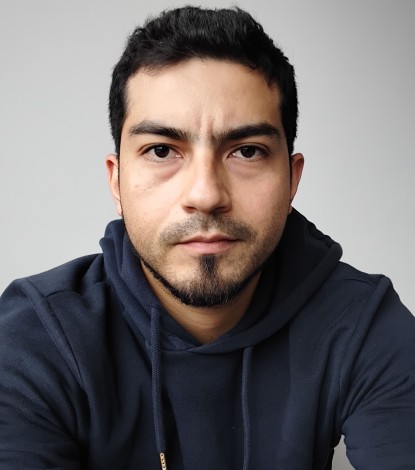
Frank Foerster is a Senior Lecturer in the Department of Computer Science at the School of Physics, Engineering & Computer Science, University of Hertfordshire. He is a core member of both the Adaptive Systems Research Group and Robotics Research Group within the Centre for AI and Robotics Research, specializing in developmental and cognitive robotics with a focus on human-robot interaction. His research centers on language acquisition in robots and communicative interaction between humans and machines, drawing from cognitive science, developmental psychology, and conversation analysis. Foerster investigates how social interaction regularities can inform machine learning for socially intelligent robots, including work on motor resonance in human-robot dyads. He has organized influential workshops at ICRA 2020 on human-robot handovers and UK-RAS workshops on failures in robotic speech interfaces. Analysis of his 2023-2025 publications reveals concentrated efforts on improving human-robot communication through formal reporting standards, failure/repair mechanisms in speech interfaces, and the relationship between fast interactions and perceived robot agency. His work bridges theoretical cognitive science with practical robotics applications. Foerster leads three significant research projects: FLUIDITY (on fluid speech interface interactions), CATLYP (addressing loneliness in older adults using social robots), and a 2022 project charting speech interface limitations. He serves as Associate Editor for IEEE Transactions on Cognitive and Developmental Systems and actively reviews for major robotics journals. He teaches key courses including Models and Methods of Computing (BSc), Introduction to Robotics (BSc), and Theory and Practice of Artificial Intelligence (MSc), while supervising numerous AI-focused BSc projects. His ORCID profile (0000-0003-1797-682X) documents 31 research outputs spanning 2009-2025.
Michela Quadrini is an Assistant Professor at the University of Camerino with expertise spanning Bioinformatics , Computational Biology , and Graph Neural Networks . Her academic work focuses on RNA structure analysis, human activity recognition, and formal methods for collective adaptive systems. Research Interests include: RNA pseudoknots comparison and classification Machine learning applications in biomedical signal processing Spatial logics for complex system modeling Protein-protein interaction site prediction Ontology-based frameworks for activity recognition Publications demonstrate methodological innovation across: RNA structure alignment and translation tools (TARNAS) Graph neural network programming languages (μG) Stress detection from wearable sensor data Formal verification of collective systems Immunoinformatics feature engineering Technical Expertise combines computational biology with advanced machine learning techniques, evidenced by contributions to: Topological data analysis for RNA structures Convolutional neural network architectures Semantic ontologies in mechatronic systems Integral equation numerical methods
Sandra Maday, Ph.D. is an Associate Professor of Neuroscience in the Department of Neuroscience at the Perelman School of Medicine, University of Pennsylvania. She directs the Maday Lab which investigates the mechanisms and regulation of autophagy in neuronal homeostasis and neurodegeneration. Dr. Maday's research has established fundamental principles of neuronal autophagy that distinguish it from non-neuronal systems. Dr. Maday's educational background includes: B.A. in Biochemistry and Biology, High Honors in Biology, Oberlin College (1998) Ph.D. in Cell Biology, Yale University (2007) Her research focuses on autophagy, an evolutionarily conserved lysosomal degradation pathway critical for neuronal viability. The Maday Lab established that autophagy in neurons is a vectorial process where autophagosomes are generated in the distal axon and undergo retrograde transport to the soma for cargo degradation. Unlike non-neuronal cells, neurons exhibit unique regulatory mechanisms for autophagy. The lab investigates three interconnected themes: spatiotemporal mechanisms of autophagosome biogenesis across neuronal compartments, the contribution of autophagy to neural function and synaptic activity, and the role of autophagy in neuronal stress responses and neurodegenerative disease. Dr. Maday's publication record demonstrates consistent contributions to understanding neuronal autophagy across multiple model systems. Her work spans from foundational cell biological mechanisms to translational implications for neurodegenerative disorders. Recent publications show increasing focus on synaptic function, neuron-glia differences in autophagy regulation, and methodological advances for studying autophagy dynamics in neurons. Dr. Maday actively mentors graduate students from the Neuroscience and Cell and Molecular Biology Graduate Groups at Penn. Her lab has trained numerous students who have successfully transitioned to medical schools and research positions. The Maday Lab combines advanced quantitative cell biology techniques, live-cell imaging, and biochemical approaches to investigate autophagy in primary neuronal cultures and mouse models of neurodegenerative disease. The Maday Lab is currently active at 111 Johnson Pavilion, 3610 Hamilton Walk, Philadelphia, PA 19104, continuing to investigate fundamental mechanisms of neuronal autophagy with implications for understanding and treating neurodegenerative conditions.
Ferric C. Fang is a Professor of Microbiology and Joint Professor of Laboratory Medicine & Pathology at the University of Washington School of Medicine. He directs the Fang Laboratory, which focuses on bacterial pathogenesis, particularly studying Salmonella enterica and Staphylococcus aureus , and has been at the University of Washington since 2001 after faculty positions at UC San Diego and the University of Colorado. Dr. Fang attended Harvard College (A.B. magna cum laude in Biology, 1979) and Harvard Medical School (M.D., 1983). His professional training includes internship/residency at UC San Diego (1983-1986), Chief Residency (1986-1987), and Infectious Disease Fellowship (1987-1990), with post-doctoral work in the laboratories of Donald Helinski and Donald Guiney. Dr. Fang's research focuses on bacterial pathogenesis, particularly the interactions between phagocytes and pathogens, transcriptional regulation of virulence genes, antimicrobial resistance mechanisms, and the pathogenesis of typhoid and paratyphoid fever. His laboratory investigates how pathogens like Salmonella and Staphylococcus resist host antimicrobial defenses including nitric oxide and reactive oxygen species. A major discovery from his laboratory is 'xenogeneic silencing,' a mechanism by which bacteria recognize and integrate foreign DNA into regulatory networks. Analysis of Dr. Fang's recent publications reveals a strong focus on bacterial pathogenesis, particularly Salmonella research, antimicrobial resistance mechanisms, and host-pathogen interactions. His work spans molecular microbiology, clinical infectious diseases, and research integrity topics, demonstrating his broad impact across both basic science and clinical translation. He has increasingly published on scientific integrity and research ethics issues alongside his microbiology work. National Merit Scholar (1975) Phi Beta Kappa (1979) NIH Physician-Scientist Award (1987-1992) ASM Baxter Diagnostics MicroScan Young Investigator Award (1994) American Society for Clinical Investigation (elected 1998) Editor-in-Chief of Infection and Immunity (2007-2017) American Academy of Microbiology (elected 2007) Dr. Fang has mentored numerous graduate students and postdoctoral fellows, including current lab members W. Ryan Will, Fermin Guerra, Wai Yee Fong, and Taylor Stepien. He has directed the NIH T32 Training Program in Bacterial Pathogenesis since 2003, supporting generations of microbiology researchers. His research has been consistently funded by NIH grants focusing on bacterial pathogenesis mechanisms, with particular emphasis on how pathogens interact with host immune defenses. The Fang Laboratory maintains active research programs studying bacterial pathogenesis mechanisms, particularly focusing on Salmonella and Staphylococcus interactions with host immune cells. The lab employs molecular genetics, biochemistry, and in vivo infection models to investigate how pathogens resist host antimicrobial defenses and regulate virulence gene expression. Current projects include studying the pathogenesis of typhoid fever and mechanisms of virulence gene regulation, with recent work exploring nitric oxide resistance mechanisms and xenogeneic silencing.
Betsy Levy Paluck is a Professor of Psychology and Public Affairs at Princeton University and Deputy Director of the Kahneman-Treisman Center for Behavioral Science and Policy. She conducts large-scale field experiments to study social norms, prejudice reduction, and behavioral change across diverse contexts including post-conflict regions in Africa and American schools. B.S. and Ph.D. from Yale University Scholar at Harvard Academy for International Affairs (2007–2009) Her research focuses on: Behavioral change through social norm interventions Media and institutional influence on societal attitudes Peer-driven prejudice reduction models Longitudinal studies in social networks Policy impact assessment via field experiments Methodological innovations in causal inference Article trends show consistent focus on: Norm-shifting interventions Behavioral measurement across cultures Interdisciplinary approaches to policy problems Experimental designs in real-world settings Psychology-sociology intersections Public engagement with scientific findings Scientific Awards: MacArthur Fellowship (2017) She has mentored numerous graduate students through Princeton's Psychology PhD program, emphasizing cross-disciplinary collaboration. Her work has received grants from: MacArthur Foundation National Institutes of Health Princeton University research funds Current lab activities include: WWS 502 Design-Diagnose behavioral policy projects Intervention evaluations in educational settings Longitudinal social network studies Policy-oriented experimental research
Kurt Sundell is an Assistant Professor in the Department of Geosciences at Idaho State University (Pocatello, ID). His research integrates field geology with analytical techniques including U-Th-Pb geochronology, Lu-Hf geochemistry, and thermochronology to study tectonic and surface processes. He specializes in quantitative sediment provenance methods and crustal evolution, with focus areas in the Central Andes and Southern Tibet. Dr. Sundell's research interests span tectonics, sedimentology, geochronology, and geochemistry. He develops computational tools for data analysis (e.g., AgeCalcML, DZstats) and investigates: Crustal thickening mechanisms in orogenic plateaus Detrital zircon geochemistry as a tectonic proxy Sediment routing responses to flat-slab subduction High-speed U-Pb dating methodologies His publication trends show strong emphasis on: Detrital zircon geochemistry/geochronology (10/15 recent papers) Tibetan and Andean tectonic evolution (8/15) Quantitative sediment provenance innovations (6/15) Crustal thickness proxies and plateau growth (5/15) Current grants include NSF-funded projects on microplastic river fingerprinting and ACS Petroleum Research Fund support for Green River Basin sediment routing. He actively advises graduate students (Robbie Manta, Jon Lever, Cheyenne Bartelt, Maria Reinoso) and collaborates with the Arizona LaserChron Center, where he develops community software and teaches workshops.
Thierry Baasch is an Associate Senior Lecturer in the Division for Biomedical Engineering at Lund University, specializing in the Faculty of Engineering. His research bridges acoustics, fluid mechanics, and computational methods to innovate in lab-on-a-chip and acoustophoresis technologies. Education: Dr. sc. ETH Zurich Research Focus: Physical modeling, finite-element methods, and machine learning to optimize acoustophoretic chips for biomedical applications. Key projects include acoustic trapping, 3D printing, and single-cell handling using multimodal ultrasound. Research Trends: Recent publications emphasize enhancing throughput, reproducibility, and control in acoustophoretic systems. Topics include harmonic generation, silica particle applications, and nonlinear acoustic effects in microfluidics. Scientific Awards: Best Poster Award (2023) W. Terence Coakley Award (2022) Collaborations: Active in NanoLund, MultiPark, and LU Profile Areas, with grants from the European Commission and Crafoord Foundation. Supervises projects on acoustic tweezers and extracellular vesicle isolation.
Pavol Sojka is a PhD student at the Department of Applied Informatics , Faculty of Economic Informatics , University of Economics in Bratislava. He teaches courses such as Algoritmy a programovanie 1 , Jazyk R , and Python , focusing on programming and data analysis.
Leonhard Held is a Professor of Biostatistics at the University of Zurich’s Faculty of Medicine, affiliated with the Epidemiology, Biostatistics and Prevention Institute (EBPI). He actively promotes open and reproducible research in health sciences, serving as Director of the UZH Center for Reproducible Science and as the university’s Open Science delegate. His research focuses on methodological aspects of epidemiological, clinical, and pre-clinical studies, with emphasis on meta-analysis, causal inference, and Bayesian statistical frameworks. Recent work explores reproducibility metrics, data-sharing practices, and the impact of school closures on infectious disease spread. Key trends in his publications include meta-regression for replication projects, survivor average causal effects in RCTs, and reproducibility challenges in oncology trials. He contributes to statistical software development (e.g., R package ‘polyCub’) and methodological guidelines for robust research practices. As a leader in open science, he advocates for training researchers in data-intensive workflows and developing sustainable open research data infrastructure, as evidenced by his involvement in Swiss stakeholder engagement studies.
Peter Rutledge is a Professor of Chemistry at the University of Sydney, where he has been a faculty member since 2006. He is affiliated with the Faculty of Science, School of Chemistry, and holds memberships in The Centre for Drug Discovery Innovation, The University of Sydney Nano Institute, and the Charles Perkins Centre. Previously, he served as Associate Head of School Education from 2013-2018 and was promoted through the academic ranks from Lecturer (2006) to Senior Lecturer (2008), Associate Professor (2014), and finally Professor (2019). His research spans multiple areas in chemical biology and medicinal chemistry, with particular focus on Antibiotics Chemistry , where his group investigates novel approaches to combat antibiotic-resistant bacteria through the synthesis of new cyclobutanone antibiotics and design of antibiotics with novel modes of action. His work in Hydrocarbon Oxidation and C-H Activation develops biomimetic catalysts inspired by enzyme systems for selective oxidation of hydrocarbon substrates. In Metal Sensing , he creates thiol- and sulfide-rich peptides for binding and sensing mercury, while his research on Nitrile Hydratase Mimics develops peptide-based systems for nitrile hydration and studies unusual sulfur oxidation mechanisms. Analysis of Professor Rutledge's recent publications reveals a strong interdisciplinary approach combining chemical synthesis, structural biology, and medicinal applications. His work shows consistent focus on antibiotic development and enzyme mechanisms, with increasing emphasis on collaborative research projects involving citizen science, digital tools for education, and public health applications. The publications demonstrate expertise in both fundamental chemical research and practical applications for health challenges including antibiotic resistance, tuberculosis, malaria, and neurodegenerative diseases. Faculty of Science Award for Outstanding Teaching (2019) Pearson Education RACI Centenary of Federation Chemistry Educator of the Year Award (2012) Vice-Chancellor's Award for Outstanding Teaching (2011) Vice-Chancellor's Award for Support of the Student Experience (2010) RACI NSW President's Citation (2009) NSW and ACT Young Tall Poppy Science Award (2008) RACI Athel Beckwith Lectureship (2007) RACI Nyholm Lectureship (2006) Professor Rutledge has demonstrated exceptional commitment to both research and education, receiving multiple awards for teaching excellence. His research program involves significant collaborations across disciplines and institutions, with numerous grants supporting work on antibiotic discovery, enzyme mechanisms, and chemical biology. His educational initiatives have incorporated innovative approaches including citizen science projects and digital tools for chemistry education. His research is conducted through the Rutledge Group within the School of Chemistry at the University of Sydney, with strong connections to interdisciplinary research centers including The Centre for Drug Discovery Innovation and The University of Sydney Nano Institute. His work bridges fundamental chemical research with practical applications in medicine and environmental science.
Kristin Young, PhD is an Associate Professor in the Department of Epidemiology at the Gillings School of Global Public Health, University of North Carolina at Chapel Hill. Her research focuses on genetic epidemiology and health disparities related to complex diseases, particularly obesity. Dr. Young received her educational training from prestigious institutions: PhD in Anthropological Genetics from the University of Kansas (2009) MA in Anthropological Genetics from the University of Kansas (2001) MS in Clinical Research from the University of Kansas Medical Center (2011) BS in Zoology and BA in Anthropology from the University of Oklahoma (1995) Dr. Young's research program centers on understanding the genetic and environmental factors contributing to health disparities in obesity and related complex diseases. Her work employs advanced genomic techniques including genome-wide association studies (GWAS), fine-mapping of genetic loci, and functional validation of obesity-related variants. A particular focus of her research involves examining gene-environment interactions, particularly how genetic susceptibility to obesity interacts with lifestyle factors. Her work spans multiple disciplines including genetic epidemiology, anthropological genetics, and population health. Analysis of Dr. Young's recent publication record (2023-2025) reveals a strong focus on multi-omics approaches to understanding obesity and related metabolic disorders. Her work increasingly incorporates diverse population samples, with emphasis on health disparities across racial and ethnic groups. Key themes in her recent work include genetic architecture of severe obesity, gene-lifestyle interactions, multi-ancestry genomic studies, and the application of advanced statistical methods to complex trait analysis. Her research often bridges basic genetic discovery with clinical and public health implications. Dr. Young has received numerous honors and awards recognizing her contributions to the field: NCTraCS KL2 Scholar (2015, University of North Carolina at Chapel Hill) NIH Loan Repayment Program (2014, NIMHD) Ethan Sims Young Investigator Finalist (2014, The Obesity Society) Postdoctoral Fellowship from Carolina Population Center (2012-2015) K30 Clinical Research Fellowship (2009-2011, University of Kansas Medical Center) NRSA Postdoctoral Fellowship (2009-2011, University of Kansas Medical Center) Dr. Young serves on multiple committees and is an active member of professional organizations including the American Society of Human Genetics, The Obesity Society, and the American Heart Association. Her service activities include judging research competitions, participating in outreach programs like DNA Day, and coordinating journal clubs focused on genetic epidemiology. Her teaching interests span physical anthropology, human genetics, and nutrition, reflecting her interdisciplinary background. Dr. Young's research is conducted within the genetic epidemiology research group at UNC's Department of Epidemiology, which focuses on the genetic underpinnings of heart, lung, and blood disorders. Her work often involves collaboration across disciplines and with diverse study populations to better understand the causes of common chronic diseases and enable prevention strategies.
Rodrigo Alfonso Pérez Illanes is a researcher at the Technische Universität Darmstadt, focusing on pollutant transport, numerical modeling, and reactive transport in heterogeneous aquifers. His work integrates computational methods with environmental science to address complex hydrological challenges. His research interests include: Pollutant transport dynamics Particle-based modeling techniques Reactive transport in porous media Parallel computing for hydrological simulations Git versioning for reproducible research Rodrigo has published extensively on topics such as permafrost modeling, solute transport, and wind-induced flow in shallow lagoons. His recent work (2024) emphasizes advancing particle tracking methods and solute transport algorithms in heterogeneous systems. Contact: rodrigo.perez@tu-darmstadt.de
Paolo Maria Tronville is a Tenured Associate Professor in the Department of Energy (DENERG) at Polytechnic University of Turin, where he serves as a member of the Interdepartmental Center Ec-L - Energy Center Lab. His academic work focuses on environmental technical physics within the Industrial and Information Engineering domain. Dr. Tronville's research centers on aerosol technology and air quality, with specific expertise in reproducing urban aerosol particle distributions in laboratory settings and simulating the realistic aging of air filters. His work bridges engineering principles with public health applications, particularly in indoor air quality and respiratory protection systems. His recent publications reveal a strong focus on practical applications of aerosol science, including air filter testing methodologies, face mask performance evaluation, and indoor ultrafine particle analysis. These works demonstrate consistent application of engineering principles to address contemporary public health challenges related to air quality. ASHRAE Distinguished Service Award (2015) Premio Paolo Scolari from UNI - Italian Standards Organization (2012) As an ASHRAE Fellow since 2020 and former member of the ASHRAE Research Administration Executive Committee (2021-2022), Dr. Tronville has significantly contributed to industry standards. He has supervised PhD student Hamed Rasam on research concerning biologically active aerosols in indoor environments and leads numerous commercial research projects focused on air filtration systems and ventilation technologies. His work with the ACRAQ research group demonstrates strong industry collaboration in developing practical solutions for air quality challenges. Dr. Tronville actively contributes to standardization efforts through UNI and maintains an extensive portfolio of commercial research contracts addressing real-world air filtration problems for industry partners.
Bennett Landman serves as Professor of Electrical and Computer Engineering at Vanderbilt University and Director of the Vanderbilt Lab for Immersive AI Translation (VALIANT). He leads the Medical-image Analysis and Statistical Interpretation (MASI) lab, focusing on medical image processing with robust and scalable methods for large-scale data analysis. His academic home is in the School of Engineering with strong ties to the School of Medicine and multiple clinical departments. Education Ph.D. in Biomedical Engineering (2008), Johns Hopkins University School of Medicine, Baltimore, MD - Thesis: "Diffusion Imaging of the In Vivo Spinal Cord and Cerebellum" advised by Jerry Prince and Susumu Mori M.Eng. in Electrical Engineering and Computer Science (2002), Massachusetts Institute of Technology, Cambridge, MA - Thesis: "Broadband Nanosensing using Heterodyne Interferometry" advised by Dennis Freeman B.S. in Electrical Engineering and Computer Science (2001), Massachusetts Institute of Technology, Cambridge, MA - Minors in Mechanical Engineering and Economics Research Interests Dr. Landman's research focuses on medical image processing with particular emphasis on neuroimaging and diffusion weighted magnetic resonance imaging . His work spans Alzheimer's disease and aging research, large-scale medical data analysis, and the development of robust image processing pipelines that connect medical physics with clinical applications. His lab has constructed a university-wide medical image processing system handling data for over 400 IRB-approved projects with more than 100,000 imaging sessions, demonstrating significant infrastructure development capabilities. His current research agenda combines image-processing technologies with electronic health data to improve understanding of individual anatomy and advance personalized medicine. This work intersects with multiple disciplines including Big Data analytics , medical imaging , and AI translation for clinical applications, with recent expansion into containerization, federated learning, and advanced neural network architectures for medical image analysis. Research Trends Analysis Analysis of Dr. Landman's recent publications reveals a strong focus on advancing medical imaging techniques, particularly in neuroimaging and diffusion MRI. His work spans methodological developments in image processing, clinical applications in Alzheimer's disease and aging, and innovative uses of AI for medical image analysis. A significant portion addresses challenges in large-scale data processing, quality control, and standardization across multiple imaging sites. His research increasingly incorporates advanced AI techniques including deep learning, GANs, and federated learning approaches to solve problems in medical imaging while addressing issues of data privacy and fairness, with notable contributions to preclinical imaging standards through the ISMRM diffusion study group. Affiliations and Mentoring Dr. Landman maintains strong affiliations with both the Vanderbilt School of Engineering and the School of Medicine. He leads the MASI lab which supports numerous research projects that would involve mentoring graduate students and postdoctoral researchers in electrical engineering, biomedical engineering, and medical imaging fields. His work involves significant collaboration across disciplines, particularly in neuroscience, radiology, and computer science, with infrastructure supporting over 400 IRB-approved projects demonstrating extensive collaborative activity. Laboratories and Teams Dr. Landman directs the Medical-image Analysis and Statistical Interpretation (MASI) lab at Vanderbilt University, which focuses on developing robust and scalable methods for medical image analysis. He is also the Director of the Vanderbilt Lab for Immersive AI Translation (VALIANT), indicating a growing focus on translating AI technologies into clinical practice. His team has constructed a university-wide medical image processing system that handles data for 400+ IRB-approved projects with more than 100,000 imaging sessions, demonstrating significant infrastructure development capabilities. The lab maintains close links with Vanderbilt's high-performance computing center for automated processing of structural, functional, and diffusion MRI data, with recent work expanding into containerization, pipeline robustness, and AI translation for clinical applications.
Hannah Dorothea Lönneker serves as a Doctoral Researcher in the Diagnostics and Cognitive Neuropsychology group at the Department of Psychology, Faculty of Science, University of Tübingen, where she investigates calculation deficits in Parkinson's Disease and neurodegenerative disorders through experimental behavioral methods and systematic reviews. Her academic foundation includes: Bachelor of Science in Psychology, University of Tübingen (2013-2017) Master of Science in Psychology, University of Tübingen (2017-2019) Erasmus exchange semester at Universidad de Granada, Spain (2016-2017) Lönneker's research critically examines numerical cognition impairments in aging populations, with emphasis on dyscalculia diagnostics in Parkinson's patients and psychometric validation of calculation ability assessments. Her methodology rigorously adheres to open science principles , incorporating registered reports and open data sharing to enhance reproducibility in cognitive neuropsychology. She actively contributes to academic training through diagnostics seminars and co-advising master's theses, while her experimental work explores linguistic influences on numerical processing and real-world measurement of numerical activities of daily living. Within the Diagnostics and Cognitive Neuropsychology research group, she focuses on translating laboratory findings into clinical diagnostic tools for cognitive impairments.