معرفی
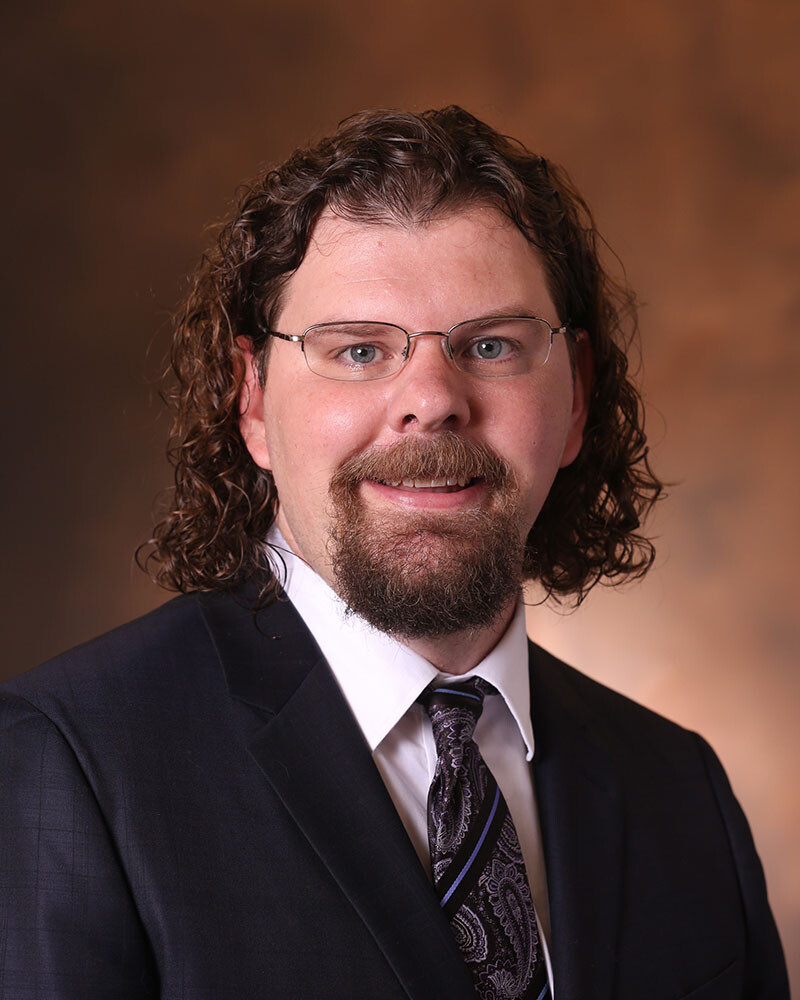
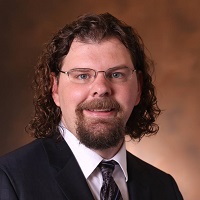
Bennett Landman serves as Professor of Electrical and Computer Engineering at Vanderbilt University and Director of the Vanderbilt Lab for Immersive AI Translation (VALIANT). He leads the Medical-image Analysis and Statistical Interpretation (MASI) lab, focusing on medical image processing with robust and scalable methods for large-scale data analysis. His academic home is in the School of Engineering with strong ties to the School of Medicine and multiple clinical departments.
Education
- Ph.D. in Biomedical Engineering (2008), Johns Hopkins University School of Medicine, Baltimore, MD - Thesis: "Diffusion Imaging of the In Vivo Spinal Cord and Cerebellum" advised by Jerry Prince and Susumu Mori
- M.Eng. in Electrical Engineering and Computer Science (2002), Massachusetts Institute of Technology, Cambridge, MA - Thesis: "Broadband Nanosensing using Heterodyne Interferometry" advised by Dennis Freeman
- B.S. in Electrical Engineering and Computer Science (2001), Massachusetts Institute of Technology, Cambridge, MA - Minors in Mechanical Engineering and Economics
Research Interests
Dr. Landman's research focuses on medical image processing with particular emphasis on neuroimaging and diffusion weighted magnetic resonance imaging. His work spans Alzheimer's disease and aging research, large-scale medical data analysis, and the development of robust image processing pipelines that connect medical physics with clinical applications. His lab has constructed a university-wide medical image processing system handling data for over 400 IRB-approved projects with more than 100,000 imaging sessions, demonstrating significant infrastructure development capabilities.
His current research agenda combines image-processing technologies with electronic health data to improve understanding of individual anatomy and advance personalized medicine. This work intersects with multiple disciplines including Big Data analytics, medical imaging, and AI translation for clinical applications, with recent expansion into containerization, federated learning, and advanced neural network architectures for medical image analysis.
Research Trends Analysis
Analysis of Dr. Landman's recent publications reveals a strong focus on advancing medical imaging techniques, particularly in neuroimaging and diffusion MRI. His work spans methodological developments in image processing, clinical applications in Alzheimer's disease and aging, and innovative uses of AI for medical image analysis. A significant portion addresses challenges in large-scale data processing, quality control, and standardization across multiple imaging sites. His research increasingly incorporates advanced AI techniques including deep learning, GANs, and federated learning approaches to solve problems in medical imaging while addressing issues of data privacy and fairness, with notable contributions to preclinical imaging standards through the ISMRM diffusion study group.
Affiliations and Mentoring
Dr. Landman maintains strong affiliations with both the Vanderbilt School of Engineering and the School of Medicine. He leads the MASI lab which supports numerous research projects that would involve mentoring graduate students and postdoctoral researchers in electrical engineering, biomedical engineering, and medical imaging fields. His work involves significant collaboration across disciplines, particularly in neuroscience, radiology, and computer science, with infrastructure supporting over 400 IRB-approved projects demonstrating extensive collaborative activity.
Laboratories and Teams
Dr. Landman directs the Medical-image Analysis and Statistical Interpretation (MASI) lab at Vanderbilt University, which focuses on developing robust and scalable methods for medical image analysis. He is also the Director of the Vanderbilt Lab for Immersive AI Translation (VALIANT), indicating a growing focus on translating AI technologies into clinical practice. His team has constructed a university-wide medical image processing system that handles data for 400+ IRB-approved projects with more than 100,000 imaging sessions, demonstrating significant infrastructure development capabilities. The lab maintains close links with Vanderbilt's high-performance computing center for automated processing of structural, functional, and diffusion MRI data, with recent work expanding into containerization, pipeline robustness, and AI translation for clinical applications.