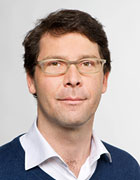
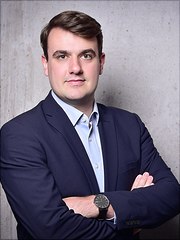
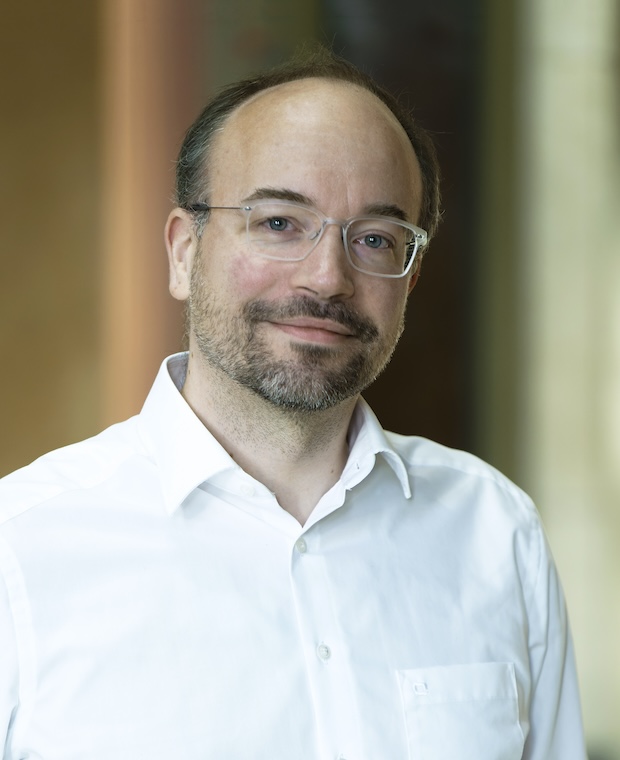
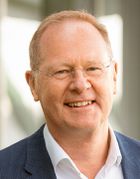
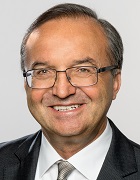
Prof. Dr. Martin Kronbichler is a faculty member at the Faculty of Mathematics , Ruhr University Bochum , leading the Numerics group. His research focuses on higher-order finite element methods, multigrid techniques, and high-performance computing for complex fluid and solid mechanics problems. Key Research Areas: Higher-order finite element methods, iterative solvers, multigrid algorithms, exascale mathematical software, and computational fluid dynamics. Notable Projects: EU-funded dealii-X (exascale digital twins), BMBF PDExa (optimized PDE solvers for exascale), and DFG grants for cut-discontinuous Galerkin methods and geometric multigrid. Publications Trends: Recent works emphasize matrix-free operators for hyperelasticity, diffuse-interface models for additive manufacturing, and multigrid smoothers for higher-order elements. Scientific Awards: Recipient of the Humboldt Research Award for his contributions to numerical methods and HPC. Team: Collaborates with researchers like Dr. Shubham Kumar Goswami, Dr. Richard Schussnig, and Natalia Nebulishvili.
Prof. Alexander Pretschner is a Professor of Software & Systems Engineering at the Technical University of Munich (TUM) and Founding Director of the Bavarian Research Institute for Digital Transformation (bidt). He also serves as Scientific Director of fortiss, a Bavarian research institute for software-intensive systems. His research focuses on software engineering, testing, information security, and ethical software development. Pretschner holds a PhD from TUM and has held academic positions at Karlsruhe Institute of Technology (KIT) and TU Kaiserslautern. He is a co-editor of several prestigious journals, including IEEE Transactions on Reliability and the Journal of Software Testing, Verification and Reliability. Education: PhD in Computer Science, Technical University of Munich MSc in Computer Science, University of Kansas (on Fulbright Scholarship) Diplom in Computer Science, RWTH Aachen University Research Interests: His work spans testing methodologies, secure software design, and ethical considerations in agile development. Notable contributions include frameworks for metamorphic testing, distributed data usage control, and accountability mechanisms for cyber-physical systems. Awards: IBM Faculty Award (2012, 2013) Google Focused Research Award (2011, 2012) EARTO Innovation Prize (2014) 2nd Platz Supervisory Award (2020) Advising & Grants: Pretschner has supervised numerous PhD and Master’s students, contributing to over 200 publications. He leads projects like EDAP (Ethical Deliberation in Agile Processes) and collaborates with industry partners on cybersecurity and AI ethics initiatives. Labs & Teams: His work is anchored in bidt, fortiss, and TUM’s Chair of Software & Systems Engineering, focusing on societal impacts of digitalization and trustworthy AI systems.
Sotirios Liaskos is an Associate Professor in the School of Information Technology at the Faculty of Science, York University. He is a leading researcher in requirements engineering and conceptual modeling, with a focus on goal models, empirical evaluation, and model-driven engineering. Research Interests: Requirements Engineering Goal and Conceptual Modeling Empirical Software Engineering Model-Driven Design and Automation Uncertainty and Decision-Theoretic Reasoning in Models Applications in Blockchain and Reinforcement Learning His recent work emphasizes the empirical validation of modeling constructs, the integration of decision theory into goal models, and the automated generation of secure workflows and AI training environments. He has led and co-authored numerous experimental studies on model comprehensibility and semantic quality. Publication Trends: His publications consistently appear in top venues like ER, RE, and iStar. The last five years show a strong trend toward empirical evaluation of modeling languages, decision-theoretic goal models, and applications of goal modeling in emerging domains such as blockchain and reinforcement learning simulation design. Scientific Contributions: Developed frameworks for empirical evaluation of modeling language ontologies (Peira framework). Advanced decision-theoretic approaches to goal modeling under uncertainty. Pioneered model-driven methods for generating blockchain simulators and reinforcement learning environments. Conducted foundational empirical studies on the comprehensibility of contribution links and visualization alternatives in goal models. Advising and Collaboration: He has advised several researchers including Ibrahim Jaouhar, Wisal Tambosi, Mehrnaz Zhian, and Saba Zarbaf. He maintains a highly collaborative research profile with frequent co-authorship with John Mylopoulos, Shakil M. Khan, and other international researchers. He has served as a co-editor for multiple iStar workshop proceedings, indicating leadership in the goal-oriented requirements engineering community. Labs and Teams: While no specific lab name is mentioned, his work is closely associated with research groups focused on requirements engineering and conceptual modeling, likely within York University’s software engineering research cluster. His collaborations span institutions in Canada, Europe, and beyond.
Anna Levina is an Assistant Professor for Computational Neuroscience at the University of Tübingen , affiliated with the Department of Computer Science under the Faculty of Science. Her research focuses on the self-organization of neuronal activity, critical dynamics in neural networks, and the excitation/inhibition balance in cortical circuits. Current positions: Assistant Professor (since 2018), Group Leader (2017-2018), Equality Officer (Computer Science) Previous roles: IST Fellow (2015-2017), Associated Researcher (2011-2015), Postdoc/PI (2011-2015), Postdoc (2008-2011) Her research integrates mathematical modeling , statistical physics , and computational neuroscience to study criticality phenomena, neural avalanches, and adaptive network dynamics. Key interests include: Self-organized criticality in neural systems Excitation/Inhibition balance mechanisms Network topology and dynamics Timescale analysis in neural processing Stochastic modeling of neural activity Recent publications reveal trends in understanding critical dynamics across biological and artificial networks, with applications to memory systems, sensorimotor integration, and disease modeling. She has received recognition as an IST Fellow .
Fabian Fritz holds an M.Sc. degree and works at the Technical University of Munich (TUM) within the Chair of Aerodynamics and Fluid Mechanics . His research focuses on computational fluid dynamics (CFD) and numerical simulation of multiphase flows, particularly using Smoothed Particle Hydrodynamics (SPH) . He collaborates on projects like PBF-LB/M (additive manufacturing) and contributes to Lagrangian fluid mechanics benchmarking frameworks. Research Trends: His publications emphasize numerical methods (SPH, level-set, finite-volume), multiphase flow modeling , heat transfer , and thermoacoustic stability . Recent work includes hardware-agnostic code optimization and adaptive mesh refinement techniques. Education: Completed a master’s thesis on Diffusive-Interface Modeling of Multiphase Flows with Surface-Tension Effects , supervised by P.D. Dr.-Ing. habil. Stefan Adami.
Dr. Michael Kleeberger is a Researcher at the Chair of Materials Handling, Material Flow, Logistics (FML) at the Technical University of Munich, based at Boltzmannstr. 15 in Garching. He collaborates closely with Prof. Johannes Fottner and maintains an active research profile in crane dynamics and mechanical systems simulation. His research specializes in Materials Handling and Logistics with emphasis on Crane Dynamics, Flexible Multibody Systems, and Control Systems. He develops advanced models for hydraulic actuated cranes, focusing on dynamic behavior during hoisting, slewing, and trajectory operations using port-Hamiltonian formulations and geometrically exact beam theory. His work bridges theoretical mechanics with industrial applications in heavy machinery. Analysis of his 15 most recent publications reveals consistent focus on numerical methods for flexible crane structures, with growing emphasis on optimal control strategies (2020-2025). Key trends include port-Hamiltonian system applications, lunar crane feasibility studies, and vibration mitigation techniques for lattice boom and knuckle boom configurations across diverse operational scenarios. As part of FML, Dr. Kleeberger contributes to TUM's leadership in logistics engineering through industry-collaborative projects and fundamental research in material flow systems, maintaining the chair's reputation for excellence in mechanical dynamics and practical engineering solutions.
Prof. Dr.-Ing. Ahmad Osman is a Professor at the Saarland University of Applied Sciences (htw saar), specializing in Test Technologies and Test Methods within the Faculty of Engineering. He also holds an Adjunct Professor position at Laval University in Quebec, Canada, in the Department of Electrical Engineering and Computer Science. His research focuses on Artificial Intelligence applications in Signal and Image Processing for Non-destructive Testing (NDT) , with extensive work on Deep Learning , 3D Ultrasound Tomography , and Sensor Data Fusion in industrial contexts. Engineering Artificial Intelligence Signal Processing Image Processing Non-destructive Testing Quality Control Augmented Reality Osman leads the AutomaTiQ research group and serves as Head of the Algorithms/Signal and Data Processing Department at Fraunhofer IZFP . His recent publications (2017–2022) emphasize Deep Learning for defect detection in CFRP , Terahertz Imaging for artwork diagnostics, and Acoustic Sensors for agricultural quality control. He has organized international conferences on Structural Health Monitoring and contributed to Springer books on NDT technologies. His projects include ComforTex-AI (2024) and development of 3D positioners for ultrasound measurements. Collaborations span institutions in Germany, Canada, Italy, and Brazil, with advisory roles in the German Society for NDT and technical committees for conferences in Montreal and Egypt.
Henrik Wyschka is a doctoral researcher and scientific staff member at the University of Hamburg's Department of Mathematics, affiliated with the Faculty of Mathematics, Computer Science and Natural Sciences. His research focuses on shape optimization with fluid dynamic applications, algorithms for p-Laplace problems, and Lipschitz sequences. He is part of the DFG Research Training Group 2583, "Modeling, Simulation and Optimization with Fluid Dynamic Applications," under project O3. Education: M.Sc. (2021) and B.Sc. (2019) in Technomathematics from TU Hamburg and University of Hamburg. His work integrates theoretical analysis and numerical methods to advance computational techniques in shape optimization. Key contributions include presentations at major conferences (e.g., IFIP TC7, SIAM, GAMM) and publications on trust-region methods for p-harmonic optimization and high-order descent direction algorithms. His research emphasizes efficient numerical solutions for fluid dynamics-related challenges. Funding: Supported by the DFG through Graduiertenkolleg 2583. Office location: Geomatikum Building, Room 1517. ORCID: 0009-0000-2242-2464 .
Michael Knap is an Associate Professor of Collective Quantum Dynamics at the Technical University of Munich (TUM), within the Department of Physics at the TUM School of Natural Sciences. His research group focuses on condensed matter theory, quantum many-body systems, and quantum simulation. Knap holds office in room 5101.01.037 at James-Franck-Str. 1, 85748 Garching b. München, and can be reached at michael.knap@ph.tum.de or +49 (89) 289 - 53777. Prof. Knap's research delves into the rich physics of quantum many-body systems, particularly exploring non-equilibrium dynamics and transport phenomena in ultracold quantum gases, interacting light-matter systems, and correlated quantum materials. His work spans multiple subfields including topological phases of matter, quantum simulation with trapped ions, fracton physics, and quantum computation. He develops novel numerical approaches based on quantum information theory and utilizes artificial intelligence and machine learning to tackle challenging problems in condensed matter physics. His group's research connects fundamental theoretical questions with experimental implementations in quantum simulators. The analysis of Prof. Knap's recent publications (2023-2025) reveals a strong focus on topological quantum matter, quantum simulation, and emergent phenomena in constrained quantum systems. His work frequently bridges condensed matter theory with quantum information science, as evidenced by publications on fracton hydrodynamics, higher-form symmetries, and quantum error correction. There's a clear progression toward increasingly complex quantum systems and connections to experimental implementations on quantum processors. His research shows significant interdisciplinary reach, connecting condensed matter physics with quantum computing and quantum information theory. ERC Consolidator Grant (2025) ERC Starting Grant (2019) Supervisory Award, TUM Department of Physics (2018) Promotio sub auspiciis Praesidentis rei publicae, Austria (2013) Prof. Knap has established a robust research program supported by prestigious European Research Council grants. His group actively collaborates with both theoretical and experimental groups worldwide, particularly in the quantum simulation community. He has supervised numerous students through Master's Seminars on Collective Quantum Dynamics covering topics like quantum simulation with trapped ions and theoretical quantum computation. His research has received significant attention, with several publications featured as Editors' suggestions and Research Highlights in leading journals. The Collective Quantum Dynamics group maintains strong connections with experimental quantum simulation efforts, particularly in the areas of ultracold atoms and trapped ion systems. Knap's theoretical work often provides frameworks for interpreting experimental results in quantum simulators, creating a productive feedback loop between theory and experiment. His group participates in collaborative research networks focused on advancing quantum simulation capabilities and understanding fundamental aspects of quantum many-body physics.
Prof. Dr.-Ing. Lars Linsen is a full Professor of Computer Science at the Westfälische Wilhelms-Universität (WWU) Münster, leading the VISualization & graphIX (VISIX) group. His primary affiliation is the Institute of Computer Science within the Faculty of Mathematics and Computer Science. He holds adjunct professorships at Jacobs University, Bremen, and has held previous academic roles including Full Professor at Jacobs University (2012–2017) and Associate/Assistant Professor roles in Germany and the U.S. His research focuses on interactive visual analysis, medical visualization, and scientific visualization, with applications in life sciences and engineering. Education: PhD (Dr.-Ing.) in Computer Science from Universität Karlsruhe (2001), M.Sc. (Diplom) in Computer Science (1997), B.Sc. (Vordiplom) in Computer Science (1994). Awards: IEEE Visualization Design Contest Winner (2008, 2022, 2018), Preis des Fördervereins des Forschungszentrum Informatik (2002). Research Highlights: Develops visualization tools for medical imaging (e.g., mass spectrometry imaging, MRI data analysis) and physical simulations (e.g., wildfire spread analysis, asteroid impact modeling). Active in EU-funded projects like Pig-Pro-QuO (surface coatings) and cells-in-motion initiatives. Supervised over 20 PhD/MS advisees, including notable graduates in medical visualization and simulation ensemble analysis. Publications: Over 100 peer-reviewed articles in top venues like IEEE Transactions on Visualization and Computer Graphics, Computers & Graphics, and EuroVis. Key works include SciVis contest-winning wildfire analysis frameworks and medical visualization tools for stenosis detection. Teaching: Offers courses on visualization, computer graphics, and computational science. Actively involved in thesis supervision and curriculum development at both WWU Münster and Jacobs University. Grants & Collaborations: Principal investigator on DFG-funded projects (e.g., hemodynamics simulations, ensemble visualization) and industry collaborations (e.g., Tascon GmbH for coating quality analysis). Member of the Cells-in-Motion Interfaculty Centre and CDH board at WWU.
Prof. Dr. Markus Bachmayr is a full professor at the Institute for Geometry and Practical Mathematics, RWTH Aachen University, holding the chair for Applied Mathematics. His research focuses on nonlinear approximation, high-dimensional partial differential equations (PDEs), uncertainty quantification, and numerical methods in quantum chemistry. He leads the ERC Consolidator Grant project Computational Complexity of Highly Nonlinear Approximations (COCOA) and contributes to CRC 1481 Sparsity and Singular Structures, and RTG 2326 Energy, Entropy, and Dissipative Dynamics. His recent work emphasizes adaptive low-rank and sparse approximation techniques for parametric and stochastic PDEs, including applications in radiative transfer and poroviscoelastic flow modeling. He serves as Editor-in-Chief of Foundations of Computational Mathematics and Associate Editor for multiple journals. Scientific Awards: John Todd Award 2013 Borchers Plakette 2014 Erwin Wenzl Preis 2007 He has taught courses such as Numerische Analysis I/II, Numerische Mathematik für Elektrotechniker, and seminars on numerical methods and approximation theory.
Dr. Moritz Ziegler is a geomechanics researcher affiliated with the Technical University of Munich (TUM) and the Assistant Professorship of Geothermal Technologies . He previously worked at GFZ Potsdam (2017–2023) and earned his PhD in Geophysics from the University of Potsdam (2014–2017). His research focuses on geomechanical numerical modeling , uncertainty quantification , and 3D stress field analysis , with applications to geothermal energy, seismic hazard, and rock mechanics. Education: Bachelor of Science in Geosciences (2008–2011), Freie Universität Berlin Master of Science in Geophysics (2011–2014), University of Potsdam PhD in Geophysics (2014–2017), University of Potsdam & GFZ Potsdam His work integrates advanced computational methods ( Altair Hypermesh , Dassault Systèmes Abaqus , Python , Matlab ) to address complex geomechanical problems. Recent publications analyze stress gradients in the North Alpine Foreland Basin, fault-stress interactions, and physics-based machine learning in geomechanics. He has contributed to software development (DOuGLAS v1.0) and calibration tools (FAST Calibration v2.4). Scientific awards or honors are not explicitly mentioned in the provided text. However, his research has been published in leading journals such as Geophysical Journal International , Solid Earth , and Pure and Applied Geophysics .
Prof. Dr.-Ing. Werner Lang serves as Vice President for Sustainable Transformation and holds the Chair of Energy Efficient and Sustainable Design and Building (ENPB) at the Technical University of Munich (TUM), within the TUM School of Engineering and Design. Previously, he was Professor of Sustainable Building and Director of the Center for Sustainable Development at the University of Texas School of Architecture in Austin (2008-2010). Lang also directs the Oskar von Miller Forum and is a partner at Lang Hugger Rampp GmbH Architekten in Munich. Lang's research focuses on developing strategies for buildings with positive environmental footprints through regenerative energy systems, renewable materials, and closed material cycles. His work emphasizes comprehensive life cycle analysis considering ecological, economic, and social aspects. Current research areas include climate-resilient urban neighborhoods, circular economy in construction, and sustainable building materials. The ENPB institute conducts numerous research projects such as Building Climate-Municipal, CircularFTmehrRAUM, and Urban Green Infrastructure. Lang's publications reveal a strong trend toward life cycle assessment, multi-criteria decision-making, and computational approaches for sustainable building design. His recent work integrates machine learning with building performance analysis and focuses on practical implementation of circular economy principles in urban contexts, with increasing emphasis on quantifying environmental benefits of urban green infrastructure. TUM Sustainability Award 2022 Doce et Delecta (Second Prize for Best Teaching), 2019 Bayerischer Energiepreis 2014 International Building Skin Tech Award (2008) Promotionspreis der TUM (2000) Lang leads the Institute of Energy-Efficient and Sustainable Design and Building with numerous research grants including projects like Building.Lab+, NAWAREUM, and ECO+. His team includes researchers working on topics ranging from urban mining to life cycle assessment tools. The institute maintains several products and startups including MoMeBo, Bilanzlabor, and EnergyML that translate research into practical applications for the building industry.
Özüm Asirim is a Researcher at the Technical University of Munich (TUM) under the Associate Professorship of Computational Photonics led by Prof. Christian Jirauschek. Her work focuses on computational photonics , quantum optics , and nonlinear optical phenomena , particularly in micro-resonators and semiconductor devices. Education: Ph.D. in Electrical Engineering from Middle East Technical University (Ankara, Turkey). Research spans optical parametric amplification , Fourier domain mode-locked lasers , self-phase modulation , and machine learning applications in photonics . Her studies include optimizing gain factors, enhancing harmonic generation, and modeling supercontinuum sources via carrier injection. Recent publications (2019–2023) highlight interdisciplinary approaches, merging photonics with computational finance and nonlinear dynamics . She contributes to EU Project QOMBS and teaches courses like Python for Engineering Data Analysis and Quantum Engineering and Machine Learning seminars. Collaborations include Prof. Christian Jirauschek (TUM), Prof. Mustafa Kuzuoğlu (Middle East Technical University), and teams in computational photonics and quantum optics. Her work impacts semiconductor physics , laser technology , and adaptive optical systems .
Prof. Dr.-Ing. Gerhard Müller is a Full Professor at the Chair of Structural Mechanics within the TUM School of Engineering and Design at Technical University of Munich (TUM). Since 2004, he has held this distinguished position, and since 2014, he has served as Executive Vice President for Academic and Student Affairs at TUM. His research focuses on structural dynamics and vibroacoustics, with specific expertise in dynamic soil-structure interaction, sound radiation analysis, and seismic risk assessment. Professorship: Structural Mechanics University: Technical University of Munich School: TUM School of Engineering and Design Department: Chair of Structural Mechanics in Civil Engineering Prof. Müller's research spans multiple domains, including: Structural Dynamics : Examining building and vehicle vibrations, seismic soil-structure interaction, and advanced model order reduction techniques Vibroacoustics : Investigating sound radiation from vibrating structures and developing acoustic metamaterials for noise control Computational Methods : Pioneering hybrid deterministic-statistical approaches, Wave Based Methods (WBM) for saturated elastodynamic structures, and parametric model order reduction His recent publications demonstrate expertise in: Wave propagation analysis in poroelastic media Bayesian parameter updating for structural models Acoustic metamaterials for vibration control Advanced numerical methods for seismic risk assessment Hybrid ITM-FEM approaches for soil-structure interaction Energy flow analysis in timber structures Awarded the Spindler Prize in 1984 , Prof. Müller also holds significant academic leadership roles: President of European Association for Structural Dynamics (EASD) Chairman of Bavarian-French University Center (BayFrance) Active member of ASIIN accreditation agency and Bavarian Chamber of Engineers Previously served as Dean of Civil Engineering and Surveying at TUM (2010-2014) He leads the Structural Dynamic Lab (formerly Vibroacoustics Lab) and has developed interactive web apps for engineering education. His work bridges theoretical advancements with practical applications in construction acoustics, transportation noise control, and geothermal energy infrastructure analysis.