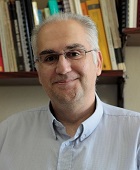
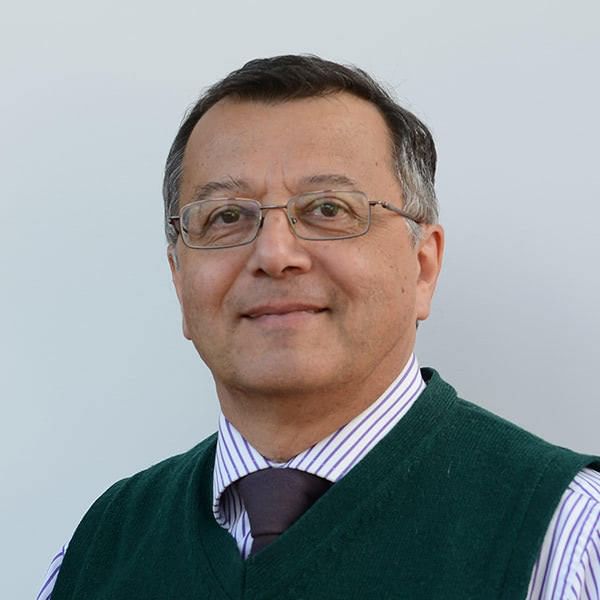
Michalis Xenos is a Professor in the Department of Mathematics at the University of Ioannina, Greece. He holds a PhD in Applied Mathematics (2003) from the University of Patras and has held postdoctoral positions at the University of Illinois at Chicago (2003-2007) and Stony Brook University (2007-2011). His research spans Applied Mathematics, Fluid Mechanics, and Biomechanics, with a focus on Magnetohydrodynamics (MHD), Computational Fluid Dynamics (CFD), and Fluid-Structure Interaction (FSI) in cardiovascular systems. Education : BSc (1996), MSc (1998), PhD (2003) in Applied Mathematics, University of Patras. Affiliations : University of Ioannina (2011-present), Stony Brook University (postdoctoral, 2007-2011), University of Illinois at Chicago (postdoctoral, 2003-2007). His work involves modeling blood flow in aneurysms, optimizing mechanical heart valves, and analyzing hemodynamic factors in vascular diseases. Collaborators include Prof. A.A. Linninger (UIC), Prof. D. Bluestein (SUNY), and Prof. U. Morbiducci (Politecnico di Torino). His publications address MHD flows, AAA rupture risk prediction, thrombogenicity in devices, and nonlinear differential equations.
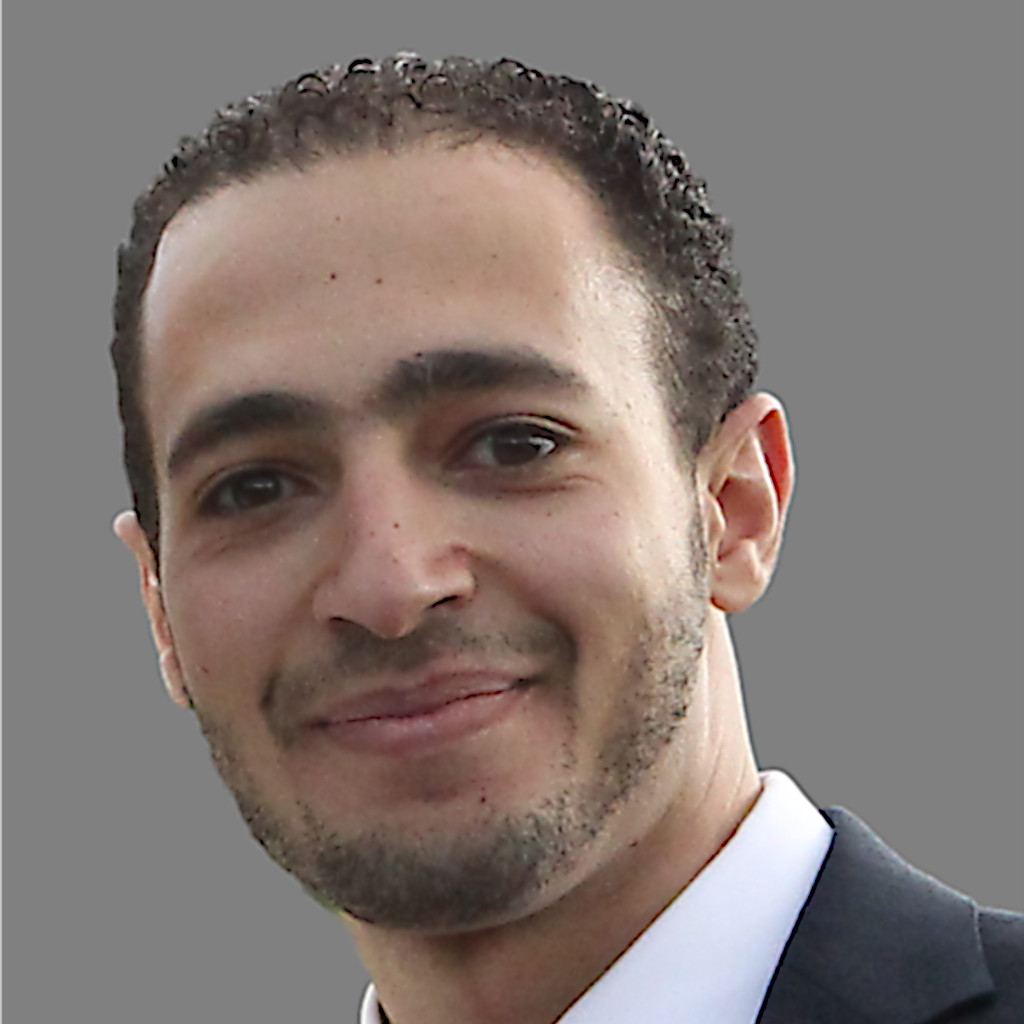
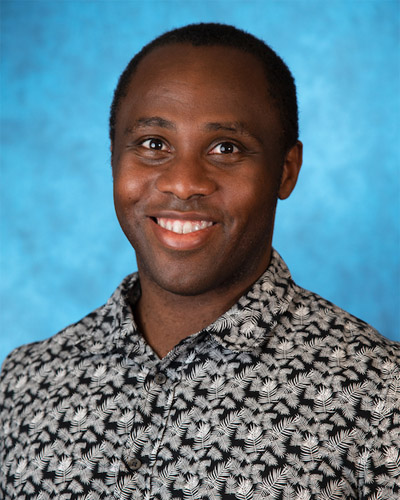
Osama Bilal is an Assistant Professor at the University of Connecticut (UConn), leading the We-Xite Lab focused on Wave Engineering through Extreme & Intelligent Materials. His research explores metamaterials for programmable wave control, combining mechanics, materials science, and advanced manufacturing. He holds a multidisciplinary background in aerospace engineering, computer science, and condensed matter physics from institutions including Caltech, ETH Zurich, and Cairo University. Prof. Bilal’s work bridges theory, simulations, and experiments to design multifunctional structures with unprecedented properties. Key areas include acoustic metamaterials, soft robotics, and topology optimization. His lab has developed 3D-printed ferroelectric programmable metamaterials and bistable systems for selective wave filtering. Notable recognitions include the ARL Postdoctoral Fellowship, ETH Zurich Postdoctoral Fellowship, and inclusion in the World’s Top 2% Scientists list. Research Groups: Active Faculty Member, Applied Mechanics & Advanced Materials Processing Lab Activities: Supervises students like Roshdy M., Samak M.M., and Evan, who have won multiple top awards in competitions. Recent publications highlight breakthroughs in flat band phononic metamaterials, auxetic metamaterial dynamics, and self-assembly of magnetic lattices. His team has presented at ASME IMECE and won best presentation awards at conferences like Phononics in Manchester. Ongoing projects aim to advance programmable materials for energy localization, flow control, and biomedical applications.
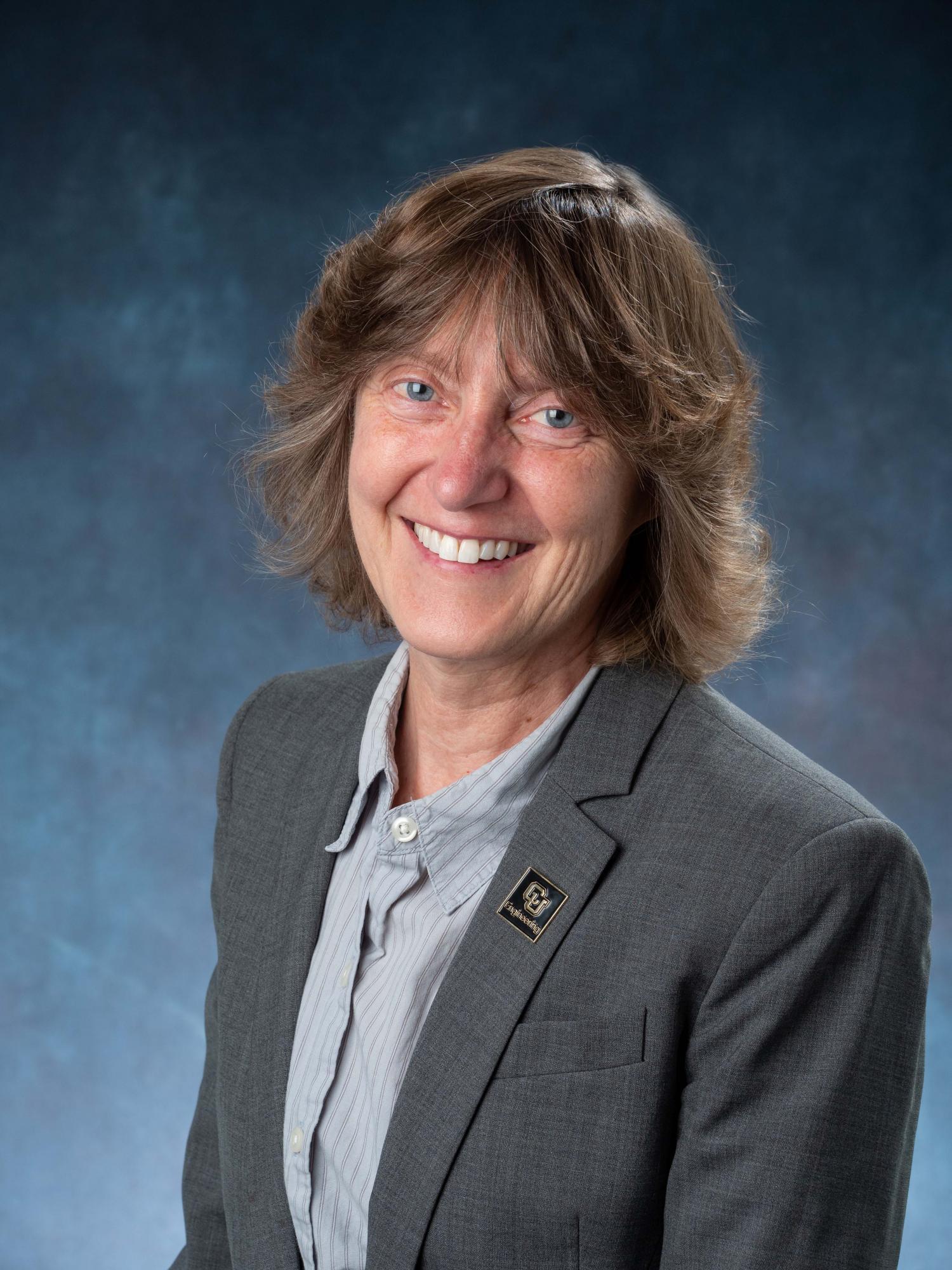
Dr. Hope Michelsen is an Associate Professor in the Department of Mechanical Engineering at the University of Colorado Boulder, specializing in Thermo Fluid Sciences and Air Quality. Her research focuses on carbonaceous particle formation mechanisms, combustion diagnostics, and their environmental impacts. She leads efforts in developing laser/X-ray-based diagnostic tools for studying soot evolution in flames and atmospheric systems. Research Interests include soot inception/growth, black carbon climate effects, and particle synthesis control. She has pioneered studies on resonance-stabilized radicals' role in soot formation and developed novel sampling techniques like jet-entrainment methods. Her work bridges fundamental combustion science with practical applications in air quality and climate mitigation. Awards: Fellow, American Physical Society Fellow, The Optical Society Alameda County Women’s Hall of Fame Inductee Lab facilities include advanced diagnostics at ECME 1B68/ECNW 180. Research collaborations involve multi-scale modeling of emissions and atmospheric transport. Current projects address wildfire soot dynamics and Arctic methane monitoring through inverse modeling techniques.
Ryan M. Pollyea is an Associate Professor in the Department of Geosciences at Virginia Tech’s College of Science. His research focuses on geofluids, energy resources, and geologic CO2 sequestration, with expertise in numerical modeling of fluid flow in porous media and geospatial analysis. He leads the VT Hydrogeosciences Lab, investigating processes like CO2 sequestration in basalt reservoirs and fluid-induced seismicity linked to wastewater injection. Education: Ph.D., University of Idaho (2012); B.S., University of Dayton (1999). His team includes PhD student Wu Hao and MS student Gradyon Konzen, studying topics like capillary pressure uncertainty and hydraulic effects of wastewater injection. Research interests span coupled thermal-hydro-chemical-mechanical modeling, fracture network characterization via LiDAR, and reservoir-scale permeability changes. He emphasizes applying computational methods to address energy and environmental challenges, with a focus on carbon storage and induced seismicity mitigation. Teaching includes courses like Groundwater Hydrology, Reactive Transport Modeling, and Engineering Geology. His work integrates high-performance computing and machine learning to analyze large datasets, exemplified by collaborations on exascale simulation frameworks and semantic interaction tools for ensemble analysis. Current projects include the Virginia SWIFT initiative, assessing aquifer recharge risks, and evaluating carbon storage potential in basaltic formations. His lab’s research underscores the interplay between subsurface fluid dynamics and geological processes, with applications to sustainable energy and environmental management.
Prof. Eric Loth is the Rolls-Royce Commonwealth Professor of Engineering and Director of the Fluids Research Innovation Lab (FRIL) at the University of Virginia. His research focuses on extreme-scale wind turbines, energy storage systems, multiphase flow, and aerospace propulsion. He has authored over 200 journal papers, holds 10 patents, and led $16M in research funding. His work has been covered by major media outlets and he has given invited talks at prestigious institutions like Harvard, MIT, and Cambridge University. Education: B.S. in Aerospace Engineering, West Virginia University M.S. in Aerospace Engineering, Pennsylvania State University Ph.D. in Aerospace Engineering, University of Michigan Research Interests: Loth’s work spans wind energy systems, aerodynamics of propulsion, turbulence mechanics, and fluid-solid interactions. He pioneered designs for 25–50 MW offshore turbines and co-developed energy storage frameworks integrating wind systems. His recent projects include icephobic coatings for turbine protection and novel particle separation technologies. Awards & Recognition: Fellow of ASME and AIAA Yip Visiting Fellow, Magdalene College, Cambridge Panel Chair for NAE Energy Research (IMECE) and NAE Aerospace Research (AIAA Sci Tech) Advising & Grants: Loth has advised numerous students and secured major grants from agencies like ARPA-E, NREL, and the Department of Energy. His lab (FRIL) collaborates with industry leaders like Rolls-Royce and the U.S. Navy. Labs & Teams: Director of the Fluids Research Innovation Lab (FRIL), co-leads the SUMR (Sustainable, Ultra-Mega-Rotor) initiative, and oversees the SpiderFLOAT offshore wind platform project. His team focuses on interdisciplinary challenges in renewable energy and fluid dynamics.
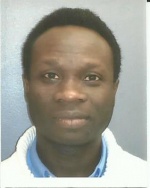
Dr. Lateef Akanji is a Senior Lecturer in the Department of Petroleum Engineering at the School of Engineering, University of Aberdeen, where he has been contributing since 2014. He previously served as Lecturer and Head of the Petroleum Technology Research Group at the University of Salford, Assistant Professor at King Saud University, and Visiting Lecturer at the University of Leoben. His academic journey includes a PhD from Imperial College London and degrees from the University of Ibadan. University: University of Aberdeen School: School of Engineering Position: Senior Lecturer, Petroleum Engineering Email: l.akanji@abdn.ac.uk Education: PhD, Petroleum Engineering, Imperial College London M.Sc., Petroleum Engineering, University of Ibadan B.Sc. (Honours), Petroleum Engineering, University of Ibadan DIC (Diploma of Imperial College) Research Interests: Dr. Akanji's research centers on multiphase flow in porous and permeable media, with applications in enhanced oil recovery (EOR) in clastic, carbonate, and unconventional shale reservoirs. His work integrates theoretical, experimental, and computational fluid dynamics, utilizing platforms like Python, C++, and Fortran. He is pioneering the application of artificial intelligence in petroleum engineering, particularly in EOR screening and production optimization. His research includes pore-scale modeling, gas-lift systems, and nuclear reactor flow dynamics. Publication Trends: His recent publications (2025–2021) reflect a strong focus on fluid displacement in porous media, shale reservoir characterization, AI applications in energy, and nuclear safety. Notable themes include computational modeling of multiphase flow, biosurfactant EOR, and advanced numerical methods for reservoir simulation. Scientific Awards and Honors: Fellow of the Higher Education Academy (FHEA) Chartered Engineer (CEng) Chartered Petroleum Engineer European Engineer (Eur Ing) Member of the Energy Institute (MEI) Advising and Grants: Dr. Akanji supervises numerous PhD students in areas such as AI-based production optimization, permeability upscaling, and biosurfactant EOR. He leads research funded by PTDF, TETFUND, Sonangol, and Elphinstone, focusing on high-pressure high-temperature flow loops, gas-lift pilot rigs, and neuro-fuzzy screening systems. His collaborative projects involve institutions in the UK, Austria, and Australia. Laboratories and Research Platforms: He contributes to the development of the Complex System Modelling Platform (CSMP++), a C++-based API for simulating multi-physics flow in porous systems, co-developed with ETH Zurich and Montanuniversität Leoben. He also leads a technology innovation platform for EOR, including experimental rigs for biosurfactant screening and gas-lift stability testing.
Benoit Cushman-Roisin is a Professor of Engineering Sciences at the Thayer School of Engineering, Dartmouth College. His research focuses on environmental fluid mechanics, industrial ecology, and sustainable design. He holds a BS in Engineering Physics from the University of Liège (1978) and a PhD in Geophysical Fluid Dynamics from Florida State University (1980). He serves as Editor-in-Chief of Environmental Fluid Mechanics and teaches courses such as Environmental Fluid Mechanics (ENGS 151) and Sustainable Product Design (ENGS 171). His academic contributions include pioneering work in turbulent dispersion modeling and industrial ecology simulation tools. Adjunct Professor at the University of Nova Gorica, Slovenia Co-organizer of the 'Modelling of Oceanic Vortices' colloquium Author of textbooks like Introduction to Geophysical Fluid Dynamics Recipient of two U.S. patents: 'Turbo-compressor-condenser-expander' (2013) and 'Geometry of heat exchanger with high efficiency' (2015) His research integrates theoretical fluid dynamics with practical environmental applications, emphasizing sustainable engineering solutions for resource management and energy efficiency.
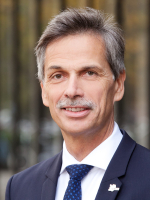
Prof. Dr. Dr. hc Jörg Becker is a Senior Professor at the University of Münster, leading the Chair of Business Informatics and Information Management. He holds prominent roles such as Director of the European Research Center for Information Systems (ERCIS) and former Pro-Rector for Strategic Planning. His expertise spans e-government, process management, and digital transformation. Becker earned his habilitation and doctorate from Saarland University, specializing in information systems and material flow control. Research focuses include hybrid value creation, trade information systems, and smart energy business models. He has advised numerous institutions and served on national committees like the Plattform 'Digitale Verwaltung' and the National E-Government Competence Center (NEGZ). His editorial roles include Business & Information Systems Engineering and Information Systems and e-Business Management. Becker has authored over 200 publications, with recent work on digital government competencies, citizen involvement in smart cities, and trust in information systems. Awards include Fellow of the German Informatics Society (GI) and honorary doctorates. His grants include projects on digital middle-tier towns and IT requirements for social security digitization.
Prof. Uner Colak is a Professor at Istanbul Technical University's Energy Institute, specializing in nuclear reactor engineering, computational fluid dynamics, and thermal hydraulics. His research focuses on high-temperature reactors, neutron flux analysis, and reactor safety. He has led numerous projects on nuclear fuel management, hydrogen production, and energy systems optimization. Colak has received the TÜBA Scientific Copyright and Translated Works Awards Program (TEÇEP) in 2015. His work spans reactor core design, neutron transport analysis, and droplet dynamics, with over 49 publications and 12 projects since 2001. Research interests include nuclear reactor core physics, computational modeling for reactor safety, and advanced energy systems. His recent work involves validating reactor analysis codes, optimizing load dispatch algorithms, and investigating droplet-surface interactions for heat transfer applications. Projects include developing pebble flow dynamics for high-temperature reactors and assessing nuclear power localization strategies. His articles highlight contributions to reactor physics, fluid dynamics, and energy policy. Current activities include active projects on hydrogen technologies and sustainable energy solutions until 2027. Colak collaborates internationally, contributing to global nuclear energy advancements and training future researchers through ongoing theses supervision.
Seher Eken is an Assistant Professor in the Department of Aerospace Engineering at Istanbul Technical University. Her research focuses on structural dynamics and aeroelasticity of aerospace systems, specializing in thin-walled composite beams, spacecraft shielding, and hypervelocity impact mechanics. She has led multiple projects on topics like transonic flutter suppression, ballistic armor optimization, and orbital debris mitigation. Key research areas include: Composite material failure under extreme loads Aeroelastic stability of rotating structures Numerical simulation of hypervelocity impacts Dynamic analysis of aircraft wings and turbine blades Active vibration control techniques Her recent work emphasizes spacecraft protection systems, with studies on orbital debris impact dynamics and advanced composite armor design. She has also contributed to launch vehicle instability analysis and swept wing flutter characteristics. Current projects involve 3D-printed turbine blade repair, transonic flutter prediction for unmanned aircraft, and ballistic impact optimization for high-performance fabrics. Notable projects (2022–2025): AB Yeni Nesil İnsansız Savaş Uçakları Aeroelastik Uyarlama (Transonic Flutter Prediction) 3D-Printed Turbine Blade Repair with Sustainability Focus Ballistic Impact Analysis of Fabric Armors Orbital Debris Impact Simulation for Spacecraft Shields Her research integrates computational modeling (CFD, FEA) with experimental validation, focusing on aerospace structural systems under extreme conditions. Collaborations span international partners in composite material development and space debris mitigation strategies.
Professor Karl Bernhard Friedrich serves as Universitätsprofessor and Chair of Metallurgical Process Engineering and Metal Recycling at RWTH Aachen University's Faculty of Georesources and Materials Engineering. He leads the Institute for Metallurgical Science and Electrometallurgy (IME), with his office located in Building 1401, Room 108 at Intzestraße 3 in Aachen. His leadership extends to numerous EU-funded research initiatives focused on sustainable metallurgy and circular economy principles. Professor Friedrich's research interests span metallurgical process engineering, metal recycling, extractive metallurgy (pyrometallurgy and hydrometallurgy), battery recycling technologies, lithium recovery processes, and vacuum metallurgy. His work emphasizes resource efficiency and sustainable practices in metal production and recycling, with particular focus on developing environmentally sound processes for electronic waste and battery recycling. The institute under his leadership has pioneered several innovative recycling concepts for lithium-ion batteries and electronic scrap. Analysis of his recent publications reveals a strong focus on battery recycling technologies, particularly lithium recovery from spent batteries through both pyrometallurgical and hydrometallurgical routes. His research group has developed advanced processes for black mass treatment, slag valorization, and metal recovery optimization. The work demonstrates increasing integration of digital technologies and multi-objective modeling in metallurgical process development. Honorary doctorate from Montanuniversität Leoben (2025) recognizing outstanding scientific achievements and commitment to promoting young scientists Long-standing collaboration with Montanuniversität Leoben through the Aachen-Leoben Workshop for non-ferrous metallurgists Professor Friedrich actively supervises numerous doctoral students and has established several collaborative research programs including the DFG priority program 'engineered artificial minerals,' and doctoral programs 'circular electronics' and 'circular e-cars.' His institute maintains strong industry connections, with growing demand for TBRC and VAR trial campaigns. The institute recently commissioned a new large-scale arc furnace and is preparing for leadership transition in early 2027. The IME under Professor Friedrich's leadership operates extensive research facilities focused on vacuum metallurgy, pyrometallurgy, and hydrometallurgy. The institute collaborates with industry partners through the GDMB Zinc & Lead Technical Committee and participates in numerous European research networks. Current research activities focus on developing sustainable processes for battery recycling, electronic waste treatment, and critical metal recovery with emphasis on circular economy principles.
Chris Matzner is a Professor and Associate Graduate Chair at the University of Toronto's Department of Astronomy and Astrophysics, affiliated with the Dunlap Institute for Astronomy & Astrophysics. He earned his Ph.D. from UC Berkeley in 1999. His research focuses on astrophysical fluid dynamics, particularly star formation processes (protostellar disks, molecular clouds, energy feedback) and stellar explosions (supernovae, gamma-ray bursts), employing analytical, numerical, and observational approaches. His research encompasses: Dynamics of protostellar outflows and molecular cloud interactions Models for supernova shocks and gamma-ray burst mechanisms Fragmentation in star and planet formation Massive black hole accretion processes Evolution of giant molecular clouds Stellar feedback in galactic environments Analysis of his 15 most recent publications reveals strong emphasis on supernova dynamics (particularly Type Ia explosions), star formation mechanisms in clusters and molecular clouds, shock wave physics in astrophysical contexts, and the development of astronomical instrumentation. The works demonstrate consistent focus on explosive transients, fluid dynamics in cosmic environments, and observational constraints on theoretical models. As Associate Graduate Chair, he oversees academic programs and student development. His laboratory affiliations include the Dunlap Institute's computational astrophysics and instrumentation groups. Current work involves modeling star cluster-galaxy interactions, tidal disruption events, and developing next-generation UV/IR detectors.
Nicolas Binder is a Professor and Head of the Turbomachinery and Propulsion Research Group at ISAE-SUPAERO . His research focuses on turbomachinery aerodynamics, unsteady flow analysis, and innovative propulsion systems for aerospace applications. Member of EuroTurbo executive committee ASME Member Associate Editor, Journal of Turbomachinery Research expertise in off-design operations and windmilling flows Research Interests : Aerodynamics of turbomachinery in severe off-design conditions Unsteady flow dynamics in turbines Innovative propulsion methods including magneto-hydrodynamics Flow analysis techniques for compressors and fans Recent publications (2024-2021) emphasize transient flow modeling in turbines, windmilling operation optimization, and variable geometry turbine performance. Articles span experimental validation of numerical models, shock wave interactions, and novel propulsion concepts like plasma-thrusters for drones.
Richard Anantua is an Assistant Professor in the Department of Physics and Astronomy within the College of Sciences at the University of Texas at San Antonio (UTSA), and also serves as an Adjunct Professor at Rice University since 2024. His research group is pioneering Event Horizon Telescope (EHT) science in Texas, focusing on computational and theoretical astrophysics related to black holes and relativistic phenomena. Assistant Professor, UTSA – 2022–Present Adjunct Professor, Rice University – 2024–Present Postdoctoral Fellow, Harvard-Smithsonian Center for Astrophysics – 2019–2021 Postdoctoral Fellow, UC Berkeley – 2016–2019 Education: Ph.D. in Physics – Stanford University M.S. in Physics – Stanford University B.S. in Physics and Philosophy – Yale University B.S. in Economics and Mathematics – Yale University Ed.M. in Education Policy and Management – Harvard University Richard Anantua’s research focuses on computational astrophysics , particularly the modeling of emission near supermassive black holes using general relativistic magnetohydrodynamic (GRMHD) simulations. His work bridges theoretical models with observational data from cutting-edge instruments like the Event Horizon Telescope (EHT) and its next-generation counterpart (ngEHT). Key areas include black hole accretion flows, relativistic jets, plasma physics, and neutrino emission. He has developed methodologies to connect simulation variables—such as electron temperature, magnetic field strength, and current density—to observable signatures across the electromagnetic spectrum. The recent publications from his group reflect a strong trend in high-resolution modeling of black hole environments , with emphasis on M87, Sgr A*, and theoretical constructs like primordial black holes and dark matter alternatives. These works integrate numerical simulations with observational predictions, particularly for EHT and ngEHT capabilities, covering emission morphology, jet stability, plasma composition, and neutrino physics. The interdisciplinary nature of his research spans astrophysics, plasma physics, and computational science. Scientific Engagement and Mentorship: Active mentor of postdoctoral researchers, PhD students, master’s students, and undergraduates at UTSA. Group members regularly present at national conferences such as the American Astronomical Society (AAS) and SCEECS. Supervised master’s thesis on GRMHD emission modeling. Anantua has been involved in major collaborations, including the Event Horizon Telescope Collaboration during his postdoc at Harvard, and continues to lead a vibrant research group at UTSA. His lab focuses on advancing computational tools for black hole imaging and theoretical modeling of extreme astrophysical environments.
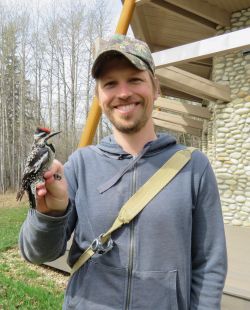
Brian Weeks is an Associate Professor in the School for Environment and Sustainability at the University of Michigan, where he joined as an Assistant Professor in 2019. His research focuses on understanding how species and communities respond to human-induced environmental changes, with particular emphasis on avian systems. Weeks leads an active research group that integrates museum specimen-based work, genomics, and field studies to investigate biodiversity responses to global change. Weeks' research interests span evolutionary ecology, climate change biology, and biodiversity conservation. His work primarily examines how bird species and communities have responded to environmental change through morphological adaptations. He combines museum-, field-, and lab-based approaches to study evolutionary processes across multiple scales, from macroevolutionary patterns in the Solomon Islands to contemporary changes in North American migratory birds. His lab has developed innovative methods like Skelevision for high-throughput measurement of functional traits from museum skeletal specimens. His publication record shows a strong focus on climate-driven morphological changes in birds, with recent work demonstrating how warming temperatures drive size reductions while simultaneously increasing wing length. His research has revealed that smaller-bodied species change at faster rates, and that migration timing shifts are decoupled from morphological changes. Weeks' lab also investigates biodiversity-ecosystem functioning relationships and extinction risk prediction. Packard Fellowship in Science and Engineering (2022) Ecological Society of America's George Mercer Award (2022) Katma Award, American Ornithological Society ISI Highly Cited paper (2021) Weeks advises multiple PhD and Master's students, and his lab collaborates extensively with researchers across institutions. His work has received significant media attention, with coverage in Science, The Wall Street Journal, The Washington Post, BBC News, and numerous international outlets. His research on birds shrinking due to climate change achieved an Altmetric score higher than 99.98% of papers tracked, reflecting its substantial scientific and public impact.