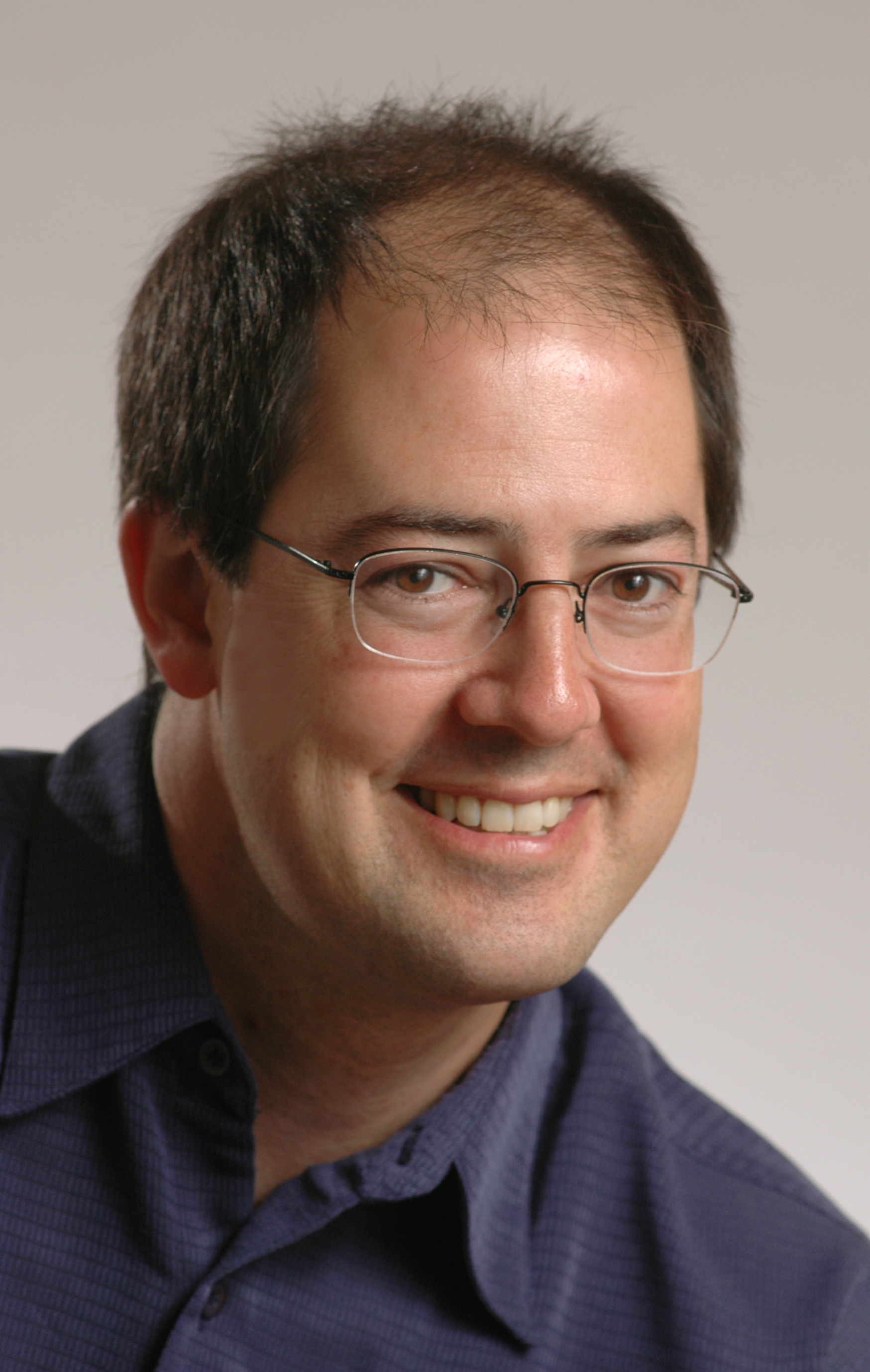
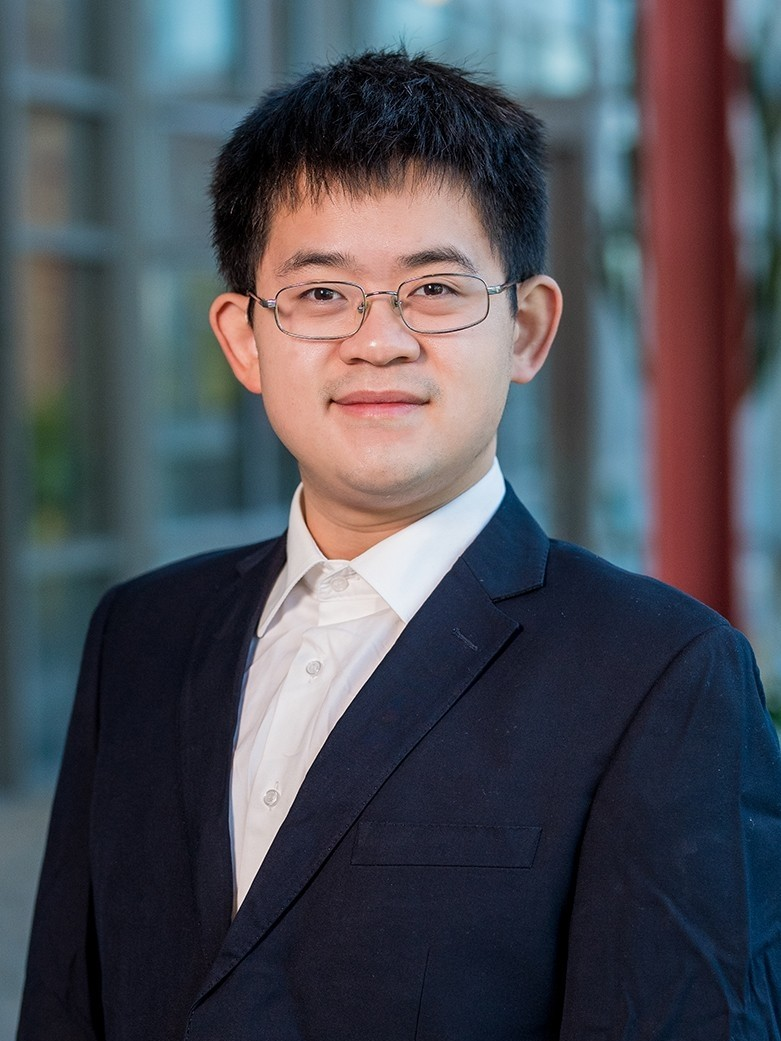
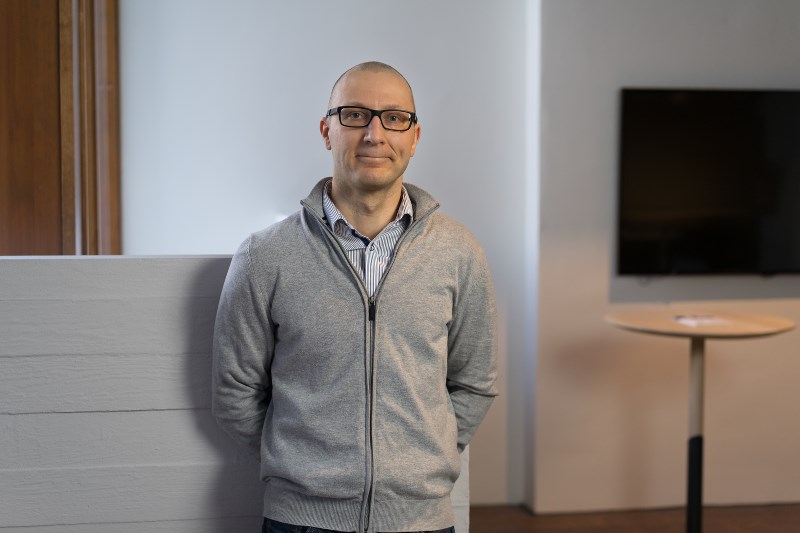
Kristofer Pister is a Professor in the Department of Electrical Engineering and Computer Sciences at the University of California, Berkeley. He co-directs the Berkeley Sensor and Actuator Center (BSAC) and the Ubiquitous Swarm Lab. His career spans groundbreaking innovations in Micro/Nano Electro Mechanical Systems (MEMS), Control Systems, and Low-Power Circuits, with a focus on Smart Dust and synthetic insects. Education: Ph.D. and M.S. in EECS from UC Berkeley (1992, 1989); B.A. in Applied Physics from UC San Diego (1986). His research areas include MEMS , Control Systems , Robotics , and Integrated Circuits , with recent work on self-powered micro-sensors, crystal-free radios, and interplanetary swarm networks. Key awards include the ISA Albert F. Sperry Founder Award (2009) , Alexander Schwarzkopf Prize (2006) , and the NSF CAREER Award (1996) . He has authored numerous influential publications in wireless sensor networks and microrobotics. His lab, Ubiquitous Swarm Lab , explores distributed robotics and swarm intelligence. Pister emphasizes open collaboration in research, ethical conduct in academia, and efficient resource utilization for graduate students.
Máté Szabó is an Assistant Professor at the University of Debrecen , affiliated with the Faculty of Informatics and the Department of Information Technology . His email contact is szabo.mate@inf.unideb.hu . He works in areas such as Machine Learning , Smart Cities , and Mobile Computing . His research spans topics like microservice architecture for ensemble models, Markov modeling of traffic flows, and distributed machine learning on mobile platforms. He has explored neural models for conversational AI and gamification in programming education through Minecraft-based challenges. His work also addresses edge computing and data parallelism in mobile environments. His publications (2016–2024) reflect trends in machine learning deployment on Android platforms smart city traffic analytics gamified educational tools cognitive modeling of numerical understanding microservice-based model integration .
Holger Fröning is a full professor at Heidelberg University’s Institute of Computer Engineering (ZITI), where he leads the Hardware and Artificial Intelligence (HAWAII) Lab. His research focuses on embedded machine learning , high-performance computing , and hardware-software co-design , with emphasis on resource efficiency, power optimization, and emerging architectures like analog , photonic , and resistive memory systems. He has held leadership roles including Managing Director of ZITI (2023–present) and Dean of Studies for Computer Science (2019–2022) , and has collaborated with institutions such as NVIDIA Research, Chinese Academy of Sciences, and Graz University of Technology. Research Trends : His recent publications explore Bayesian neural networks , green machine learning , analog computing noise mitigation , and GPU/FPGA optimization . Articles highlight photonic computing for AI , memory-efficient training , and hardware-aware DNN compression . Scientific Awards : 2025 HiPEAC Paper Award (Nature Computational Science) 2014 Google Faculty Research Award Multiple Best Paper Awards (IPDPS, ICPP, ECML-PKDD workshops) Leadership & Service : Organized workshops (WEML, ITEM, F4HD), chaired tracks at EuroPar and ISC, and served on program committees for ICPR, ECAI, and FPL. Education & Affiliations : PhD and MSc from University of Mannheim (2007/2001). Sponsors include DFG, FWF, FFG, NVIDIA, SAP, and XILINX.
Daniel A. Spielman is a Sterling Professor of Computer Science, Statistics & Data Science, and Mathematics at Yale University. He serves as the inaugural James A. Attwood Director of the Institute for Foundations of Data Science (FDS) and was previously co-Director of the Yale Institute for Network Science (YINS). He is also a member of TILOS, the NSF Institute for Learning-Enabled Optimization at Scale. His research interests span Spectral Graph Theory, Algebraic Graph Theory, Laplacian Matrices, Expander Graphs, and Random Walks on Graphs. Spielman has made fundamental contributions to understanding the mathematical foundations of data science, including work on smoothed analysis of algorithms, spectral sparsification, and solutions to the Kadison-Singer problem. Spielman's publications demonstrate a consistent focus on developing efficient algorithms with strong theoretical foundations. His work bridges pure mathematics, theoretical computer science, and practical applications in network analysis and machine learning. His research has evolved from foundational work on smoothed analysis to recent contributions in experimental design using discrepancy theory. His scientific honors include: Nevanlinna Prize for contributions to mathematical aspects of computer science Two Gödel Prizes (2008 and 2015) for outstanding papers in theoretical computer science MacArthur Fellowship ('Genius Grant') Simons Investigator award Membership in the National Academy of Sciences and American Academy of Arts and Sciences Spielman has advised numerous PhD students who have gone on to prominent positions in academia and industry. His teaching includes advanced courses in Spectral Graph Theory and Computation and Optimization. He has developed important software packages like Laplacians.jl for solving Laplacian linear equations and related problems.
Linyi Li is an Assistant Professor in the School of Computing Science at Simon Fraser University (SFU), leading the Trustworthy Artificial Intelligence (TAI) Lab. His research focuses on certifiably trustworthy deep learning systems, combining machine learning and computer security. He holds a PhD from the University of Illinois Urbana-Champaign (UIUC) and a B.Eng. from Tsinghua University. Affiliations: Simon Fraser University, TAI Lab Education: PhD in Computer Science, UIUC, 2023 B.Eng (Cum Laude), Tsinghua University, 2018 His research interests include deep learning , trustworthy machine learning , large language models , and software engineering . He emphasizes rigorous certification of robustness, fairness, and numerical reliability in AI systems. Recent work includes the InfiBench benchmark for evaluating code LLMs and advancements in neural network verification. Recent Research Trends: His publications span certified robustness, fairness guarantees, and scalable verification techniques for deep learning models. He also explores scientific evaluation of foundation models and adversarial defense mechanisms. Awards: Rising Stars in Data Science AdvML Rising Star Award Wing Kai Cheng Fellowship Finalist: Qualcomm Innovation Fellowship (2022) Winner: VNN-COMP'23 Competition (Team α, β-CROWN) Advising & Grants: As a PI, he oversees the TAI Lab's research. Though no specific grants are listed, his work is funded through competitive awards and university resources. Labs/Teams: Leads the TAI Lab at SFU, focusing on foundational and applied research in trustworthy AI.
Daniel Gottesman is the Brin Family Endowed Professor in Theoretical Computer Science at the University of Maryland, affiliated with the Department of Computer Science, Institute for Advanced Computer Studies (UMIACS), and the Joint Center for Quantum Information and Computer Science (QuICS). He holds a Ph.D. in Physics from Caltech (1997) and has held positions at institutions like the Perimeter Institute and Quantum Benchmark. His research focuses on quantum computing, quantum error correction, and fault-tolerant systems, with contributions to stabilizer codes and quantum teleportation-based gates. Education: Bachelor's in Physics, Harvard University (1992) Ph.D. in Physics, California Institute of Technology (1997) Research Interests: Quantum error correction and fault-tolerant architectures Quantum cryptography and secure communication protocols Quantum complexity theory and algorithm design Applications of stabilizer codes and topological quantum computing Scientific Awards: Fellow of the American Physical Society CIFAR Senior Fellow in Quantum Information Science Three U.S. Patents (e.g., quantum key distribution systems) Advising & Grants: Supervised over 30 students/postdocs and served on numerous thesis committees. Active in securing funding for quantum research through endowed professorships and industry partnerships (e.g., Quantum Benchmark). Labs/Teams: Member of QuICS and UMIACS, collaborating on quantum hardware-software integration and error correction challenges.
Marko Hinkkanen is a Professor at Aalto University's Department of Electrical Engineering and Automation, affiliated with the School of Electrical Engineering. His research focuses on electric drives, power electronics, and control systems, with a strong emphasis on sensorless control, grid converters, and motor drives. He has received numerous awards, including the IEEE Fellow distinction and multiple best paper awards for contributions to sensorless control and grid integration. Research interests span advanced control algorithms, power converter design, and renewable energy systems. His work addresses challenges in grid stability, motor drives under weak grid conditions, and energy-efficient control strategies. Notable achievements include innovations in bearingless motor systems and grid-forming converter control frameworks. His awards reflect impactful contributions: the Aalto ELEC Supervisor Award (2023) highlights exceptional mentorship, while the IEEE Fellow (2023) and numerous paper awards underscore technical excellence. Key publications include advancements in grid-forming control, sensorless techniques, and electromagnetic damping for aircraft systems. He has advised doctoral students such as F. M. Mahafugur Rahman and Hafiz Asad Ali Awan, whose theses won top awards. His labs and collaborations focus on cutting-edge topics like virtual air gap reactors and six-phase machine dynamics.
Matthias Feurer is a Thomas Bayes Fellow and interim professor at the Chair of Statistical Learning and Data Science, funded by the Munich Center for Machine Learning (MCML) at Ludwig Maximilian University of Munich. He is a member of the Department of Statistics at LMU Munich, working under Prof. Dr. Bernd Bischl. His academic background includes: PhD in Computer Science from Albert-Ludwigs-Universität Freiburg, supervised by Prof. Dr. Frank Hutter M.Sc. in Computer Science from the University of Freiburg B.Sc. in Computer Science and Media from the Media University Stuttgart Feurer's research focuses on simplifying machine learning usage through Automated Machine Learning (AutoML). His work encompasses hyperparameter optimization, meta-learning, and model selection, with increasing emphasis on multi-objective AutoML that considers factors beyond predictive performance such as interpretability, deployability, and fairness. He actively develops open-source tools to advance the field. His recent publications demonstrate a strong trajectory in practical AutoML systems, with growing attention to tabular machine learning, foundation models integration, and addressing real-world constraints in optimization. His work consistently bridges theoretical advances with practical implementations through several widely-used open-source projects. Notable achievements include: 1st place in the warmstarting-friendly leaderboard of the BBO NeurIPS challenge Winner of the 2nd AutoML challenge Winner of the kdnuggets blog contest on AutoML Feurer is actively mentoring and teaching, having advertised PhD positions focused on AutoML, optimization, and benchmarking. He co-founded the Open Machine Learning Foundation supporting OpenML.org. His upcoming move to TU Dortmund as an assistant professor in AutoML and Optimization signals continued growth in his academic career while maintaining his research focus on making machine learning more accessible and rigorous.
Professor Hassan Rivaz is a Full Professor and Concordia University Research Chair in Medical Imaging with Deep Learning at Concordia University's Gina Cody School of Engineering and Computer Science. He holds appointments in the Department of Electrical and Computer Engineering and is cross-appointed to the Department of Computer Science & Software Engineering. Dr. Rivaz serves as the Founding Director of the IMPACT Lab and actively supervises PhD students in Electrical and Computer Engineering and Computer Science programs. Dr. Rivaz received his PhD from Johns Hopkins University in 2011, Master's degree from the University of British Columbia, and Bachelor's degree from Sharif University, followed by postdoctoral training at McGill University. His academic journey includes prestigious awards such as the NSERC Post-Doctoral Fellowship and Jeanne Timmins Costello Post-Doctoral Award. His research focuses on advancing medical image analysis through deep learning techniques, particularly in ultrasound imaging applications. Dr. Rivaz has made significant contributions to quantitative ultrasound, cancer detection, lymphedema assessment, and ultrasound elastography. His work bridges theoretical algorithm development with practical clinical applications, addressing challenges in medical image denoising, segmentation, registration, and tissue characterization. The IMPACT Lab under his direction develops innovative solutions for medical imaging problems with direct clinical relevance. Analysis of his recent publications reveals a strong emphasis on deep learning applications for ultrasound image processing, with particular focus on denoising techniques, elastography improvements, and segmentation algorithms. His work consistently addresses the challenge of working with real clinical data rather than simulated environments, contributing to more practical medical imaging solutions. Dr. Rivaz has received numerous prestigious awards including: Concordia University Research Chair in Medical Imaging with Deep Learning (2023–2028) QBIN/RBIQ Rising Star in Bio-Imaging in Quebec (2022) Concordia University Research Chair in Medical Image Analysis (2018-2023) Petro-Canada Young Innovator Award (2016–2018) He actively mentors graduate students, with many recipients of competitive scholarships including NSERC CGS, FRQNT, and FRQS awards. Dr. Rivaz serves on editorial boards for top journals including IEEE Transactions on Medical Imaging (since 2017), Medical Image Analysis (since 2025), and IEEE Transactions on Ultrasonics, Ferroelectrics and Frequency Control (since 2018). He has organized major conferences including IEEE EMBC 2020, ISBI 2021, and IEEE IUS 2023, and served as Area Chair for MICCAI from 2017 to 2024. As Founding Director of the IMPACT Lab, Dr. Rivaz leads a multidisciplinary research team focused on innovative medical imaging solutions. The lab maintains strong collaborations with hospitals and research institutions to translate imaging technologies into clinical practice. Current projects include developing AI-powered ultrasound analysis tools, quantitative imaging biomarkers for cancer diagnosis, and advanced techniques for ultrasound elastography with applications in tissue characterization and disease detection.
Jingtong Hu is an Associate Professor at the Swanson School of Engineering, University of Pittsburgh, where he also holds the William Kepler Whiteford Faculty Fellowship. His research focuses on Cyber-Physical Systems and Infrastructure Security, with significant contributions to embedded systems, non-volatile memory architectures, and hardware/software co-design for energy-constrained environments. Dr. Hu received his PhD from the University of Texas at Dallas (2007-2013) and his Bachelor of Engineering from Shandong University (2003-2007). His research spans multiple interdisciplinary areas including energy harvesting systems, non-volatile processors, FPGA acceleration, and machine learning at the edge. His recent publications demonstrate a strong focus on algorithm-hardware co-design, particularly for vision transformers, federated learning, and non-volatile memory systems. His work often addresses the challenges of implementing AI on resource-constrained edge devices, with emphasis on energy efficiency, reliability, and performance optimization. The trend in his publications shows increasing focus on sustainable AI processing, heterogeneous computing architectures, and personalized machine learning for IoT applications. Selected Awards: IEEE Transactions on Computer-Aided Design Donald O. Pederson Best Paper Award (2021) ACM SIGDA Meritorious Service Award (2019) Multiple Best Paper Award nominations at top conferences including DAC, ASP-DAC, and CODES+ISSS Dr. Hu's research has been supported by multiple grants focusing on energy-efficient computing, non-volatile memory systems, and hardware acceleration for machine learning. His collaborative work spans numerous institutions and involves interdisciplinary teams working at the intersection of computer architecture, embedded systems, and artificial intelligence. His publications show extensive collaboration with researchers at the University of Pittsburgh, particularly with Albert K. Jones and Yiyu Shi. His laboratory work focuses on implementing practical systems for energy harvesting powered devices, non-volatile processors, and hardware accelerators for machine learning applications. Current projects appear to emphasize sustainable AI processing at the edge, heterogeneous FPGA acceleration, and personalized federated learning for health monitoring applications.
David Cash is a Professor in the Department of Computer Science at the University of Chicago. His research focuses on applied and theoretical cryptography, computer security, and theoretical computer science. He joined UChicago in 2018 and has held roles such as teaching courses in cryptography, computer security, and discrete mathematics. Cash has advised numerous PhD and master’s students, including Sam Everett, Alexander Hoover, and Jesse Stern. His work includes constructing quantum-secure cryptography systems, analyzing encrypted data navigation, and foundational theoretical results. He has received notable awards like the 2025 Quantrell Award for Teaching and multiple Best Paper awards at Eurocrypt. Cash's research also explores secure computation, oblivious RAM, and cryptographic agility. His affiliations include the Systems Group at UChicago, focusing on interdisciplinary systems research. Education details are not explicitly provided in the text. However, his career trajectory suggests advanced degrees in computer science or related fields. His teaching spans undergraduate and graduate courses, emphasizing both theoretical foundations (e.g., discrete mathematics) and applied topics like cryptocurrencies and secure systems. Cash actively engages in academic service, including organizing conferences and reviewing research. His work bridges theoretical insights with practical applications, addressing modern computational security challenges. His research contributions span cryptographic protocols, secure data structures, and privacy-preserving technologies. Notable projects include work on searchable encryption, leakage-abuse attacks, and cryptographic systems resilient to quantum computing. Cash collaborates with institutions like Rutgers University and has mentored postdoctoral researchers such as Alexander Hoover. His grants include NSF CAREER awards and Simons Institute fellowships, supporting research in secure outsourcing and cryptographic data protection.
Peter Benner is a Professor and Director at the Max Planck Institute for Dynamics of Complex Technical Systems in Magdeburg, where he leads the Computational Methods in Systems and Control Theory group. He also holds an Honorarprofessor position for Mathematics at Otto-von-Guericke Universität Magdeburg since 2011. Benner has previously served as Managing Director of the Max Planck Institute during multiple periods (2013-2014, 2021-2022, and 2025-2026), demonstrating his leadership in the field. Benner's research focuses on Scientific Machine Learning, Numerical Linear and Multilinear Algebra, Model Order Reduction and Reduced-order Modeling, Numerical Methods in Systems and Control Theory, PDE Constrained Optimization, High-performance and Power-aware Computing, and Mathematical Software development. His work bridges theoretical mathematics with practical engineering applications, particularly addressing challenges in large-scale dynamical systems. Analysis of his recent publications reveals a strong emphasis on developing efficient computational methods for complex systems. Benner has pioneered approaches combining model order reduction with tensor methods to tackle high-dimensional problems in uncertainty quantification and PDE-constrained optimization. His work shows a consistent trend toward integrating data-driven techniques with traditional model-based approaches, particularly for nonlinear and parametric systems. Throughout his career, Benner has actively mentored students and collaborated with researchers worldwide, delivering numerous invited talks at prestigious institutions and conferences across Europe, North America, and Asia. His research has received significant funding, supporting the development of mathematical software and computational methods for industrial applications. Benner leads the Computational Methods in Systems and Control Theory department at the Max Planck Institute, which focuses on developing and implementing advanced numerical methods for large-scale dynamical systems. The group maintains strong connections with both theoretical mathematics and practical engineering applications, particularly in fluid dynamics, energy systems, and control theory.
Ron Dror is the Cheriton Family Professor of Computer Science at the Stanford Artificial Intelligence Lab , with courtesy appointments in Structural Biology and Molecular & Cellular Physiology . He also holds affiliations with Bio-X, the Institute for Human-Centered Artificial Intelligence (HAI), the Institute for Computational and Mathematical Engineering (ICME), Sarafan ChEM-H, and the Wu Tsai Neurosciences Institute. Education: PhD in Electrical Engineering and Computer Science, MIT MPhil in Biological Sciences, University of Cambridge (Churchill Scholar) BS in Mathematics and Electrical & Computer Engineering, Rice University (summa cum laude) Ron leads a multidisciplinary research group that combines molecular simulation and machine learning to study biomolecular structure, dynamics, and function. His work focuses on developing computational methods to accelerate drug discovery by predicting molecular interactions and designing more effective therapeutics. Current projects include the PENSA software library for analyzing biomolecular ensembles and FRAME framework for structure-based ligand design. His research has produced groundbreaking work on G-protein-coupled receptors (GPCRs) , RNA structure prediction , and mitochondrial transport mechanisms . Key publications highlight applications of geometric deep learning and molecular dynamics simulations in structural biology. Scientific Awards: Cheriton Family Professorship (2023) Two Gordon Bell Prizes (2014, 2009) Best Paper Awards at NeurIPS (2021), IPDPS (2013), SC11 (2011), SC09 (2009), SC06 (2006) Science Magazine Top 10 Breakthrough (2010) Fulbright Scholarship , NSF Fellowship , DoD Fellowship , Whitaker Foundation Fellowship Ron has advised numerous doctoral and master’s students including EJ Fine , Masha Karelina , and Briana Sobecks . His lab collaborates with experimentalists across academia and industry, applying computational methods to diverse biomedical problems such as RNA structure prediction , GPCR signaling , and mitochondrial metabolism .
Gordon Plotkin is a Professor at the School of Informatics, University of Edinburgh, where he is affiliated with the Laboratory for Foundations of Computer Science (LFCS). His research lies at the intersection of theoretical computer science and programming language semantics, with a profound influence on the formal understanding of computation. His research interests include Programming Language Theory, Semantics of Programming Languages, Domain Theory, Operational Semantics, Lambda Calculus, Type Theory, Concurrency Theory, and Algebraic Effects. His seminal work on structural operational semantics and domain theory has laid the foundation for modern semantics of programming languages. His publications span over five decades, showing a sustained and evolving research trajectory from foundational work in lambda calculus and domain theory to recent contributions in algebraic effects, probabilistic computation, and biochemical systems modeling. The articles demonstrate a consistent focus on formal methods, mathematical rigor, and the algebraic structure of computational effects. He has collaborated with leading researchers including Martín Abadi, John Power, Glynn Winskel, and John Reynolds. His work continues to influence both theoretical and practical developments in programming languages and systems. Gordon Plotkin has made foundational contributions to computer science, particularly through his development of structural operational semantics and domain-theoretic models of computation. He has advised numerous researchers and supervised many influential PhD theses, though specific student names are not listed in the provided text. His work has been supported by long-standing affiliations with the Laboratory for Foundations of Computer Science and the University of Edinburgh, and he has contributed to major collaborative projects in programming language design and verification. He is associated with several research groups and labs, most notably the Laboratory for Foundations of Computer Science (LFCS), which serves as a hub for theoretical research in programming languages, semantics, and logic at the University of Edinburgh.
Dr. Xinwen Fu is a Professor in the Miner School of Computer & Information Sciences at the University of Massachusetts Lowell, where he also serves as Director of the iSAFER Center. He received his Ph.D. in Computer Engineering from Texas A&M University (2005), M.S. in Electrical Engineering from University of Science and Technology of China (1998), and B.S. in Electrical Engineering from Xi'an Jiaotong University (1995). Research Interests Dr. Fu specializes in Computer Security and Privacy , with particular focus on IoT Security , Mobile Security , Network Security , and Digital Forensics . His research has been published in all four top computer security conferences: IEEE Symposium on Security and Privacy (S&P/Oakland), ACM Conference on Computer and Communications Security (CCS), USENIX Security Symposium, and Network and Distributed System Security Symposium (NDSS), as well as prestigious journals like ACM/IEEE Transactions on Networking and IEEE Transactions on Dependable and Secure Computing. His work has gained significant media attention from CNN, Wired, Huffington Post, Forbes, Yahoo, MIT Technology Review, and PC Magazine, including multiple appearances on CNN Domestic and International. He has also served as TPC member for numerous prestigious conferences including ACM CCS, IEEE INFOCOM, and IEEE ICDCS. Scientific Awards Best paper award at IEEE International Conference on Industrial Internet (ICII) 2019 Best paper award, International Conference on Wireless Algorithms, Systems, and Applications (WASA), 2017 Teaching Excellence Award of Department of Computer Science, UMass Lowell, 2016 Best paper award, International Performance Computing and Communications Conference (IPCCC) 2016 Award of Excellence, GeekPwn 2016 Ethic Smart Life Hack Competition Erich Spengler Student Cyber Paper Award with students, The Colloquium for Information Security Education (CISSE), 2016 Spotlight Paper of the IEEE Transactions on Mobile Computing (TMC), February 2014 Best paper award, International Conference on Wireless Algorithms, Systems, and Applications (WASA), 2013 Best paper award, IEEE International Conference on Communications (ICC): Communications and Information Security Symposium, 2013 Teaching award, Department of Computer Science, University of Massachusetts Lowell, 2011