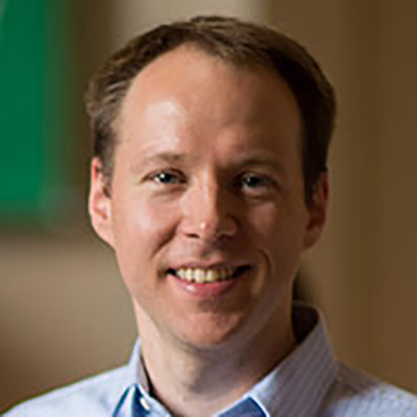
Thomas Michaels is an Assistant Professor at the Department of Biology, ETH Zürich, leading the Michaels Group . His research focuses on theoretical models of biomolecular condensates and protein aggregation in biological systems. Research Themes : Protein aggregation, liquid-liquid phase separation, membrane biophysics, and the role of condensates in neurodegenerative diseases like Alzheimer’s and Parkinson’s. Collaborative Approach : Integrates theoretical physics, control theory, and computational biology with experimental validation to design therapeutic strategies. Recent Publications highlight his work on amyloid formation mechanisms, lipid interactions, and phase-separated compartments as biochemical reactors. His group trains PhD students in systems biology and biocondensate physics.
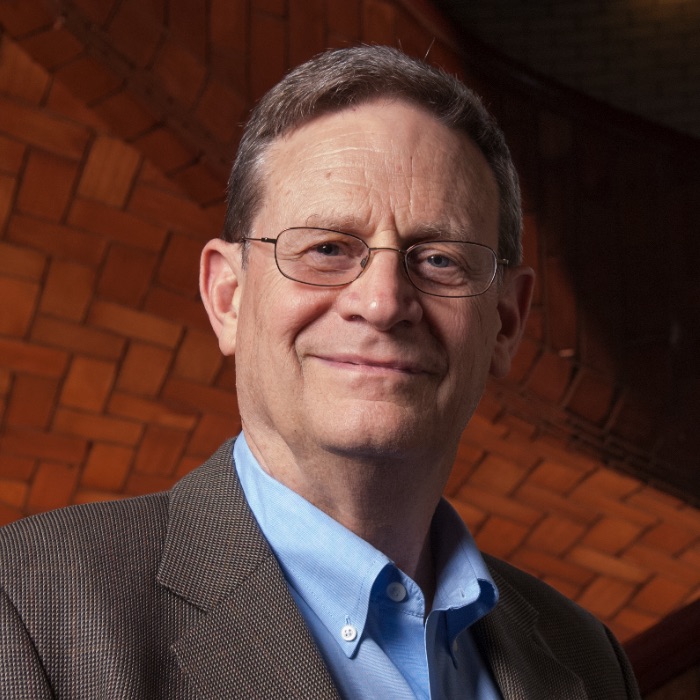
Professor Mikko Haataja is a distinguished faculty member in the Department of Mechanical and Aerospace Engineering at Princeton University's School of Engineering and Applied Science. Holding a Ph.D. from McGill University (2003), he leads the Haataja Research Group focused on theoretical and computational approaches to materials science and physical biology. His office is located in D404C Engineering Quadrangle, and he serves as an advisor to numerous graduate students working at the intersection of physics, materials science, and biology. Professor Haataja's research spans multiple domains including theoretical and computational materials science, physics of materials, and physical biology. His work examines microstructure formation during solid-solid phase transformations and solidification, growth of electrodeposited thin films and quantum heterostructures, dynamics of driven interfaces with mobile impurities, recrystallization kinetics, cell signaling mechanisms, and the regulation & self-organization of 'lipid rafts' in plasma membranes. His group has pioneered concepts in 'dynamically programmable electromechanical 2D materials' and investigates phase separation phenomena in biological systems. His publication record demonstrates significant contributions across several key areas: intracellular phase transitions and biomolecular condensates, 2D transition metal dichalcogenide materials, lipid bilayer membrane physics, solid oxide fuel cells and batteries, and organic semiconductor thin films. His most recent work focuses on amyloid-like fibril formation, liquid-liquid phase separation in biological contexts, and defect engineering in 2D materials, reflecting his interdisciplinary approach that bridges physics, materials science, and biology. Professor Haataja actively mentors graduate students and postdoctoral researchers, with numerous co-authored publications indicating strong advising relationships. His research program encompasses multiple funded projects investigating materials for energy conversion and storage, intracellular organization mechanisms, and novel 2D material systems. The Haataja Group maintains strong collaborations with other Princeton researchers and external institutions, particularly in the fields of biophysics and advanced materials. The Haataja Group operates as a dynamic research laboratory employing computational modeling and theoretical approaches to address fundamental questions in materials science and biophysics. Their work spans from atomic-scale simulations to continuum modeling, with particular emphasis on phase-field crystal models, membrane biophysics, and 2D material systems. The group maintains specialized computational infrastructure for multiscale modeling and collaborates extensively with experimental groups to validate theoretical predictions.
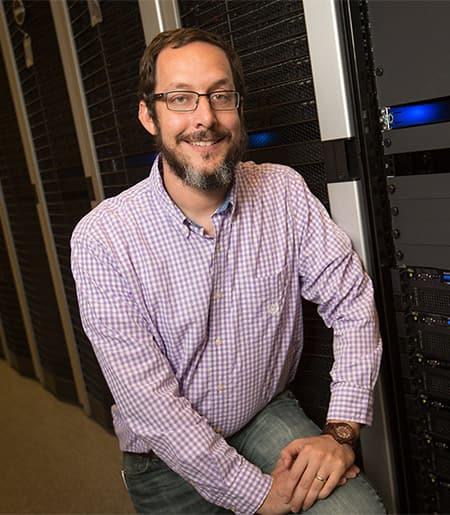
Andrew Spakowitz is a Professor of Chemical Engineering, Materials Science and Engineering, and by courtesy, Applied Physics and Chemistry at Stanford University. He currently serves as the Senior Associate Dean for Research and Faculty Affairs and holds the Tang Family Foundation Chair of the Department of Chemical Engineering. His academic career at Stanford spans from Assistant Professor (2006-2014) to Associate Professor (2014-2020) and now Professor since 2020. Dr. Spakowitz earned his PhD in 2004, MS in 2001 from the California Institute of Technology, and his BS in Chemical Engineering from the University of Wisconsin, Madison in 1999. He completed postdoctoral training in Molecular and Cell Biology and Biophysics at UC Berkeley from 2004-2006. His research focuses on theoretical and computational approaches to understanding biological processes and complex materials. The Spakowitz lab addresses fundamental chemical and physical phenomena through four main research themes: chromosomal organization and dynamics, protein self-assembly, polymer membranes, and charge transport in conducting polymers. His group employs diverse theoretical and computational methods including analytical theory of semiflexible polymers, polymer field theory, continuum elastic mechanics, Brownian dynamics simulation, equilibrium and dynamic Monte Carlo simulations, and reaction-diffusion modeling. Analysis of his recent publications reveals a strong emphasis on epigenetics and chromatin dynamics, with significant work on DNA methylation patterns, nucleosome clustering, and chromosome organization. His research also extends to polymer physics applications in biological systems, particularly in respiratory diseases, water purification membranes, and bacterial phage interactions with human mucus. Tang Family Foundation Chair of the Department of Chemical Engineering Professor Spakowitz mentors several graduate students and postdoctoral scholars in the Chemical Engineering and Materials Science departments. His lab members work on diverse projects spanning from chromatin dynamics to polymer membranes for water purification. He teaches multiple courses including CHEMENG 120B (Energy and Mass Transport), CHEMENG 340 (Molecular Thermodynamics), CHEMENG 466 (Polymer Physics), and CHEMENG 467 (Physics of Biomacromolecules). The Spakowitz lab operates from Clark S295 at Stanford University, conducting theoretical and computational research that bridges chemistry, physics, biology, and engineering disciplines to address complex problems across multiple length and time scales.
Cathryn Carson is a Professor in the Department of History at the University of California, Berkeley. Her work bridges the philosophical, cultural, and political dimensions of 20th-century science, with a focus on theoretical physics, nuclear history, and the integration of social sciences and humanities into engineering education. Education: AB in History and Philosophy of Science from University of Chicago (1990) AM in Physics from Harvard University (1993) PhD in History of Science from Harvard University (1995) Her research explores the interplay between science and philosophy, particularly in Germany and the U.S., alongside the institutionalization of data science. She teaches graduate and undergraduate courses, including Berkeley’s Data Science major’s Human Contexts and Ethics of Data course. Scientific Awards: Berkeley Collegium Award for Excellence in Undergraduate Education (2017) Distinguished Service Award, Division of Social Sciences (2014) Carol D. Soc Distinguished Graduate Student Mentoring Award (2014) Fellow of the American Association for the Advancement of Science Fellow of the American Physical Society Mellon New Directions Fellowship NSF CAREER Award Alexander von Humboldt Foundation Research Fellowship Member, Institute for Advanced Study, Princeton Carson has served in multiple leadership roles, including Associate Dean of Social Sciences, founding Interim Director of the D-Lab (Social Science Data Laboratory), and Faculty Lead of Berkeley’s Data Science Education Program. She is currently accepting students for advising and contributes to campus governance through roles in the Academic Senate.
Timothy Abram is a Professor of Nuclear Fuel Technology at the University of Manchester, holding the Westinghouse Chair since 2008. He leads the U-Battery HTGR project and serves as Visiting Senior Research Fellow at NNL. His expertise spans nuclear fuels (MOX, ATF, TRISO) and reactor systems (gas-cooled, VHTR), with roles in IAEA, UK Government advisory boards, and the UK Nuclear Regulator’s committee. He directs the Rolls-Royce University Technology Centre for Nuclear Science and Engineering. Education: BSc and PhD (details unspecified). Research focuses on advanced nuclear fuels, thermal conductivity, and sustainable energy solutions, contributing to UN SDGs. Projects include molten salt reactor research (Radiochemical Facilities, DAWNMANTLE) and waste minimization strategies. Over 15 EU projects and 72 research outputs demonstrate his global impact. Awards: Not explicitly listed. Collaborations include international networks in nuclear innovation and material science. Advising roles include external examiner for Royal Navy and Cambridge MPhil programs.
Lina Bertling Tjernberg is a Professor at the Department of Electrical Engineering, KTH Royal Institute of Technology, and Deputy Head of the School of Electrical Engineering and Computer Science (EECS) with responsibility for research conditions and impact. She served as Director of KTH's Energy Platform during 2018-2024 and holds memberships in IVA (Swedish Royal Academy of Engineering Sciences) and the IEEE Power & Energy Society. Research Focus: Applying mathematics (statistics, optimization, life cycle assessment) to enhance reliability and predictive maintenance in electric power systems, with emphasis on future electricity grids integrating microgrids, battery storage, HVDC, nuclear/pumped/hydro/wind/solar power, hydrogen, and electrified transport. Collaborations: Engaged with Comillas Pontifical University (Madrid), Addis Ababa University, Norwegian University of Science and Technology (NTNU), and IEA Wind. Key Research Trends: Recent articles highlight advancements in microgrid control (2025), SMR nuclear energy integration (2025), AI-driven asset management (2024), hydrogen sector coupling (2024), and renewable forecasting techniques (2024). Awards: 2021 Power Woman of the Year 2022 Energy Power List (Sweden’s top 20 energy influencers) Leadership Roles: Swedish Electromobility Center (SEC) board Chair of Swedish Electrical Standards (SEK Svensk Elstandard) Member, IEEE PES ISGT Europe steering committee
Benoit Forget is the Korea Electric Power Professor of Nuclear Engineering and the Department Head of Nuclear Science and Engineering at MIT. He joined MIT in 2008 and leads the MIT Computational Reactor Physics Group (CRPG), which focuses on advancing computational methods for reactor simulation. His research spans Monte Carlo and deterministic transport methods, multiphysics coupling, and uncertainty quantification. He co-developed OpenMC and OpenMOC, open-source tools for reactor analysis. Forget holds a PhD from Georgia Tech and has received awards including the 2013 Landis Young Member Engineering Achievement Award. He teaches courses such as 22.05 Neutron Science and Reactor Physics, and actively contributes to MIT’s computational science initiatives. Educations: PhD in Nuclear Engineering (Georgia Tech, 2006), MS and BS in Energy Engineering (École Polytechnique de Montréal, 2003). Research Interests: Computational reactor physics, radiative transport, high-performance computing, Monte Carlo and deterministic methods, multiphysics coupling, nuclear data uncertainty. Labs/Teams: MIT Computational Reactor Physics Group (CRPG), Consortium for Advanced Simulation of Light Water Reactors (CASL).
M. Granger Morgan is the Hamerschlag University Professor of Engineering at Carnegie Mellon University , with appointments in the Department of Engineering and Public Policy , Department of Electrical and Computer Engineering , and H. John Heinz III College . He co-directs the NSF Center for Climate and Energy Decision Making and the Electricity Industry Center at CMU. Education: Ph.D., Applied Physics and Information Science, University of California, San Diego (1969) M.S., Astronomy and Space Science, Cornell University (1965) B.A., Physics, Harvard College (1963) His research spans science, technology, and public policy with focus areas in energy systems , climate change mitigation , electric grid resilience , and uncertainty characterization in policy analysis . Recent publications analyze hydrogen market barriers , carbon sequestration timelines , and interdependent energy infrastructure risks . Scientific leadership includes: Member, National Academy of Sciences Member, American Academy of Arts and Sciences Co-chair, NAS Report Review Committee Board member, International Risk Governance Council Foundation Advisory Board, E.ON Energy Research Center, RWTH Aachen DOE Electricity Advisory Committee member Former EPA Science Advisory Board Chair Fellow of AAAS, IEEE, and Society for Risk Analysis Contact: Office 5220 Wean Hall, Phone 412-268-2672, Email granger.morgan@andrew.cmu.edu
David Bindel is an Associate Professor in the Department of Mathematics at Cornell University, affiliated with the College of Arts and Sciences, College of Engineering, and Cornell Ann S. Bowers College of Computing and Information Science. He earned his Ph.D. in Mathematics from the University of California, Berkeley in 2006. His research focuses on applied numerical linear algebra, eigenvalue problems, and their applications in plasma physics, network analysis, and nonlinear systems. He develops methods for analyzing complex systems, including magnetic confinement in stellarators, stability of MHD systems, and community detection in networks. His work bridges theoretical foundations with practical computational tools, such as formal verification of linear algebra algorithms and scalable Gaussian process models. Bindel’s research explores the interplay between structure and computation, leveraging eigenvalue analysis to address challenges in computer vision, opinion dynamics, and engineering design. He has contributed to advancements in numerical methods for large-scale systems, including iterative solvers, spectral approximation techniques, and stochastic optimization. His interdisciplinary approach spans applied mathematics, computer science, and physics, with applications in fusion energy, machine learning, and network science. Recent work highlights include high-order expansions for magnetic confinement, adaptive filtering for dynamical systems, and Bayesian optimization strategies. His publications emphasize rigorous analysis alongside computational scalability, addressing both theoretical and practical aspects of modern scientific computing. Despite no explicitly listed awards, his contributions reflect significant impact in his fields.
Andrea C. Ferrari is a Professor of Nanotechnology in the Department of Engineering at the University of Cambridge, UK. He currently holds multiple leadership roles, including Science and Technology Officer and Chair of the Management Panel for the EU Graphene Flagship, as well as Director of both the EPSRC Centre for Doctoral Training in Graphene Technology and the Cambridge Graphene Centre. PhD, University of Cambridge (24 March 2001) Laurea in Nuclear Engineering, Politecnico di Milano (24 July 1997) His research focuses on nanoscience, graphene and related materials, Raman spectroscopy, and optoelectronic applications of nanotechnology. He has authored over 390 papers, amassed >116,000 citations, and delivered >450 invited/keynote talks globally. He has received numerous accolades including: IMR-Lee Hsun Lecture Award (2018) Nanosmat Award (2017) ERC Synergy grant (2013) Philip Leverhulme Prize (2005) As a leading figure in graphene research, he has secured >£60M in research funding, led major EU Flagship projects, and commercialized innovations through patents licensed to companies like Nokia, IBM, and Huawei. He chairs the Executive Board of the EU Graphene Flagship and serves as Academic lead for the Royce Institute's e-beam lithography initiatives.
Prof. Prita Pant is a faculty member in the Department of Metallurgical Engineering and Materials Science at the Indian Institute of Technology Bombay (IIT Bombay). She holds a Ph.D. and M.S. in Materials Science from Cornell University and a B.E. in Metallurgical Engineering from Roorkee University. Her research focuses on the mechanical behavior of advanced materials, particularly thin films and shape memory alloys. B.E., Metallurgical Engineering, Roorkee University (1997) M.S., Materials Science, Cornell University (2001) Ph.D., Materials Science, Cornell University (2004) Her research interests include mechanical behavior of thin films , dislocation dynamics , nanoindentation studies , simulation of deformation processes , and Ni-Ti based shape memory materials . She employs both experimental and computational techniques to investigate microstructural evolution and deformation mechanisms in metals. The available publications indicate a strong focus on thin film mechanics , dislocation behavior , and microstructure-property relationships , particularly under mechanical loading. Her work bridges computational modeling and experimental characterization, with applications in structural and functional materials. There are no scientific awards explicitly mentioned in the provided text. While no specific students are listed, Prof. Pant leads the Computational Mechanics and Experimental Group (CMEG@IITB) , indicating active supervision of graduate students and involvement in research grants. Her research group website suggests ongoing funded projects and collaborative work. She is affiliated with the Computational Mechanics and Experimental Group (CMEG@IITB) , which conducts research on multiscale mechanics of materials, combining simulation and experimentation to understand deformation phenomena.
Nuno Loureiro is an Associate Professor at the Department of Nuclear Science and Engineering at MIT, with a secondary appointment in the Physics Department. He obtained his PhD in Physics from Imperial College London in 2005 and held postdoctoral positions at Princeton University and the UK’s Culham Centre for Fusion Energy before joining MIT in 2016. His research focuses on plasma physics , particularly theory and simulations of astrophysical and laboratory plasmas , including magnetic reconnection, turbulence, and kinetic effects. His work bridges classical plasma dynamics with emerging quantum computing applications. The 15 most recent publications highlight advancements in quantum algorithms for plasma simulations , magnetic reconnection mechanisms , and turbulence dynamics across relativistic and non-relativistic plasmas. Topics include plasmoid-mediated inverse energy transfer, data-driven fluid closures, and ion-acoustic instability impacts. 2015 Thomas H. Stix Award (American Physical Society) NSF CAREER Award
Michele Klingbeil is a Professor in the Department of Microbiology at the University of Massachusetts Amherst, where she leads the Klingbeil DNA Replication Laboratory. She received her PhD in Cell and Molecular Biology from the University of Toledo in 1996 and previously worked at Johns Hopkins School of Medicine before moving to UMass in July 2007. Her educational background includes: PhD in Cell and Molecular Biology, University of Toledo, 1996 Dr. Klingbeil's research focuses on the unique biology of trypanosomatid parasites, particularly Trypanosoma brucei , the causative agent of African sleeping sickness. Her laboratory investigates two main areas: (1) replication of the unusual mitochondrial DNA network called kinetoplast DNA (kDNA), and (2) nuclear DNA replication initiation. Her work on kDNA is particularly significant as this structure is essential for parasite survival but has no counterpart in mammalian hosts, making it an attractive drug target. She employs a combination of reverse genetics (RNAi), cell biology, and biochemistry to understand the replication and repair mechanisms of kDNA, with a special focus on a family of four DNA polymerases related to bacterial Pol I. Dr. Klingbeil's recent publications reveal her laboratory's deep investigation into mitochondrial DNA polymerases in trypanosomatids, with discoveries showing multiple polymerases having specialized functions in kDNA replication and repair. Her research has established that several of these polymerases are essential for parasite viability, opening new avenues for drug development. She has also made significant contributions to understanding the simplified Origin Recognition Complex in trypanosomatids compared to other eukaryotes. Dr. Klingbeil has received the Thomas G. Lessie Distinguished Lectureship Award for her impact on teaching at the graduate level. Her research is funded by the National Institutes of Health, U.S. Department of Agriculture, the Joeph P. Healey Endowment, and the University of Massachusetts Amherst. She has mentored numerous graduate and undergraduate students, including current PhD candidates Dave Bruhn, Jeniffer Concepción, and Juemin Luo, as well as visiting scholar Eva Vidal Rico. Her former students have gone on to positions at institutions including Dana Farber/Broad Institute, Regis College, and Flagship Ventures. The laboratory regularly participates in scientific conferences including the Molecular Parasitology Meeting at Woods Hole and the Kinetoplastid Molecular Cell Biology conference. Dr. Klingbeil teaches several courses including Parasitology (MICRO 590S), Parasitology Lab (MICRO 590L), Molecular Mechanisms of Pathogenesis (MICRO 797P), Advanced Cell Biology (MCB 641), and Writing in Microbiology (MICRO 360). Her laboratory organizes regular social events including pumpkin carving parties and outings to Six Flags New England and Mt. Sugarloaf.
Francesca De Benetti is a Researcher at the Chair of Computer Aided Medical Procedures (Prof. Navab) at the Technical University of Munich (TUM), affiliated with the Interdisciplinary Research Laboratory (IFL) and NARVIS Lab at the Garching Campus. Her research focuses on Nuclear Medicine and Machine Learning for medical image processing, particularly in internal radiation therapy simulations and AI-driven segmentation. Education : M.Sc. in Biomedical Computing (TUM, 2018-2020), B.Sc. in Information Engineering (Università di Padova, 2015-2018) Francesca's recent publications highlight her work in Monte Carlo dosimetry , dynamic PET tracer modeling , and deep learning-based anomaly detection in medical imaging. Her projects emphasize personalized radiation therapy and cross-modality image translation , often involving collaborations with nuclear medicine experts and radiologists. She contributes to teaching at TUM, leading lectures and practical courses on topics including Medical Augmented Reality , Computer Aided Medical Procedures , and Deep Learning for Medical Applications . Francesca is actively involved in labs such as the IFL Lab and NARVIS Lab , focusing on interdisciplinary applications of computer vision and generative AI in medicine.
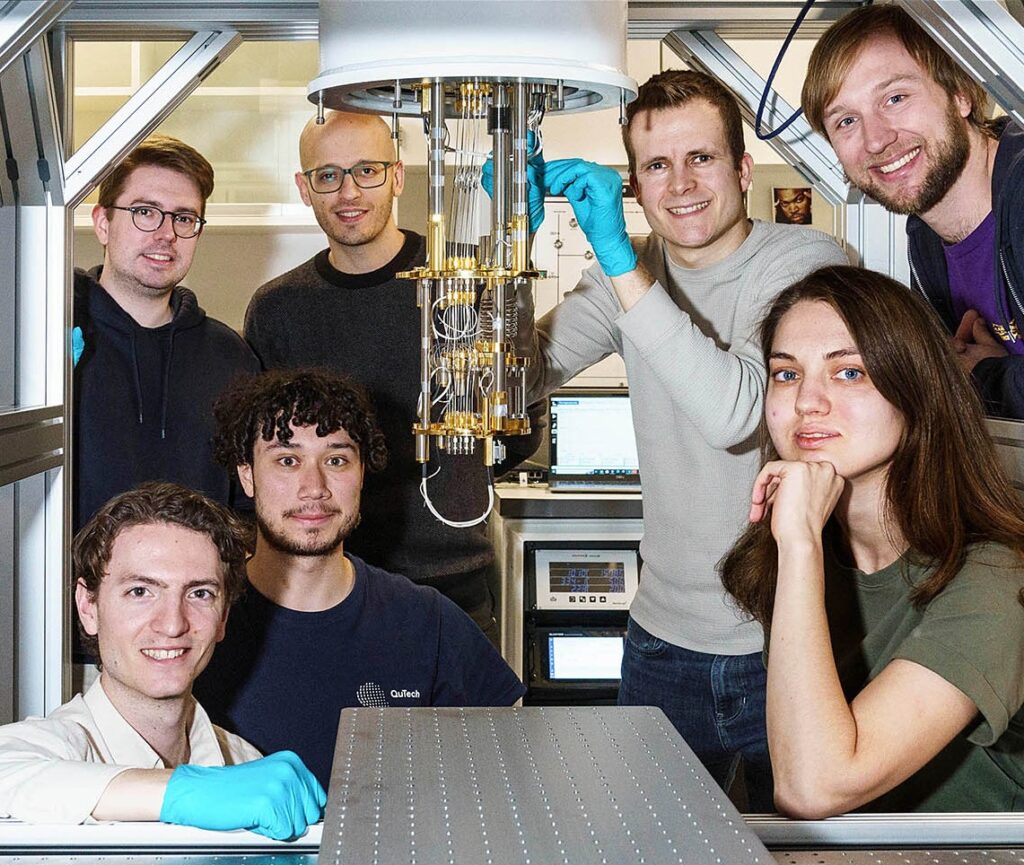
Carlos Errando Herranz serves as an Assistant Professor in the Quantum and Computer Engineering Division at Delft University of Technology's Faculty of Electrical Engineering, Mathematics and Computer Science (EEMCS) and as a Principal Investigator at QuTech. His research focuses on developing scalable quantum photonic integrated circuits using semiconductor fabrication processes compatible with existing infrastructure for quantum internet applications. He received Bachelor's and Master's degrees from Universitat Politècnica de València (2013) and a PhD in Micro and Nanosystems from KTH Royal Institute of Technology (2018), followed by postdoctoral positions at KTH and MIT as a Marie Curie fellow. His lab investigates quantum photonics, integrated photonics, and color centers with emphasis on diamond tin-vacancy systems and silicon-based quantum emitters. Recent publications demonstrate strong expertise in tuning quantum emitters via strain engineering, heterogeneous integration of spin-photon interfaces, and MEMS-enabled reconfigurable photonics. Key advancements include cavity-enhanced quantum memories, superconducting detector integration, and spectral control of solid-state emitters for quantum networks. Dr. Herranz advises seven graduate students including PhD candidates Vicky Dominguez Tubio, Arjan Mejas, Matteo Pirro, Christian Primavera, Jan Riegelmeyer, and Elena Volkova, along with Master student Bram Zijlstra. His team comprises postdocs Lin Jin and Pat Laferriere, and interns Elsa Herranz Valiente and Ernest Staffetti Cruañas. The Errando Herranz Lab operates within QuTech's Quantum Internet Division at Delft University, maintaining specialized facilities for nanofabrication and optical characterization of quantum photonic devices. Current research directions include developing CMOS-compatible quantum memories operating at telecom wavelengths and scalable architectures for quantum repeaters.