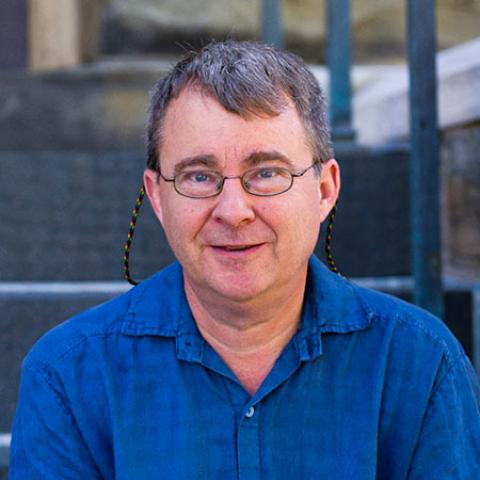
Sıtkı Egeli is an Associate Professor at the Department of Political Science and International Relations at İzmir University of Economics since 2015. With a PhD in International Relations from Bilkent University, an MA in Security Studies from University of Chicago, and a BA in Political Science from Boğaziçi University, he specializes in defense policy, security studies, and military technology. PhD: Bilkent University, International Relations (1993-1999) MA: University of Chicago, Security Studies (1988-1991) BA: Boğaziçi University, Political Science (1983-1988) His research focuses on weapons of mass destruction proliferation , air and missile defense , nuclear deterrence , space security , and disruptive military technologies . His publications analyze Turkish defense industrialization, Arctic geopolitics, and strategic stability in aerospace warfare contexts. Recent collaborative work (2017-2025) spans: • Balancing defense autarky (2025) • Arctic region involvement (2022) • Historical air power development (2021) • Military space operations (2021) • Turkish missile defense (2019) • Ballistic missile programs (2017)
Scott D. Sagan is the Caroline S.G. Munro Professor of Political Science at Stanford University and a Senior Fellow at the Freeman Spogli Institute for International Studies. He serves as Co-Director of the Center for International Security and Cooperation (CISAC) and holds the position of Bass University Fellow in Undergraduate Education. Sagan also co-chairs the American Academy of Arts and Sciences' Committee on International Security Studies, demonstrating his significant influence in the field of international security. Sagan received his Ph.D. in Political Science from Harvard University in 1983 and his B.A. in Government from Oberlin College in 1977. Prior to joining Stanford, he taught at Harvard University and served as special assistant to the director of the Organization of the Joint Chiefs of Staff in the Pentagon, providing him with valuable practical experience in defense policy. Professor Sagan's research primarily focuses on nuclear weapons policy, international security, arms control, and nonproliferation. His work examines the organizational, political, and ethical dimensions of nuclear strategy, with particular attention to the risks of nuclear accidents, the effectiveness of nonproliferation policies, and public attitudes toward nuclear weapons use. He has pioneered important theoretical frameworks regarding the organizational causes of nuclear accidents and the normative constraints on nuclear weapons use. Sagan's publications reveal a consistent focus on nuclear deterrence theory, the organizational aspects of nuclear command and control, and the ethical dimensions of nuclear weapons policy. His work bridges theoretical analysis with practical policy implications, often challenging conventional wisdom about nuclear strategy and proliferation. Recent publications show increasing attention to public opinion on nuclear weapons use, the evolving nature of nuclear deterrence in the contemporary security environment, and the relationship between international law and nuclear strategy. Thérèse Delpech Memorial Award (2022) Susan Strange Award, International Studies Association (2017) William and Katherine Estes Award, National Academy of Sciences (2015) International Security Studies Section Distinguished Scholar Award (2013) Stanford's Dean's Award for Distinguished Teaching (1998-99) Stanford's Hoagland Prize for Undergraduate Teaching (1996) International Studies Association's Innovative Teaching Award (2008) Monterey Institute for International Studies' Nonproliferation Education Award (2009) Sagan has been instrumental in shaping the research agenda at CISAC, mentoring numerous students and junior scholars in the field of international security. His work has been supported by various research grants from foundations and government agencies focused on nuclear security issues. At Stanford, he has led numerous research initiatives examining nuclear weapons policy, arms control, and nonproliferation challenges. As Co-Director of CISAC, Sagan oversees one of the world's leading research centers on international security, nuclear policy, and arms control. The center brings together scholars, practitioners, and students to address pressing security challenges through interdisciplinary research, policy-relevant analysis, and educational programs. Under his leadership, CISAC has maintained its position as a premier institution for security studies research and policy engagement.
Keir A. Lieber is a Professor at Georgetown University, holding dual appointments in the Edmund A. Walsh School of Foreign Service and the Department of Government. His research focuses on nuclear strategy, deterrence, technology’s role in warfare, and U.S. national security policy. He co-authored The Myth of the Nuclear Revolution and authored War and the Engineers , exploring how political decisions outweigh technological determinism. Lieber’s work appears in International Security , Foreign Affairs , and other leading journals. He has received major fellowships from institutions like the Brookings Institution and the Council on Foreign Relations. Education: Ph.D. and M.A. in Political Science from the University of Chicago; B.A. in Political Science and International Relations from the University of Wisconsin-Madison. A proud alumnus of D.C. public schools, Lieber emphasizes interdisciplinary approaches to security studies. His research interests span nuclear deterrence theory, the impact of emerging technologies on conflict, and the evolution of U.S. defense strategies. Recent work addresses nuclear tripolarity and the challenges of escalation control in modern conflicts. Awards include recognition for his contributions to international relations scholarship and policy analysis. Lieber’s academic contributions include co-editing volumes on realism and advising on national security policy. Grants and fellowships have supported his exploration of topics like cyber warfare and nuclear non-proliferation.
Janina Dill holds the Dame Louise Richardson Chair in Global Security at the Blavatnik School of Government, University of Oxford. She is also a Professorial Fellow at Trinity College and Co-Director of the Oxford Institute for Ethics, Law, and Armed Conflict (ELAC). Her academic work focuses on the intersection of law, morality, and international relations in the context of war. Her research spans three interconnected strands: the legal requirements for military operations under international law; theoretical frameworks for understanding how international law serves as an instrument of morality in war; and empirical investigations into how moral and legal norms affect real-world military decision-making and public opinion in conflict zones. Professor Dill's work has particular relevance to contemporary conflicts, with extensive analysis of the wars in Ukraine and Gaza. She has examined how international humanitarian law applies to these conflicts, the moral arguments employed by different parties, and the practical challenges of implementing legal constraints in complex warfare environments. Her research has been recognized with the prestigious Philip Leverhulme Prize in 2021, which she has used to advance her work on the moral psychology of decision-making in war. She is currently leading multiple significant research projects, including a three-year ESRC/NSF-funded study on "Cumulative Civilian Harm" and an expert process with the ICRC on military objectives under international humanitarian law. Professor Dill is frequently consulted by international media outlets including The Guardian, The Economist, BBC, CNN, and major European publications. Her expertise is regularly sought on matters related to the laws and ethics of war, particularly regarding the conflicts in Ukraine and Gaza. She has received recognition for her contributions to the field through numerous speaking engagements, media appearances, and her influential research that bridges theoretical legal scholarship with practical applications in contemporary conflicts.
Bradley D. Olsen is a full professor in the Department of Chemical Engineering at the Massachusetts Institute of Technology (MIT), where he leads research at the intersection of polymer science, soft matter physics, and bioengineering. His work focuses on designing materials for critical applications in biotechnology, hemostasis, and sustainable polymer development while advancing fundamental understanding of polymer network mechanics and self-assembly. Education: Ph.D. in Chemical Engineering, University of California Berkeley (2007) S.B. in Chemical Engineering, Massachusetts Institute of Technology (2003) Olsen's research spans protein-based materials, block copolymer phase behavior, and mechanochemical hydrogels. He has pioneered methods for quantifying polymer network topology, developing hemostatic nanoparticles, and creating bio-inspired materials for selective biomolecular transport and medical applications. His recent publications emphasize data-driven approaches to polymer characterization and educational outreach in materials science. Scientific Awards: American Physical Society (APS) Fellow (2023) Fulbright Amazonia Scholar (2023) Alexander and I. Michael Kasser Chair in Chemical Engineering (2021) ACS Macro Letters Young Investigator Award (2021) MIT Committed to Caring Honor (2019) AIChE Owens Corning Early Career Award (2019) APS Dillon Medal (2018) Kavli Emerging Leader in Chemistry (2017) ACS Polymer Division Fellow (2016) Camille Dreyfus-Teacher Scholar (2015) Alfred P. Sloan Research Fellow (2014) NSF Career Grant (2013) NIH Postdoctoral Fellowship (2008-2009) Hertz Fellow (2003-2007) Barry M. Goldwater Scholarship (2002) Olsen has received significant grant support including NSF Career (2013) and AFOSR (2012) awards. His teaching activities include innovative international outreach like the 2025 soccer-themed science camp in Brazil. The Olsen Group at MIT explores advanced materials with applications ranging from trauma care to sustainable polymers.
Prof. Waldemar Kolanus leads the Molecular Immunology and Cell Biology department at the University of Bonn's Life & Medical Sciences Institute (LIMES) . His research bridges immunoregulation , stem cell dynamics , and metabolic stress responses in immune cells. Unit 2 member at LIMES Principal investigator in SFB 704 and ImmunoSensation Cluster Leads a multidisciplinary lab with postdocs, PhD students, and technical staff His work focuses on intracellular signaling pathways connecting immune activation to tissue homeostasis, particularly through: Cytohesin proteins in integrin-mediated adhesion and migration TRIM71 in stem cell regulation and congenital hydrocephalus High-salt environments affecting macrophage function Publication trends show expertise in immune cell migration , genetic models , and chemical inhibition , with frequent use of mice and zebrafish for in vivo studies. Key articles explore: TRIM71's dual role in auditory development and germ cell maintenance Cytohesin family's Golgi regulation and insulin signaling Ruxolitinib's off-target migration inhibition of dendritic cells Contact details: Address: LIMES Institute, Carl-Troll-Straße 31, Bonn Email: kolanus.sekretariat@uni-bonn.de Phone: +49 228 73-62788
Robert S. Litwak is a Research Professor at the Elliott School of International Affairs (ESIA) at George Washington University. Previously, he served as Senior Vice President and Director of International Security Studies at the Woodrow Wilson International Center for Scholars, and held roles such as Director for Nonproliferation on the National Security Council staff. He is a consultant to Los Alamos National Laboratory and an adjunct professor at Georgetown University’s School of Foreign Service. His research focuses on nuclear proliferation, international security dynamics, and strategic competition among major powers. Education: PhD in Political Science from the London School of Economics and Political Science (LSE), and a BA from Haverford College. His publications analyze nuclear crises involving North Korea, Iran, and the evolving tripolar rivalry between the U.S., Russia, and China. He emphasizes policy frameworks for managing nuclear risks and nonproliferation challenges. Litwak is affiliated with the Council on Foreign Relations and has held visiting fellowships at Harvard, Oxford, and the Russian Academy of Sciences.
Christopher Robert Way is an Associate Professor of Government at Cornell University, affiliated with the College of Arts and Sciences. He is a core faculty member of the Institute for European Studies and part of the Reppy Institute for Peace and Conflict Studies, where he contributes to the Peace Studies Minor. His research focuses on comparative political economy, international relations, and nuclear proliferation, with a particular emphasis on the effectiveness of non-proliferation regimes and the political drivers of weapons development. Way's academic interests span international/comparative political economy, the political economy of OECD democracies, and the impact of electoral cycles on policy-making. His work integrates quantitative and qualitative methods to analyze topics such as the relationship between conventional arms transfers and nuclear proliferation, the role of political insecurity in financial market liberalization, and the effects of economic interdependence on military conflict. His recent research on paid sick leave policies and democracy’s role in capitalism reflects his broader engagement with public policy and institutional adaptation. Way has also contributed to debates on nuclear energy as an 'ambiguous technology' and the dynamics of the Nuclear Non-Proliferation Treaty.
Barbara Zanchetta is a Senior Lecturer in the Department of War Studies at King’s College London, affiliated with the Faculty of Social Science & Public Policy. She specializes in Cold War history, American foreign policy, and transatlantic relations. Her work examines US-Soviet détente, nuclear arms control, and the strategic implications of post-Cold War policies. She is the author of The Transformation of American International Power in the 1970's and co-author of Transatlantic Relations since 1945 . Currently, she is researching US policies toward the Persian Gulf and their role in the collapse of the Soviet Union. Her teaching includes courses on international history, US national security, and the War on Terror. She is affiliated with the Sir Michael Howard Centre for the History of War, the Latin American Security Research Group, and the Centre for Grand Strategy. Her research explores the intersections of diplomacy, conflict, and security policy, with a focus on Cold War legacies and modern geopolitical challenges. Zanchetta has organized international conferences, including a hybrid event in Paris on the consequences of the Cold War’s end. Her commentary on contemporary issues, such as NATO’s expansion and Russia’s aggression in Ukraine, reflects her expertise in historical and strategic analysis.
Stuart Croft is Vice-Chancellor & President of the University of Warwick and Professor of International Security in the Department of Politics and International Studies (PAIS). Since joining Warwick in 2007 he has served as Pro-Vice-Chancellor for Research (Arts & Social Sciences), Provost, and since February 2016 as the University’s chief executive, leading 5,500 staff across all disciplines. Education & Career: 18 years at the University of Birmingham, latterly Professor of International Relations and Head of the School of Social Sciences. Appointed Professor of International Security, University of Warwick, January 2007. Pro-Vice-Chancellor for Research (Arts & Social Sciences) 2011-2013. Provost 2013-2016. Vice-Chancellor & President from February 2016. Research Interests: Professor Croft’s scholarship lies at the intersection of security studies and political culture, using constructivist and narrative approaches to analyse how identities and discourses shape security policy. He has published extensively on the War on Terror, NATO transformation, European security governance, and the securitisation of Islam in Britain. His work combines large-scale funded empirical projects with theoretical innovation in International Relations. Publications & Grants Trend: Over the past two decades his output has clustered around three themes—cultural narratives of terrorism and counter-radicalisation, institutional governance of Euro-Atlantic security (NATO/EU), and arms-control regimes—moving from traditional strategic studies toward critical security approaches that foreground identity, discourse and governance. Scientific Awards & Fellowships: Academician, Academy of Social Sciences (2006) Fellow, Royal Society of Arts (2006) International Studies Association – International Security Section Book Award short-list 2007 Doctoral Supervision & Mentoring: He has successfully supervised 21 PhD students at Birmingham and Warwick, examined 25 UK PhDs as external examiner, and currently supervises 6 doctoral researchers. He has mentored 9 ESRC, EU and British Academy post-doctoral fellows. Editorial & Professional Leadership: Editor of the Palgrave ‘New Security Challenges’ book series since 2005; co-editor of Contemporary Security Policy 1989-2004; editorial board member of Critical Studies on Terrorism and Dynamics of Asymmetric Conflict . Chair (2009-2011) and President (2011-2013) of the British International Studies Association.
Sarah Shirazyan is a Lecturer in Law at Stanford Law School , where she designed the Interpol-Stanford Policy Lab. She also serves as Director and Head of Meta's GenAI Product Policy work, overseeing responsible AI development across Meta's platforms. Doctor of Juridical Sciences (J.S.D.) from Stanford Law School LL.M. from SOAS/UCL, University of London Her research focuses on the intersection of national security , public policy , and international law , particularly examining: Effectiveness of UN Security Council responses to WMD terrorism Framework for regional organization collaboration in WMD prevention Platform content policy development and misinformation governance Responsible AI implementation under legal frameworks Key publication themes include: Platform algorithmic accountability Media capture in digital domains Content policy development during crises UN Security Council institutional limitations Regional organization synergies in security Recipient of Gerald J. Lieberman Award for research, teaching, and community service Professional affiliations: Stanford Law School Stanford Center for International Security and Cooperation (CISAC) INTERPOL European Court of Human Rights Council of Europe United Nations
Daryl G. Press is a Professor of Government at Dartmouth College and the inaugural Faculty Director of the Davidson Institute for Global Security . He co-founded the Strategic Forces Boot Camp with Sandia National Laboratories and serves as a non-resident Senior Fellow at the Atlantic Council . Research Expertise U.S. National Security Policy Nuclear Deterrence Dynamics Technological Evolution in Warfare Strategic Stability Analysis Defense Department Consultancy Recent Publications (2023–2025) Examined U.S.-China military dynamics in East Asia Analyzed North Korean deterrence strategies Explored post-primacy U.S. foreign policy frameworks Investigated nuclear escalation risks Contact Information Email: daryl.g.press@dartmouth.edu Phone: (603) 646-1707 Office: Silsby Room 120, HB 6108
Scott Kemp is an Associate Professor at the Massachusetts Institute of Technology (MIT) within the Department of Nuclear Science and Engineering , where he also directs the Laboratory for Nuclear Security and Policy . His interdisciplinary research bridges physics, political science, and history to address challenges in nuclear security, energy policy, and critical infrastructure protection . Education: B.Sc. in Physics from University of California, Santa Barbara; Ph.D. in Public and International Affairs from Princeton University Research focuses on: Strategic implications of hypersonic and advanced conventional weapons Securing vulnerabilities in energy/water/gas infrastructure Technological tools for nuclear disarmament verification Decarbonization policy frameworks Scientific recognition includes: Fellow of the American Physical Society (2017) Sloan Research Fellowship in Physics (2016) NEC Corporation Award in Computation (2015) Fulbright Fellow (2003) As an academic advisor in MIT's Energy Studies Program , he mentors students in policy-science intersections while serving on the International Policy Lab and President’s Committee for Distinguished Fellowships .
Roy Dong is an Assistant Professor at the University of Illinois at Urbana-Champaign, affiliated with the Coordinated Science Laboratory. His research bridges Control Theory Economics Statistics Optimization to address challenges in cyber-physical systems and the Internet of Things, focusing on data manipulation, privacy, and strategic behavior in interconnected systems. His academic journey includes a Ph.D. in Electrical Engineering and Computer Sciences from UC Berkeley (2017) and dual B.S. degrees in Economics and Computer Engineering from Michigan State University (2010). At Illinois, he teaches courses ranging from Control Systems to Convex Optimization , with multiple teaching excellence awards. Roy's research explores Closed-loop effects of machine learning Causality in decision systems Incentive design for strategic agents Privacy-utility tradeoff optimization Human behavior modeling with applications in smart grids, transportation networks, and semi-autonomous vehicles. His work formulates privacy-preserving mechanisms as optimization problems, balancing data utility against user privacy in dynamic systems. Article trends show expertise in Game theory for strategic data sources Energy disaggregation techniques Nonlinear basis pursuit algorithms Privacy-aware control systems with a focus on cyber-physical systems and human-in-the-loop applications. Scientific recognition includes 'Teacher Ranked as Excellent' awards (ECE 120, ECE 486, ECE 515) Contributions to smartSDH building control and CPRL compressive sensing Roy leads the Privacy-aware Control Systems research group, collaborating with institutions like UC Berkeley and Michigan State University , and directs projects funded by grants including the New USDA NIFA grant for agricultural robot autonomy .
Allen S. Weiner is a Senior Lecturer in Law at Stanford Law School and directs three major programs: the Stanford Program in International and Comparative Law, the Stanford Humanitarian Program, and the Stanford Center on International Conflict and Negotiation. His expertise spans international security, conflict resolution, and humanitarian law. Weiner holds a BA from Harvard University (1985) and a JD from Stanford Law School (1989). Prior to joining Stanford in 2003, he served in the U.S. State Department, advising on international law and representing the U.S. in international tribunals. His research focuses on international law’s application to contemporary security threats, including cyber warfare, nuclear doctrine, and online misinformation in conflict zones. Notable works include co-authoring the leading textbook International Law (8th ed., 2023) and analyzing historical cases like the Hiroshima bombing’s legal implications. Weiner’s policy work includes projects with INTERPOL to combat transnational crime and rethinking its governance models. Scientific awards are not explicitly listed in the provided texts, though his contributions to legal scholarship and policy are widely recognized. He teaches courses on conflict resolution, humanitarian law, and ethics in warfare. His advising and grants include policy practicums addressing global security challenges.