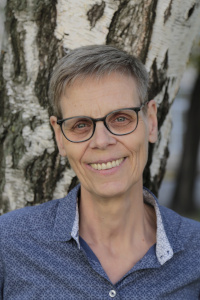
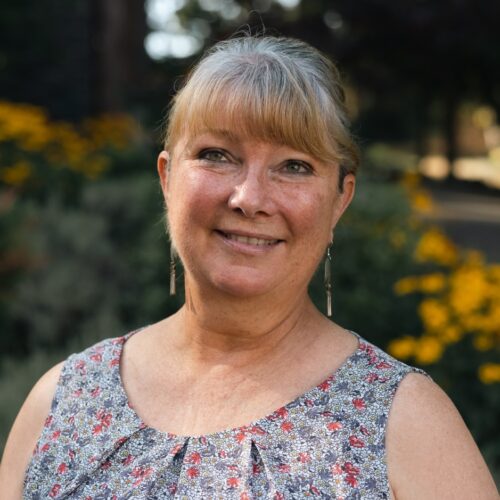
Benoit Favre is a Full Professor (PR, Section 27) at Aix-Marseille University and its engineering school Polytech Marseille since 2021. He leads the Data Science axis at the Laboratoire d'Informatique et Systèmes (LIS, CNRS UMR7020), encompassing research teams in NLP, machine learning, and multimodal processing. He completed his HDR (habilitation) in 2019 and serves as co-head of the multimodality group in the CNRS GdR on NLP. His research focuses on Natural Language Processing with machine learning, including semantic content analysis, multimodal system fusion, and technology evaluation in realistic applications. He teaches advanced machine learning for NLP at the Master IAAA program and organizes the ILCB Summer School. The 15 most recent publications highlight trends in Vision-Language Transformers , biomedical classification, historical domain adaptation, and cross-modal analysis. These works span from 2020 to 2024, with particular emphasis on multimodal representations, semantic parsing, and robust NLP systems. Scientific Awards : Best paper at TALN 2011 Ranked 1st in PERCOL consortium (REPERE 2013-2014) Ranked 1st in TAC 2008 and 2009 Benoit is also deeply engaged in community service, having organized major conferences like IEEE SLT 2010, SLAM 2013, and TALN 2014. He serves on scientific committees for selection of PhD grants and faculty positions. Office location: University library building (Luminy campus), second floor, office C207
Claudio Di Meola is a Full Professor at Sapienza University of Rome, affiliated with the Department of European, American and Intercultural Studies. He teaches German linguistics and language courses, including German Language I and German Translation III, and coordinates exam schedules for undergraduate and master's students. His institutional email is claudio.dimeola@uniroma1.it, and he holds office hours by appointment. Di Meola's research centers on German linguistics with interdisciplinary foci in cognitive linguistics, morphosyntax (e.g., connectors, prepositions), semantics (metaphor, polysemy, verb tenses), and contrastive linguistics. His work bridges theoretical frameworks with practical applications in language pedagogy, particularly for Deutsch als Fremdsprache (German as a Foreign Language). Key themes include the simplification of German grammar ( Leichte Sprache ), tense semantics, and cross-linguistic analysis between German and Italian. His recent publications (2020–2024) predominantly explore grammar pedagogy , tense semantics , and contrastive linguistics . Articles analyze the optimization of German teaching materials, structural complexities in German syntax, and pragmatic dimensions of tense usage in discourse. Recurring subfields include morphosyntax, lexical semantics, DaF curriculum design, and cognitive-linguistic approaches to language simplification.
Professor Irina Nikolaeva is affiliated with the School of Languages, Cultures and Linguistics (LAC) at SOAS University of London . Her research focuses on linguistic typology, morphosyntax, and endangered languages, particularly in Siberian and Uralic language families. Primary Affiliation: School of Languages, Cultures and Linguistics, SOAS University of London Email: in3@soas.ac.uk Her work explores: possessive constructions and switch-reference systems mixed categories in noun modification morphosyntactic features in Tundra Nenets and Yukaghir polarity focus and finiteness in typological frameworks Recent publications analyze vowel harmony in Yukaghir, contact-induced morphosyntactic changes in Siberia, and the morphosyntactic properties of internal possessors across diverse languages. Her scholarship bridges theoretical linguistics with fieldwork on endangered languages.
Greta Gencheva is a faculty member at the Faculty of Modern Languages, Department of Romance Languages, at St. Cyril and St. Methodius University of Veliko Turnovo . Her academic work focuses on Italian linguistics, specialized texts, and translation studies. University: St. Cyril and St. Methodius University of Veliko Turnovo School: Faculty of Modern Languages Department: Department of Romance Languages Emails: g.gencheva@ts.uni-vt.bg , greta_gencheva@abv.bg Her research spans morphological and syntactic analysis of Italian nouns, functional linguistics, and cultural mediation in translation . She investigates specialized terminology and professional jargon in Italian texts, contributing to translation pedagogy. Recent work explores the use of "che" in Italian syntax and gender inflection in nouns. Her publications include studies on literary autobiography and translations of Italian medical and literary texts. She participates in projects like ALTA (Allophone Teacher Academy) , focusing on integrating refugees through language education, with a project duration from 2022–2025.
Prof. Velina Slavova is a full Professor in the Department of Informatics at New Bulgarian University (NBU), where she has taught since 1995. Her international academic engagements include invited professorships at Université de Nantes (1998-2017), Université Française d'Égypte (2005-2012), and ongoing teaching at the Francophone Institute of Management in Sofia. Educational background comprises: Mechanical Engineer, Higher Institute of Mechanical and Electrical Engineering, Sofia Specialist in Applied Mathematics and Informatics Candidate of Technical Sciences Robotics specialization, École Nationale des Mines de Paris Cognitive Science specialization, New Bulgarian University Research focuses on interdisciplinary domains: Natural Language Processing : Emotion recognition, text analysis, computational semantics Cognitive Modeling : Language acquisition frameworks, concept formation Data Science Applications : Corpus linguistics, statistical text analysis Cross-disciplinary Studies : Psycholinguistics, computational social science Her work often bridges computer science with cognitive psychology and linguistics. Recent publications (2020-2023) predominantly investigate emotion recognition through linguistic features, child language acquisition patterns, and semantic role modeling, utilizing corpus-based statistical approaches across multiple languages. Professional leadership includes: Co-chair of International Conference on Cognitive Modeling in Linguistics (since 2007) Member of Scientific Council, Francophone University Agency (2004-2010) Regional Bureau of Experts, Francophone University Agency (2006-2016) Teaching spans fundamental and advanced topics: Core CS: Algorithms, Data Structures, Database Design Specialized: Natural Language Processing, Information Systems Practicums: Database implementation, programming Contact: Office hours Friday 13:00-15:00 & Saturday 14:30-17:30 (Building II, Room 712), email: vslavova@nbu.bg
Balkız ÖZTÜRK BAŞARAN is a Professor and Department Head at Boğaziçi University's Department of Linguistics. She holds office JF 303 and can be reached at balkiz.ozturk@boun.edu.tr. Her academic career spans theoretical and descriptive linguistics with a focus on understudied languages of the Caucasus region. Her educational background includes a PhD in Linguistics from Harvard University (2004), an MA in Linguistics from Boğaziçi University (1999), and a BA in Translation and Interpretation from Boğaziçi University (1996). Her research interests center on Caucasian Languages, Altaic Languages, Turkish Languages, Theoretical Syntax, and Semantics. She has made significant contributions to the documentation and analysis of Laz language varieties, particularly Pazar Laz, Ardesheni Laz, and Muş Kurmanji. Her work bridges theoretical syntax with empirical fieldwork on lesser-documented languages, examining phenomena like case systems, applicatives, verb-framing, and possessive constructions. Her recent publications reveal a strong trend toward computational linguistics applications, particularly in Turkish language processing, while maintaining her core research on Caucasian languages. This dual focus demonstrates her ability to integrate theoretical linguistic insights with practical computational applications. She has served as principal investigator or researcher on multiple significant projects including the Deep Learning Based Turkish Dependency Parser (2018-present), Language Interaction in Turkey: Documentation and Analysis (2018-present), and Argument and Adjunct Distinction in Muş Kurmanji (2017-present), all funded by TÜBİTAK and Boğaziçi University Research Fund. Her teaching portfolio includes undergraduate courses in Morphology (Ling 202), Syntax (Ling 203), Typology (Ling 206), and Syntax and Semantics of Turkish (Ling 314), as well as graduate courses in Syntactic Theory (Ling 541), Readings in Linguistics (Ling 572), and Syntax of Voice (Ling 58H). She has presented her research at numerous international conferences and has given invited talks at institutions including Harvard University, University of Toronto, and Dokuz Eylül University.
Erik Elgh is a Researcher in linguistics at Uppsala University's Department of Linguistics and Philology, specializing in historical and computational approaches to language evolution and documentation. His work bridges theoretical frameworks with empirical data from diverse language families. His research program integrates three core pillars: Historical Linguistics : Reconstructing language phylogenies through computational modeling, with case studies on Torricelli and Germanic languages. Computational Linguistics : Developing holistic methodologies for analyzing dialect chains and language change dynamics. Descriptive Linguistics : Field-based documentation of endangered languages in Melanesia (Au, Olo) and Indonesia (Elkei). Publication trends (2019-2025) reveal a strategic shift toward unifying computational tools with traditional comparative methods, particularly in phylogenetic analysis and dialectology. His 2025 doctoral thesis establishes a comprehensive framework for modeling language evolution from data collection through classification, emphasizing interdisciplinary integration.
Mathilde Eveline Keizer is a Professor of English Linguistics: Variation and Cognition at the Department of English and American Studies, Faculty of Philological and Cultural Studies, University of Vienna. She serves as both Vice-Director of Studies for English and American Studies and Deputy Head of the Department of English and American Studies, demonstrating significant leadership within the institution. Professor Keizer's educational background includes: MA in English language and literature, Vrije Universiteit Amsterdam (1987) PhD in English Linguistics, Vrije Universiteit Amsterdam (1992) Her primary research focuses on the theoretical framework of Functional Discourse Grammar, with particular emphasis on the Noun Phrase in English and Dutch, possessive constructions, reference and predication, definiteness, English pronouns, apposition, information structure, linguistic categorization, and semi-fixed constructions. Professor Keizer leads the FunCog research group, which investigates the intersection of functional and cognitive approaches to language structure. Her work demonstrates how linguistic structures emerge from the interaction of cognitive processes and communicative needs, providing insights into the dynamic nature of language organization. Analysis of Professor Keizer's recent publications reveals a consistent focus on English syntax within the framework of Functional Discourse Grammar. Her work spans noun phrase structure, partitive constructions, prepositional phrases, and adverbial modification, demonstrating the versatility of FDG in addressing diverse syntactic phenomena. A notable trend is her increasing attention to cross-linguistic comparisons, particularly between English and Dutch, which enriches our understanding of language universals and specifics. Professor Keizer has made significant contributions to the field through her extensive publication record, including authored and edited books that have shaped contemporary understanding of functional-cognitive approaches to grammar. Her work has appeared in leading linguistics journals and handbooks, establishing her as a prominent voice in theoretical linguistics. As an educator, Professor Keizer teaches courses on Functional Discourse Grammar, Cognitive Grammar, Linguistic Categorization, Fuzzy grammar, Linguistic models and approaches, The English Noun Phrase, English adjectives, English idioms, and English syntax. She has supervised numerous graduate students through thesis seminars and advanced courses in linguistics, contributing significantly to the development of the next generation of linguists. Professor Keizer leads the FunCog research group, which brings together scholars interested in the intersection of functional and cognitive approaches to language. The group focuses on empirical investigations of linguistic structures through the lens of Functional Discourse Grammar, fostering interdisciplinary collaboration and innovative research methodologies that bridge theoretical linguistics with practical applications in language teaching and computational linguistics.
Dr. Krzysztof Migdalski is an Associate Professor at the Department of English and Comparative Linguistics within the Institute of English Studies at the University of Wrocław, Poland. He has been a faculty member at the University since 2008, following post-doctoral research at the University of Connecticut and research positions at Tilburg University in the Netherlands. His educational background includes a Ph.D. in Linguistics from Tilburg University (2006) with a dissertation on "The Syntax of Compound Tenses in Slavic," supervised by Prof. Henk van Riemsdijk and Dr. Hans Broekhuis. He earned his M.A. in English from the University of Wrocław (2000) with a thesis on "The Determiner Hypothesis in Polish." Dr. Migdalski specializes in theoretical linguistics with a focus on comparative generative syntax of Balkan, Germanic, and Slavic languages, as well as historical linguistics, particularly Old Church Slavonic. His research explores the intricate relationships between syntax, morphology, and historical development across Slavic languages. He has made significant contributions to understanding cliticization patterns, tense marking systems, and the evolution of syntactic structures in Slavic languages. His work bridges formal syntactic theory with historical linguistic analysis, offering insights into language change through generative frameworks. His extensive publication record reveals consistent research themes centered on the syntax of Slavic languages, particularly examining clitic placement rules, the evolution of tense systems, and comparative syntactic structures across Germanic and Slavic language families. His work demonstrates how morphosyntactic elements like clitics interact with tense marking and how these patterns evolve over time, providing crucial evidence for theories of language change and syntactic universals. Dr. Migdalski has received several prestigious grants and awards: Focus grant from the Foundation for Polish Science (2010-2013) for "Understanding Linguistic Categories: Temporality at the interfaces" Rubicon grant from the Netherlands Organization for Scientific Research (2006-2008) for post-doctoral research on "The diachrony and synchrony of the second position effect in Slavic" University of Toronto travel grant (2006) for FASL-15 conference AIO-appointment at Tilburg University (2001-2005) Quota Program at University of Tromsø (2000-2001) As an active researcher and academic, Dr. Migdalski serves as a peer reviewer for numerous prestigious linguistics journals including Journal of Comparative Germanic Linguistics, Journal of Linguistics, and Journal of Slavic Linguistics. He has been involved in collaborative research projects such as the "Nový encyclopedický slovník češtiny online" project at the University of Brno (2011-2015) and has participated in numerous summer schools for generative grammar across Europe. His extensive conference presentations demonstrate his active engagement with the international linguistics community, where he regularly presents on topics related to Slavic syntax and historical linguistic change.
Dr. Sara J. Swanson is a Professor and Division Chief of Neuropsychology in the Department of Neurology at the Medical College of Wisconsin. She also holds adjunct appointments as an Associate Professor in the Psychology Department at the University of Wisconsin-Milwaukee and as a Clinical Associate Professor in the Psychology Department at Marquette University. Dr. Swanson is a Clinical Neuropsychologist at Froedtert Memorial Lutheran Hospital and St. Luke's Medical Center, and she is a member of both the Neuroscience Research Center and the Wisconsin Institute of NeuroScience (WINS). Dr. Swanson's research primarily focuses on the neuropsychology of epilepsy, with special emphasis on presurgical evaluation using functional MRI and Wada testing. Her work examines language lateralization, memory assessment, and cognitive outcomes following epilepsy surgery. She has been involved in numerous multicenter collaborations, particularly through the FMRI in Anterior Temporal Epilepsy Surgery (FATES) Study group. Her research has significant clinical implications for improving surgical outcomes and understanding brain-behavior relationships in epilepsy patients. Analysis of Dr. Swanson's recent publications (2020-2025) reveals a continued focus on predicting cognitive outcomes following epilepsy surgery using advanced neuroimaging techniques. Her work increasingly incorporates multicenter data collection and standardized assessment protocols. Key themes include the relationship between fMRI findings and postoperative naming/memory outcomes, application of standardized cognitive classification systems to epilepsy, and exploration of novel approaches to neuromodulation therapies. Outstanding Teachers for 2008-2009, Medical College of Wisconsin Senior Female Faculty Pin Ceremony Fellow, Division 40 of the American Psychological Association Alumni Merit Scholarship, Washington State University Paul Dupertuis Scholarship, Washington State University Women of Achievement Award, Washington State University Dr. Swanson has mentored over 20 postdoctoral researchers and graduate students throughout her career, including Julie Janecek, David Sabsevitz, and Bradley Anderson. She has served as Faculty Sponsor for multiple Epilepsy Foundation of America Behavioral Science Student Fellowships and has been involved in numerous NIH-funded and foundation-supported research projects. Her leadership extends to serving on the Board of Directors for the American Academy of Clinical Neuropsychology and the American Board of Clinical Neuropsychology, as well as participating in national guideline development for the use of fMRI in epilepsy surgery evaluation. As Division Chief of Neuropsychology, Dr. Swanson oversees the Adult Neuropsychological Services within the Adult Comprehensive Epilepsy Program. She has developed clinical protocols for neuropsychological evaluation of epilepsy surgery candidates, including testing protocols, lateralization ratings, and Wada examination procedures. Her work bridges clinical practice and research, ensuring that advances in neuropsychological assessment directly inform patient care.
Dimitar Atanasov, PhD, serves as an Associate Professor in the Department of Informatics at New Bulgarian University (NBU), where he has taught since 2009 across multiple programs including Network Technologies, Informatics, Psychology, and Telecommunications. His academic foundation includes a PhD in Probability Theory and Mathematical Statistics (2007). His research spans Statistics, Probability Theory, and their applications in educational measurement, cognitive diagnosis, and stochastic modeling. Key focus areas include robust statistical estimation, branching processes, test equating, and psychometric modeling for educational assessment. He has developed original teaching materials for courses in statistics, probability, data warehousing, and game theory. At NBU, he teaches core courses including Probability Theory and Statistics, Applied Statistics, and specialized topics like Image Classification and Data Theory. His work demonstrates strong interdisciplinary connections between statistical methodology and practical applications in education, linguistics, epidemiology, and computer security. He actively contributes to the academic community as a member of the editorial board of Mathematics and Informatics journal and participates in the Bulgarian Statistical Society and Bulgarian Society for Research and Evaluation in Education. Professor Atanasov has collaborated on national and international projects, particularly in educational assessment systems. His technical expertise includes MATLAB programming for statistical simulation and algorithm development, with applications in test scoring, equating, and automated test assembly systems developed for institutions like Saudi Arabia's National Center for Assessment.
Dr. Annette Harrison serves as a Professor of Intercultural Studies at Corban University's School of Ministry. She holds a Ph.D. in Linguistics: Language, Interaction and Social Organization from the University of California, Santa Barbara, complemented by an M.A. in Linguistics from the same institution, a Certificate in Linguistic Studies from the Summer Institute of Linguistics, a Diplôme Supérieur d’Etudes Françaises Modernes from Alliance Française in Paris, and a B.A. in French from Northwestern College. Her research encompasses language acquisition, sociocultural methodologies, and cross-cultural engagement, with specific foci on: Multilingualism in religious contexts Linguistic theory for language learners Research ethics in cross-cultural fieldwork Discourse analysis in African languages Social justice through linguistic accessibility Publications primarily explore sociolinguistic patterns in African communities, mission training paradigms, and historical linguistics, demonstrating consistent engagement with language documentation and cross-cultural communication challenges over a 25-year scholarly career. She maintains active fieldwork involvement, having served 23 years with Wycliffe Bible Translators across Francophone Africa, conducting ethnolinguistic research and training translators at the Bangui Evangelical School of Theology. She currently leads international service trips and teaches courses in anthropology, TESOL, and justice studies.
Anju Saxena is a Professor in General Linguistics at the Department of Linguistics and Philology, Uppsala University. Her research focuses on the linguistic landscape of the Himalayan region, particularly on Kanashi and other lesser-known languages of South Asia. Professor Saxena's research interests span multiple areas of linguistics with particular emphasis on: Himalayan and South Asian languages documentation and analysis Language contact and historical linguistics Computational linguistics approaches to language documentation FrameNet development for linguistic domains Language variation and typological studies Numeral systems and grammaticalization processes Her recent publications demonstrate a consistent focus on Kanashi language studies, with multiple comprehensive works published in 2022 including a linguistic sketch, sound system analysis, vocabulary documentation, and investigations into Kanashi's historical development and relationship to other West Himalayish languages. She has also made significant contributions to computational linguistics through her work on LingFN (Linguistic FrameNet) and applying digital resources to language documentation. Professor Saxena maintains an active research profile with collaborations across international institutions, as evidenced by her extensive publication record extending to 2023.