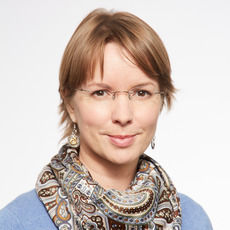
Dr Vera Axyonova is an Assistant Professor at the University of Birmingham's Department of Political Science and International Studies within the School of Government. Holding a PhD from the University of Bremen and Jacobs University Bremen, she has held prestigious positions including Marie Skłodowska-Curie REWIRE Fellow at the University of Vienna and Hurford Next Generation Fellow at the Carnegie Endowment. PhD: University of Bremen & Jacobs University Bremen (2013) MA: Fulda University of Applied Sciences (2008) Diploma: East Kazakhstan State University (2006) Her research focuses on international crisis management, cross-border norm transfer, and knowledge production in conflict environments. Recent projects examine European normative engagements in Eastern Europe and academic freedom challenges during forced migration. Her publications appear in top-tier journals like Peacebuilding and European Security . Notable awards include the Marie Skłodowska-Curie REWIRE Fellowship and Carnegie Endowment's Hurford Next Generation Fellowship. She co-chairs the ECPR Research Network on Statehood and Sovereignty and has held visiting positions at European University Institute, Freie Universität Berlin, and George Washington University.
Christian Enz is a Full Professor at École Polytechnique Fédérale de Lausanne (EPFL), where he serves as Director of the Institute of Microengineering and Head of the Integrated Circuits Laboratory. With M.S. and Ph.D. degrees in electrical engineering from EPFL (1984 and 1989), he has established himself as a leading researcher in low-power analog circuit design and semiconductor device modeling. His research interests focus on very low-power analog and RF IC design , semiconductor device modeling , and increasingly on cryogenic electronics for quantum computing applications . Professor Enz is particularly known for his work on FDSOI MOSFET behavior at cryogenic temperatures, developing comprehensive models that address challenges in subthreshold swing saturation, threshold voltage shifts, and self-heating effects. As a Life Fellow of IEEE with 282 publications and over 7,400 citations, Professor Enz has made significant contributions to the field. His recent work demonstrates how the $G_{m}/I_{D}$ design methodology remains effective in advanced technology nodes and can be extended to cryogenic temperature operation. His research bridges fundamental semiconductor physics with practical circuit design considerations for quantum computing interfaces. Life Fellow, IEEE Director of the Institute of Microengineering, EPFL Head of the Integrated Circuits Laboratory 282 publications with 7,400+ citations Specialist in cryogenic CMOS for quantum computing Professor Enz's work on cryogenic electronics addresses critical challenges for quantum computing scalability. By developing accurate models for transistor behavior at temperatures as low as 3.3K, his research enables the design of specialized control electronics that can operate inside dilution refrigerators, potentially solving major wiring constraints that currently limit quantum computer scaling. His laboratory continues to advance the understanding of semiconductor device physics at cryogenic temperatures while developing practical circuit design methodologies for this emerging application domain.
Caterina Urban is a Research Scientist (Chargé de Recherche) at INRIA and École Normale Supérieure (ENS) in Paris, France. She is a member of the INRIA research team ANTIQUE (ANalyse StaTIQUE), where she focuses on formal methods and static analysis. Prior to her current position, she was a postdoctoral researcher at the Chair of Programming Methodology, led by Peter Müller at ETH Zurich. Dr. Urban holds a PhD in Computer Science (2015) from École Normale Supérieure, Paris, where she worked under the joint supervision of Radhia Cousot and Antoine Miné. She also earned a Master's degree (2011) and Bachelor's degree (2009) in Computer Science, both with full marks and honors (summa cum laude) from the Università degli Studi di Udine, Italy. Her research interests span the whole spectrum of formal methods with a focus on developing rigorous methods and tools to enhance the reliability of computer software, particularly data science applications. Her main area of expertise is static analysis based on abstract interpretation. Dr. Urban is currently engaged in several research projects including Lyra (focusing on data science software), Libra (fairness certification for neural networks), and SAIF (addressing safety concerns in machine learning-based systems). Dr. Urban's recent publications demonstrate her expertise in applying abstract interpretation to diverse areas including machine learning, data science, program verification, and security. Her work bridges theoretical foundations with practical applications, particularly in ensuring the reliability and trustworthiness of increasingly critical data science and machine learning systems. She has received recognition for her work through invitations to serve on program committees for major conferences including OOPSLA 2026, PLDI 2026, and CAV 2026. She is also the general chair of iFM 2025 in Paris. Dr. Urban actively mentors the next generation of researchers, supervising PhD students and postdoctoral researchers. She teaches courses on abstract interpretation and its applications at the Master Parisien de Recherche en Informatique (MPRI) and various international summer schools. She has developed several open-source software tools including Lyra (a static analyzer for data science applications), Libra (for fairness certification of neural networks), and Typpete (SMT-based static type inference for Python).
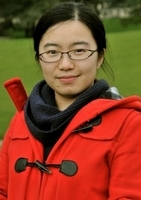
Dr. Xin Zhou is an Oxford-Bristol Myers Squibb Fellow at the Department of Computer Science, University of Oxford. Her research integrates computational modeling, clinical data, and experimental findings to investigate cardiac disease mechanisms and develop human-based simulations for drug evaluation. BSc and MSc in Life Sciences, Beijing Normal University DPhil in Computational Biology, University of Oxford Her work focuses on multi-scale cardiac modeling , particularly in ischemic heart disease and heart failure, exploring ionic currents, tissue conduction, and organ-level dynamics. She develops electromechanical simulations to study cardiac alternans and arrhythmic risks, translating these into clinical applications for patient stratification and pharmaceutical testing. Recent publications emphasize in silico clinical trials , sex-specific cardiometabolic analysis, and Purkinje network modeling. Collaborative efforts with clinicians and pharmaceutical partners highlight her translational approach to regulatory science. Model of the Year 2024, BioModels EPSRC Impact Acceleration Account Microsoft Research Project Award Recognition Award, University of Oxford She supervises PhD and MSc students in computational cardiology, while serving on the editorial board of Frontiers in Physiology . Her current projects involve digital twinning and predictive cardiac safety models to reduce animal testing reliance.
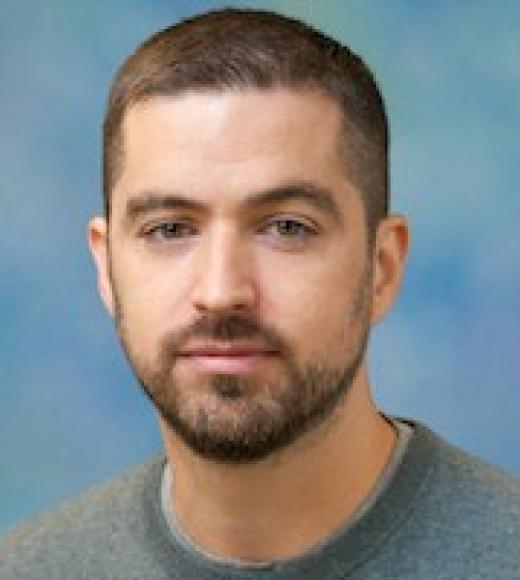
Maximilian Hilger is a doctoral researcher at the Chair of Perception for Intelligent Systems, part of the Munich Institute of Robotics and Machine Intelligence at Technische Universität München (TUM). He joined the chair in 2024 and specializes in radar perception for autonomous systems. M.Sc. in Automation Engineering (RWTH Aachen, 2023) Doctoral studies previously at AASS, Örebro University, Sweden His research focuses on radar-based localization, mapping, and introspection in challenging environments, with publications addressing 4D imaging radar SLAM, loop closure techniques, and sensor fusion methodologies. Recent work includes evaluating radar odometry algorithms and developing robust mapping systems using intensity-augmented normal distributions transform. Key research themes: Radar perception for autonomous systems SLAM robustness and introspection Occlusion-resistant localization Sensor fusion in dynamic environments He collaborates with team members including Prof. Achim Lilienthal, Valeria Salazar, and Thomas Wiedemann at TUM's Siemens Technology Center campus in Garching, Germany.
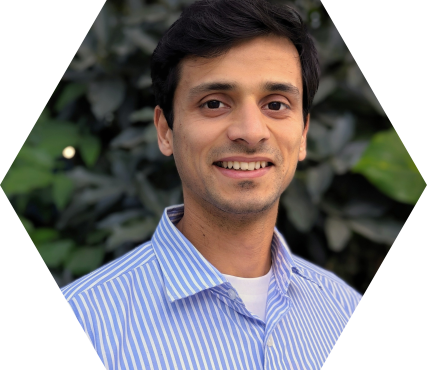
Karthik Menon serves as an Assistant Professor with a joint appointment in the Woodruff School at Georgia Institute of Technology and the Coulter Department of Biomedical Engineering. His research integrates fluid mechanics, computational modeling, and data-driven methodologies to address critical challenges in healthcare, renewable energy, and bio-inspired engineering systems. His academic credentials include: Ph.D. in Mechanical Engineering, Johns Hopkins University (2021) M.S. in Mechanical Engineering, Johns Hopkins University (2019) B.E. in Mechanical Engineering, Birla Institute of Technology and Science, Pilani, India (2015) Menon's research program centers on three interconnected domains: cardiovascular flows for personalized treatment of heart disease, fluid-structure interactions in biological systems like heart valves and bio-mimetic robots, and vortex-dominated flows for renewable energy applications. His approach combines high-fidelity computational modeling with machine learning to uncover fundamental physics and develop clinical solutions, such as cardiovascular digital twins for non-invasive risk assessment. Current projects focus on patient-specific hemodynamics using CT imaging and uncertainty quantification to improve surgical planning. Analysis of his 15 most recent publications (2023-2025) reveals a dominant focus on advancing multi-fidelity computational frameworks for cardiovascular applications. Key trends include Bayesian uncertainty quantification, zero-dimensional solver development, and integration of clinical imaging data to create predictive digital twins. His work bridges fluid dynamics with clinical cardiology, targeting improved outcomes in coronary artery disease and Kawasaki-related complications through physics-informed machine learning. Menon's scholarly contributions have been recognized through competitive awards: WCCM-PANACM 2024 Travel Award, U.S. Association for Computational Mechanics (2024) Future Faculty Symposium Travel Award, Society of Engineering Science Conference (2023) Mark O. Robbins Prize in High-performance Computing, Johns Hopkins University (2021) Corrsin-Kovasznay Outstanding Paper Award, Johns Hopkins University (2020) Prosperetti Travel Award, Johns Hopkins University (2017) Mechanical Engineering Departmental Fellowship, Johns Hopkins University (2016) As principal investigator of the ComBiNE Fluid Dynamics Lab, Menon mentors graduate students in developing computational tools for fluid-structure interaction problems. His collaborative projects with cardiologists at Stanford and Emory hospitals translate engineering principles into clinical applications for cardiovascular disease management. Current grant activities focus on NSF and NIH-funded initiatives for uncertainty-aware cardiovascular modeling and bio-inspired flow energy harvesting. The ComBiNE Fluid Dynamics Lab operates as an interdisciplinary hub where engineers, clinicians, and data scientists collaborate on fluid mechanics challenges. Current lab initiatives include developing real-time hemodynamic simulators for surgical planning, creating reduced-order models for cardiac device optimization, and investigating vortex dynamics in fish schooling for underwater vehicle design. The lab maintains strong partnerships with Children's Healthcare of Atlanta and the Parker H. Petit Institute for Bioengineering and Bioscience.
Professor Qihao Weng is Chair Professor of Geomatics and Artificial Intelligence at The Hong Kong Polytechnic University, where he leads the Research Institute for Land and Space. A globally recognized scholar, he bridges geography, landscape ecology, and environmental science through innovative geospatial analytics, GeoAI, and big data methodologies. His work focuses on urban climatology, sustainability science, and human-environment interactions, with over 279 publications and 14 books. PhD, The University of Georgia MA, The University of Arizona MS, South China Normal University Professor Weng's research explores remote sensing applications for urban environmental challenges, including thermal comfort, heat islands, and land-use changes. He pioneered global-scale urban observation via the Group on Earth Observation (GEO) initiative and developed frameworks integrating geospatial technology with climate resilience strategies. Recent publications highlight advancements in GeoAI for urban thermal stress assessment, road extraction algorithms, and multi-temporal data fusion techniques. His work spans interdisciplinary domains, connecting remote sensing, urban science, and sustainability metrics across diverse climate zones. NASA Senior Fellowship (2008) Taylor & Francis Lifetime Achievements Award (2019) AAG Wilbanks Prize (2024) Lifetime Achievement in Remote Sensing Award (2024) Academia Europaea Foreign Member (2021) As Editor-in-Chief of the ISPRS Journal, Professor Weng has advanced global remote sensing discourse. His research has been supported by NSF, NASA, USAID, Microsoft, and Hong Kong Research Grant Council. He has delivered over 130 invited talks and established visiting professorships in Japan, France, and China.
Santiago Barreda is an Associate Professor in the Department of Linguistics at the University of California, Davis, specializing in speech perception and phonetic analysis. His research examines how acoustic properties of speech convey speaker characteristics including age, gender, and physical attributes. Education: Ph.D. in Linguistics (Phonetics), University of Alberta, 2013 M.A. in Hispanic Studies (Language and Linguistics), University of Western Ontario, 2008 B.A. in Linguistics and Spanish Language and Literature, University of Western Ontario, 2006 Research Focus: Dr. Barreda employs behavioral experiments and statistical modeling to investigate perceptual mechanisms in speech recognition. His work bridges theoretical phonetics with practical applications, particularly in vowel normalization techniques and formant tracking algorithms. Key questions address how listeners extract speaker identity from acoustic cues and interpret social characteristics through vocal signals. Publication Trends: Recent publications (2020-2025) reveal three dominant themes: computational phonetic tools (FastTrack, phonTools), perception of social/physical speaker characteristics from children's voices, and interdisciplinary public health research on speech-related aerosol transmission. His work demonstrates strong methodological consistency in combining acoustic analysis with perceptual validation. Scientific Awards: No scientific awards were mentioned in the source material. Advising and Grants: The provided documentation does not specify graduate student advising roles or external grant funding. Technical Contributions: Dr. Barreda develops open-source phonetic analysis software including FastTrack (Praat-based formant tracking) and the phonTools R package, which have become standard resources in acoustic phonetic research.
Anming Zhang serves as a Professor in the Operations and Logistics Division of UBC's Faculty of Commerce and Business Administration, holding the prestigious Vancouver International Airport Authority Professorship in Air Transportation. His academic foundation includes a B.Sc. from Shanghai Jiao-Tong University and M.Sc./Ph.D. degrees from the University of British Columbia. Education : B.Sc. (Shanghai Jiao-Tong University), M.Sc. & Ph.D. (University of British Columbia) His research focuses on Transport Economics and Policy , Air Cargo Logistics , and Industrial Organization , with particular expertise in air-rail competition dynamics, pandemic impacts on aviation, and infrastructure economics. Zhang employs advanced methodologies including spatial econometrics and complex network analysis to examine transportation systems. Analysis of his 2024-2025 publications reveals three dominant trends: (1) Resilience of global air networks against pandemics and geopolitical conflicts, (2) Economic implications of urban air mobility integration, and (3) Non-aeronautical revenue optimization in airport management. His work increasingly bridges transportation economics with environmental sustainability concerns. Zhang actively supervises graduate students in Transportation & Logistics MSc and PhD programs within Business Administration, teaching undergraduate courses including Logistics and Operations Management and Air Transportation. He maintains strong institutional ties through the Center for Transportation Studies and collaborates extensively with international researchers on aviation policy challenges.
Benjamin Eysenbach is an Assistant Professor in the Department of Computer Science at Princeton University's School of Engineering and Applied Science since 2023. His research focuses on developing principled reinforcement learning (RL) algorithms that improve simplicity, scalability, and robustness in state-of-the-art systems, particularly through probabilistic inference techniques. Ph.D., Machine Learning, Carnegie Mellon University (2023) B.S., Mathematics, Massachusetts Institute of Technology Research interests center on reinforcement learning with emphasis on long-horizon reasoning, exploration strategies, and robustness. He explores intersections with probabilistic inference and self-supervised learning to enhance RL capabilities. Recent publications highlight trends in contrastive learning for goal-conditioned RL, temporal distance modeling , and hierarchical control . Key themes include reward-free learning, scalable architectures, and uncertainty quantification in decision-making systems. 2025: Junior Faculty Award for Excellence in Research and Teaching, Princeton School of Engineering and Applied Science Eysenbach's work bridges theoretical foundations with practical implementations in AI training frameworks, emphasizing performance optimization and safety mechanisms.
Roel C.G.M. Loonen is an Associate Professor at the Unit Building Physics and Services within the Department of the Built Environment at Eindhoven University of Technology (TU/e), Netherlands. He holds joint appointments with EAISI High Tech Systems and EIRES Research groups, focusing on building performance simulation and energy systems. His work bridges academic research with practical applications through collaborations with SMEs in the building industry. Loonen received his BSc and MSc (cum laude) in Building Services from Eindhoven University of Technology, followed by a PhD in 2018 with a dissertation on 'Approaches for computational performance optimization of innovative adaptive facade concepts.' His educational background has positioned him as a leading expert in building performance simulation and sustainable building technologies. His research interests center on developing and applying modeling and simulation strategies to support decision-making for designing buildings that combine high indoor quality with minimal environmental impact. Key areas include adaptive facades, building-integrated renewable energy systems, and energy-efficient building envelopes. He specializes in creating and validating new building performance simulation models to advance innovative building technologies. His recent publications demonstrate a strong focus on practical applications of building performance simulation, with emphasis on residential energy efficiency, photovoltaic systems, and occupant-centered approaches to building design. The work shows increasing integration of machine learning techniques with traditional building simulation methods, particularly for sensitivity analysis and optimization of building performance. REHVA Young Scientist Award (2021) Best PhD supervisor award from Department of the Built Environment, TU/e (2018) First prize - REHVA International student competition (2011) Smart daylight control for optimal building performance (NWO Take-off award, 2018) Best paper award (2021) Loonen actively supervises PhD and Master's students, evidenced by his Best PhD Supervisor Award in 2018. He manages multiple research projects including Sustainable Summer Comfort (2024-2027), Modeling Innovative Use Scenarios for Future Domestic Comfort (2023-2026), and Just Prepare (2022-2026), with funding from sources including the Dutch Research Council (NWO). His professional service includes being a board member of the Dutch-Flemish IBPSA affiliate and co-chair of IBPSA World's website committee, plus reviewing for 35 academic journals. He leads research within the Building Performance group, focusing on creating practical tools and methodologies that bridge the gap between theoretical building performance models and real-world implementation in the construction industry. His work particularly emphasizes the integration of occupant behavior and practices into building performance models, recognizing that human factors are critical to achieving sustainable building performance in practice.
Erica Burman is a Professor of Education at the Manchester Institute of Education, University of Manchester. She holds visiting professorships at institutions in South Africa, Brazil, Spain, and Norway, and adjunct roles in Norway. Her research focuses on critical developmental psychology, feminist theory, childhood studies, and intersectionality. She has supervised over 80 doctoral students, many exploring themes like racialization, mental health, and education equity. Her academic career began with a PhD from Sussex University in 1990. She co-founded the Discourse Unit and co-convenes the Manchester Psychoanalytic Matrix and Feminist Theory Network. Her work challenges normalizing practices in mental health and education, emphasizing postcolonial and Frantz Fanon-inspired frameworks. Notable projects include the 'Women Asylum Seekers from Pakistan' study (2005-2008), influencing asylum policies, and research on austerity's impact on families. She has authored over 228 publications including books like Child as Method (2024). Awards include the British Psychological Society's Honorary Fellowship. Research interests span pedagogical practices for sustainability, group analysis, and educational inequalities. She serves on editorial boards of journals like Childhood and Feminism & Psychology .
Benjamin Eysenbach leads the Princeton Reinforcement Learning Lab, where he designs algorithms that enable artificial intelligence systems to learn intelligent behaviors through trial-and-error, specializing in self-supervised methods that eliminate the need for human labels. He joined Princeton after completing his PhD in machine learning at Carnegie Mellon University under Ruslan Salakhutdinov and Sergey Levine, supported by the NSF Graduate Research Fellowship and Hertz Fellowship. His research bridges fundamental machine learning principles with practical applications in robotics and decision-making systems. Eysenbach's research focuses on developing self-supervised reinforcement learning algorithms that enable autonomous skill acquisition without external rewards. His investigations span contrastive learning methods, temporal abstraction techniques, and scalable architectures for goal-conditioned behaviors. These innovations aim to create more efficient and generalizable learning systems that can discover useful behaviors from unlabeled experience. Eysenbach's publications demonstrate consistent advancement in self-supervised RL methodologies, with recent work focusing increasingly on temporal abstraction and representation learning theory. His research shows progression from foundational contrastive RL frameworks toward more sophisticated analyses of generalization properties and uncertainty quantification. The 2025 works indicate expanding investigation into hierarchical control, probabilistic alignment, and hyper-deep network architectures. Eysenbach has been recognized with prestigious awards including the Hertz Fellowship and NSF Graduate Research Fellowship, supporting his doctoral research in self-supervised RL methodologies. His work has been presented at top machine learning conferences including NeurIPS, ICML, and ICLR. As director of the Princeton Reinforcement Learning Lab, Eysenbach oversees research initiatives in self-supervised RL, including projects on intention-conditioned modeling, horizon generalization, and contrastive learning frameworks. He has secured funding from the Princeton AI Lab to study neural correlates of temporal contrast in decision-making. Eysenbach teaches courses in reinforcement learning and has developed new benchmarks like JaxGCRL to accelerate research in goal-conditioned RL.
Mathieu Couttenier serves as Professor of Economics at Ecole Normale Superieure de Lyon and Head of the Center for Economic Research on Governance, Inequality and Conflict (CERGIC). He is additionally a Research Fellow at the Centre for Economic Policy Research (CEPR) specializing in International Trade, Regional Economics, and Political Economy. His interdisciplinary research spans political economy, economic development, civil conflicts, natural resources, and media dynamics, with significant contributions to understanding conflict determinants and resource-driven socio-economic impacts. His academic trajectory includes a PhD in Economics from University Paris 1 Sorbonne (2011), followed by positions as Assistant Professor at the University of Geneva and post-doctoral researcher at the University of Lausanne. He has held visiting appointments at Stanford University, Sciences Po Paris, and the University of Bologna, building expertise in spatial conflict analysis and resource economics. PhD in Economics, University Paris 1 Sorbonne (2011) Assistant Professor, University of Geneva Post-doctoral researcher, University of Lausanne Visiting researcher: Stanford University, Sciences Po Paris, University of Bologna Couttenier's research program centers on microeconomic analyses of conflict diffusion, examining how income shocks, climate variability, and natural resource extraction influence violence patterns across space and time. His work integrates economic modeling with geospatial techniques to investigate resource-conflict linkages and local development impacts, particularly in African contexts. His publication record reveals a consistent methodological evolution toward spatial and quantitative approaches, with recent work employing deep learning for geospatial mining detection and network analysis for conflict cost measurement. Key thematic threads connect natural resource governance, media effects on political behavior, and climate-conflict interactions across his American Economic Review, Journal of EEA, and Economic Journal publications. Major scientific recognition includes: ERC Consolidator Grant (2023) for socio-economic impact research on African artisanal mining Ongoing CEPR Research Fellowship status As head of CERGIC and EMR CNRS 5001 Equality and Conflict, Couttenier directs research teams investigating governance structures and inequality drivers. His current ERC-funded project will conduct field studies on artisanal mining communities in Africa, aiming to produce evidence-based policy recommendations for sustainable resource management and conflict prevention through interdisciplinary collaboration.
Dr Gëzim Visoka serves as Associate Professor of Peace and Conflict Studies at Dublin City University (DCU), where he also completed his PhD in Politics and International Relations. A prolific scholar, he has authored or co-edited 10 books, published 25 journal articles, and contributed 20 book chapters, establishing himself as a leading voice in critical peace studies and state recognition theory. Education: PhD in Politics and International Relations, Dublin City University Visoka's research interrogates the intersections of peacebuilding, state formation, and global governance, with particular emphasis on diplomatic recognition practices, the foreign policy of small states, and Kosovo's contested statehood. His critical approach challenges liberal peacebuilding paradigms while exploring emancipatory alternatives through concepts like 'normal peace' and 'peace multitudes,' grounded in extensive fieldwork across the Western Balkans. Analysis of his recent publications reveals three dominant trajectories: 1) Theoretical innovations in state recognition/derecognition dynamics, 2) Critical examinations of 'counter-peace' as systemic obstruction to conflict resolution, and 3) Investigations into micro-level normalization practices in post-conflict settings. His work consistently bridges high theory with empirical studies of Kosovo, demonstrating how everyday state-making practices intersect with international governance structures. Dr Visoka holds influential editorial positions including Associate Editor of Peacebuilding journal, editor of Routledge Studies in Statehood book series, co-editor of Rethinking Peace and Conflict Studies , and editor-in-chief of the Palgrave Encyclopaedia of Peace and Conflict Studies . Complementing his academic work, he maintains 15+ years of practical engagement with civil society organizations and policy institutions in post-conflict environments, providing critical insights into transitional justice implementation and peacebuilding effectiveness.