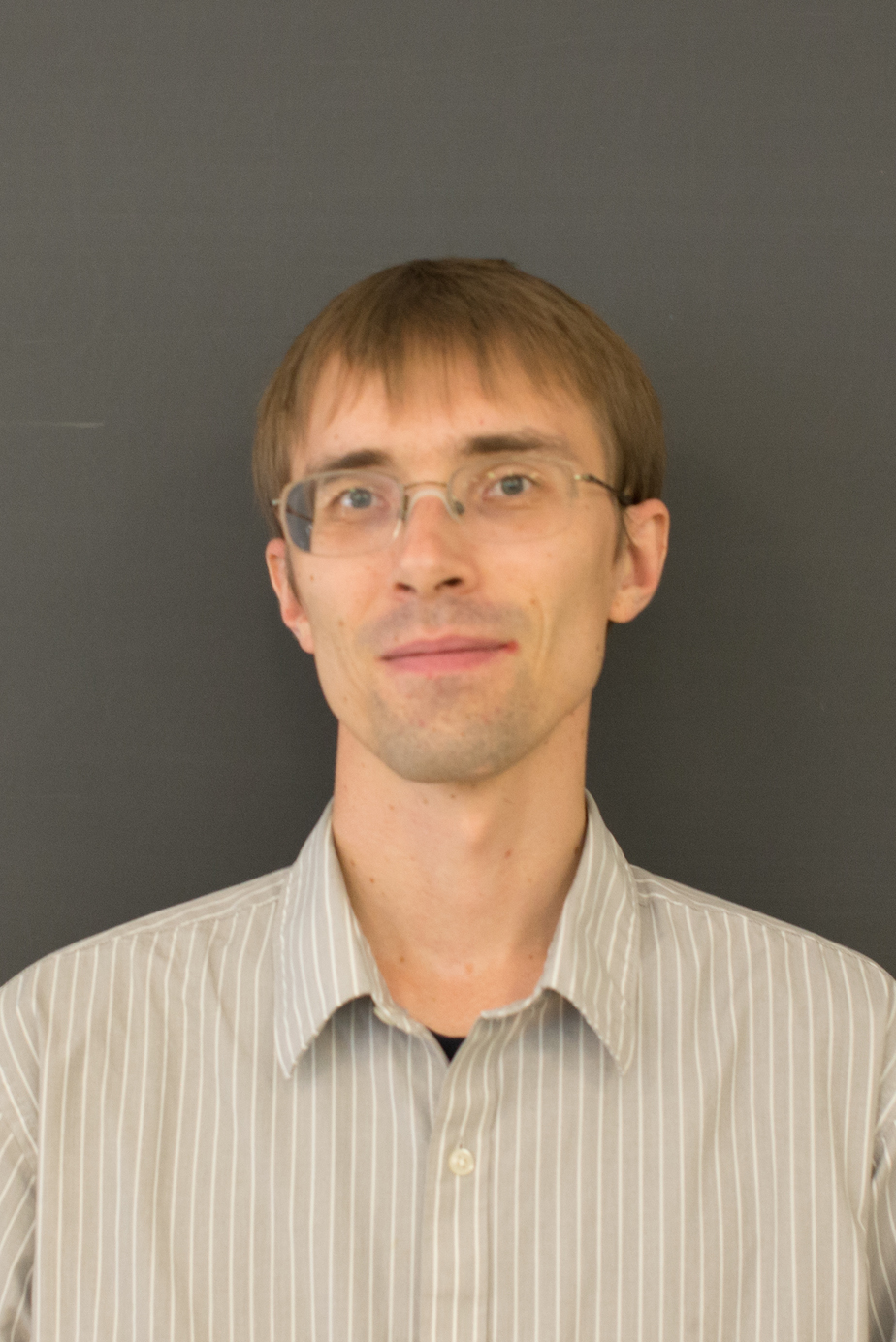
Florian Kalinke is a Researcher at the Information Management Systems group under the IPD Böhm team at the Karlsruhe Institute of Technology (KIT) . His work focuses on advanced machine learning methodologies for data streams, statistical testing, and kernel-based approaches. Research Interests: Machine Learning, Data Mining, Time Series Analysis, Statistical Learning, Artificial Intelligence, and Computer Science. Key Contributions: Development of novel techniques for partial-label learning with reject options, Nyström kernel approximations, online change detection using Maximum Mean Discrepancy, and multi-kernel outlier detection in streaming data. Collaborations: Works with researchers like Tobias Fuchs, Karsten Böhm, Zoltán Szabó, and others, leveraging theoretical and applied machine learning frameworks. Publications: Active in top venues like Transactions on Machine Learning Research , NeurIPS , AISTATS , and Discovery Science , with a focus on scalable and interpretable models.
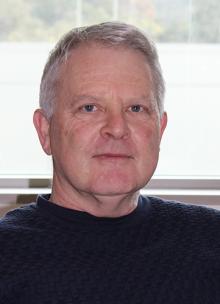
Søren Feodor Nielsen is a Professor in the Department of Finance at Copenhagen Business School, Denmark, holding an active ORCID profile (0000-0002-9399-4918). His academic work spans finance, statistics, and international business with significant contributions to econometric methodology. Research interests center on Finance and Financial Econometrics , particularly volatility modeling and corporate default analysis. His statistical expertise focuses on Missing Data Analysis and Survival Analysis , including coarsening at random mechanisms and imputation techniques. Additional work explores International Business dynamics such as economic sanctions and R&D globalization. This interdisciplinary approach bridges theoretical statistics with real-world financial applications. Publication trends reveal an evolution from foundational statistical methods (2000-2010) toward applied finance and international business (2015-2023). Recent work integrates econometric rigor with contemporary issues like economic sanctions and fintech, while maintaining core contributions to missing data theory. The research demonstrates consistent methodological innovation across finance, statistics, and business disciplines. Advising: Nielsen has supervised 5 students according to institutional records, though specific details of these supervisions are not publicly documented in available sources.
William Holmes Finch is the George and Frances Ball Distinguished Professor of Educational Psychology at Ball State University, with a career spanning over two decades. His work bridges statistics, psychometrics, and educational psychology, focusing on advanced methodologies like structural equation modeling, item response theory, and robust multivariate inference. Ph.D. in Educational Psychology and Research (2002, University of South Carolina) M.Ed. in Educational Research (1990, University of South Carolina) B.A. in History (1987, University of South Carolina) Finch's research explores nonlinear growth modeling, differential item functioning, and multilevel modeling applications across disciplines. He collaborates with experts in neuropsychology and exercise physiology, emphasizing methodological rigor in educational data analysis. His recent work includes grant-related investigations into immigrant student performance during the pandemic and nonlinear growth modeling for accurate identification rules. As a prolific author, Finch has published books on multilevel modeling and applied psychometrics, alongside numerous journal articles. His collaborations with Maria Hernandez Finch, including the Parent Play Lab grant project, highlight his interdisciplinary impact. He mentors students in research methodologies, fostering their involvement in funded projects and publications.
Veronika Rockova is the Bruce Lindsay Professor of Econometrics and Statistics in the Wallman Society of Fellows at the University of Chicago Booth School of Business. She joined Booth after postdoctoral training at the Wharton School and has been internationally recognized for her work at the intersection of statistics and machine learning. Her research focuses on developing decision-centric statistical tools for large datasets, specializing in Bayesian computation Variable selection High-dimensional decision theory Hierarchical modeling Uncertainty quantification for generative AI Recent publications highlight trends in Bayesian CART mixing rates Generative posterior sampling Deep learning integration with Bayesian frameworks Tree-based bandit approaches for ABC Quantile methods for credible sets Scientific recognition includes COPSS President's Award (2024) COPSS Emerging Leader Award (2023) NSF CAREER Award (2020) She currently serves on editorial boards for Annals of Statistics Journal of the American Statistical Association Journal of the Royal Statistical Society (Series B) and mentors PhD students in econometrics and statistics.
Tony Cai is the Daniel H. Silberberg Professor and Professor of Statistics and Data Science at The Wharton School, University of Pennsylvania. He also holds appointments as Professor in the Applied Mathematics & Computational Science Graduate Group and Associate Scholar in the Department of Biostatistics, Epidemiology, & Informatics at the Perelman School of Medicine. Education: PhD from Cornell University (1996) Research Interests: Statistical machine learning High-dimensional statistics Large-scale inference Functional data analysis Statistical decision theory Nonparametric function estimation Applications to genomics and financial econometrics His recent research focuses on federated learning, differential privacy, and high-dimensional covariance estimation. He has developed adaptive algorithms for optimal estimation under communication and privacy constraints. Scientific Awards: AAAS Fellow (2024) Institute of Mathematical Statistics (IMS) President (2023-2025) Noether Distinguished Scholar Award (2023) Frontiers of Science Award (2023) Laplace Lecturer (2021) ICSA Distinguished Achievement Award (2019) Peter Whittle Lecturer (2018) ICCM Best Paper Award (2018) COPSS Presidents' Award (2008) Fellow, IMS (2006) Tony Cai serves on the editorial boards of leading journals, including the Annals of Statistics, Journal of the Royal Statistical Society (Series B), and the American Statistical Association. He is also a member of professional societies such as IMS, IEEE, ASA, ICSA, and AAAS.
Mark G. Low is the Walter C. Bladstrom Professor of Statistics and Data Science at the Wharton School of the University of Pennsylvania, where he has been on faculty since 1991. He co-advises the Statistics and Data Science Undergraduate Concentration and Minor and has held visiting appointments at the University of California, Berkeley, and the University of Illinois. Education: PhD from Cornell University (1989), ScB from Brown University (1983) Research Interests: His work focuses on decision theory, nonparametric function estimation, and statistical inference, with recent publications addressing adaptive confidence bands, sparse normal mixtures, and risk trade-offs in nonparametric regression. He emphasizes methodologies that balance global and local statistical guarantees. Teaching: He teaches courses such as Stochastic Processes, Probability, and Advanced Statistical Inference, covering topics from Markov Chains to Bayesian credible sets. His pedagogical approach integrates mathematical rigor with interdisciplinary applications in economics and physics. Scientific Awards: Wharton Teaching Excellence Award (2020) Wharton Undergraduate Teaching Award (2013) Medallion Lecturer, Institute of Mathematical Statistics (2011, 2013) Fellow, Institute of Mathematical Statistics (2008) NSF Mathematical Sciences Post-Doctoral Fellow (1991)
Christoph Breunig is a Professor at the Department of Economics, University of Bonn, with research focused on Econometrics. He is affiliated with the Institute for Financial Economics & Statistics at the university. His primary research interests include Econometrics, Statistics, Nonparametric Methods, Instrumental Variables, Treatment Effects, and Missing Data Analysis. Professor Breunig's work demonstrates a strong focus on methodological developments in econometric theory with applications to economic questions. His publication record shows a consistent output of high-quality research in top econometrics journals including Econometrica, Journal of Econometrics, and Quantitative Economics. His research trajectory demonstrates progression from foundational work on nonparametric methods and instrumental variables toward more complex problems involving treatment effects, missing data, and high-dimensional settings. Professor Breunig has established himself as a contributor to the field of econometric theory with particular expertise in nonparametric and semiparametric methods. His work often addresses identification and estimation challenges in complex economic models.
Stanislav Volgushev is an Associate Professor in the Department of Statistical Sciences at the University of Toronto, with a cross-appointment in the Department of Mathematical & Computational Sciences at the University of Toronto Mississauga (UTM). His work bridges theoretical statistics with practical applications in big data analysis, with a focus on developing robust statistical methods for complex data structures. His educational background includes: Ph.D. in Mathematics from Ruhr University Bochum (2010), advised by Prof. Holger Dette Diploma in Mathematics from Ruhr University Bochum (2007) Volgushev's research spans multiple areas of statistical theory and methodology. His primary interests include quantile regression, empirical process theory, extreme value theory, time series analysis, copulas, and bootstrap methods. He is particularly focused on addressing statistical and computational challenges presented by big data, developing methods that maintain theoretical rigor while being practically applicable to modern data analysis problems. His work often involves the development of nonparametric and semiparametric methods that can handle complex dependence structures. Analysis of his recent publications reveals a strong focus on high-dimensional statistics, with particular attention to change-point detection, extremal graphical models, and quantile-based methods. His work bridges theoretical statistics with machine learning, showing increasing interest in optimization methods for statistical learning and causal inference. There's a clear trajectory toward addressing computational challenges in modern statistics, with many papers developing methods specifically designed for big data contexts. Volgushev serves as an associate editor for several prestigious journals: Electronic Journal of Statistics (since 2022) Canadian Journal of Statistics (since 2022) Scandinavian Journal of Statistics (since 2021) Statistical Inference for Stochastic Processes (since 2014) Previously served at Computational Statistics and Data Analysis (2018-2023) and Bernoulli (2016-2018) He has taught various courses including STA107 (Introduction to Probability and Modelling), STA2211 (Probability Theory II), and STA314 (Introduction to Statistical Learning) at both the St. George and Mississauga campuses. His teaching reflects his research expertise, covering both theoretical foundations and modern applications of statistical methods. Administratively, he serves as Associate Chair, Graduate Studies in his department, demonstrating leadership in academic governance.
Stefan Sperlich is a Full Professor and Director of the Research Institute for Statistics and Information Science at the University of Geneva's Geneva School of Economics and Management. He holds dual appointments in the Department of Econometrics and Statistics, with affiliations in both the Research Institute for Statistics and Information Science and the Institute of Economics and Econometrics. Dr. Sperlich earned his diploma in mathematics from the University of Göttingen and completed his PhD in economics at Humboldt University of Berlin. His academic career includes professorships at University Carlos III de Madrid (1998-2006) and the University of Göttingen (2006-2010), before joining the University of Geneva in 2010. Professor Sperlich's research spans nonparametric and semiparametric statistics , small area estimation , and impact evaluation methods . His work bridges theoretical econometrics with practical applications in development economics, policy evaluation, and poverty measurement. He has made significant contributions to specification testing, causal inference methodologies, and the development of robust statistical techniques for small area estimation. His research often addresses real-world problems through collaborations with international institutions and development programs. His recent publications reveal a strong focus on advancing methodological frameworks for small area statistics, causal inference, and nonparametric estimation. Key themes include developing robust inference techniques for linear mixed models, improving bandwidth selection methods, and creating model-free approaches to difference-in-differences estimation. His work increasingly integrates computational statistics with traditional econometric methods to address challenges in big data analysis and distributed data environments. Professor Sperlich has received numerous accolades including: Tjalling C. Koopmans Econometric Theory Prize (2000-2002) Augusto Gonzalez Linares award (2014) for attracting international talent Elected member of the International Statistical Institute (since 2025) Special rewards from the Economics Department at University Carlos III de Madrid (2004-2005) Grants from the Institute Flores de Lemus (2001-2003) As an advisor and researcher, Professor Sperlich has supervised numerous graduate students and led significant research initiatives. He co-founded the research center 'Poverty, Equity and Growth in Developing Countries' at the University of Göttingen and serves as a research fellow at the Center for Evaluation and Development in Mannheim, Germany. His consultancy work spans regional, national, and international institutions, with participation in development programs like EUROSOCIAL and UN assessment reports. He has secured multiple research grants supporting his work in statistical methodology and economic applications. Professor Sperlich leads research teams focused on nonparametric methods, small area statistics, and impact evaluation. His research group develops innovative statistical approaches for poverty mapping, causal inference, and composite indicator construction. The team maintains strong connections with statistical offices and international organizations, ensuring their methodological advances have practical applications in policy development and evaluation.
Amos Storkey is a Professor at the School of Informatics , University of Edinburgh , with a focus on machine learning, Bayesian methods, and their applications in neuroscience and astronomy. His research spans deep learning, generative models, and stochastic optimization under real-world constraints. Education: MA in Mathematics, Trinity College, Cambridge (1989) Part III (Theoretical Physics), Trinity College, Cambridge (1992) PhD in Neural Networks, Imperial College London (1995) Research Interests: Storkey’s work addresses core challenges in machine learning, including model understanding, efficiency, and transfer learning. Key topics include: Generative Models : Applications in medical imaging (brain/retinal) and music generation. Bayesian & Probabilistic Methods : In healthcare, astronomy, and diffusion processes. Optimization & Reinforcement Learning : Stochastic systems, meta-learning, and few-shot learning. Medical Applications : Structural connectivity analysis in ALS and aging studies. Article Trends: Recent publications emphasize interdisciplinary applications of machine learning, with 5/15 focused on neuroscience (fMRI, ALS, aging), 3/15 on optimization/sampling, and 2/15 on astronomical data analysis. Emerging themes include machine learning markets and generative models for hallucinations.
Surya T Tokdar is a Professor of Statistical Science at Duke University and a faculty member of the Duke Institute of Brain Sciences . He works at the intersection of Bayesian and frequentist statistical theories, focusing on smoothing, quantile regression, and neuroscience applications. Education : BStat and MStat from Indian Statistical Institute, Kolkata; PhD (2006) from Purdue University under JK Ghosh. Career : Morris H DeGroot Visiting Assistant Professor at Carnegie Mellon (2006-2009), Duke University since 2009 (promoted to Professor, 2022). Research Interests span Bayesian smoothing, quantile regression, density estimation, and theoretical neuroscience. His work on posterior consistency bridges Bayesian and frequentist principles through Dirichlet processes and Gaussian process priors. Recent Publications include advancements in heavy-tailed density estimation (2022), spatial quantile regression (2021), and neural multiplexing analysis (2021), reflecting his dual focus on statistical methodology and neuroscience applications. Scientific Awards include the Leonard J Savage Award (2006) and Young Statistician Award (2016). Advising has produced doctoral alumni at institutions like Google, Netflix, and Duke University. He collaborates with Jennifer Groh on NIH-funded neuroscience projects and develops statistical software ( sbde , neuromplex , qrjoint ).
Mary C. Meyer is a Professor at Colorado State University , Department of Statistics. Her research focuses on nonparametric estimation and shape-restricted inference, with applications in environmental science, public health, and anthropology. Education: Ph.D. in Statistics from University of Michigan (1996) Research Interests include: Nonparametric function estimation under shape constraints Constrained regression splines and generalized additive models Statistical software development for constraint-based modeling Applications to forest dynamics and public safety Publication Trends show a focus on: Statistical methodology for shape-restricted models Environmental applications (Landsat time series, forest monitoring) Public safety analysis (airbag effectiveness studies) Statistical software packages (cgam, cone projection algorithms) Email: meyer@stat.colostate.edu
Xiaohong Chen is the Malcolm K. Brachman Professor of Economics and Professor of Management at Yale University. She previously held positions at the University of Chicago, London School of Economics, and New York University. She earned her PhD in Economics from the University of California, San Diego. Education : PhD in Economics (UC San Diego) Her research focuses on econometrics, particularly penalized sieve estimation, inference on semiparametric and nonparametric models, and applications to nonlinear time series, empirical asset pricing, copula modeling, missing data, measurement error, nonparametric instrumental variables, conditional moment restrictions, and causal inference. She has developed scalable algorithms like stochastic generalized method of moments (SGMM) for real-time data analysis. Her publications span top journals in economics (Econometrica, Review of Economic Studies), statistics (Annals of Statistics, Journal of the American Statistical Association), and engineering (IEEE Transactions). Key themes in her work include robust econometric methods, nonparametric inference, and machine learning integration for high-dimensional confounders. Scientific Awards : 2017 China Economics Prize Econometric Theory Multa Scripsit Award (2012) Journal of Nonparametric Statistics Best Paper Award (2010) Richard Stone Prize (2008-2009) Arnold Zellner Award (2006-2007) Elected Member, American Academy of Arts and Sciences (2019) Fellow of the Econometric Society (2007) She serves as an editor of the Journal of Econometrics (since 2019) and has been an associate editor for multiple journals. Her PhD thesis addressed stochastic approximation in function spaces for near-epoch dependent processes.
Professor Andrew Wood is a faculty member at the Research School of Finance, Actuarial Studies and Statistics, Australian National University. His research spans non-Euclidean statistics, theoretical statistics, computational methods, and applied statistics in sciences and medicine. Research Interests : Non-Euclidean statistics, directional statistics, statistical shape analysis, asymptotic theory, computational statistics, stochastic differential equations, and applications in science/medicine. Grants : Funded by Engineering and Physical Sciences Research Council (UK), Biotechnology and Biological Sciences Research Council (UK), and Australian Research Council Discovery Projects. Editorial Roles : Former Joint Editor of Journal of the Royal Statistical Society, Series B and current Associate Editor of Biometrika . Research Trends : Recent publications focus on robust statistical methods for non-Euclidean data, computational approaches for complex distributions, principal component analysis for high-dimensional datasets, and geometric inference on manifolds. Applications include microbiome analysis, surface fractal dimension estimation, and spherical regression models. Supervision & Collaboration : Registered as a supervisor at ANU, with collaborations across disciplines including molecular biology, environmental science, and computational mathematics.
Jacobo de Uña Álvarez is a full-time University Professor at the University of Vigo, Spain. He is affiliated with the School of Industrial Engineering in the Department of Statistics and Operational Research. His research focuses on nonparametric statistics, survival analysis, and statistical methods for censored and truncated data. He leads the SiDOR (Statistical Inference, Decision and Operational Research) research group and is associated with the Biomedical Research Center and CITMAga interuniversity research center. Dr. de Uña Álvarez earned his doctorate from the University of Santiago de Compostela in 1998 with a thesis titled "Statistical Inference under Proportional Censorship Models," supervised by Dr. Wenceslao González Manteiga. His academic journey has established him as a leading researcher in statistical methodology for complex data structures. His research interests center on nonparametric and semiparametric statistical methods, particularly for survival analysis with censored and truncated data. He has made significant contributions to the development of statistical techniques for doubly truncated data, length-biased sampling, and illness-death models. His work bridges theoretical statistics with practical applications in biomedicine and engineering. Analysis of his recent publications reveals a strong focus on methodological advances in handling complex data structures, particularly doubly truncated data. His research shows consistent progression from foundational work on nonparametric estimation to sophisticated methods for high-dimensional data and complex sampling schemes. The interdisciplinary nature of his work is evident in applications to biomedical research and genomics. Dr. de Uña Álvarez has mentored numerous researchers through collaborations, with extensive co-authorship networks. His work has been supported by various research grants focused on statistical methodology development, though specific grant details are not provided in the available information. He leads the SiDOR research group at the University of Vigo, which focuses on Statistical Inference, Decision Theory, and Operational Research. The group maintains strong collaborations with international researchers and institutions, contributing significantly to the advancement of nonparametric statistical methods.