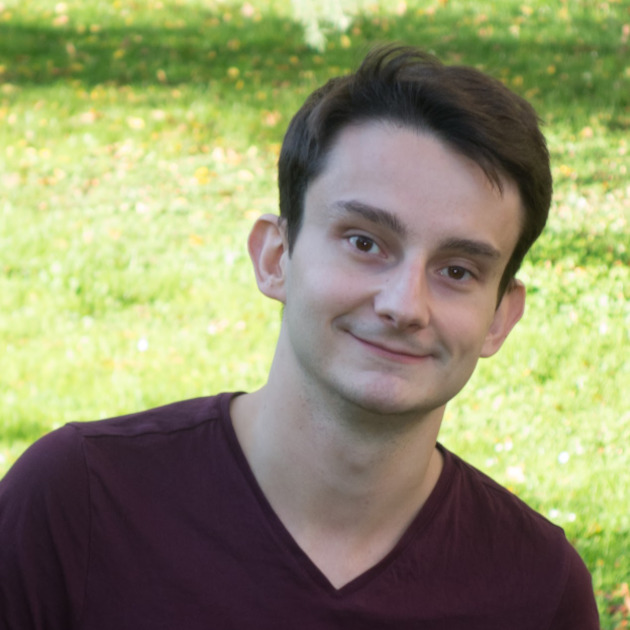
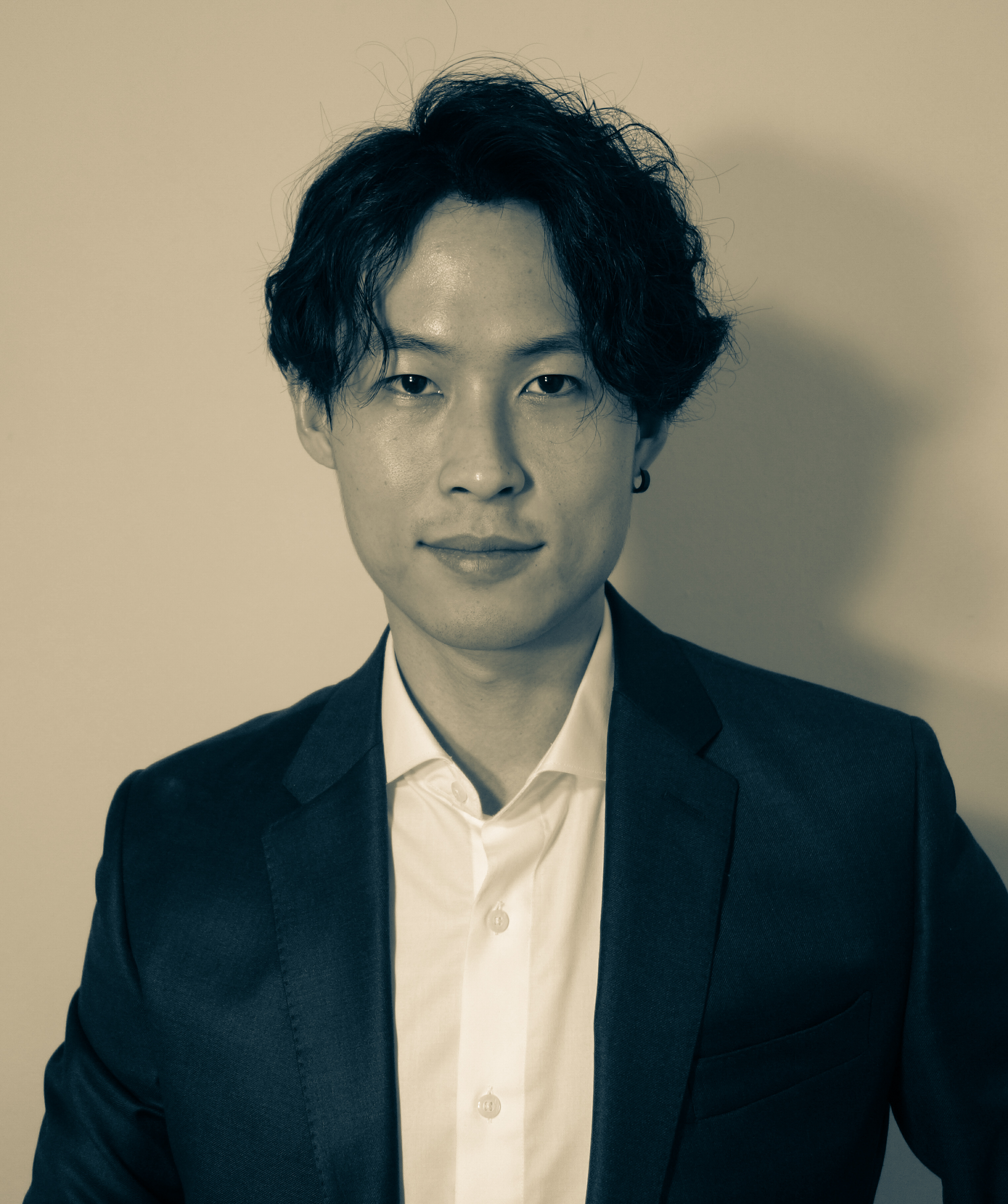
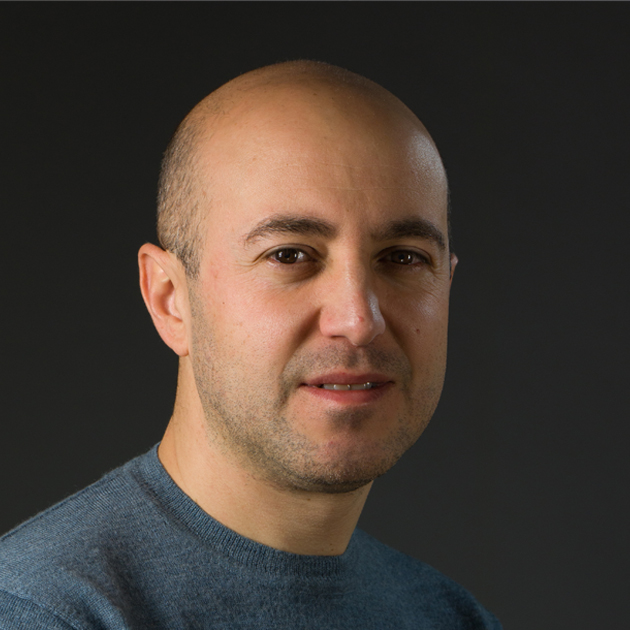
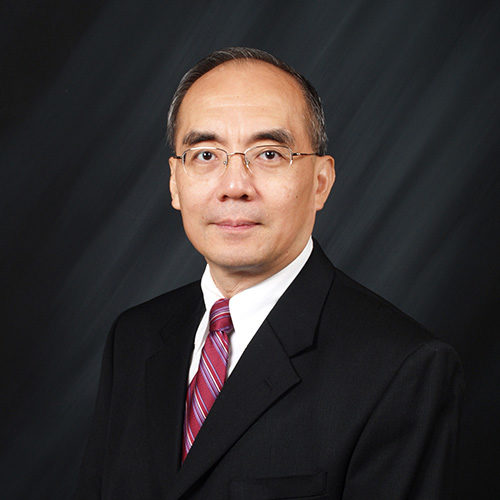
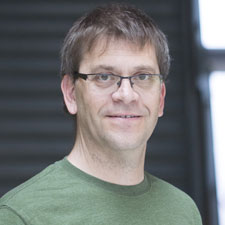
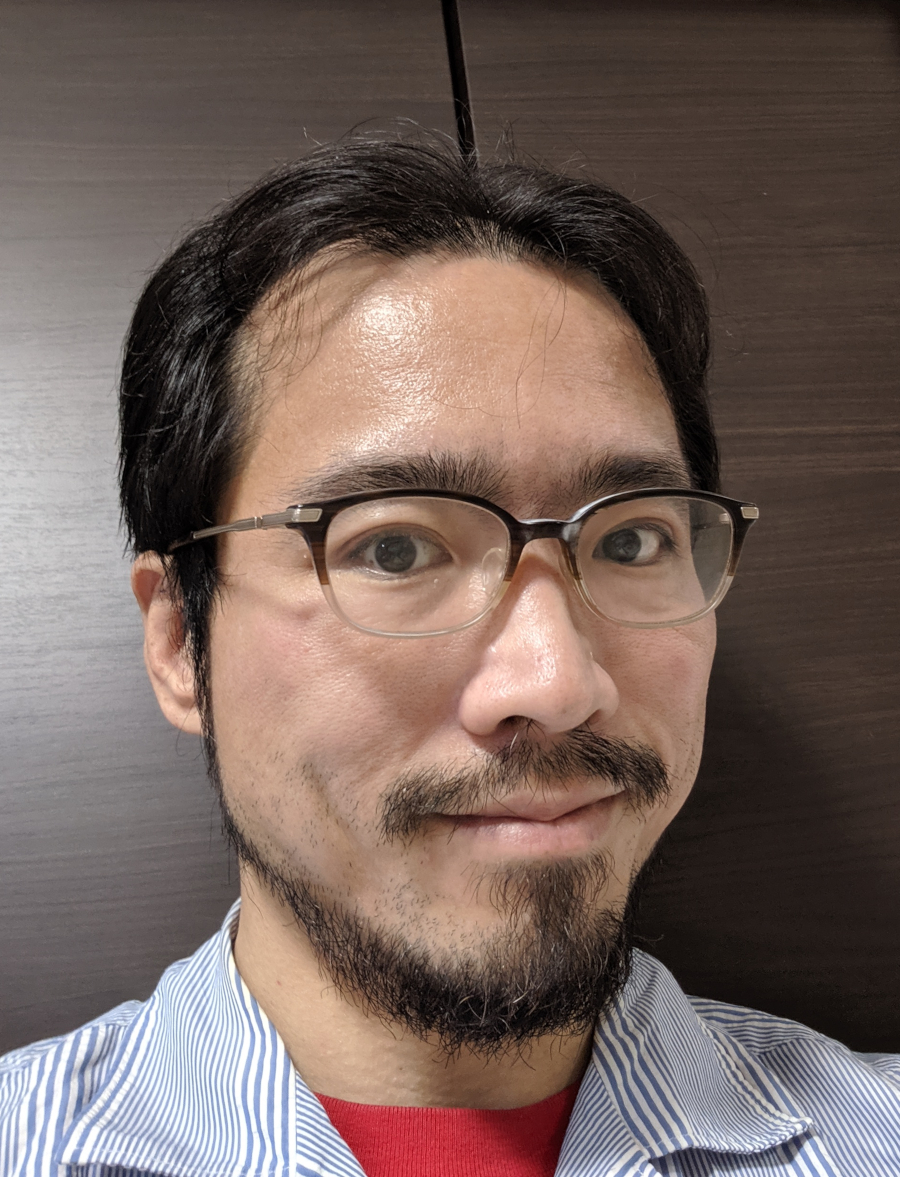
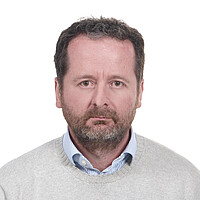
Christophe Kervazo is an Assistant Professor (Maître de Conférences) at Télécom Paris, France, affiliated with the IMAGES group under the Image, Data, Signal (IDS) department . His research focuses on sparse blind source separation, nonnegative matrix factorization, hyperspectral imaging, and optimization techniques for remote sensing and biomedical applications. Education: Engineering degree from Supélec (2015), Master of Science from Georgia Institute of Technology (2016), PhD in Signal and Image Processing from Université Paris Saclay (2019). His work spans deep learning for inverse problems (including deep unrolling techniques), remote sensing (hyperspectral imaging and SAR), and uncertainty quantification . Recent publications address synthetic data training for medical imaging, distributed sparse BSS, and nonlinear component separation. Collaborators include institutions like CEA Saclay, Université de Mons, and ONERA. Current students include PhD candidates working on topics such as digital breast tomosynthesis, hyperspectral unmixing, and SAR image reconstruction. Former students and interns have contributed to projects involving plug-and-play methods, unrolling algorithms, and implicit regularization. He is involved in teaching and research projects, including collaborations with Airbus and ONERA on hyperspectral imaging and spectral band optimization. His lab, LTCI (Information Processing and Communication Laboratory), supports interdisciplinary work in signal and image processing.
Hanbaek Lyu is an Assistant Professor in the Department of Mathematics at the University of Wisconsin-Madison, with an affiliation in the Department of Computer Science and membership in the Institute for Foundations of Data Science. His research spans discrete probability, matrix factorization, and machine learning, focusing on large discrete systems including interacting particle systems, networks, and structured random matrices. His educational background includes: Ph.D. in Mathematics, The Ohio State University (2018); Thesis: "Combinatorial and probabilistic aspects of coupled oscillators" (Advisor: David Sivakoff) B.S. in Mathematics, Seoul National University Lyu's research bridges theoretical probability and practical machine learning, with emphasis on optimization for dependent data and complex systems. His work develops foundational algorithms for matrix/tensor factorization while exploring synchronization phenomena in oscillator networks and phase transitions in particle systems. Recent publications highlight interpretable models for biological data and rigorous convergence guarantees for nonconvex optimization. Analysis of his 15 most recent publications reveals three dominant threads: (1) optimization theory for constrained nonconvex problems applied to dictionary learning, (2) interacting particle systems and random matrix theory with combinatorial aspects, and (3) interpretable latent models for network dynamics and genomics. His work consistently combines probabilistic methods with computational applications. Lyu leads two active NSF grants: DMS-2206296 (2022-2025): "Online Dictionary Learning for Dependent and Multimodal Data Samples: Convergence, Complexity, and Applications" DMS-2010035 (2020-2023): "Combinatorial and Probabilistic Approaches to Oscillator and Clock Synchronization" He currently mentors five doctoral students across Mathematics and Computer Science departments, organizes UW-Madison's probability seminar, and collaborates with over 30 researchers including Janko Gravner, Lionel Levine, and Wenpin Tang on interdisciplinary projects spanning genomics, network science, and statistical physics.
Slim Essid is a Full Professor at Télécom Paris and coordinator of the Audio Data Analysis and Signal Processing (ADASP) group. He holds a PhD and HDR from Université Pierre et Marie Curie (UPMC). His research focuses on machine learning, artificial intelligence, and signal processing applied to temporal data analysis, including multiview learning, representation learning, and structured prediction. Applications span music content analysis (MIR), multimodal perception (e.g., EEG data analysis), and human behavior analysis. He has advised 15 PhD students and collaborated on over 14 post-doctoral projects. Education: PhD in Signal Processing, Université Pierre et Marie Curie (2005) Habilitation (HDR), Université Pierre et Marie Curie (2015) M.Sc. in Digital Communication Systems, Télécom ParisTech (2002) Engineer Degree, École Nationale d’Ingénieurs de Tunis (2001) Research interests emphasize multimodal learning, self-supervised representation learning, and audio-visual fusion. Key projects include sound-prompted segmentation, zero-shot audio captioning, and EEG-based auditory attention decoding. Over 150 peer-reviewed publications exist across conferences like NeurIPS, ICML, and journals like IEEE Transactions. Active in reviewing for top-tier venues and advising French/EU research projects. Labs/Teams: Member of the Signal, Statistics and Learning (S2A) research team and the Information Processing and Communication Laboratory (LTCI).
Gianna Del Corso is an Associate Professor at the Department of Computer Science, University of Pisa. Her research interests span Quantum Computing, Numerical Linear Algebra, and Spectral Analysis. She has advised PhD students in quantum computing topics such as quantum algorithms and machine learning. Her teaching includes courses on Numerical Calculus, Parallel Scientific Computing, and Introduction to Quantum Computing, delivered across multiple academic years at the University of Pisa. She has also contributed to advanced courses in the PhD program in Computer Science. Her research focuses on quantum algorithms for machine learning, quantum walks, eigenvalue computation of structured matrices, and spectral techniques for web analysis. Recent work includes applications of quantum k-means clustering and variance estimation subroutines. Her publications span quantum computing, numerical methods, and scientific citation models. Her articles highlight contributions to PageRank computation, matrix factorization for recommendation systems, and analysis of citation-based research evaluation models. She has actively engaged in international conferences, presenting on topics such as orthogonal iterations for nonlinear eigenvalue problems and quantum hitting time algorithms. Labs/Teams: Research conducted within the Department of Computer Science at the University of Pisa, focusing on quantum computing and numerical methods.
Moody T. Chu is a Professor in the Department of Mathematics at North Carolina State University since 1982, holding a PhD from Michigan State University. His research focuses on numerical linear algebra, dynamical systems, inverse problems, and quantum computing. He has received prestigious teaching awards including the Alumni Distinguished Undergraduate Professorship (2006) and multiple Board of Governors Awards (2010, 2013, 2014). His work bridges computational mathematics with applications in physics, engineering, and data science. Research interests include numerical methods for differential equations, tensor approximation, and quantum simulation. His articles explore topics like Cartan decomposition for quantum Hamiltonians, Lax dynamics, and low-rank tensor approximations. Over 200 publications span numerical analysis, inverse eigenvalue problems, and optimization techniques. Chu’s contributions also address algorithm design for matrix completion and structured low-rank approximations. He has advised numerous graduate students (details not listed here) and led projects on adaptive optics and stochastic processes. His work on nonnegative matrix factorization and Markov chain dynamics has influenced data mining and machine learning applications. Chu’s lab focuses on advancing computational frameworks for complex systems, emphasizing interdisciplinary collaboration.
Selcuk Koyuncu is an Associate Professor in the Department of Mathematics at the University of North Georgia. His work focuses on advanced matrix theory, topology, operator theory, and combinatorial mathematics. He holds a prominent role in the Mathematics academic programs, contributing to both research and education. His research interests include structural analysis of matrices (e.g., Toeplitz, centrosymmetric, doubly stochastic), topological properties of mathematical objects, and applications in fields like evolutionary biology and signal processing. He has published extensively in journals covering matrix theory, combinatorics, and operator theory. Recent work explores topics such as extreme points of matrix polytopes, sub-defect variations in substochastic matrices, and Lie group structures of Toeplitz operators. His contributions have addressed applications ranging from numerical methods to algebraic topology. Dr. Koyuncu has no listed scientific awards or grants in the provided information. He can be contacted at selcuk.koyuncu@ung.edu and is located in the Watkins Academic Building, Gainesville campus.
Michael Gruninger is a Professor in the Department of Mechanical and Industrial Engineering at the University of Toronto, serving as Associate Chair of Undergraduate Studies. He holds a PhD and MSc in Computer Science from the University of Toronto and a BSc in Computer Science from the University of Alberta. His research focuses on semantic integration, process modeling, and mathematical logic applications in manufacturing and enterprise engineering. He contributed to the ISO 18629 standard for Process Specification Language. Research interests include ontologies, semantic web technologies, knowledge representation, and formal methods. He leads the Semantic Technologies Laboratory, advancing theories in mereotopology, spatiotemporal ontologies, and ontology engineering. Recent work emphasizes automated spatial reasoning in robotics and standards-based ontology development. Publications span ontology validation, mereological foundations, and applied semantic technologies. His work bridges theoretical computer science with practical enterprise systems and smart city applications. No awards are explicitly listed, though his contributions to ISO standards reflect industry impact. Advising and grants: No specific students/grants detailed here. His lab focuses on semantic technologies with applications in manufacturing and urban systems. Collaborations include NIST and the Industrial Ontologies Foundry.
Jiayuan Wang is a Teaching Assistant Professor at Lehigh University's Department of Mathematics. He holds a Ph.D. (2022), M.S. (2017), and B.S. (2015) in Mathematics from George Washington University. His research focuses on algebraic combinatorics, particularly LLT polynomials, nonnegativity properties of matrix products, and factorization problems in complex reflection groups. He has published in journals like Combinatorial Theory , Journal of Algebra , and Discrete Mathematics . Teaching responsibilities include courses such as Probability and Statistics, Calculus, and Linear Methods. He has taught multiple sections of these courses since 2022. His research explores intersections between combinatorics and algebraic structures, with recent work on Hurwitz action in complex reflection groups and fully commutative elements. Wang utilizes digital tools like Scribble for teaching and maintains an active academic website detailing his publications and presentations. His work bridges abstract algebraic concepts with combinatorial frameworks, contributing to areas like symmetric functions and Coxeter group theory.
Hiroyuki Kasai is a Full Professor at the School of Fundamental Science and Engineering, Waseda University, where he leads research in signal processing, machine learning, and optimization. He holds a B.Eng. (1996), M.Eng. (1998), and Dr.Eng. (2000) in Electronics, Information, and Communication Engineering from Waseda University. His career includes positions as Associate Professor and Professor at the University of Electro-Communications (2007-2019), Senior Policy Researcher at Japan's Cabinet Office (2011-2013), and visiting roles at Technical University of Munich and British Telecom. His research spans: Fundamental methodologies : Riemannian optimization, stochastic gradient algorithms, tensor decomposition Applied domains : Network analysis, multimedia systems, environmental sound processing, video coding Emerging areas : Low-rank modeling, manifold learning, and large-scale anomaly detection His publications focus on efficient algorithms for high-dimensional data, with recent work emphasizing Riemannian manifold optimization and real-time tensor analysis. This includes development of open-source tools like SGDLibrary (MATLAB) and McTorch (PyTorch) for optimization tasks. Awards include: IEEE ICCE Best Paper Award (2011) Yamashita Memorial Award (2003) Ericsson Young Scientist Award (2001) 電気通信普及財団賞 (2015) IEICE Service Recognition Award (2010) He maintains memberships in IEEE, IEICE, IPSJ, and JSIAM, and has contributed to over 100 peer-reviewed publications with significant citation impact (h-index 27 via Google Scholar).
Ippei Obayashi is a Professor at Okayama University's Center for artificial intelligence and mathematical data science, with a visiting professorship at Tohoku University's Advanced Institute for Materials Research (AIMR). His academic career spans prestigious institutions including RIKEN, Tohoku University, and Kyoto University, where he earned his Doctor of Science degree. Okayama University, Center for AI and Mathematical Data Science, Professor (2021-present) RIKEN, Center for Advanced Intelligence Project, Researcher (2018-2021) Tohoku University, Institute for Advanced Materials Science, Associate Professor (2018) Tohoku University, Advanced Institute for Materials Science, Assistant Professor (2015-2018) Kyoto University, Research Fellow (2010-2015) Educational Background: Kyoto University, Graduate School of Science, Department of Mathematics and Mathematical Analysis (2006-2010, Doctoral) Kyoto University, Graduate School of Science, Department of Mathematics and Mathematical Analysis (2004-2006, Master's) Kyoto University, Faculty of Science (2000-2004, Bachelor's) Professor Obayashi's research focuses on topological data analysis (TDA) , particularly persistent homology and its applications, alongside dynamical systems theory. His work bridges pure mathematics with practical applications in materials science, where he has developed innovative methods to analyze complex material structures. He has made significant contributions to understanding magnetic materials, amorphous structures, and crystal formation through topological approaches, often integrating machine learning techniques with traditional mathematical analysis. His research has practical implications for energy materials, battery technology, and materials characterization. His publication record demonstrates a strong trend toward applying topological methods to solve real-world materials science problems, with increasing integration of machine learning techniques. Recent work shows sophisticated applications of persistent homology to analyze neutron scattering data, magnetic properties, and structural characteristics of materials, reflecting his ability to translate abstract mathematical concepts into practical analytical tools. Scientific Awards: JCS-JAPAN Excellent Paper Award, Ceramic Society of Japan (2020) 11th Sakuramai Research Encouragement Award, RIKEN (2020) Japan Society for Industrial and Applied Mathematics Best Author and Best Paper Awards (2017) 6th Fujiwara Hiroshi Mathematical Sciences Encouragement Award (2017) AIMR International Symposium Best Poster Award (2017) Professor Obayashi actively mentors graduate students through Okayama University's Graduate Student Program and leads research initiatives including the Japan Society for Industrial and Applied Mathematics Topological Data Analysis Research Group, which he chairs. His research is supported by multiple competitive grants, including Japan Society for the Promotion of Science (JSPS) funding for projects on mathematical data science and topological structure analysis. He collaborates extensively with researchers across disciplines, particularly in materials science and engineering. He is affiliated with the Center for artificial intelligence and mathematical data science (Angels) and the Cyber-Physical Engineering Informatics Research Division (Cypher) at Okayama University, where he leads efforts to develop and apply topological data analysis methods to complex scientific problems. His laboratory focuses on creating practical software tools like HomCloud for persistent homology analysis, bridging the gap between theoretical mathematics and applied scientific research.
Kurt Anstreicher is a Professor of Business Analytics at the University of Iowa's Tippie College of Business, with complementary appointments in the Department of Computer Science and Department of Industrial Engineering. He holds the Gary C. Fethke Chair in Leadership. His research focuses on mathematical programming, optimization, interior-point algorithms, and nonlinear programming. Anstreicher earned his Ph.D. from Stanford University in 1983 and a B.A. from Dartmouth College in 1978. Research interests include optimization theory and methods, particularly in nonconvex programming, convex relaxations, and algorithm design. His work addresses challenges in quadratic programming, semidefinite optimization, and global optimization techniques. Recent contributions explore applications in trust-region subproblems, copositive cones, and maximum-entropy sampling. Publications span topics like convex hull representations, Kronecker product constraints, and spherical codes. His work bridges theoretical advancements and practical computational methods, with implications for operations research, data analysis, and engineering systems.
Dr Thiru Balasubramaniam is a Research Fellow at Queensland University of Technology (QUT), working within the Faculty of Science, School of Computer Science. His expertise lies at the intersection of data science, machine learning, and real-world applications, with a specific focus on tensor factorization methods for managing multifaceted data from IoT and Web 3.0 applications. His educational background includes a PhD from Queensland University of Technology and a Bachelor of Engineering from Anna University. Prior to his doctoral studies, he worked as a Research Assistant at the Singapore University of Technology and Design - Massachusetts Institute of Technology (SUTD-MIT) International Design Centre, where he analyzed mobility data to personalize city environments for elderly citizens in Singapore. Dr Balasubramaniam's research interests span multiple areas of data science: Tensor and Matrix Factorization methods Pattern Mining and Text Mining applications Recommender Systems development IoT data processing Web 3.0 applications Real-time analytics for multifaceted data His publication record demonstrates consistent contributions to high-impact venues including IEEE TKDE, ACM TKDD, WWW, WISE, AusDM, and PRICAI. The trend in his recent work shows increasing application of tensor factorization techniques to diverse real-world problems including environmental monitoring, pandemic modeling, social media analysis, and smart grid technology. His research often involves interdisciplinary collaborations, particularly with Professor Richi Nayak at QUT. Scientific recognition includes: QUT-CDS first byte research funding worth 30,000 AUD Dr Balasubramaniam has been actively involved in teaching data analytics subjects at QUT since 2017, including Data Exploration and Mining, Data and Web Analytics, Data Mining Technology and Applications, and Web Computing. His teaching spans both undergraduate and postgraduate levels. His research has been supported through various collaborative grants and institutional funding mechanisms at QUT.
Mareike Dressler is a Senior Lecturer (A/Professor, tenured) and ARC Discovery Early Career Research Fellow at the School of Mathematics and Statistics, University of New South Wales (UNSW Sydney). She joined UNSW in February 2022 as a Lecturer (Assistant Professor, tenure-track) and was promoted to Senior Lecturer with tenure in July 2024. Her educational background includes: PhD in Mathematics from Goethe-Universität Frankfurt/Main (2018), supervised by Thorsten Theobald M.Sc. in Mathematics from Goethe-Universität Frankfurt/Main (2013) B.Sc. in Mathematics from Goethe-Universität Frankfurt/Main (2010) Mareike's research focuses on real and computational algebraic geometry and polynomial and convex optimization. She also works on problems intersecting with convex geometry, matrix and tensor computation, applied algebraic geometry, algebraic and geometric combinatorics, and real analysis. Her work particularly involves nonnegativity of polynomials, optimization methods, and ranks of matrices and tensors, with a special interest in sums of nonnegative circuits (SONCs) for sparse polynomials. Her research has strong applications in data science and machine learning. Mareike has received several prestigious awards including the ARC Discovery Project 2025 grant for "Quantifying Uncertainty of Risk-Aware Optimization for Safe Decision-Making," the J G Russell Award from the Australian Academy of Science, and the Early Career Impact Award from UNSW Science. She actively supervises research students, including PhD student Hongzhi Liao, Master's student Qi Wang, and recently supervised Moritz Schick to completion of his PhD in 2025. Mareike has secured significant research funding, including an ARC Discovery Early Career Researcher Award (DECRA) for 2024-2026. Mareike is an active member of the academic community, regularly organizing workshops and conferences such as "Optimization Days" at UNSW and minisymposia at major conferences like SIAM Conference on Applied Algebraic Geometry.
Athanasios Liavas is a Professor at the Technical University of Crete (TUC), School of Electrical and Computer Engineering (ECE), where he has served as Department Chair (2009-2011) and Vice Chair (2011-2013). He holds a Diploma (1989) and PhD (1993) in Computer Engineering and Informatics from the University of Patras. His career includes postdoctoral research at the Institut National des Télécommunications (1996-1998) as a Marie Curie Fellow, and academic roles at the University of Ioannina and the University of the Aegean before joining TUC in 2004 as Associate Professor. He has been a Professor since 2009. His research focuses on Signal Processing for Communications , Information Theory , and Telecommunications , with recent emphasis on tensor decomposition techniques for biomedical signal analysis and machine learning applications. He leads the Telecommunications Laboratory and teaches courses such as Digital Communication Systems II and Wireless Communication Systems. He served as an Associate Editor for the IEEE Transactions on Signal Processing (2005-2009) and was a member of the IEEE SP COM Technical Committee (2006-2011). His recent work includes advancements in nonnegative tensor completion, parallel algorithms for large-scale tensor factorization, and generalized canonical correlation analysis for multi-subject fMRI data. These contributions address challenges in high-dimensional data reconstruction and brain imaging signal processing, leveraging stochastic optimization and distributed computing frameworks. Liavas has authored over 80 peer-reviewed articles, with key contributions in IEEE journals and conferences. His research spans theoretical signal processing, algorithm design, and practical implementations for telecommunications and biomedical engineering.
Michael Berry is a Professor in the Min H. Kao Department of Electrical Engineering and Computer Science at the University of Tennessee, Knoxville, part of the Tickle College of Engineering. He holds a PhD in Computer Science from the University of Illinois at Urbana-Champaign, an MS in Applied Mathematics from North Carolina State University, and a BS in Mathematics from the University of Georgia. His research focuses on data science, machine learning, text mining, nonnegative matrix factorization, parallel computing, and their applications in biomedical and environmental domains. Notable contributions include work on tensor decomposition for big data analysis, algorithms for text mining, and computational tools like PolyLens and CodeAssessor. Berry's publications emphasize interdisciplinary applications, such as using nonnegative tensor factorization for biomedical literature analysis and developing GPU-accelerated methods for traffic flow analysis. His work spans conferences like the International Conference on Soft Computing in Data Science (SCDS) and journals in computational science. He has contributed to software tools like FutureLens for text visualization and SHEPPACK for interpolation algorithms. His research also addresses environmental challenges via parallel ecosystem modeling and spatial control problems. No scientific awards or grants are explicitly mentioned in the provided text.