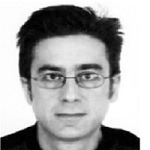
Alessandro Tredicucci , Full Professor of Condensed Matter Physics at the University of Pisa's Department of Physics, serves as Vice-Rector for Research Organization and Evaluation. His research focuses on nanostructured materials , quantum cascade lasers , and terahertz technology . First THz quantum cascade laser developer (2002) Director of Interdepartmental Center for Materials Science and Engineering (2019-present) Member of European Laboratory for Non-Linear Spectroscopy (LENS) board (2019-present) Scientific achievements include: Nick Holonyak Jr. Award (Optical Society of America) Giuseppe Occhialini Award (Institute of Physics & Italian Physical Society) Over 280 ISI publications and 16 patents ERC Advanced Grant SouLMan principal investigator
Mark Stefan Oude Alink is an Associate Professor at the University of Twente , specializing in Integrated Circuit Design . His work bridges Artificial Intelligence Hardware , Radio Frequency Engineering , and Optical Characterization of semiconductor devices. Research Interests : Focus on silicon-on-insulator (FDSOI) technologies, intermodulation effects in RF systems, and energy-efficient circuit architectures. Key Contributions : Pioneered low-power direct-conversion receivers, advanced PIN-diode responsivity, and linearizer systems for power amplifiers. Scientific Awards include the Else Kooi Prize (2013) , Master Thesis Prize (2009) , and CIVI Propedeuseprijs (2002) , reflecting early and mid-career excellence. Publications highlight trends in 850 nm optical characterization , low-power RF design , and SOI device optimization , with recent work extending to 2025. Collaborations span intermodulation analysis , AI hardware acceleration , and spectrum sensing in cognitive radio systems.
Dr. Helena Franke serves as a Lecturer for Special Tasks in Physics Didactics at the University of Leipzig's Center for Teacher Education and School Research (ZLS) since 2018 and within the Physics Didactics working group since 2021. She leads subject-specific didactic training for lateral entry students in the "Scientific Teacher Training" (wAL) project and trains physics teacher candidates, having coordinated wAL Physics from 2019-2022. Her educational background includes a PhD in Natural Sciences (2012) and Diploma in Physics from the University of Leipzig, with additional studies at Université Paris-Sud XI and University of Freiburg. She completed part-time practical teacher training for secondary school physics in 2017-2018. Dr. Franke specializes in physics education research, focusing on teacher training methodologies, secondary school physics instruction, and the development of practical school experiments. Her work bridges theoretical physics concepts with classroom application, emphasizing active learning and conceptual understanding for diverse student populations through structured courses covering all educational levels from Sekundarstufe 1 to college-level physics. While her early career included semiconductor physics research resulting in publications on ZnO nanowires and exciton-polariton systems (2015-2017), her current scholarship is exclusively dedicated to physics didactics. She actively mentors teacher training students through seminars on physics teaching fundamentals, subject-specific didactics, and applied physics for secondary schools.
Zhongwei Chen is an Adjunct Professor in the Department of Chemical Engineering at the University of Waterloo. His research focuses on advanced energy storage systems, including proton exchange membrane fuel cells, next-generation rechargeable batteries (lithium-ion, lithium-sulfur, zinc-air), and nanomaterials synthesis for electrochemical applications. He explores innovative solutions for improving battery performance, safety, and sustainability through material design and interfacial engineering. Chen's work spans interdisciplinary areas such as membrane technology, solid-state electrolytes, and electrode materials optimization. He has contributed to breakthroughs in polysulfide regulation for lithium-sulfur batteries, scalable silicon anode prelithiation, and biomass-based electrolytes for zinc-iodine batteries. His research often integrates computational modeling (e.g., P2D models) with experimental validation to address practical challenges in energy storage. Publications highlight his expertise in electrocatalysis for water splitting, high-energy-density solid-state batteries, and flame-retardant materials for safer battery systems. His team develops novel characterization techniques (e.g., in situ X-ray diffraction) to study battery degradation mechanisms and improve cycle life. Chen collaborates extensively with industry partners to translate lab-scale innovations into real-world energy solutions.
Professor Arthur James Lowery (BSc, PhD) is a full-time faculty member at Monash University's Faculty of Engineering , specifically within the Department of Electrical and Computer Systems Engineering (ECSE). He holds the ARC Laureate Fellow distinction and has served as Head of Department (2007-2012). His research spans electro-photonics , optical OFDM , and brain-machine interfaces , with extensive work on photonic integrated circuits and fiber nonlinearity compensation . He leads major projects like COMBS: Centre for Optical Microcombs (2023-2029) and previously directed the Monash Vision Group for bionic eye development. His educational background includes a BSc (Hons) from Durham University and a PhD from Nottingham University . Current research focuses on high-capacity optical communication networks , energy-efficient photonic devices , and direct cortical vision restoration systems . Notable grants include a $72M ARC Centres of Excellence award (2022) and a $924k MRFF Frontiers grant (2019) targeting brain-machine interface commercialization. His Google Scholar publications (over 15 recent works) reveal a trajectory toward soliton microcomb applications , photonic neuromorphic computing , and low-latency optical processing . Awards include Fellowships from IEEE and ATSE , the Clunies Ross Award (2007), and the Peter Doherty Prize (2006). He actively seeks postdocs and graduate students for research in photonic chip design , optical signal processing , and brain-machine interfaces , with scholarships available. Scientific Honors : IEEE Fellow (2009), ATSE Fellow (2007), Clunies Ross Award (2007), Peter Doherty Prize (2006) Key Grants : $72M ARC (2022), $924k MRFF (2019), $440k ARC Discovery (2019), $500k MTPconnect (2018) Leadership Roles : Director of Monash Vision Group (2010-2017), CTO of Ofidium Pty Ltd His work bridges optical communications and biomedical engineering , with patents in optical OFDM and nonlinearity compensation. The Monash Vision Group's Gennaris cortical implant project exemplifies his translational research, aiming to restore vision through wireless cortical stimulation systems.
Professor Maryna Kovalenko leads the Functional Inorganic Materials Group at ETH Zurich, focusing on the chemistry, physics, and applications of inorganic nanostructures. Her research bridges solid-state and molecular chemistries to develop novel materials for optoelectronics and energy storage, with significant contributions to perovskite quantum dots and solid-state battery technologies. Her research interests center on synthesis of inorganic nanocrystals and their integration into multifunctional solid-state structures . Key areas include: Design of perovskite quantum dots for photodetectors, scintillators, and quantum light sources Development of solid-state electrolytes and cathode materials for all-solid-state batteries Nanocrystal surface chemistry engineering for enhanced stability and performance Exploiting collective properties of nanocrystal assemblies for energy conversion Recent publications reveal a dominant trend toward room-temperature quantum phenomena in perovskite systems and advanced battery materials . The group pioneers techniques for blinking suppression in quantum dots, cavity-polariton condensation, and halide-spinel cathodes, demonstrating strong interdisciplinary work spanning nanophotonics, quantum optics, and electrochemistry. Professor Kovalenko mentors over 30 PhD students across ETH Zurich and Empa laboratories, with recent graduates receiving ETH medals and best presentation awards at international conferences (SCS MatChem, MATSUS2024, GCIM2024). The group maintains state-of-the-art synthesis and characterization facilities in HCI building (ETH) and Empa campuses, enabling cutting-edge work from nanocrystal fabrication to device integration.
Prof. Dr. Maksym Kovalenko leads the Functional Inorganic Materials Group at ETH Zurich's Department of Inorganic Functional Materials (D-CHAB). His research focuses on the synthesis and applications of novel inorganic nanocrystals for optoelectronics and energy storage systems, particularly lead halide perovskites and their quantum dot architectures. With over 15 recent publications in 2024-2025, his work spans quantum optics, solid-state lighting, battery materials, and radiation detection technologies. The group's publications highlight advancements in quantum dot engineering, perovskite stability, and solid-state battery electrolytes. Their research intersects solid-state chemistry with molecular approaches, achieving breakthroughs in single-photon emission, ultrafast scintillation, and coherent spin dynamics. The Kovalenko Lab has produced numerous PhD graduates now working in academia and industry across Europe and North America. 2024 GCIM Leading Scientist Award Key research areas: quantum optics, energy materials, and nanocrystal surface chemistry Collaborations with MIT, EPFL, and University of Chicago His team explores both fundamental physics of nanomaterials and applied technologies for sustainable energy systems, maintaining leadership in colloidal perovskite research since 2011.
Anders Hallén is a Professor at KTH Royal Institute of Technology's Division of Electronics and Embedded Systems, part of the School of Electrical Engineering and Computer Science. His research focuses on semiconductor materials, particularly silicon carbide (SiC) and wide-bandgap semiconductors. He specializes in ion implantation, radiation effects, defect engineering, and device fabrication. Hallén is actively involved in teaching courses such as 'Calculus' and various degree projects in electrical engineering and ICT innovation. His work emphasizes understanding material properties under extreme conditions, including radiation tolerance and high-power device performance. Notable contributions include studies on proton implantation effects, defect dynamics in SiC, and passivation layer optimization. His research bridges fundamental materials science with practical applications in power electronics and radiation-hardened devices.
Prof. Dirk Reuter leads the Optoelectronic Materials and Devices group at Paderborn University's Department of Physics (Faculty of Science). His research focuses on semiconductor heterostructures for quantum information technology, utilizing molecular beam epitaxy (MBE) and advanced characterization techniques like X-ray diffraction and photoluminescence spectroscopy. He co-leads the Institute for Photonic Quantum Systems (PhoQS) and participates in projects TRR 142 and CeOPP. Recently elected to the Young Academy, Reuter's group develops quantum photonic devices and remote epitaxy methods. Teaching contributions include physics courses across bachelor's and master's programs. Current openings exist for SHK/WHB students. Research Highlights Quantum dot fabrication for novel optoelectronic properties High-purity semiconductor growth via MBE Quantum repeaters and photonic quantum computing Awards & Recognition 2025: Elected to Junge Akademie (Young Academy) Grants & Collaborations State of NRW funding for quantum photonics group (2025) BLB NRW research building handover (2025) Labs & Infrastructure Operates advanced facilities for structural (XRD, TEM), optical (photoluminescence), and electrical (Hall effect) characterization. Involved in Germany's first photonic quantum computer project (operational 2024).
Roles & Affiliations: Dane McCamey is the Pro Vice-Chancellor Research at UNSW and a Professor of experimental condensed matter physics. He leads the ARC Centre of Excellence in Exciton Science (ACEX) as a Chief Investigator and Research Platform Leader. His work focuses on spin dynamics in materials and devices for solar energy and quantum electronics, alongside advanced spin resonance techniques applied to biology and chemistry. Research Interests: Spin impact on electronic properties of materials Solar energy generation and quantum-enabled electronics Exciton science and molecular materials Pulsed electron spin resonance techniques Facilities & Leadership: Leads the UNSW Pulsed Electron Spin Resonance Facility. Contributes to ACEX’s mission to advance light-energy absorption and transformation in molecular materials. Articles & Fields: Recent work spans singlet fission in solar cells, perovskite materials, and quantum spin control. Key themes include energy-efficient optoelectronics, quantum materials, and environmental sustainability. Labs & Teams: Directs the Spin Resonance Laboratory, applying spin resonance to understand optoelectronic materials. Collaborates widely across academia and industry.
Dr. Gregory E. Triplett serves as the Oliver L. Parks Dean and Professor of Electrical and Computer Engineering at Saint Louis University's School of Science and Engineering. Holding a PhD from Georgia Institute of Technology, his research specializes in nanomanufacturing technologies for enhanced electronic and photonic device performance. His laboratory focuses on advanced semiconductor materials and nanostructures, with particular expertise in quantum cascade lasers, semiconductor nanowires, nanolithography techniques, and characterization methods like Raman spectroscopy. Dean Triplett maintains active collaborations with national laboratories and industry partners to advance nanoscale engineering applications. His publication portfolio demonstrates sustained research productivity across: Semiconductor materials growth and characterization Quantum cascade laser design and optimization Nanofabrication techniques including electron beam lithography Spectroscopic analysis of nanomaterials Engineering education and student engagement models
Dr. Jia Zhang is a researcher previously affiliated with the Max Born Institute for Nonlinear Optics and Short Pulse Spectroscopy (MBI). Their work focuses on ultrafast optical and terahertz spectroscopy techniques to study dynamic processes in molecular and material systems. Key research areas include excited-state dynamics in biomolecules like bacteriorhodopsin, polaron behavior in liquids, and charge transport in novel materials such as borophene-based heterostructures. Dr. Zhang contributed to groundbreaking studies on nonlinear phonon responses in 2D materials and terahertz Stark effect applications. Publications highlight interdisciplinary collaborations in biophysics, materials science, and chemical physics. Research emphasizes ultrafast phenomena at the intersection of optics and molecular physics, with applications in understanding energy transfer and structural dynamics at the atomic scale.
Professor Stylianos Savaidis is affiliated with the University of West Attica, specializing in microwave engineering, plasma physics, and electromagnetic systems. His research focuses on high-power microwave pulse compression, plasma applications for exhaust gas treatment, and electromagnetic compatibility of automotive systems. He also explores optical modeling of photovoltaic and OLED devices, using transmission line methods for simulation. Key research themes include: Microwave pulse compressor design and efficiency optimization Plasma reactor development for environmental applications Electromagnetic shielding of conductive materials Advanced optoelectronic device modeling Recent work emphasizes hybrid methodologies combining deep learning with traditional engineering approaches, as seen in his 2021 papers on self-organizing maps for image clustering. His research bridges theoretical models with practical implementations in high-power systems and biomedical safety assessments. Publications span experimental validations and theoretical advancements, with a focus on microwave systems (2025-2020), optoelectronics (2021-2017), and material characterization (2020-2016). His work addresses both fundamental scientific questions and real-world applications in telecommunications, automotive engineering, and renewable energy.
Matteo Pasini is a Postdoctoral Researcher at the Institute of Photonic Sciences (ICFO), working in the Quantum Photonics with Solids and Atoms department. His research focuses on quantum photonics, spin qubits in diamond defects, and quantum network technologies. He holds a PhD in Physics from Delft University of Technology (NL). His research interests include solid-state quantum technologies, nanophotonics, and quantum optoelectronics. Key areas of exploration involve tin-vacancy centers in diamond, cavity quantum electrodynamics, and photonic integration for quantum networks. He develops protocols for quantum control, coherence enhancement, and entanglement distribution using diamond color centers. Notable contributions include work on fiber-based microcavities for quantum interfaces, nonlinear quantum photonics, and scalable quantum node architectures. His recent studies address challenges in heralded initialization of qubits, waveguide integration, and remote entanglement protocols. While no specific awards or grants are listed, his publications reflect active engagement with cutting-edge quantum technologies. He collaborates on nanophotonic device design and all-optical characterization of spin qubits. His work aims to bridge fundamental quantum science with practical applications in quantum communication and computing.
Mikhail Masharin is a Postdoctoral Researcher in the BioNanoPhotonic Systems Lab (BIOS) at the École Polytechnique Fédérale de Lausanne (EPFL), part of the School of Engineering. He holds a PhD in Physics from ITMO University (2023) and a Master's in Nanophotonics and Metamaterials (2020), also from ITMO. His Bachelor's in Solid State Physics was completed at Novosibirsk State University (2018). Prior to EPFL, he was an Invited Researcher at UNAM Bilkent University (2022–2023). His research focuses on nanophotonics, optical metasurfaces, and experimental optics, with a particular emphasis on halide perovskites, exciton-polaritons, and micro/nano-fabrication. His work addresses applications in optical biosensors, nonlinear optics, and quantum phenomena in advanced materials. Key research trends include the development of polariton-based devices, nonlinear optical effects in perovskites, and bio-compatible photonic materials. His studies bridge fundamental research with applied technologies, such as gas sensing via perovskite nanowires and stable perovskite nanocrystals for biomedical imaging. Masharin's lab, BIOS, specializes in bio-nano-photonic systems, integrating optics with biosensors and advanced material fabrication. His research contributes to both foundational science and translational applications in photonics and materials engineering.