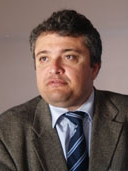
Panagiotis Hatzipantelidis is an Associate Professor at the University of Crete, specializing in numerical analysis and computational mathematics. His work focuses on the numerical solution of differential equations, particularly through finite element and finite volume methods. His research includes error analysis, positivity preservation, and adaptive time-stepping techniques for parabolic and hyperbolic partial differential equations. He has contributed to the development of stabilized schemes for chemotaxis systems and nonlinear parabolic problems. Key trends in his publications involve virtual element methods for elliptic problems, finite volume element approaches for parabolic equations, and numerical stability analysis. His work spans topics like chemotaxis systems, wave equations, transport equations, and nonlinear PDEs. He is affiliated with the University of Crete (Ph.D. 1998) and holds the email address p.chatzipa@uoc.gr .
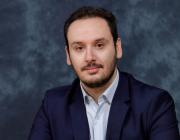
Athanasios Chasalevris is an Assistant Professor at the School of Mechanical Engineering, National Technical University of Athens (NTUA), with research expertise in rotordynamics, tribology, and nonlinear machine dynamics. His work focuses on vibration control in turbomachinery, controllable bearings, and fault diagnostics in rotating systems. Doctor of Philosophy in Rotordynamics (University of Patras, 2009) Diploma in Mechanical & Aeronautical Engineering (University of Patras, 2004) Research interests include: Linear/Nonlinear Rotordynamics of Turbines and Turbochargers Controllable Bearings (Oil/Gas/Magnetic) for Vibration Suppression Tribology: Hydrodynamic/Aerodynamic Bearing Performance Cracked Rotors and Fracture Mechanics Nonlinear Dynamics and Bifurcation Analysis His recent work emphasizes the development of adjustable bearings for turbine systems, nonlinear stability assessment, and diagnostics of bearing wear and rotor cracks. Collaborations include institutions in Germany, the US, Iran, and Austria. Scientific Awards: General Electric Co. 'Beyond and Ahead' Award (2017) Alexander Von Humboldt Fellowship (2010) Technical Chamber of Greece (TEE) Award for Excellence (2004) Athanasios supervises PhD and Master’s students, requiring expertise in dynamics, vibration theory, and programming (Matlab/Python). He teaches courses in dynamics of rotating machines, machine elements, and kinematics of mechanisms.
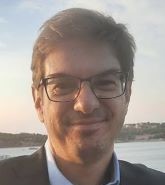
Yiannis Tsompanakis is a Professor of Structural Mechanics with emphasis on Earthquake Engineering at the Technical University of Crete , affiliated with the Computational Dynamics & Energy Laboratory and Division IV: Environmental Hydraulics & Coastal and Geoenvironmental Engineering. His research spans structural and geotechnical earthquake engineering, soil-structure interaction, and AI-driven optimization techniques for infrastructure resilience. PhD in Civil Engineering, National Technical University of Athens (NTUA), 1999 Diploma in Civil Engineering, NTUA, 1992 Professor Tsompanakis specializes in computational methods for seismic vulnerability assessment, geohazard mitigation, and life-cycle analysis of structures. His work integrates artificial intelligence, structural optimization, and probabilistic mechanics to address challenges in earthquake engineering and environmental protection. Key trends in his recent publications (2021-2022) include: Application of EPS blocks for vibration mitigation in railway systems Swarm intelligence algorithms for seismic response optimization of liquid storage tanks Finite element analysis of secondary fault rupture effects on pipelines and soil deposits Dynamic soil-structure interaction in retaining wall systems Integrated computational approaches to regional seismic risk assessment Life-cycle performance evaluation of geoenvironmental infrastructure He serves as Technical Editor for Structure and Infrastructure Engineering Journal and Secretary of the T4 Technical Committee IASSAR on Life-Cycle Performance. His projects include EU-funded initiatives like TEMPUS WIMB and national grants focusing on seismic resilience of energy and transportation systems.
Dr. Euripides Mystakidis is a Professor at the Department of Civil Engineering, University of Thessaly (Pedion Areos, 38334 Volos, Greece). His academic journey includes: Diploma in Civil Engineering (1987) from Aristotle University of Thessaloniki (graduated top of class with honors). PhD (1992) from Aristotle University of Thessaloniki, focusing on theoretical/numerical mechanics. His research spans steel/composite structures , seismic strengthening, fiber-reinforced concrete, and computational mechanics. He develops advanced numerical methods (nonconvex optimization, neural networks) for structural analysis and fracture mechanics. Recent work emphasizes fire safety modeling and retrofitting techniques for catastrophe resilience. Publications (journal articles, books) show consistent focus on structural optimization, composite materials, and seismic design. Trends include increased application of computational intelligence and high-performance materials in civil engineering. Awards: Honorary commendations by the State Scholarship Foundation (1982-83, 1984-85, 1985-86). Advising & Grants: Supervised 3+ PhD candidates (e.g., Konstantinos Tzaros, Kyriaki Georgiadi-Stefanidi) and Master's students. Secured significant funding including: EU COST Actions (C1, C12, C26; 1993–2010). Greek national projects (PENED, EPAN) on seismic retrofitting. Industry collaborations (e.g., OΑΣP, ΟΣΚ Α.Ε.). He directs the Laboratory of Analysis and Design of Structures and leads the postgraduate program 'Applied Mechanics and Systems Simulation' at the University of Thessaly.
Nikolaos Sapidis is a Professor at the Department of Mechanical Engineering, University of Western Macedonia, Greece, leading the 'Division of Constructions and Materials'. His career spans over three decades with previous roles at the University of the Aegean and multiple academic/research institutions including the National Technical University of Athens and Technical University of Catalonia. He earned a Ph.D. in Mechanical and Aerospace Sciences from the University of Rochester, USA, and holds degrees in Applied Mathematics (University of Utah) and Naval Architecture (National Technical University of Athens). His research focuses on Computational Design and Analysis , including CAD/CAE integration, geometric modeling of curves/surfaces, virtual engineering, and finite-element methodologies. Notable areas include solid modeling, point-cloud-based CAD, reverse engineering, and virtual reality applications in mechanical systems. He has authored over 80 publications and actively contributes to editorial boards of journals like Computer-Aided Design and Computer-Aided Design and Applications . His work emphasizes practical industrial applications, with research implemented in systems by companies like General Motors and Mercedes-Benz. Key contributions include algorithms for shape preservation in curves/surfaces, automated assembly design frameworks, and finite-element model optimization for large-scale systems. He directs the Laboratory of Mechanical Systems , advancing interdisciplinary research in mechanical design and virtual engineering.
Professor Vassilios Loukopoulos holds a faculty position at the Department of Theoretical and Mathematical Physics, Astronomy and Astrophysics, University of Patras, since 2021. Previously, he served as Associate Professor (2016-2021), Assistant Professor (2011-2016), and Lecturer (2007-2011). He teaches courses in Fluid Mechanics, Computational Physics, and specialized MSc topics like Simulation Techniques for Physical Systems. His research focuses on computational fluid dynamics, magnetohydrodynamics, and numerical methods for fluid flow problems, with emphasis on nanofluids and biomedical applications. Collaborations include Max Planck Institute (Germany), KAUST (Saudi Arabia), and EPFL (Switzerland). He serves on editorial boards of journals like Mathematical Problems in Engineering and ISRN Mathematical Physics . Research interests span numerical solutions of Navier-Stokes equations, thermal convection in nanofluids, and biofluid mechanics under magnetic fields. He has developed meshless computational methods for complex fluid dynamics problems. Recent publications explore magnetohydrodynamic flows in porous media and transient bioheat transfer modeling. His work integrates advanced numerical techniques with applications in astrophysical fluid dynamics and medical physics. Education Progression : Professor: University of Patras (2021–present) Associate Professor: University of Patras (2016–2021) Assistant Professor: University of Patras (2011–2016) Lecturer: University of Patras (2007–2011) Grants and collaborations involve institutions like KAUST and the Institute of Chemical Engineering Sciences (Greece). His research team actively publishes in top journals like Journal of Computational Physics and Physics of Fluids , with a focus on developing innovative numerical frameworks for multiphysics problems.
Professor Georgios E. Stavroulakis is a distinguished academic at the Technical University of Crete, where he serves as Professor in the Department of Production Engineering and Management within the School of Production Engineering and Management. He is also the Head of the Institute of Computational Mechanics and Optimization (Co.Mec.O) at the university. Additionally, he holds the position of Honorary Professor at the Department of Civil Engineering at the Jordan University of Science and Technology, and has qualifications as Privatdozent for Mechanics at the Carolo Wilhelmina Technical University in Braunschweig, Germany. His educational background includes: Diploma of Civil Engineering with highest honours (9.20/10) from Aristotle University of Thessaloniki, Greece (1985) PhD with honours from Department of Civil Engineering, Aristotle University of Thessaloniki, Greece (1991) Habilitation and venia legendi for mechanics from Carolo Wilhelmina Technical University, Braunschweig, Germany (2000) Professor Stavroulakis has made significant contributions to the fields of Computational Mechanics, Optimization, and Structural Analysis. His research focuses on nonsmooth and nonconvex mechanics problems, optimal design of materials and structures, solution of inverse problems, design of smart structures, and application of soft computing methods (neuro-fuzzy systems) in mechanics. His scholarly output demonstrates a clear trend toward integrating machine learning techniques with traditional computational mechanics approaches, particularly through physics-informed neural networks and data-driven computational homogenization, while maintaining strong work on masonry structures, smart materials, and vibration control. His notable recognitions include: Co-Editor of the Book Series on Stability, Vibration and Control of Systems (World Scientific Publishers) Member of the Editorial Board for Journal of Global Optimization Member of the Advisory Board for Book Series Nonconvex Optimization and Its Applications Elected member of the executive board of the Hellenic Society of Theoretical & Applied Mechanics Former president of the Greek Association of Computational Mechanics As an educator, Professor Stavroulakis has taught undergraduate and postgraduate courses at the Technical University of Crete since 2006, covering mechanics, optimization, and computational methods. He has supervised numerous students and organized major academic conferences including the 9th GRACM International Congress on Mechanics (2018) and the 10th HSTAM International Congress on Mechanics (2013). His laboratory, Co.Mec.O, serves as a research hub for computational mechanics and optimization at the Technical University of Crete, developing theory, algorithms, and software for structural analysis and computational mechanics problems.
Georgios Stavroulakis is a Professor at the Department of Production Engineering and Management, Technical University of Crete (since 2005). He holds a Dipl. Civil Engineer (1985) and PhD (1991) from Aristotle University of Thessaloniki. Previously, he served as an Assistant Professor at Technische Universität Braunschweig (2000) and Associate Professor at University of Ioannina (2001–2005). His research focuses on Computational Mechanics, Non-Smooth Mechanics, and Optimization, with applications in structural dynamics, smart materials, and biomedical engineering. Education: Diploma in Civil Engineering (Aristotle University, 1985) PhD in Civil Engineering (Aristotle University, 1991) Professional Roles: Chairman of the Department of Production Engineering and Management (2011–2013) Member of the Decision Science Laboratory and Computational Engineering & Optimization group His work bridges computational methods with real-world engineering challenges, including vibration control, structural rehabilitation, and biomedical modeling. Recent studies explore finite element methods (FEM) for aneurysm rupture prediction, Helmholtz resonator acoustics, and optimization of piezoelectric systems using auxetic materials. Collaborations span smart structures, noise reduction in urban spaces, and heritage preservation of masonry buildings. Publications highlight advancements in quasidifferentiable optimization, data-driven homogenization, and robust control strategies for intelligent systems. His research integrates machine learning and physics-informed neural networks to enhance predictive accuracy in mechanics and materials science. Labs/Teams: Active in the Decision Science Laboratory and Computational Engineering & Optimization group, focusing on interdisciplinary solutions for structural and biomedical engineering challenges.
Michael Plexousakis is an Assistant Professor in the Department of Mathematics & Applied Mathematics at the University of Crete. He received his PhD from the University of Tennessee, Knoxville and joined the University of Crete in 2010. He maintains research affiliations with the Institute of Applied and Computational Mathematics at the Foundation for Research and Technology, Hellas (FO.R.T.H.) and the Archimedes Center for Modeling, Analysis and Computations (ACMAC). His research focuses on: Numerical solution of partial differential equations with finite element and finite volume methods A posteriori error estimation and adaptivity Singular solutions of evolution equations Scientific computing and visualization Dr. Plexousakis has secured significant research funding including the SYNERGASIA program (2011-2013) studying extreme weather phenomena, the THALIS program (2012-2014) on optimal management of economic and environmental systems, and research on seismic protection of existing buildings. His teaching portfolio spans computational mathematics with courses including: Computer Programming II Design and Analysis of Algorithms Numerical Algorithms Numerical Analysis Numerical Solution of PDEs Mathematical Biology He has co-authored two textbooks: "Numerical Analysis" (2023) for postgraduate studies and "Numerical Solution of Partial Differential Equations" (2015) for undergraduate students, both published through Kallipos, Open Academic Editions. Dr. Plexousakis's publication record demonstrates expertise across multiple domains of computational mathematics, with particular emphasis on numerical methods for Helmholtz equations, Schrödinger equations, and parabolic equations. His work bridges theoretical numerical analysis with practical applications in atmospheric science, quantum mechanics, and materials science, showing consistent contributions to high-impact journals in applied mathematics.
Professor Costas P. Providakis is a Professor of Mechanics of Materials and Director of the Applied Mechanics Laboratory (AMEL) at the Technical University of Crete (TUC). He holds a Ph.D. in Structural Mechanics from the University of Patras (1988) and a B.S. in Civil Engineering (1983). His academic roles include Deputy Head of the Department of Applied Sciences and Principal Investigator of the WiAMS Project under the THALIS Programme. He specializes in Structural Health Monitoring (SHM), smart materials, and computational mechanics, with research spanning structural dynamics, earthquake engineering, and material characterization. His work integrates advanced numerical methods (FEM/BEM) with experimental techniques to address challenges in infrastructure durability and safety. Education: Ph.D., Mechanics of Materials (University of Patras, 1988); B.S., Civil Engineering (University of Patras, 1983). Research Interests: Focus on SHM using piezoelectric sensors, smart structures, viscoplasticity, seismic risk mitigation, and computational mechanics. His contributions include developing wireless sensor networks for concrete integrity assessment and advancing methodologies for damage detection via electromechanical impedance. Grants/Projects: Led the SEISMOCARE and WiAMS projects, addressing seismic risk reduction and wireless monitoring systems. Collaborates internationally on structural analysis and smart material applications. Labs/Teams: Directs the AMEL, which conducts research in mechanics of materials, structural dynamics, and advanced material testing. The lab’s facilities include fatigue testing equipment, computational resources, and sensor networks.
Stavroulaki Maria is an Associate Professor at the Technical University of Crete (TUC), affiliated with the ARC Department within the School of Architecture. Her research focuses on structural engineering of heritage structures, particularly masonry monuments, bridges, and historic buildings. She specializes in finite element analysis, seismic retrofitting, and non-destructive testing techniques for cultural heritage preservation. Dr. Maria has authored numerous studies on masonry behavior under static and dynamic loads, including innovative methods for strengthening and damage detection in historic structures. Her work integrates computational mechanics with practical restoration strategies, addressing challenges such as earthquake resilience in Venetian-era buildings, structural behavior of arch bridges, and stochastic modeling of adjacent structures. Key areas of expertise include material modeling for masonry, response spectrum analysis, and advanced reinforcement techniques like shotcrete mantles and cable-ties. Dr. Maria’s research also explores physico-chemical properties of restoration materials and their application in heritage conservation. Notable contributions include parametric studies on masonry walls, finite element modeling of monuments like Neoria in Chania, and dynamic criteria for structural sufficiency. Her interdisciplinary approach bridges engineering, architecture, and cultural heritage management, ensuring both technical rigor and preservation of historical significance.
Stelios Georgantzinos is an Assistant Professor at the Department of Aerospace Science and Technology, National and Kapodistrian University of Athens. His research focuses on advanced materials, nanotechnology, and computational mechanics, with a strong emphasis on multiscale modeling of composite materials and structural analysis. His work spans applications in aerospace engineering, biomedical devices, and smart materials. Research interests include composite materials, nanocomposites, finite element analysis, and additive manufacturing. He explores topics like CNT-reinforced laminates, 4D printing, and structural behavior of nanomaterials such as graphyne and fullerene. His studies often combine experimental methods with computational tools like molecular dynamics and finite element modeling. Recent work highlights include multiscale simulations of hygrothermal effects on composite vibrations, topology optimization for orthoses, and mechanical characterization of nanosheets. He also investigates quality management strategies integrating DEA and Lean Six Sigma for industrial applications.
Pavlos Thanopoulos is an Assistant Professor at the Structural Engineering Department of the National Technical University of Athens (NTUA). He holds a Civil Engineering Diploma (1999) from NTUA, an MSc in Structural Steel Design from Imperial College London (2000, with distinction and the Dowling Award), and a PhD from NTUA (2006) focusing on seismic behavior of steel structures with energy absorption systems. His research emphasizes steel structures, seismic design, bridge engineering, and finite element analysis. He has worked at a major engineering consultancy (2006–2014), specializing in steel and composite structures. Since 2014, he lectures on steel structure design methods and continues consulting on steel and bridge projects. His publications span experimental and numerical studies on steel connections, seismic performance, and composite bridges, with a focus on innovative energy-dissipating systems like INERD and FUSEIS. Key contributions include developing practical design guidelines for seismic-resistant steel connections and assessing seismic fragility of bridges. He collaborates on international projects like the INNOSEIS initiative, advancing resilient structural systems. His work is published in journals like International Journal of Steel Structures and Soil Dynamics and Earthquake Engineering .
Olympia PANAGOULI is an Assistant Professor in the Department of Civil Engineering at the University of Thessaly. She holds a Diploma in Civil Engineering from the National Technical University of Athens (1988) and a Doctoral Thesis from Aristotle University of Thessaloniki (1992), focusing on fractal geometry in structural analysis. Her academic roles include teaching Structural Analysis III, Elastoplastic Analysis, and Finite Elements at the University of Thessaly since 2007. She has extensive experience in structural analysis projects (1992-2007) and has been a lecturer in structural engineering at both Architectural and Civil Engineering departments of the University of Thessaly from 1999 to 2007. Professional Address: Dept. of Civil Engineering, University of Thessaly, Pedion Areos, 38334 Volos, Greece Phone: +302421074146 Email: olpanag@uth.gr Her research interests focus on applying fractal geometry to civil and structural engineering problems, including numerical methods, fractal interfaces, contact mechanics, and material behavior. She has actively participated in national and international research programs since 1989, addressing topics like nonsmooth mechanics, composite materials, and fractal data compression. Panagouli has also contributed to international conferences on computational mechanics, contact mechanics, and structural analysis since the early 1990s. Her computing expertise includes programming languages like FORTRAN and C, and operating systems such as UNIX and Windows. She has reviewed journals like Computers and Structures and Engineering Structures . Panagouli’s work emphasizes the intersection of fractal theory with civil engineering applications, addressing complex structural problems through innovative numerical techniques.
Konstantinos TZAROS is an academic affiliated with the Department of Civil Engineering at the University of Thessaly. He holds a PhD in Civil Engineering and has been involved in teaching and research since 2005. His roles include auxiliary and independent teaching in undergraduate and postgraduate courses such as Structural Analysis, Statics, and Finite Element Methods. His research focuses on structural mechanics, composite materials, and buckling analysis. Education: Diploma in Civil Engineering (2005), MSc in Applied Mechanics (2009), PhD in Structural Analysis (2011). Research Projects: Includes studies on composite materials, seismic behavior, and structural optimization funded by institutions like ELASTRON and EXEL Group. His research interests span structural stability, nonlinear mechanics, and finite element analysis. Recent publications address topics like thermal buckling and beam instability. He has contributed to multiple international conferences and peer-reviewed journals.