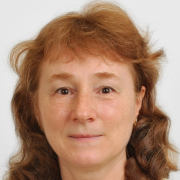
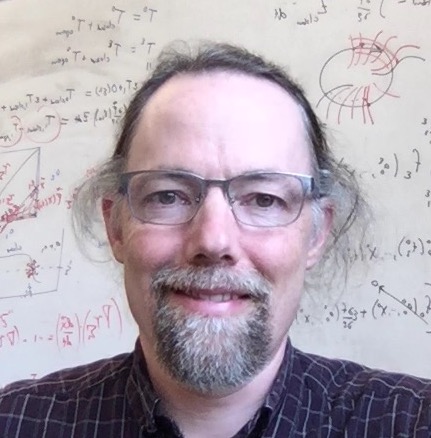
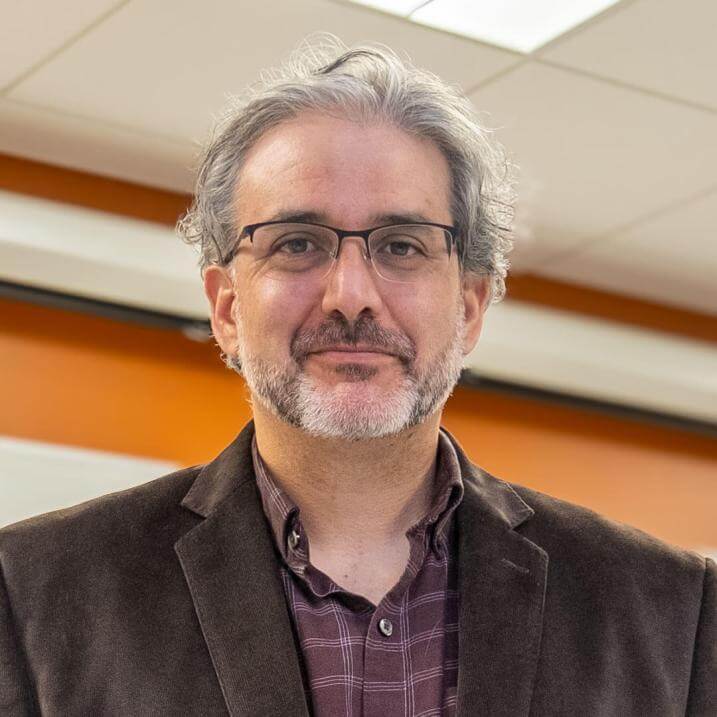
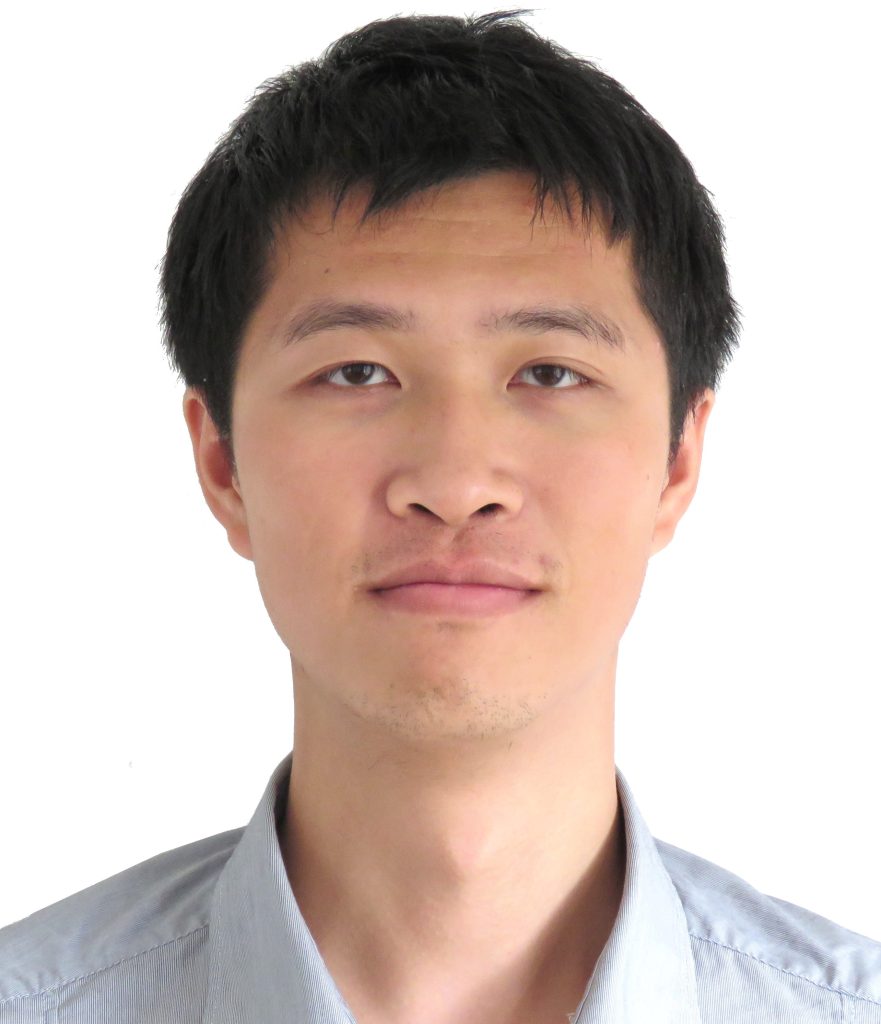
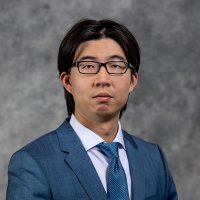
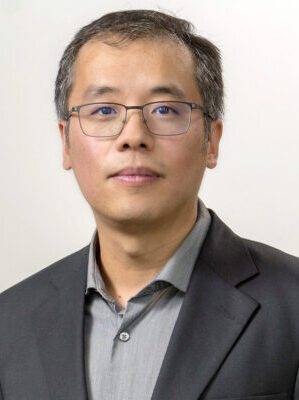
Daniel Holz is a Professor of Physics and Astronomy & Astrophysics at the University of Chicago, affiliated with the Enrico Fermi Institute, Kavli Institute for Cosmological Physics, and the College. His research focuses on gravitational wave astrophysics, cosmology, and black hole dynamics, contributing to major discoveries like GW150914 and GW170817 as part of the LIGO collaboration. He holds a BA from Princeton and a PhD from the University of Chicago, with postdoctoral fellowships at the Albert Einstein Institute (Germany), Kavli Institutes in Santa Barbara and Chicago, and a Richard Feynman Fellowship at Los Alamos National Laboratory. Research interests include gravitational-wave standard sirens for cosmology, black hole-neutron star mergers, and testing general relativity. Awards include the NSF CAREER Award, Quantrell Teaching Award, and Breakthrough/Gruber Prizes (via LIGO). He chairs the Bulletin of the Atomic Scientists' Science and Security Board, guiding the Doomsday Clock, and directs the UChicago Existential Risk Laboratory (XLab), addressing nuclear, climate, and AI risks. His lab and collaborations leverage multi-messenger astronomy and advanced data analysis techniques. Notable contributions include pioneering gravitational-wave cosmology methods and advancing understanding of cosmic expansion tensions.
Professor Lyudmila Mihaylova is a distinguished academic at the University of Sheffield's School of Electrical and Electronic Engineering, where she holds the position of Professor of Signal Processing and Control. She has established herself as a leading researcher in the fields of signal processing, Bayesian methods, and autonomous systems, with significant contributions to particle filtering techniques for intelligent transportation systems. Her work bridges theoretical developments with practical applications across multiple domains including transportation, healthcare, and industrial automation. Prof. Mihaylova's research interests center on nonlinear filtering, sequential Monte Carlo methods, statistical signal processing, and sensor data fusion. Her work spans both theoretical advancements and practical implementations, with particular focus on high-dimensional problems including vehicular traffic flow estimation, image processing, and localization in sensor networks. She has extensive experience with various image modalities such as optical, thermal, LIDAR, SAR, and hyperspectral imaging. Her group actively develops novel methods for autonomous intelligent systems focusing on sensing, tracking, decision making, and machine learning applications. Analysis of Prof. Mihaylova's recent publications reveals a strong trend toward uncertainty quantification in machine learning models, particularly for safety-critical applications. Her work increasingly integrates traditional signal processing techniques with modern deep learning approaches, with applications spanning sewer inspection robotics, medical diagnostics (particularly sleep apnea detection), UAV swarm tracking, industrial manufacturing, and autonomous vehicle systems. A significant portion of her recent research focuses on developing robust methods that can handle incomplete or outlier-corrupted data while providing reliable uncertainty estimates. Among her notable professional achievements: President of the International Society of Information Fusion (ISIF) Senior member of the IEEE Signal Processing Society Associate Editor for IEEE Transactions on Aerospace and Electronic Systems Associate Editor for Elsevier Signal Processing Journal Prof. Mihaylova has successfully mentored numerous PhD students and postdoctoral researchers, many of whom have gone on to prominent academic and industry positions. Her research has been supported by major funding bodies including EPSRC, EU, MOD/DSTL, and industry partners, with recent projects including 'Protecting Environments with UAV Swarms' (InnovateUK, 2022-2024), 'ShiRAS: Towards Safe and Reliable Autonomy in Sensor Driven Systems' (NSF-EPSRC, 2019-2023), and 'Confident safety integration for Cobots' (Lloyd's Register Foundation, 2019-2020). Her research group follows a collaborative approach with the philosophy 'We share knowledge, we grow.' Prof. Mihaylova maintains active research collaborations with institutions worldwide and has held previous academic positions at Lancaster University (2006-2013) and University of Bristol (2004-2006), along with research visiting positions at the University of Ghent, Katholic University of Leuven, and the Bulgarian Academy of Sciences.
Peter J. Thomas is a Professor in the Department of Mathematics, Applied Mathematics, and Statistics at Case Western Reserve University's College of Arts and Sciences, with secondary appointments in Electrical Engineering and Computer Science, Cognitive Science, and Biology. He serves as Co-Editor-in-Chief of Biological Cybernetics and leads the Computational Biomathematics Laboratory. Primary Affiliation: Department of Mathematics, Applied Mathematics, and Statistics Secondary Affiliations: Department of Electrical Engineering and Computer Science, Department of Cognitive Science, Department of Biology Leadership: Co-Editor-in-Chief of Biological Cybernetics Thomas earned his B.A. in Physics and Philosophy from Yale University (1990), M.S. in Mathematics from the University of Chicago (1994), and both M.A. in Conceptual Foundations of Science and Ph.D. in Mathematics from the University of Chicago (2000). His research spans mathematical neuroscience, theoretical biophysics, and information theory applications to biological systems. Thomas specializes in understanding how noise and stochasticity affect neural coding, developing mathematical frameworks for gradient sensing in cells, and applying graph theory to biological networks. His work on stochastic shielding has provided novel approaches to simplifying complex stochastic models while preserving essential dynamics. His research bridges theoretical mathematics with experimental neuroscience through collaborations with the Chiel laboratory and others. Thomas's recent publications demonstrate a strong focus on stochastic oscillators, sensory feedback mechanisms, and information theory applications to biological systems. His work consistently develops novel mathematical frameworks to address specific biological questions, with significant contributions to understanding phase dynamics in neural oscillators and information processing in biochemical signaling. Core Fulbright Scholar Program (2013) Simons Fellow in Mathematics Program (2014) Multiple NSF grants as Principal Investigator Co-Editor-in-Chief of Biological Cybernetics Thomas has mentored numerous students at all levels, from undergraduates to postdoctoral researchers. His laboratory has produced successful scholars who have gone on to faculty positions at institutions like New Jersey Institute of Technology and the University of Nevada, Reno. He has actively organized workshops at the Banff International Research Station and served on editorial boards for leading journals in computational neuroscience. The Computational Biomathematics Laboratory focuses on developing mathematical frameworks to understand neural dynamics, cellular signaling, and pattern formation. The lab maintains strong collaborations with experimental neuroscience groups and has made significant contributions to understanding rhythmic neural systems, respiratory control mechanisms, and information processing in biological systems.
Summary Luis A. Duffaut Espinosa is an Assistant Professor in the Department of Electrical and Biomedical Engineering at the University of Vermont (UVM), affiliated with the College of Engineering and Mathematical Sciences. His research focuses on control theory, estimation, robotics, and nonlinear systems with applications in autonomy, quantum control, and environmental monitoring. He holds a Ph.D. in Electrical and Computer Engineering from Old Dominion University (2009) and has held academic positions at George Mason University and postdoctoral roles at Johns Hopkins University and the University of New South Wales. Education: Ph.D. in Electrical and Computer Engineering (2009), Old Dominion University M.S. in Mathematics (2005), Pontificia Universidad Católica del Perú B.S. in Physics (2003), Universidad Nacional de Ingeniería, Peru Research Interests: His work emphasizes data-driven control and estimation methodologies, including model-free approaches for power systems, environmental monitoring, and quantum control. Current projects include real-time data assimilation in harsh environments, resilient robotics in GPS-denied conditions, and SAR with small satellites. He co-directs the Autonomous and Intelligent Systems Research Laboratory (AIRLab) and is part of the CREATE center. Recognition: 2024 NSF CAREER Award for work on safety-aware data-driven control frameworks Teaching & Advising: He teaches courses in estimation theory, control systems, and signal processing. Advises a team of graduate and undergraduate students focusing on autonomy, robotics, and control systems. Notable students include Danial Waleed (Ph.D. 2024), Jacob Friz-Trillo (M.S. 2025), and Farnaz Boudaghi (Ph.D. candidate). Labs & Collaborations: AIRLab: Focuses on data-driven control for autonomy in robotics and engineered systems CREATE: Research on resilient energy and autonomous technologies
Dr. Christos Papavassiliou is an Associate Professor in the Department of Electrical and Electronic Engineering at Imperial College London, part of the Faculty of Engineering. His research focuses on instrumentation electronics, memristor modeling, signal integrity, and novel device technologies such as SiGe devices, RF MEMS, and ReRAM. He leads the Space Lab and collaborates with the National Centre for Scientific Research in Athens. He holds senior membership in IEEE and is a member of the IET. Education: Ph.D. in Applied Physics, Yale University (1983–1989) MPhil in Applied Physics, Yale University (1983–1988) MS in Applied Physics, Yale University (1983–1985) B.S. in Physics, MIT (1979–1983) Research Interests: Memristor-based neuromorphic computing and stochastic systems High-performance instrumentation hardware and data acquisition Multi-state memristive memory and selectorless arrays Integration of memristors with CMOS for hybrid circuits Applications in biomedical wearables and edge AI deployment Key Contributions: Developed novel memristor models for circuit simulation Pioneered work on memristor-based true random number generators Advanced understanding of resistive drift and energy-constrained storage Designed FPGA-based systems for analog circuit emulation Labs & Teams: Active in the Space Lab at Imperial College, focusing on interdisciplinary research in electronics and space applications.
Kaidi Yang is an Assistant Professor at the National University of Singapore (NUS) in the Department of Civil and Environmental Engineering, specializing in Intelligent Transportation Systems and related fields. He holds a PhD from ETH Zurich (2019), an M.Sc. in Control Science and Engineering from Tsinghua University (2014), and dual bachelor’s degrees in Automation and Mathematics from Tsinghua University (2011). His research focuses on advancing traffic control, connected/automated vehicles, shared mobility systems, and data privacy in transportation. He has contributed to developing algorithms for efficient traffic signal control, platooning coordination, and privacy-preserving data sharing in transportation networks. Education: Ph.D., Civil and Environmental Engineering (Transportation), ETH Zurich, 2019 M.Sc., Control Science and Engineering, Tsinghua University, 2014 B.Sc./B.Eng., Dual Degrees in Pure/Applied Mathematics and Automation, Tsinghua University, 2011 Yang has received prestigious awards including the Swiss National Science Foundation’s Postdoc Mobility Fellowship (2021–2022) and the IEEE ITS Conference Best Student Paper Award (2020). He serves as an Associate Editor for the IEEE Conference on Intelligent Transportation Systems (2024). His work bridges theoretical advancements in operations research, robotics, and machine learning with practical applications in urban mobility systems. Recent efforts emphasize integrating privacy-preserving techniques into traffic management and optimizing mixed-autonomy platoon control.
Dr. Kaiqun Fu is an Assistant Professor in the McComish Department of Electrical Engineering and Computer Science at South Dakota State University (SDSU). He holds a Ph.D. and M.S. in Computer Science from Virginia Tech (2021 and 2016). His research focuses on spatial data mining, spatiotemporal event analysis, graph neural networks, and urban computing applications such as traffic impact prediction and social media-driven insights. He also explores physics-informed machine learning for power systems and interdisciplinary topics like 'deaths of despair' in rural areas. Education: Ph.D. in Computer Science, Virginia Tech, 2021 M.S. in Computer Science, Virginia Tech, 2016 Research Interests: His work emphasizes machine learning and deep learning applications in spatial-temporal domains, including: Graph neural networks for traffic incident prediction Social media analysis for urban challenges Physics-informed models for power grid stability Citation forecasting in scientific publications Grants & Projects: NSF CRII ($174,734): Spatiotemporal impacts of traffic events via graph neural networks (2024–2026) NSF EAGER ($300,000): Socio-economic impacts of emerging technologies (2024–2026) SDSU RSCA ($10,118): Graph transformer-based location learning (2023–2024) Professional Involvement: He chairs ACM SIGSPATIAL's SRC committee, serves on SDSU's Computer Science curriculum committees, and is an IEEE member. He co-edits Frontiers in Big Data and advises on interdisciplinary projects like climate-impacted grid security (NSF RII Track-2, $750,000). Labs/Teams: Collaborates with interdisciplinary groups focusing on smart cities, data-driven infrastructure resilience, and GeoAI applications.
Dr. Young-Jin Cha is a tenured full Professor in the Department of Civil Engineering at the University of Manitoba, affiliated with the Price Faculty of Engineering. He holds a PhD from Texas A&M University and has postdoctoral experience at MIT. His research focuses on deep learning-based structural health monitoring (SHM), autonomous UAVs for infrastructure inspection, and smart transportation systems, with over 100 peer-reviewed publications and $1.2M in grants. He is a Fellow of ASCE and has received notable awards including the 2021 Merit Award and 2022 International Association of Advanced Materials Scientist Award. His work has been cited over 9,200 times globally. Research interests include automated SHM with UAVs, nonlinear system identification, unsupervised deep learning for damage detection, and sustainable infrastructure design. He serves as an editor for journals like Structural Control & Health Monitoring and Engineering Reports . His lab, the Laboratory for Infrastructure Science and Technology (LIST), develops advanced technologies for infrastructure resilience. Key achievements include pioneering deep learning-based SHM with UAVs, top-cited papers in civil engineering journals, and leadership in organizing international conferences. He actively seeks graduate students for research in AI-driven infrastructure solutions.
Professor John G Rarity serves as Professor of Optical Communication Systems within the School of Electrical, Electronic and Mechanical Engineering at the University of Bristol, where he leads research at QET Labs and the Bristol Quantum Information Institute. His work spans quantum communication, photonics, and quantum information systems with significant contributions to quantum cryptography and sensing. Research focuses on quantum communication networks , quantum cryptography , and quantum sensing applications . His fingerprint reveals dominant expertise in Quantum Dot Physics (100%), Photonics Physics (94%), Photonic Crystal Material Science (60%), and Quantum Cryptography (48%). Current work emphasizes entanglement distribution, counterfactual communication protocols, and quantum-enhanced sensing for environmental monitoring. Recent publications (2025) demonstrate leadership in multi-node quantum networks, deterministic teleportation, and methane sensing via quantum techniques. His 438 research outputs show consistent focus on practical quantum systems integration, particularly in overcoming classical-quantum channel coexistence challenges in fiber networks. Principal Investigator for 75 projects including active EPSRC grants EP/N00762X/1, EP/R022054/1, and EP/R023018/1 Supervised 36 research students Developed quantum communication systems for CubeSat deployment Pioneered quantum sensing applications for greenhouse gas detection Rarity actively collaborates across international quantum research networks, with recent work involving hollow-core fiber quantum channels, NV-center quantum sensors, and photonic integrated circuits for scalable quantum systems. His lab maintains strong industry partnerships with BT Research and optical communications firms.
Pooya Davari is a Professor and Head of the Section for Applied Power Electronic Systems at Aalborg University , Denmark. He leads the EMI/EMC in Power Electronics Research Group and serves as Vice Chair of the Energy Efficiency Mission. His research focuses on electromagnetic interference (EMI) and harmonic mitigation in power electronic systems, with over 200 publications and significant contributions to renewable energy integration. Education: B.Sc. and M.Sc. in Electronic Engineering (2004, 2008), Ph.D. in Power Electronics from Queensland University of Technology (2013) Prior Roles: Lecturer at QUT (2013–2014), Postdoc at AAU (2014) Research Interests: Harmonic and EMI analysis in grid-tied converters High power density converter design Signal processing for converter modeling Reliability of power electronic systems Article Trends: Recent work emphasizes EMI/EMC in renewable energy systems, wide bandgap semiconductors (SiC/GaN), and reliability modeling for EVs and hydrogen production via electrolysis. Sub-fields include converter topologies, grid integration challenges, and AI-driven diagnostics. Scientific Awards: Equinor 2022 Prize (Denmark’s oldest engineering award) IEEE EMC Society Young Professional Award (2020) World’s Top 2% Highly Cited Scientist (Stanford, 2021–2025) Multiple best paper awards (IEEE, Applied Sciences, etc.) Grants & Editorial Roles: Recipient of grants from Innovation Fund Denmark (Supra-EMC project), Horizon Europe (SOLARIS), and industry partnerships. Serves as Area Editor for IEEE Transactions on Transportation Electrification , Associate Editor for IEEE Transactions on Power Electronics , and Editor-in-Chief of Circuit World Journal (2020–2025). Labs & Standards: Coordinator of the EMC Laboratory at Aalborg University. Member of IEC standardization Working Groups 6 and 8 (TC77A), focusing on EMC strategies for power grids.
Youssef M A Hashash is the W. W. Grainger Chair and Professor in the Department of Civil and Environmental Engineering at the University of Illinois. His research focuses on geotechnical and earthquake engineering, with emphasis on seismic site response analysis, soil-structure interaction, and advanced computational methods like the Discrete Element Method (DEM). He has led projects on infrastructure resilience, including studies of buried water reservoirs, railway systems, and post-earthquake reconnaissance. Hashash has developed influential models for site amplification in Central and Eastern North America, contributing to seismic hazard assessments. His work integrates experimental centrifuge testing, numerical simulations, and field data. Notable contributions include guidelines for implementing NGA-East ground motion models and advancements in pore-water pressure generation models for liquefaction evaluation. Key Research Areas: Ground movement, seismic response, soil dynamics, and geotechnical data systems Major Projects: NGA-East Geotechnical Working Group, Beirut Explosion Analysis, and LA Metro Tunnel Projects Recipient of prestigious awards including the NAE Membership (2022), PECASE (2000), and Walter L. Huber Prize (2006), he collaborates internationally on earthquake engineering and geotechnical innovations. His lab develops tools like the DEEPSOIL software for nonlinear site response analysis and explores AI applications in geotechnical data interpretation.
Lexin Li is a Professor in the Department of Biostatistics and Epidemiology at the University of California, Berkeley School of Public Health, with additional affiliations at the Helen Wills Neuroscience Institute, the UC Berkeley-UCSF Joint Program on Computational Precision Health, and the Center for the Theoretical Foundations of Learning, Inference, Information, Intelligence, Mathematics and Microeconomics at Berkeley (CLIMB). He received his BE in Electrical Engineering from Zhejiang University (1998) and PhD in Statistics from the University of Minnesota (2003), followed by postdoctoral training at UC Davis School of Medicine. He joined North Carolina State University as Assistant Professor in 2005, was promoted to Associate Professor in 2011, and served as visiting faculty at Stanford University and Yahoo Research Labs (2011-2013) before joining UC Berkeley as Associate Professor in 2014, where he was promoted to Full Professor in 2018. Dr. Li's research spans statistical methodology development for neuroimaging data analysis, tensor statistics, and machine learning applications to biomedical problems. His work focuses on brain connectivity and network analysis, imaging causal inference, tensor regression, dimension reduction, and statistical machine learning with applications to Alzheimer's disease, Parkinson's disease, and other neurological disorders. His methodological innovations bridge theoretical statistics with practical neuroscience applications, particularly in multimodal neuroimaging analysis and brain network modeling. His recent publications demonstrate a strong trajectory in integrating deep learning with classical statistical inference, particularly in tensor analysis, functional data modeling, and causal inference. The research shows increasing sophistication in handling high-dimensional, complex neuroimaging data while developing rigorous statistical frameworks for inference. His work increasingly focuses on multimodal data integration and developing methods that can handle the complexity of real-world neurological data. Dr. Li has received numerous prestigious honors including being elected as a Fellow of the American Statistical Association (2017), Fellow of the Institute of Mathematical Statistics (2021), Elected Member of the International Statistical Institute, and Fellow of the American Association for the Advancement of Science (2024). Fellow, American Statistical Association (2017) Fellow, Institute of Mathematical Statistics (2021) Elected Member, International Statistical Institute Fellow, American Association for the Advancement of Science (2024) Editor-in-Chief, Annals of Applied Statistics (2025-2027) As an academic leader, Dr. Li serves as Co-Director of the Biostatistics Program (2019-) and Director of Graduate Admissions (2015-) at UC Berkeley. He is an active editor, currently serving as Editor-in-Chief of the Annals of Applied Statistics (2025-2027), and has held associate editor positions at multiple top statistical journals including the Journal of the American Statistical Association and Journal of Computational and Graphical Statistics. He also serves as a Standing Member of the NIH Emerging Imaging Technologies in Neuroscience Study Section (2023-2027). His research has been supported by various NIH grants focused on statistical methodology for neuroimaging analysis. Dr. Li leads a vibrant research group focused on statistical neuroimaging and machine learning methodology, with strong connections to the Helen Wills Neuroscience Institute and collaborations across multiple departments at UC Berkeley. His team develops innovative statistical methods that address real challenges in neuroscience research while maintaining rigorous theoretical foundations. The group maintains active collaborations with neuroscientists and clinicians working on Alzheimer's disease, Parkinson's disease, and other neurological conditions.
A. Douglas Stone is the Carl A. Morse Professor of Applied Physics and Professor of Physics at Yale University, and Deputy Director of the Yale Quantum Institute. His research focuses on theoretical condensed matter and optical physics, with emphasis on quantum transport, mesoscopic systems, laser physics, and wave chaos. He has contributed to foundational work on microcavity lasers, Steady-state Ab initio Laser Theory (SALT), and non-Hermitian systems such as coherent perfect absorption (CPA). His education includes a Ph.D. from MIT (1983) and a Rhodes Scholarship (1976-1978). Research Highlights: Development of SALT for microlaser design, discovery of CPA as time-reversed lasing, and exploration of Anderson localization in disordered systems. Awards include the Willis Lamb Medal (2015) and Phi Beta Kappa Science Book Award (2014) for his book Einstein and the Quantum . Advising: Supervised numerous Ph.D. students including Li Ge, Harald Schwefel, and Hakan Türeci. Collaborates with experimental groups on laser engineering, quantum computing, and nonlinear optics. Supported by NSF grants in materials and theoretical physics. Labs/Teams: Leads the A. Douglas Stone Research Group at Yale, focusing on non-Hermitian photonics, quantum measurement, and mesoscopic physics. Active in designing novel lasers and exploring topological optical systems.
Professor Stephen Sweeney is a prominent academic in photonics and nanotechnology at the University of Glasgow. He holds a BSc from the University of Bath and a PhD from the University of Surrey. His research focuses on semiconductor materials for photonic devices, with applications in communications, energy, and biomedical fields. He leads the Semiconductor Photonic Materials and Devices group and serves as Convenor for Postgraduate studies in the James Watt School of Engineering. Education: BSc Applied Physics (University of Bath), PhD in Semiconductor Laser Physics (University of Surrey) Roles: Professor of Photonics and Nanotechnology, former Head of Physics Department at University of Surrey Industries: CTO of Zinir Ltd (UK photonics start-up) His research interests span laser technology, photonic integration, and energy-efficient systems. He has authored over 185 publications and holds prestigious fellowships from the Institute of Physics and SPIE. Recent work includes advancements in mode-locked lasers and photonic crystal devices. Awards: Fellow of the Institute of Physics Fellow of SPIE Grants & Collaborations: EPSRC Leadership Fellowship, EU advisory roles, and partnerships with global research agencies. His lab develops cutting-edge photonic systems for communications and sensing.
Kunal Mukherjee serves as an Assistant Professor in the Department of Materials Science and Engineering within Stanford University's School of Engineering. His teaching portfolio includes core courses such as MATSCI 152: Electronic Materials Engineering and MATSCI 183/213: Defects and Disorder in Materials, alongside extensive supervision of graduate research through MATSCI 300 (Ph.D. Research) and undergraduate studies. His research centers on semiconductor defects and quantum materials engineering, with particular expertise in dislocation dynamics, heteroepitaxial growth, and quantum emitter systems. Key focus areas include: Defect engineering in diamond for quantum sensing applications Mid-infrared photonic materials (PbSe, PbSnSe) for room-temperature operation Quantum dot laser reliability on silicon substrates Nanoscale positioning of color centers in diamond nanostructures Chalcogenide thin film growth for infrared photonics Analysis of his 15 most recent publications reveals a strong emphasis on defect-mediated phenomena across multiple material systems. His work bridges fundamental materials science with photonic applications, particularly in quantum technologies and infrared optoelectronics. The research demonstrates sophisticated control over dislocation formation, strain management, and phase stability in heterostructures. No scientific awards are documented in the provided materials. His academic supervision spans Ph.D. candidates (MATSCI 300), Master's students (MATSCI 200), and undergraduate researchers across multiple independent study courses, though specific student names are not listed. His laboratory work focuses on advanced materials growth and characterization, particularly employing correlative microscopy techniques to study dislocation luminescence and quantum emitter systems. Current efforts target scalable quantum photonic platforms and high-reliability infrared emitters through precise defect engineering.