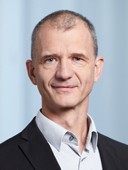
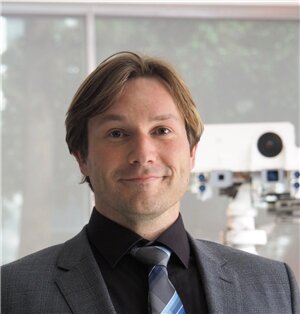
Jesper Nygård is a Professor at the Niels Bohr Institute, University of Copenhagen, specializing in solid state physics, nanophysics, and quantum technology. He leads the Center for Quantum Devices and has held leadership roles including Head of Section for Nanophysics and Solid State Physics (2007–2017) and Deputy Head of Research (2017–present). His research focuses on hybrid superconductor-semiconductor systems, nanowire-based quantum devices, and low-temperature quantum transport. PhD in experimental nanophysics (2000) and MSc/BSc in physics/mathematics from the University of Copenhagen International research experience at Harvard, Berkeley, and CNRS Grenoble His work bridges nanofabrication, quantum electronics, and Kondo physics, with recent publications analyzing nanowire junctions, microwave dynamics in superconducting systems, and heat dissipation mechanisms. He co-founded multiple technology startups and served as a Danish astronaut candidate (2005–2008). Scientific Awards: Member of the Royal Danish Society of Letters Member of the Danish Academy of Sciences
Dr. Fan Zhang serves as Associate Professor in Engineering (Engineering and Design) at the School of Engineering and Informatics, University of Sussex, where he leads research in control systems and sustainable energy technologies. His work bridges theoretical control engineering with practical renewable energy applications, particularly in hydrogen storage and conversion systems. His academic foundation includes: PhD in Control Systems from the University of Sheffield MSc in Control Systems from the University of Sheffield PgCLT (Distinction) from the University of South Wales BEng in Automation from Tianjin University of Technology and Education Research centers on control systems for renewable energy integration, with emphasis on hydrogen storage, wind/solar-hydrogen systems, and automation. His work demonstrates strong interdisciplinary connections between power electronics, energy conversion, and sustainable transportation solutions, particularly through advanced control strategies for complex energy systems. Publication analysis reveals consistent focus on hydrogen energy systems (70% of recent work), with growing emphasis on aviation applications and tidal energy integration. His research trajectory shows evolution from foundational photovoltaic control (2013-2015) toward multi-source renewable systems (2021-2025), reflecting industry shifts toward hydrogen economy solutions. Academic recognition includes: Senior Fellow of the Higher Education Academy He supervises research projects including tidal lagoon power and hydrogen energy storage optimization, with teaching responsibilities spanning Robotics and Electrical Engineering programs delivered in China. His curriculum development for Automation & Mechatronics and Systems Analysis modules demonstrates practical application of his research expertise. Current research activities involve supervisory control systems for renewable hydrogen infrastructure, with emerging work in neurolinguistics-based control interfaces indicating expanding interdisciplinary reach.
Jani Kotakoski is a Full Professor at the University of Vienna's Faculty of Physics, leading the Physics of Nanostructured Materials research group. He additionally holds an adjunct professorship at the University of Helsinki since May 2011. Education: Ph.D. in Physics, University of Helsinki (2007). Dissertation: Irradiation-mediated tailoring of carbon nanotubes Research Focus: Kotakoski pioneers atomic-scale manipulation of 2D materials using electron and ion beams. His work centers on defect engineering in graphene, carbon nanotubes, and transition metal dichalcogenides to control electronic, mechanical, and catalytic properties. Key methodologies include scanning transmission electron microscopy (STEM), slow highly charged ion irradiation, and in situ characterization within integrated vacuum systems. His fingerprint reveals dominant expertise in graphene (100%), two-dimensional materials (27%), carbon nanotubes (26%), and scanning transmission electron microscopy (20%). Publication Trends: Recent works (2024-2025) demonstrate a strategic shift toward functional applications: pore-engineered MoS 2 for hydrogen evolution catalysis, corrugation-controlled mechanical properties in graphene, and metal atom chains at graphene edges. His group increasingly combines defect creation with advanced imaging techniques like ptychography to resolve atomic structures of dopants and vacancies. Research Leadership: MECS (2023-2028): Materials for Energy Conversion and Storage Quantum Centers in Diamond (2021-2025): Creating quantum emitters DCAFM (2020-2025): Doctoral College for Advanced Functional Materials training Laboratory Infrastructure: His group operates an integrated vacuum system coupling graphene growth, manipulation, and atomic-resolution STEM imaging, enabling real-time observation of beam-induced dynamics from pristine to amorphous structures.
Christopher Onder is a Lecturer at the Department of Mechanical and Process Engineering at ETH Zürich, where he serves as Deputy Head of the Institute for Dynamic Systems and Control. His research focuses on control engineering, energy systems, and sustainable transportation solutions. Role : Lecturer, Deputy Head of Institute Department : Mechanical and Process Engineering Institute : Dynamic Systems and Control University : ETH Zürich His research interests include: Control systems for hybrid and electric vehicles Energy management optimization Thermal comfort in public transport Co-design of mechanical and racing strategies Nonlinear control in aerospace applications Model-based calibration for diesel engines Contact: onder@idsc.mavt.ethz.ch
Joseph J. Beaman is Professor and Cockrell Family Dean's Chair in Engineering Excellence in the Walker Department of Mechanical Engineering at The University of Texas at Austin, where he has served since 1979 and chaired the department from 2000-2011. A pioneer in additive manufacturing, he coined the term Solid Freeform Fabrication (SFF) in 1987 and initiated academic research in the field in 1985, developing the foundational Selective Laser Sintering (SLS) process in his laboratory. His educational background includes: B.S.M.E. with high honors from The University of Texas at Austin (1972) Sc.D. in nonlinear control from Massachusetts Institute of Technology Professor Beaman's research spans additive manufacturing, control systems, and materials engineering, with seminal contributions to SFF technology that enabled rapid prototyping and manufacturing across medical, automotive, and industrial applications. His work encompasses materials processing, laser scanning, thermal control, direct metal fabrication, and biomedical applications, driving the emergence of a global industry. Analysis of his publications (2004-2012) reveals evolving focus from core SLS development to cross-disciplinary applications in metallurgical process control (electroslag remelting) and energy systems (fuel cell membrane modeling), while maintaining additive manufacturing as the central theme. Keywords consistently include materials science, control theory, and advanced manufacturing across diverse subfields. His distinguished honors include: National Science Foundation Presidential Young Investigator Award (1984, inaugural year) Distinguished Mechanical Engineer (2011) DuPont Young Faculty Award and Engineering Foundation Awards (1984, 1988) Multiple Best Paper Awards across engineering journals As an academic entrepreneur, Beaman co-founded DTM Corporation (now 3D Systems) and served as Advanced Development head (1990-1992), mentoring graduate students who became key inventors in SLS commercialization. His research has been supported by NSF and industry grants, while his leadership extended to chairing the World Technology Evaluation Center panel on Additive/Subtractive Manufacturing (2003) and serving on international assessment panels. His laboratory established UT Austin as the birthplace of academic SLS research, fostering industry-academia collaboration that directly enabled commercialization of rapid manufacturing systems now used globally for complex part production impossible with conventional methods.
Kristin Y. Pettersen is a Professor at the Department of Technical Cybernetics, Norwegian University of Science and Technology (NTNU), and a Professor II at the Norwegian Defence Research Institute (FFI). She is a co-founder of Eelume AS, a company specializing in underwater robotics solutions. Education: Civil Engineering and PhD in Technical Cybernetics from NTNU Her research focuses on advanced control systems for marine and underwater vehicles, particularly snake robots and autonomous underwater vehicles (AUVs). Key areas include formation control, path following, adaptive guidance algorithms, and safety-critical control in dynamic environments. Recent work explores machine learning integration and energy-shaping techniques for robust locomotion. Publications highlight trends in Model Predictive Control (MPC) , Collision Avoidance , and Task-Priority Operational Space Control for redundant and underactuated systems. Her work bridges theoretical control theory with practical applications in marine robotics, including autonomous inspections and cooperative transport. Labs/Teams: Collaborates with NTNU's Faculty of Information Technology and Electrical Engineering and co-founded Eelume AS, advancing subsea robotic manipulation technologies.
Mustapha C.E. Yagoub is a Full Professor at the School of Electrical Engineering and Computer Science, University of Ottawa, with over 500 publications in RF/microwave CAD, RFID systems, neural networks, and applied electromagnetics. He leads research in the ELEMENT Laboratory and RFM Research Group , focusing on wireless communication systems and nonlinear device modeling. PhD in Electronics (Institut National Polytechnique de Toulouse, 1994) Magister in Telecommunications (École Nationale Polytechnique d'Alger, 1987) Dipl.-Ing. in Electronics (École Nationale Polytechnique d'Alger, 1979) His research bridges Microwave Circuit Design with Artificial Intelligence , including applications in Energy Conservation and Telecommunication Systems . Key trends in his publications include hybrid modeling techniques combining Neural Networks with Computational Electromagnetics for optimizing Antenna Design and RF Components . He is a Senior Member of IEEE and licensed with the Professional Engineers of Ontario and Ordre des Ingénieurs du Québec . His lab teams focus on High-Tc Superconducting Devices and Directional Antenna Optimization for RFID networks.
William R. Cluett is a Professor at the University of Toronto's Department of Chemical Engineering & Applied Chemistry within the Faculty of Applied Science and Engineering. He holds a B.Sc. from Queen’s University and a Ph.D. from the University of Alberta, and is a licensed Professional Engineer (P.Eng). Currently serving as Dean’s Advisor on Innovations in Undergraduate Education, Cluett bridges engineering principles with systems biology in his research. B.Sc., Queen’s University Ph.D., University of Alberta Cluett's research spans traditional process control and design, extending into systems biology where he collaborates with Professor Krishna Mahadevan. His work focuses on integrating engineering methodologies with biological systems, including multiscale modeling, dynamic metabolic engineering, and computational toxicology. His publications highlight trends in applying control theory to metabolic networks, developing algorithms for genome-scale modeling, and designing bistable cell factories. These contributions reflect interdisciplinary efforts between chemical engineering and computational biology. Scientific Awards & Recognitions: Fellow of Engineers Canada (2021) Medal for Distinction in Engineering Education (2021) OCUFA Teaching Award (2020) President’s Teaching Award (2018) Sustained Excellence in Teaching Award (2016) Bill Burgess Teacher of the Year Award (2014) Fellow, AAAS (2009) Fellow, Chemical Institute of Canada (1998) Syncrude Canada Innovation Award (1997) Cluett has contributed to major grants and collaborative projects in systems biology and metabolic engineering. He actively advises on undergraduate education innovations and maintains strong affiliations with the Department of Chemical Engineering & Applied Chemistry.
Ryozo Nagamune is a Professor in the Department of Mechanical Engineering within the Faculty of Applied Science at the University of British Columbia (UBC). His research focuses on control engineering with specific expertise in floating offshore wind turbines, integrated solar thermal systems, and metal additive manufacturing processes. He maintains active collaborations with NSERC, MITACS, and industry partners including Ascent Systems Technologies. Dr. Nagamune received his B.Sc. and M.Sc. degrees from Osaka University, followed by a Ph.D. from the Royal Institute of Technology in Stockholm, Sweden. His educational background laid the foundation for his expertise in control systems theory and applications. His primary research interests center on control engineering, with particular emphasis on the control of floating offshore wind turbines and wind farms, integrated solar thermal systems, directed energy deposition metal additive manufacturing processes, engine aftertreatment systems, and data-driven modeling and control of dynamical systems. His work addresses critical challenges in renewable energy, manufacturing, and automotive applications, focusing on optimization, robustness, and efficiency improvements. The research spans theoretical developments in control algorithms to practical implementation in real-world systems. Analysis of Dr. Nagamune's recent publications reveals a strong focus on floating offshore wind turbine control, which constitutes approximately 40% of his recent work. Another significant portion (30%) addresses automotive control systems, particularly selective catalytic reduction for emissions control. The remaining publications cover diverse applications including haptic interfaces, spacecraft control, and precision manufacturing systems. His research demonstrates a consistent pattern of applying advanced control methodologies to solve practical engineering problems across multiple domains. Dr. Nagamune leads the Control Engineering Laboratory at UBC (located in KAIS 3104) and actively seeks collaborations with industry partners, research clusters, and interdisciplinary teams. His research is supported by major funding agencies including NSERC and MITACS, as well as industry partnerships. He is available for supervision of graduate students and expresses interest in working with undergraduate students on research projects. Dr. Nagamune welcomes interdisciplinary research opportunities and is particularly interested in collaborations that bridge multiple engineering domains.
Ricardo Aguilera Echeverria is an Associate Professor at the University of Technology Sydney (UTS), School of Electrical and Data Engineering . With a Ph.D. in Electrical Engineering from the University of Newcastle (2012), he has held academic positions at UNSW Australia (2014-2016) and UTS since 2016. His research focuses on model predictive control (MPC) applied to power electronics , renewable energy integration , and microgrid control systems . He actively supervises Masters and PhD students and has developed courses such as Control Studio A and Control Studio B . Education: PhD in Electrical Engineering (University of Newcastle, 2012) MSc in Electronics Engineering (Universidad Tecnica Federico Santa Maria, 2007) BSc in Electrical Engineering (Universidad de Antofagasta, 2003) Research Interests: Model Predictive Control (MPC) for power converters Microgrid stability and cybersecurity Second-life battery integration Hybrid DC-AC microgrid solutions Recent Research Trends: Advancements in modular multilevel matrix converters (M3C) for LFAC systems Development of per-phase instantaneous power theories for LVRT compensation Sliding mode observers (SMO) for cyberattack mitigation in AC microgrids Optimal control strategies for delta-connected CHB converters in energy storage Grants & Projects: Lead investigator in HORIZON Europe (2024-2027) on digital solutions for renewable energy systems ARC Discovery Project (DP240102646) on extending second-life battery life (2024-2026) Collaborative grants with Sovereign Propulsion Systems Pty Ltd and NSW Department of Industry for hybrid-electric vehicle control
Charu Sharma is an Associate Professor in the Department of Electrical Engineering at UiT The Arctic University of Norway, specializing in power systems and smart grid technologies. Her work focuses on reactive power control, voltage stability, and optimization of renewable energy-integrated networks. Research on cyber-physical co-simulation frameworks for real-time grid management Development of hybrid renewable energy microgrids for rural and industrial applications Expertise in optimization algorithms (e.g., BFOA-PSO, ANFIS) for energy systems Recent publications highlight her contributions to DER-enriched distribution networks, low-inertia system stability, and intelligent load frequency control. She actively collaborates with researchers on projects like Cooperative Isolated Renewable Energy Systems and arcICE , addressing reliability and sustainability challenges.
Dr. Jaswinder Lota is a Reader in Engineering at the University of East London , School of Architecture, Computing and Engineering, Department of Engineering & Construction. He is also a Visiting Academic at University College London’s Department of Electronic and Electrical Engineering, and a Chartered Engineer with extensive industry and academic experience. Education: BSc BEng MEng PGCert HE PhD Research Interests: Dr. Lota specializes in signal processing, circuits and systems, wireless communication, and their applications in radar systems (weather/military), low-power sustainable networks beyond 5G/6G (robotics, automation, healthcare), and electronic technologies for hydrogen propulsion. His work integrates AI-driven channel modeling and impulsive noise analysis. Scientific Awards: IEEE CAS Society Certificate of Appreciation (2019) Grants and Collaborations: He has secured significant funding, including a £2.5K International Research Collaboration Award (2016), £2.5K Research Internship Award (2015), £76K Impact Grant (2014), and a £7M MoD-funded project (1999-2004). Collaborators include UCL and NYU. Leadership: Dr. Lota leads the Smart Cities Research group at UEL and contributed to the REF 2021 submission. He has served as Associate Editor for IEEE TCAS I and Guest Editor for multiple IEEE journals.
Siegfried Eggl is an Assistant Professor in the Department of Aerospace Engineering at the University of Illinois at Urbana-Champaign , with additional affiliations as an Affiliate Faculty in the Department of Astronomy (2022–present) and the National Center for Supercomputing Applications (NCSA) (2021–present). His research bridges astrodynamics, planetary defense, and celestial navigation, focusing on spacecraft trajectory optimization, asteroid deflection, and autonomous navigation systems. Education: B.S., Astrophysics, University of Vienna (2005) M.S., Astrophysics, University of Vienna (2008) M.S., Computational Physics, University of Vienna (2009) Ph.D., Astrophysics, University of Vienna (2013) Research Interests: Eggl investigates astrodynamics for planetary defense, including momentum transfer in asteroid impacts (e.g., NASA’s DART mission). He develops algorithms for celestial navigation using variable stars and studies space domain awareness to address satellite constellation interference. His work also explores dynamical systems in binary star environments and computation/data-driven approaches to orbital mechanics. Recent Publications highlight advancements in planetary defense simulations , celestial navigation algorithms , and asteroid impact dynamics . Topics include state transition matrix computation , ejecta momentum analysis , and binary asteroid system modeling . Scientific Awards: LSST Architect Award (2021) Space Foundation 2023 Space Achievement Award (DART Team) AIAA Award for Engineering Excellence (DART Team, 2023) Asteroid 2000 GT167 named 'Eggl' (2023) 2024 Engineering Council Outstanding Advisors Best paper award at AIAA Guidance, Navigation, and Control Conference (2024) Eggl contributes to professional societies such as the AIAA , American Astronomical Society (Division on Dynamical Astronomy) , and International Astronomical Union , where he co-leads the Centre for the Protection of the Dark and Quiet Sky. His APEX research group at UIUC focuses on planetary defense and astrodynamics.
Dr. Steven Cummer is the William H. Younger Distinguished Professor of Engineering and Associate Chair of Faculty Affairs in the Department of Electrical and Computer Engineering at Duke University's Pratt School of Engineering. He is also recognized as a Bass Fellow at Duke University. Dr. Cummer received his educational foundation at Stanford University, earning his B.S.E.E. in 1991, M.S.E.E. in 1993, and Ph.D. in Electrical Engineering in 1997. After completing his doctorate, he spent two years at NASA Goddard Space Flight Center as an NRC postdoctoral research associate before joining Duke University in 1999. B.S.E.E. Stanford University, 1991 M.S.E.E. Stanford University, 1993 Ph.D. Stanford University, 1997 Dr. Cummer's research focuses on theoretical and experimental electromagnetic problems related to geophysical remote sensing and engineered electromagnetic materials. His work spans multiple disciplines, including lightning physics, terrestrial gamma-ray flashes, acoustic metamaterials, and transformation optics. He has made significant contributions to understanding the connection between lightning discharges and high-energy atmospheric phenomena, particularly terrestrial gamma-ray flashes (TGFs). His research in acoustic metamaterials has pioneered new approaches to sound manipulation and control, with applications in medical imaging, underwater acoustics, and noise control. Analysis of Dr. Cummer's recent publications shows a continued focus on atmospheric electricity phenomena, particularly lightning and terrestrial gamma-ray flashes, while simultaneously advancing the field of acoustic metamaterials. His work integrates experimental observations with theoretical modeling, often using sophisticated radio frequency and optical measurement techniques. The interdisciplinary nature of his research bridges electrical engineering, atmospheric science, and physics. Dr. Cummer has received numerous prestigious awards for his research contributions: National Science Foundation CAREER award (2001) Presidential Early Career Award for Scientists and Engineers (PECASE) (2001) Fellow of the Institute for Electrical and Electronics Engineers (2011) Stansell Family Distinguished Research Award from the Pratt School of Engineering (2018) As an educator, Dr. Cummer has taught a range of courses in electrical and computer engineering, including Fields and Waves, Waves in Matter, and various project-based courses. His research group has been consistently supported by grants from the National Science Foundation and other agencies, enabling both fundamental research and student training. Dr. Cummer has mentored numerous graduate students who have gone on to successful careers in academia and industry. Dr. Cummer leads a research laboratory that combines experimental and theoretical approaches to study electromagnetic phenomena. His team utilizes sophisticated radio frequency measurement systems, optical instrumentation, and computational modeling to investigate lightning physics, atmospheric electricity, and acoustic metamaterials. Recent field campaigns have included airborne observations of gamma-ray emissions from thunderstorms.
Inna Sharf is a Professor at the Department of Mechanical Engineering, Faculty of Engineering, McGill University. She is affiliated with the Aerospace Mechatronics Laboratory, focusing on dynamics, control, and robotics. Her work spans space robotics, UAVs, forestry automation, and multibody systems. Ph.D., University of Toronto B.ASc., University of Toronto Her research interests include: Dynamics and control of robotic systems Space robotics for debris removal and on-orbit servicing Unmanned aerial vehicles (quadrotors, indoor airships) Forestry robotics for tree-harvesting automation Multibody dynamics and contact modeling Recent publications emphasize: Control algorithms for quadrotors and UAV swarms De-orbitation strategies using natural resonances Motion planning under dynamic constraints Thermalling and energy-efficient flight for gliders Collaborative payload transport and adaptive control Tether and net-based debris capture systems