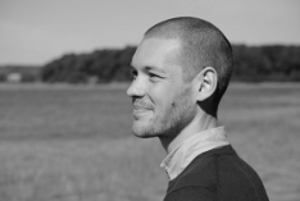
Dr. Shengquan Wang is an Associate Professor in the Department of Computer and Information Science at the University of Michigan-Dearborn , affiliated with the College of Engineering and Computer Science . His career spans over a decade, with prior academic experience at Texas A&M University as a Research/Teaching Assistant. He received his Ph.D. in Computer Science from Texas A&M University in 2006, preceded by M.S. degrees in Mathematics (Texas A&M, 2000) and Applied Mathematics (Shanghai Jiao Tong University, 1998), and a B.S. in Mathematics (Anhui Normal University, 1995). Research Interests Real-Time Systems Sustainable Computing (Power/Energy/Thermal Management) Networks and Distributed Systems Security and Privacy Optimization and Machine Learning Publication Trends His work focuses on real-time systems under thermal constraints , secure overlay architectures , and energy-efficient server farms . Recent research explores statistical delay guarantees in wireless networks and nonmonotone optimization techniques . Collaborations span institutions like Texas A&M University and Karlsruhe Institute of Technology. Awards and Grants NSF CAREER Award (CNS 0746906) Rackham Faculty Research Grant Best Paper Award at ECRTS 2006 Advising and Leadership Dr. Wang advises Ph.D. and Master's students like Jun Liu and Nan Wang, fostering innovation in sustainable systems. He leads the Research Laboratory for Sustainable Systems (RLSS) , focusing on thermally constrained real-time systems and secure computing.
Levy F. Costa is an Assistant Professor in the Electromechanics and Power Electronics group at the Department of Electrical Engineering, Eindhoven University of Technology (TU/e). He holds a PhD in Electrical Engineering from Kiel University (2019), an M.Sc. from the Federal University of Santa Catarina (2013), and a B.Sc. from the Federal University of Ceara (2010). His expertise spans high-power electronics, modular converter designs, and solid-state transformers for industrial and renewable energy systems. Academic Background: B.Sc., Federal University of Ceara (2010) M.Sc., Federal University of Santa Catarina (2013) PhD, Christian-Albrechts University of Kiel (2019) His research focuses on advancing high-efficiency power converter topologies, with specific emphasis on solid-state transformers and DC-DC converters. Recent work explores modular multilevel converter architectures, resonant converter designs for electrolyzer power supplies, and semiconductor material trade-offs in three-level resonant converters. He also investigates constrained power flow control strategies for grid-tied converters. Key projects include RelSST (Reliable Solid-State Transformer for Smart Grids) and HiVECAF (Highly Versatile Efficient & Compact Active Filters), addressing challenges in power electronics reliability, compactness, and control algorithms. Collaborations span institutions in Brazil, Germany, Switzerland, and the Netherlands. His publications highlight innovations in modular converter designs, semiconductor optimization, and power flow control for renewable energy integration. Current research aligns with UN Sustainable Development Goals related to clean energy and climate action, focusing on technologies to enhance grid stability and energy efficiency.
Paolo Pescetto is a Fixed-term tenure-track Assistant Professor in the Department of Energy (DENERG) at Politecnico di Torino, where he is also a member of the Interdepartmental Center PEIC (Power Electronics Innovation Center). He serves on multiple academic boards including the College of Electrical and Energy Engineering, College of Computer, Film and Mechatronics Engineering, and College of Mechanical, Aerospace, and Automotive Engineering. His research focuses on power electronics, electrical machines, and motor drives with particular emphasis on electric vehicle applications. His work spans motor control strategies, thermal management of high-power density motors, sensorless control techniques, and integrated power systems for e-mobility. He has developed advanced methodologies for flux mapping, torque ripple compensation, and fault protection in permanent magnet and synchronous reluctance machines. Analysis of his recent publications reveals a strong trend toward solving practical challenges in electric vehicle powertrains, with significant contributions in multi-phase motor drives, thermal management, and fault-tolerant control systems. His work bridges theoretical advances with practical automotive applications, particularly in third-generation electric vehicle technologies. Dr. Pescetto holds multiple patents in motor control technologies, including methods for MTPA tracking without HF injection, spatial harmonic flux-map identification, and isolated on-board battery chargers for electric vehicles. His intellectual property demonstrates practical innovation in the field of motor drives and power electronics. He actively supervises PhD students Andrei Bojoi and Chen Chen in the Electrical, Electronics, and Communications Engineering program, focusing on electric motor drives and sustainable traction electrification. His research projects include commercial contracts on sensorless control of synchronous reluctance machines, firmware implementation for motor control, and advanced sensorless control methodologies for brushless motors. As a member of the PEEMD Research Group within DENERG, Dr. Pescetto contributes to cutting-edge research in power electronics and motor drives, with a strong industry collaboration focus that translates academic research into practical automotive solutions.
Enrico Galvagno is an Associate Professor at the Department of Mechanical and Aerospace Engineering (DIMEAS) of the Polytechnic University of Turin. He is a member of the CARS@PoliTO Interdepartmental Center for Automotive Research and Sustainable Mobility. His academic roles include teaching and supervising courses on Mechanical System Dynamics , Hybrid and Electric Propulsion Systems , and Motor Vehicle Mechanics , as well as serving on doctoral college committees for Mechanical Engineering since 2019. His research interests span Applied Mechanics , Vehicle Dynamics , Hybrid and Electric Vehicles , and Noise, Vibration, and Harshness (NVH) . He focuses on Mathematical Modeling , Control Optimization , and Experimental Mechanics in automotive systems. Recent projects include the OWHEEL benchmarking initiative, EFFEREST for energy management in electric vehicles, and CliMAFlux for axial flux motor drives. Galvagno's scholarly work includes collaborative research on electric powertrain vibro-acoustics , off-road tire modeling , and tracked vehicle simulations . His 2024 publications highlight advancements in nonlinear vehicle dynamics , e-NVH performance , and model order reduction techniques. Scientific Awards and Memberships : Effective member of IFToMM Italy (2019-) Scientific Committee member of IFToMM Technical Committee for Engines and Powertrains (2019-) Effective member of SAE International (2010-) He supervises PhD students Luca Biondo , Luca Ciravegna , and Luca Zerbato , and has led commercial research contracts like Off-Road Tyre Model Integration and Tracked Vehicle Kinematic Modeling for industrial clients.
Dr. Mohamed Djemai is a Full Professor at École Nationale Supérieure de l'Électronique et de ses Applications (ENSEA), Cergy, and INSA Hauts-de-France. He is affiliated with the Quartz Laboratory (EA 7393) and LAMIH UMR CNRS 8201 at University Polytechnic Hauts-de-France. His research focuses on nonlinear control systems theory, with emphasis on hybrid and variable structure systems, sliding mode approaches, fault detection, and applications to power systems, robotics, and vehicle dynamics. IEEE Senior Member Associate Editor for Nonlinear Analysis: Hybrid Systems Co-Facilitator of National Working Group GT-SDH (2014–present) Member of IFAC-TC-1.3 (Discrete Event and Hybrid Systems) since 2001 Member of IFAC-TC-2.1 (Control Design) since 2005 His recent publications address fractional-order control of multiagent systems, stability analysis on time scales, fault-tolerant satellite attitude control, and robust consensus algorithms for nonlinear systems. Key methodologies include sliding mode control, event-triggered control, and observer-based fault detection. Current teaching activities encompass diagnostics, linear systems, signal processing, and sensor conditioning. The trend in Dr. Djemai's research since 2022 involves advanced control strategies for cyber-physical systems, distributed fault detection mechanisms, and time scale theory applications to intermittent communication problems. Notable collaborations include work with Michael Defoort, Stefano Di Gennaro, and international institutions like Kyungpook National University and University of Reims. Scientific contributions include: IEEE Senior Member recognition Development of robust exact filtering differentiators Innovations in fixed-time consensus protocols Leadership in IFAC technical committees Editorial role in hybrid systems analysis His laboratory work at Quartz and LAMIH supports applications in aerospace systems, renewable energy conversion, and industrial risk management architectures.
Hilmi AYGÜN is an Assistant Professor in the Department of Mechatronics Engineering at Karabük University's Faculty of Engineering and Natural Sciences, where he has been serving since 2019. His academic career began as a Research Assistant in the Electrical and Electronics Engineering Department from 2009-2019 before transitioning to his current position in Mechatronics Engineering. He also serves as the Erasmus Coordinator for both the Mechatronics Engineering Department and the university since 2021. Education: PhD in Electrical and Electronics Engineering (2011-2019), Karabük University, Institute of Science MSc in Electrical and Electronics Engineering (2010-2011), Karabük University, Institute of Science BSc in Electrical and Electronics Engineering (2003-2007), Kırıkkale University, Faculty of Engineering Hilmi AYGÜN's research primarily focuses on electrical machines and energy conversion systems, with particular emphasis on motor control algorithms for electric vehicle applications. His work integrates control theory with artificial intelligence techniques, especially optimization algorithms like Particle Swarm Optimization (PSO) and the Yusufcuk Algorithm. He has made significant contributions to field-oriented control of induction motors, DC motor control systems, and wind energy applications. His publication record shows a clear trajectory toward increasingly sophisticated control systems for electromechanical applications, with recent work focusing on metaheuristic methods for motor control, optimization of wind energy systems, and advanced DC motor control techniques. His research bridges theoretical control concepts with practical engineering applications, particularly in transportation and renewable energy sectors. Hilmi AYGÜN has successfully advised at least one Master's student, Hersh Hasan Taha Al Dawoodı, whose thesis focused on field-oriented control of induction motors using metaheuristic methods. He has participated in two major research projects: one on optimal flux reference direct torque control for asynchronous motors used in electric vehicles (2015-2019), and another on controlling bed temperature in fluidized bed boilers using PSO-PID controllers (2011-2013). As an educator, he has taught numerous courses including Electric Machine Dynamics, Modeling and Control of Biomedical Systems, Control of Electric Machines, Electric and Hybrid Vehicles, Industrial Automation, and various electronics courses. His teaching spans both undergraduate and graduate levels, demonstrating his versatility across multiple engineering disciplines within the mechatronics field.
Dr. Almas Shintemirov is a Research Fellow at Aalto University's Department of Electrical Engineering and Automation, specializing in robotics, control systems, and human-robot interaction. His research focuses on intelligent robotics, with emphasis on Real-time motion prediction for collaborative robots Nonlinear control algorithms for safe human-robot interaction Open-source robotic hardware design Deep learning applications in autonomous systems
Dr.-Ing. Frank-Josef Heßeler is a Senior Research Engineer (Geschäftsführender Oberingenieur) and Deputy Institute Director at the Institute of Control Engineering (IRT), RWTH Aachen University . His work focuses on control systems for automotive and urban mobility applications, including model predictive control, vehicle localization, and intelligent infrastructure. He actively contributes to research in autonomous driving, hybrid drivetrains, and thermal systems optimization. Control Engineering Automotive Systems Model Predictive Control Thermal Diagnostics Urban Traffic Simulation His publications highlight advancements in connected vehicle localization, scenario-specific motion modeling, and hybrid drivetrain control. He collaborates extensively with Dirk Abel and other researchers. No scientific awards or student advisement details are explicitly mentioned in the provided texts. He is affiliated with the Institute of Control Engineering, engaging in projects like CERMcity (autonomous urban driving testbed) and Galileo-based navigation systems. His work integrates simulation platforms, Neuro-Fuzzy models, and hardware-in-the-loop testing for automotive control solutions.
Satu-Pia Reinikainen is a tenured Professor in Computational Engineering at the Lappeenranta-Lahti University of Technology (LUT) School of Engineering Sciences . With expertise in chemometrics and multivariate analysis, her work bridges statistical modeling, spectroscopy, and environmental monitoring. Research Focus Development of advanced kernel-based methods for process control Application of hyperspectral imaging in material and environmental analysis Microplastic pollution dynamics in aquatic systems Integration of spectroscopic techniques for real-time monitoring Conservation of geological and heritage materials through data-driven approaches Her research combines chemometric algorithms, environmental data analysis, and industrial process monitoring to solve complex analytical challenges.
Claudio Gaz is a Senior Lecturer in Mechatronics, Control, and Autonomous Systems at the Department of Mechanical Engineering, Faculty of Engineering, Computing and the Environment, Kingston University London. He holds a PhD in Automation and Operational Research (2016) and a Master's in Control Engineering with top marks (2011) from Sapienza Università di Roma, and was awarded the French national qualification as maître de conférences (class 61) in 2019. His research spans control systems, robotics, and mathematical modeling, with a focus on industrial manipulators (e.g., KUKA LWR, Universal Robots UR10) and biological processes like glucose homeostasis. Recent work involves dynamic parameter identification for collaborative robots and sensorless force feedback in medical robotics. He has collaborated with institutions such as Sapienza Università di Roma, CNR-IASI (Italian National Research Council), and Airbus Group. His scientific awards include: Fellowship of the Higher Education Academy (FHEA) . Gaz has contributed to journals and conferences in robotics, control theory, and biomedical modeling, with a strong emphasis on real-time adaptive algorithms and safety in physical human-robot interaction.
Gurunath Gurrala serves as an Associate Professor in the Department of Electrical Engineering at the Indian Institute of Science (IISc), Bangalore. His research focuses on power systems dynamics, high-performance computing applications, and renewable energy integration. He maintains active collaborations with international institutions including Oak Ridge National Lab and Texas A&M University. His research interests center on Power Systems Analysis and Control , with specialization in High Performance Computing Applications, Nonlinear and Intelligent Control, Weak Grid Integration of Renewables, Microgrid Protection, and Smart Grid Stability. His work bridges theoretical control systems with practical power grid challenges, particularly for renewable-rich grids. His recent publications demonstrate a strong interdisciplinary trend, spanning power systems (35%), control theory (25%), renewable integration (20%), and emerging applications in biomedical engineering and environmental systems (20%). Key recurring themes include grid stability under high renewable penetration, advanced protection schemes for microgrids, and computational methods for power system analysis. IEEE Power and Energy Society (PES) Outstanding Engineer Award 2018 Young Engineer Award 2015, Indian National Academy Engineers Best Conference Paper, IEEE PES General Meeting 2015 Best Ph.D Thesis Award (Prof.D.J.Badkas Medal) 2010 Elevated to Senior Member IEEE (2016) Professor Gurrala has secured competitive research funding including the Young Scientist Grant from DST (2015) and International Travel Support from SERB (2017). He actively mentors students through PhD and Master's programs while teaching advanced courses including Power System Dynamics and Control (E4 231), Computer Control of Power Systems (E4 233), and Selected Topics in Integrated Power Systems (E4 237). His research group collaborates with power utilities and international research labs on grid modernization challenges.
Suleiman Sharkh is Professor of Electrical Machines and Drives at the University of Southampton within the Faculty of Engineering and Physical Sciences. His primary affiliation is with the Department of Electrical and Electronic Engineering, where he leads research in critical energy technologies. His work spans multiple interdisciplinary groups including Mechatronics Southampton, the Southampton Marine and Maritime Institute, Ocean Energy research, and Maritime Decarbonisation initiatives. Professor Sharkh's research focuses on electric machines, power electronics, and microgrids , with specialized expertise in battery management systems, energy harvesting, and electromagnetic field effects on aquatic life. His current projects investigate novel power electronic converters for grid-battery interfaces, hybrid dual-chemistry battery characterization, multi-degree-of-freedom actuators for vibration control, and electromagnetic guidance systems for fish migration. His work bridges theoretical innovation with commercial applications in marine propulsion, renewable energy integration, and electric vehicle infrastructure. Analysis of his recent publications reveals strong trends in electrification of marine systems (rim-driven thrusters, tidal turbines), advanced battery-grid interfaces (electrochemical impedance spectroscopy, hybrid chemistries), and bioelectromagnetic applications (fish behavior studies). His work consistently addresses real-world challenges in energy security, system reliability, and environmental sustainability through rigorous experimental validation. Scientific Awards The Engineer Energy Innovation and Technology Award (2008) for rim-driven marine thrusters Royal Academy of Engineering ExxonMobil Teaching Excellence Award (2013) Professor Sharkh actively supervises five PhD students while leading major research projects funded by EPSRC, Innovate UK, and industry partners. His current grants include the FEVER project on electric vehicle networks, Shark S research exchanges with China/India, and investigations into electromagnetic effects on eel migration. His laboratory work focuses on high-speed electrical machines, battery characterization rigs, and electromagnetic field exposure systems for biological studies. Future work emphasizes maritime decarbonization through integrated power electronics and machine design for zero-emission vessels.
Abhishek Halder is an Associate Professor in the Department of Aerospace Engineering at Iowa State University and an Associate Adjunct Professor in the Department of Applied Mathematics at the University of California, Santa Cruz. He is also a member of the Translational AI Center at Iowa State University. His academic journey includes joining Iowa State University as an Assistant Professor in July 2023 and previously serving as faculty at UC Santa Cruz starting from October 2017. Dr. Halder's educational background includes studies at IIT Kharagpur and Texas A&M University, where he developed expertise in systems and control theory with applications to matrix analysis, probability, and optimization. His research has been recognized with prestigious awards including the O. Hugo Schuck Best Application Paper Award from the American Automatic Control Council, Applied Mathematics Research Award from UC Santa Cruz, Outstanding Doctoral Student Award from Texas A&M, and Best Dual Degree Thesis Award from IIT Kharagpur. His research focuses on stochastic systems, control and optimization with applications to large scale cyber-physical systems. Dr. Halder has made significant contributions to the fields of optimal transport, Schrödinger Bridge theory, distributional control, and uncertainty propagation in dynamical systems. His work bridges theoretical developments with practical applications in power systems, aerospace engineering, and machine learning. He has secured multiple research grants from NSF, including a CPS Frontier project on Computation-Aware Algorithmic Design for Cyber-Physical Systems. Dr. Halder has demonstrated leadership in the control systems community through editorial roles including Associate Editor for IEEE Transactions on Automatic Control (2025-present), ASME Journal of Dynamic Systems, Measurement, and Control (2025-present), Systems & Control Letters (2022-present), and previously for IEEE Control Systems Society Conference Editorial Board (2019-2025) and IEEE Transactions on Aerospace and Electronic Systems (2019-2022). He is a Senior Member of IEEE and a member of IFAC, SIAM and ASME. His research group has produced numerous publications in top-tier journals and conferences, with recent work focusing on connections between optimal transport theory, stochastic control, and machine learning. The publication trends show increasing integration of Schrödinger Bridge formulations with machine learning techniques for distributional control problems across various domains including power systems, aerospace applications, and resource allocation. O. Hugo Schuck Best Application Paper Award (2024) Applied Mathematics Research Award from UC Santa Cruz (2022) IEEE Senior Member (2021) Outstanding Doctoral Student Award from Texas A&M Best Dual Degree Thesis Award from IIT Kharagpur Dr. Halder has mentored numerous PhD students including Alexis, Georgiy, Iman, Shadi, and Kenneth, many of whom have received prestigious fellowships. His research group maintains strong collaborations with national laboratories including Lawrence Livermore National Lab and Los Alamos National Lab, as well as industry partners. Dr. Halder is also committed to education and outreach, having created and taught the 'Feedback Control' course for high school students in the California State Summer School for Mathematics and Science (COSMOS), introducing complex control theory concepts without calculus or linear algebra.
Professor Mahdi Mahfouf holds the Chair in Intelligent Systems at the University of Sheffield's School of Electrical and Electronic Engineering . He obtained his MPhil (1988) and PhD (1991) in Control Systems from the same institution. After postdoctoral research (1992-1996) on Leverhulme-funded projects in Model-Predictive Control and Fuzzy Logic, he progressed through academic ranks at Sheffield to Full Professor (2005). Recipient of the IEE Hartree Premium Award (1992) and MEDIPEX Innovation Award (for ICU Decision Support Systems) Over 370 publications, including 130+ journal papers Head of the Intelligent Systems Research Laboratory Research Themes His work spans fundamental research in Fuzzy Logic (modelling, control), Neural-Fuzzy Systems, Self-Organising Control, and Evolutionary Optimization, alongside applied domains in pharmaceutical manufacturing, aerospace systems, biomedical engineering (ICU monitoring), and intelligent transportation. Recent publications focus on hybrid AI for pharmaceutical processes , type-2 fuzzy control systems , and machine learning in manufacturing metrology . Lab initiatives include multistage process monitoring and human-machine interaction systems for stress management.
Pierre Nyquist is an Associate Professor and docent in the Department of Mathematical Sciences at Chalmers University of Technology and Gothenburg University. His research is sponsored by the Swedish Research Council, the Swedish e-science Research Center (SeRC), and the Wallenberg Artificial Intelligence, Autonomous Systems and Software Program (WASP). He is also an elected member of the Young Academy of Sweden for the period 2024-2029 and has served as a scientific ambassador for EURANDOM since November 2021. Dr. Nyquist's research interests lie at the intersection of probability theory, mathematical statistics, and applied mathematics. His main expertise is in probability theory, with a focus on large deviations theory and stochastic numerical methods. He has a general interest in all aspects of probability theory and much of what is categorized as applied mathematics, particularly questions related to partial differential equations, optimization, and stochastic optimal control. Recently, he has become increasingly interested in the mathematical foundations of complex data analysis and modeling, and the interplay with ideas from physics. His current research interests include large deviations, gradient flows and their generalizations, stochastic numerical methods, statistical learning theory, stochastic processes, and random dynamical systems. Pierre Nyquist has received research funding from several prestigious sources including the Swedish Research Council, the Swedish e-science Research Center (SeRC), and the Wallenberg Artificial Intelligence, Autonomous Systems and Software Program (WASP). His publications demonstrate a consistent focus on theoretical aspects of probability with applications to computational methods and data analysis, showing increasing integration with machine learning techniques in recent years. elected member of the Young Academy of Sweden (2024-2029) scientific ambassador for EURANDOM (since November 2021) Dr. Nyquist is actively involved in mentoring the next generation of researchers. He currently supervises several PhD students including Cinja Arndt (starting Aug. 2025), Niki Wilhemlson (started Aug. 2024), and Viktor Nilsson (started Aug. 2020). He has previously supervised successful PhD students such as Federica Milinanni (Aug. 2020-May 2025) and Carl Ringqvist (Aug 2015-June 2021). He regularly teaches graduate-level courses including "Modern methods of statistical learning" and has supervised numerous MSc theses on topics ranging from deep learning for time-series radar signals to neural network embedding in insurance pricing. His research group is active in both theoretical developments and practical applications, with current projects spanning from mathematical foundations of probability to applications in machine learning and data science. Dr. Nyquist maintains strong international collaborations, as evidenced by his frequent travel for conferences and research visits to institutions such as Brown University and TU Delft.