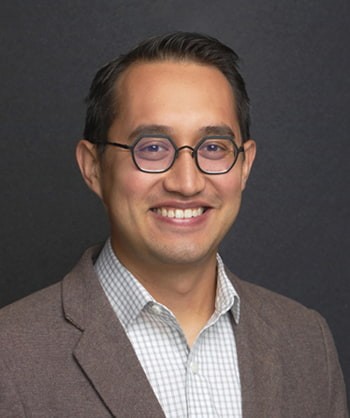
Dr. John Moore is an Assistant Professor in the Department of Mechanical Engineering at Marquette University . He leads the Computational Mechanics of Materials Laboratory, focusing on computational mechanics, materials science, and high-performance computing. His research spans alloys, polymers, and biomedical devices. Education Ph.D., Mechanical Engineering, Northwestern University (2015) M.S.E., Civil Engineering, University of Washington (2007) B.S., Aeronautical and Astronautical Engineering, University of Washington (2005) Research Focus Dr. Moore's work combines computational modeling with experimental validation to understand material behavior under extreme conditions. Key areas include: Crystal plasticity modeling of metallic alloys Nonlocal damage mechanics for fatigue prediction Dynamic spallation and porosity evolution High-throughput X-ray imaging of additively manufactured materials UV-sensitive resin material modeling Recent Publications His recent work focuses on advanced computational techniques for material failure analysis, including: Nonlocal approaches for statistical fatigue prediction Microinertia effects in spall modeling Betatron X-ray tomography applications UV resin optimization studies Phase transformation fatigue mechanisms Contact Email: john.a.moore@marquette.edu | Phone: (414) 288-6641 Location: Haggerty Hall, 225, Marquette University, Milwaukee, WI 53201
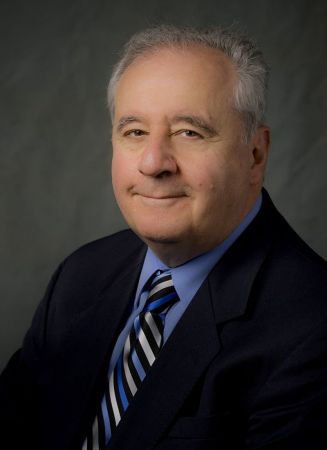
Giuseppe Fileccia Scimemi is a Researcher in Structural Mechanics at the University of Palermo. He teaches courses in Nonlinear Analysis of Structures and Building Science for Civil and Management Engineering programs. Research focuses on: Interface mechanics in discontinuous structures Heuristic techniques for structural identification Ultrasonic non-destructive testing methods Computational mechanics and optimization algorithms Recent publications demonstrate expertise in FRP bonding quality assessment, viscoelastic structural modeling, and innovative applications of optimization algorithms in geotechnical engineering. Supervises student theses on structural analysis, non-destructive testing, and concrete reinforcement techniques.
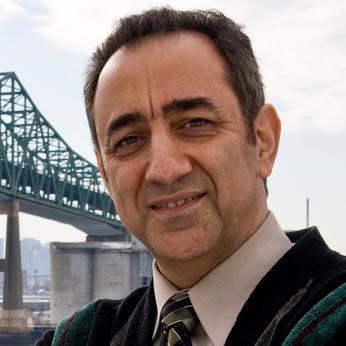
Professor Ningqun Guo holds the dual roles of Professor in Mechanical Engineering and Head of School for both the Malaysia School of Engineering and School of Information Technology at Monash University Malaysia. He previously served at Nanyang Technological University, Singapore. His academic journey includes a B.Eng from Nanjing University of Aeronautics and Astronautics (China) and a PhD from Imperial College London (UK). His research focuses on stress wave propagation, ultrasound applications, smart materials, nondestructive testing, and civil infrastructure analysis. He has published over 130 papers, secured S$2 million in research grants, and supervised over 10 PhD students. Key research areas include ultrasonic technology for material characterization, smart material systems, and image processing for infrastructure monitoring. His work aligns with UN Sustainable Development Goals, emphasizing sustainable infrastructure and innovation. Notable collaborations span global institutions, with recent projects exploring AI-driven pavement crack detection, transparent object reconstruction, and 3D imaging systems. His contributions to magnetorheological fluid applications and nanofluidics further underscore his interdisciplinary impact. Grants and funding have supported projects in sensor development, structural health monitoring, and advanced imaging technologies. His advisory work has produced impactful PhD graduates in mechanical engineering and materials science. Prof. Guo leads research teams focused on smart materials, nondestructive evaluation, and computational imaging. His lab integrates experimental and theoretical approaches to solve challenges in infrastructure, photonics, and nanotechnology.
James A Bay is an Associate Professor in the Department of Civil and Environmental Engineering at Utah State University , with a focus on Geotechnical Engineering , Earthquake Engineering , and MSE Retaining Structures . He has taught courses such as Engineering Soil Mechanics , Geotechnical Principles , and Mechanics of Materials since the 1980s. PhD in Civil/Geotechnical Engineering (1997), The University of Texas MS in Civil and Environmental Engineering (1987), Utah State University BS in Civil and Environmental Engineering (1986), Utah State University His research centers on Engineering Geophysics , Soil Dynamics , and Soil Mechanics , particularly in applications such as resonant column testing , LIDAR visualization of earthquake damage , and nondestructive pavement evaluation . He has published extensively on topics including dynamic soil properties , seismic wave propagation , and MSE wall performance . James A Bay has mentored over 25 graduate students, including Yoon-Shin Bae , Fernando Ventura Tejeda , and Potikul Vivithkeyoonvong . He has also received multiple awards, including the Outstanding Teacher (2015) and the C.A. Hogentogler Award (2012).
Jochum Wiersma serves as an Extension Professor at the University of Minnesota within the College of Food, Agricultural and Natural Resource Sciences, affiliated with the Northwest Research and Outreach Center (NWROC). His work bridges academic research and practical agricultural extension, focusing on crop science and agronomy for Minnesota's farming community. Dr. Wiersma's research spans crop science, agronomy, plant breeding, and sustainable agriculture with emphasis on small grains. He investigates critical agronomic parameters including planting date optimization, nitrogen management strategies, and disease resistance mechanisms in wheat, rye, and barley systems. His work addresses real-world challenges such as lodging prevention, Fusarium head blight control, and climate adaptation in Upper Midwest agricultural environments. Through field trials and variety development, he translates scientific findings into actionable practices for grain producers. Analysis of his recent publications (2022-2025) reveals consistent focus on management-intensity impacts across diverse small grain systems. Key trends include hybrid rye adaptation across US regions, genomic approaches to oat improvement, and dual-purpose (grain/forage) crop optimization. His research demonstrates particular expertise in spring wheat production systems, with significant contributions to variety registration and nitrogen-use efficiency studies across Minnesota and Canadian Prairies. Dr. Wiersma maintains active engagement with the Northwest Research and Outreach Center (NWROC), where he conducts field-based research and extension activities. His work involves direct collaboration with farmers, commodity groups, and industry partners to address regional agricultural challenges through scientifically rigorous yet practically applicable solutions.
Dr. Pratik Shah is an Assistant Professor in the Department of Pathology at the University of California, Irvine (UCI) School of Medicine. He leads a cutting-edge research group focused on translational artificial intelligence and biomedical technologies to advance diagnostic imaging, uncover biological mechanisms, and enable clinical deployment of digital therapeutics. Institution: University of California, Irvine School: School of Medicine Department: Department of Pathology Academic Rank: Assistant Professor Email: pratik.shah@uci.edu Dr. Shah's research lies at the intersection of computational medicine, artificial intelligence, and biomedical imaging. His work emphasizes developing interpretable and explainable AI systems that enhance model effectiveness, safety, and clinical utility. Key research areas include generative AI for nondestructive histopathology, deep learning for medical image analysis, AI-driven clinical decision support for infectious diseases, and multimodal imaging for biological insights. His lab is dedicated to creating equitable and responsible technologies to improve diagnosis and treatment of cancer, infectious diseases, and neurological disorders. The recent publications highlight a strong trend in applying deep learning to digital pathology, particularly in computational staining and tumor detection from non-stained images. There is a consistent focus on developing interpretable AI tools for medical image segmentation, with applications in cancer diagnostics, sepsis detection, and dental imaging. The research spans from foundational AI methods to clinical validation, showing a trajectory toward regulatory science and real-world deployment of AI in healthcare. MIT NEWS feature on computational staining research SPIE publication selected for Deep-Dive spotlight session SPIE publication selected for oral presentation IEEE BioInformatics and BioEngineering publication selected for oral presentation Dr. Shah has mentored a diverse group of students and postdoctoral associates, including PhD candidates in Mechanical Engineering at MIT and undergraduate researchers in Electrical Engineering and Computer Science. His trainees have contributed to high-impact publications in journals like JAMA Network and conferences like IEEE EMBC. He has fostered collaborations with institutions including Stanford, UCSF, and the FDA, indicating strong research outreach and interdisciplinary partnerships. His lab has received recognition through media features and conference selections, reflecting the significance and innovation of his work in AI for healthcare. Dr. Shah leads a multidisciplinary research team comprising postdoctoral associates, graduate students, research staff, and student researchers, primarily focused on machine learning and medicine. The lab has strong ties to MIT, where much of the prior research was conducted, and maintains collaborations with clinical and engineering experts across the US.
Mitch Dunn serves as an Advance Queensland Industry Research Fellow within the School of Mechanical and Mining Engineering at The University of Queensland, affiliated with the Centre for Advanced Materials Processing and Manufacturing (AMPAM). His research integrates materials science with electromagnetic applications, focusing on functional composites for aerospace and defence systems. Educational background: PhD in Mechanical Engineering (2018), The University of Queensland Bachelor of Engineering (Honours) (2011), The University of Queensland Research interests center on three interconnected domains. First, functional composite antenna structures for aerospace applications including load-bearing antennas and hypersonic vehicle systems. Second, nondestructive testing methodologies using nonlinear ultrasonics for damage detection in composites. Third, hybrid composite material development with emphasis on thermoset-thermoplastic systems and cost-effective manufacturing. His work bridges theoretical modeling with industry-driven applications, particularly in defence technology. Publication trends reveal consistent focus on composite material characterization (85% of works), with growing emphasis on RF-composite integration (40% of recent works). Key methodological approaches include nonlinear ultrasonics (65% of publications), finite element analysis (50%), and experimental validation of multifunctional structures. Key recognition: Advance Queensland Industry Research Fellowship Dunn actively supervises research projects including functional composite antennas for UAVs and hypersonic vehicle antenna systems. Current funding includes National Intelligence Discovery Grants for compact multi-mode antennas (2025-2027) and Advance Queensland grants for hypersonic vehicle antennas (2025-2028). Past projects include Defence Materials Technology Centre initiatives on functional antenna structures and high-temperature sub-assemblies. As part of the UQ Composites group within AMPAM, Dunn collaborates on industry technology development projects focused on functional composite materials and conformal antenna structures, with strong links to defence and aerospace sectors.
David Auty is an Associate Professor and Executive Director in the School of Forestry at Northern Arizona University. His research focuses on wood properties, forest management practices, and innovative applications of LiDAR technology in forestry. He leads projects investigating the impact of environmental factors on tree physiology, wood quality, and forest dynamics. Notable contributions include developing the sgsR toolbox for LiDAR-based forest inventories and studying radial profiles of specific gravity in conifers. His work bridges ecological and engineering disciplines, addressing challenges in sustainable forestry and climate resilience. Collaborations include international studies on wildfire impacts, carbon modeling, and wood mechanics. David actively contributes to datasets on tree growth dynamics and has authored over 45 scholarly works, emphasizing practical solutions for forest management and conservation. Key Focus Areas: Forest Management, Wood Quality, Remote Sensing, Climate Adaptation Tools & Innovations: sgsR LiDAR Toolbox, Acoustic Wood Testing, Stand Dynamics Models Collaborations: Global networks studying boreal forests, wildfire impacts, and conifer physiology David’s research highlights the interplay between ecological processes and industrial forestry needs, with implications for bioenergy, carbon sequestration, and resilient forest systems.
Dr. Wei Jiang is a Research Associate in Mid-Infrared Lasers and Detectors at the School of Electrical and Electronic Engineering, University of Sheffield. His work focuses on advancing population-based structural health monitoring (SHM) techniques, particularly for wind energy systems. He specializes in integrating spatial autoregressive models, sensor networks, and environmental data analysis to optimize wind farm performance and detect structural anomalies. Research interests include: Development of advanced SHM frameworks for large-scale infrastructure Data-driven approaches for wind farm wake field prediction and optimization Environmental mapping using Eov fields for infrastructure longevity Integration of machine learning in structural anomaly detection Recent publications emphasize automated structure selection, spatial modeling for turbine performance, and database systems for SHM networks. His work bridges electrical engineering principles with renewable energy systems, contributing to sustainable energy infrastructure advancements. No scientific awards or grants are explicitly listed in the provided information. Dr. Jiang collaborates on interdisciplinary projects involving sensor technology, environmental engineering, and data science applications.
Bryan Ranger is the Ferrante Family Assistant Professor in the Department of Engineering at Boston College, with a courtesy appointment in the William F. Connell School of Nursing and affiliation with the Global Public Health and the Common Good Program. He leads the Biomedical Imaging and Instrumentation Lab, focusing on ultrasound imaging, AI/ML algorithms, and global health applications. B.S.E., University of Michigan, Ann Arbor M.S.E., University of Michigan, Ann Arbor Ph.D., Massachusetts Institute of Technology (NSF Graduate Research Fellow) His research spans biomedical imaging, AI-driven diagnostics, and low-cost medical device development for resource-limited settings. Key themes include human-centered design, bioreactor monitoring, ultrasound elastography, and educational ultrasound platforms. Collaborations include Brigham and Women's Hospital, Jimma University (Ethiopia), Ahmedabad University (India), and Boston College departments like Computer Science and Nursing. Selected publications demonstrate expertise in musculoskeletal imaging, phantom development, and ultrasound education. Awards include Google Research Scholar (2022), Google Award for Inclusion Research (2023), ATIG Grant (2023), and SI-RITEA Grant (2023). Funded projects involve Gates Foundation support for maternal nutrition assessment and NIH mHealth Training Institute (2025). Google Award for Inclusion Research (2023) Google Research Scholar Program Award (2022) ATIG Grant (2023) SI-RITEA Grant (2023) NSF Graduate Research Fellow (PhD period) He teaches first-year engineering labs and courses in biomedical imaging, emphasizing societal responsibility in engineering education. His lab includes student researchers like Hayoung Cho, who received the Finnegan Award, and has presented at conferences including BMES, IEEE GHTC, and KEEN workshops.
Prof. Dan M. Frangopol is the Fazlur R. Khan Endowed Chair of Structural Engineering and Architecture at Lehigh University's P.C. Rossin College of Engineering and Applied Science. He is a global leader in life-cycle civil engineering, focusing on probabilistic methods, infrastructure resilience, and sustainability. His research spans structural reliability, risk-based decision-making, and multi-hazard mitigation under climate change. Affiliations: Lehigh University (current), University of Colorado Boulder (23 years), and institutions in Romania and Belgium. Education: Dipl.-Ing. from Bucharest (1969), Doctor of Applied Sciences (summa cum laude) from University of Liège (1976), and multiple honorary doctorates. His research interests include life-cycle cost optimization, probabilistic mechanics, and infrastructure systems management. He pioneered the International Association for Bridge Maintenance and Safety (IABMAS) and the International Association for Life Cycle Civil Engineering (IALCCE). Key contributions include frameworks for resilient infrastructure under climate change and extreme events. Frangopol has authored/co-authored over 500 journal articles, 5 books, and 70 book chapters. He has supervised 50 PhD and 56 M.Sc. students, many of whom are now leading academics and practitioners. His awards include the inaugural Dan M. Frangopol Medal (2023), ASCE Noble Prize (2015, 2024), and multiple honorary memberships in national and international academies. He has advised numerous high-profile projects funded by NSF, FHWA, NASA, and others. His labs and initiatives include the Fazlur R. Khan Distinguished Lecture Series and the journal Structure and Infrastructure Engineering .
Dr. Joel Mobley is a Professor in the Department of Physics and Astronomy at the University of Mississippi and a Senior Scientist II at the Jamie Whitten National Center for Physical Acoustics. He specializes in biomedical ultrasonics, opto-acoustics, and physical acoustics, with a focus on applications in medical imaging, material characterization, and nuclear storage systems. Education: B.S. (Physics, University of Kentucky, 1989), M.A. (Physics, Washington University in St. Louis, 1991), Ph.D. (Physics, Washington University in St. Louis, 1996). Postdoctoral and research roles include Oak Ridge National Laboratory (1997-2004) and the U.S. Army Research Laboratory (2004-2005). Research Interests: Dr. Mobley’s work spans ultrasonic beamforming in biomedical contexts, acoustic lens design, nuclear cask structural integrity analysis, and microsphere-based metamaterials. His recent projects include droplet manipulation via acoustic tweezers, vibration-based monitoring of nuclear storage systems, and multiphase fluid dynamics. Teaching: Courses include Physics for Engineering, Optics, Biophysics, and Acoustics. He actively contributes to the development of graduate programs in physical acoustics. Lab/Affiliations: Primary affiliations include the National Center for Physical Acoustics (NCPA) and the University of Mississippi’s Department of Physics and Astronomy. His research integrates interdisciplinary approaches across physics, engineering, and environmental science.
Kun-Jun Han is an Associate Professor at the Louisiana State University Agricultural Center, affiliated with the School of Plant, Environmental and Soil Sciences within the College of Agriculture. His research focuses on forage crop improvement, biofuel feedstock development, and soil health enhancement. He leads the Forage Quality Lab, which provides analytical support for forage nutritional value assessment. Education: Han holds a Ph.D. in Agronomy from the University of Wisconsin-Madison (2001) and multiple degrees in Animal Sciences from Seoul National University, including a Ph.D. (1995), M.S. (1989), and B.S. (1987). Research Interests: His work emphasizes sustainable agricultural practices, including nondestructive forage analysis using NIRS, cover crop impacts on soil health, and optimization of biofuel feedstock production. Key areas include legume integration in pastures, silage quality evaluation, and climate-resilient forage systems. Grants & Funding: Han has secured over $1.2 million in grants from USDA programs, the United Sorghum Checkoff, and others, supporting projects on soil health, forage radish benefits, and biofuel crop management. Labs/Teams: The Forage Quality Lab collaborates with extension programs and industry stakeholders to improve forage utilization and livestock productivity. Recent efforts include developing machine learning tools for weed identification and evaluating biochar effects on crop productivity.
Masoud Sanayei is a Professor of Civil and Environmental Engineering at Tufts University's School of Engineering, where he has been a faculty member since 1986. He currently serves as an active professor in the Civil and Environmental Engineering department, teaching courses in structural analysis, finite element analysis, and structural dynamics. Dr. Sanayei's research focuses on bridge structural health monitoring (SHM), building train-induced vibrations, nondestructive testing of full-scale structures, and fatigue life prediction of structures with nonproportional multi-axial loading. His work has significantly advanced the field of structural health monitoring through the development of bridge signatures, an innovative nonparametric probabilistic method using operational bridge responses due to daily traffic for structural condition assessment. His recent publications demonstrate a strong trend toward integrating advanced computational methods including deep learning and machine learning with traditional structural engineering approaches. His research spans from fundamental vibration analysis to practical applications in bridge and building monitoring, with particular emphasis on train-induced vibrations in over-track structures and fatigue assessment of complex connections. Albert Nelson Marquis Lifetime Achievement Award by Marquis Who's Who 2017 Professor of the Year Award, Tufts University Dr. Sanayei has secured numerous research grants from the National Science Foundation, Federal Highway Administration, and Massachusetts Port Authority, focusing on structural performance monitoring, fatigue assessment, and asset management. His professional activities include editorial board membership for the Journal of Bridge Engineering (ASCE), committee leadership in the AISC/ASCE Steel Bridge Competition, and active participation in technical committees related to structural identification. His laboratory work includes extensive full-scale testing on structures such as the Tobin Bridge in Boston, Powder Mill Bridge in Massachusetts, Memorial Bridge in New Hampshire, Boston Convention Center, Hynes Convention Center, TD Garden, MIT Brain and Cognitive Science Center, and over-train-track buildings atop Shenzhen Metro Depot in China.
Mojtaba Dirbaz is an Adjunct Professor at the Department of Civil, Architectural, and Environmental Engineering within the Armour College of Engineering at Illinois Institute of Technology. His doctoral degree in Civil Engineering (Structural Engineering) was awarded by Illinois Institute of Technology in 2013. His research focuses on advancing structural health monitoring and infrastructure assessment through Bayesian methodologies. Key interests include damage detection, modal analysis, and uncertainty quantification in civil engineering systems. His work applies probabilistic frameworks to bridge condition assessment and structural integrity evaluation using limited or uncertain field data. Recent publications emphasize Bayesian updating techniques for infrastructure diagnostics, integrating visual inspection and modal data to enhance reliability in structural condition assessment. No scientific awards are explicitly listed. Advising roles and grants are not mentioned in available records. No affiliated labs or teams are noted in the provided information.