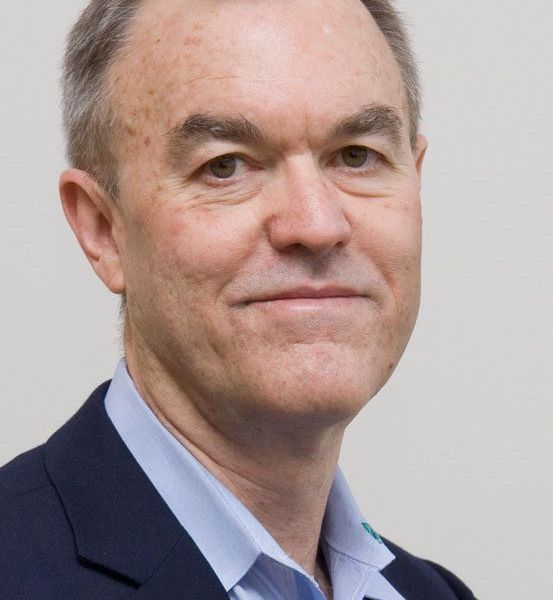
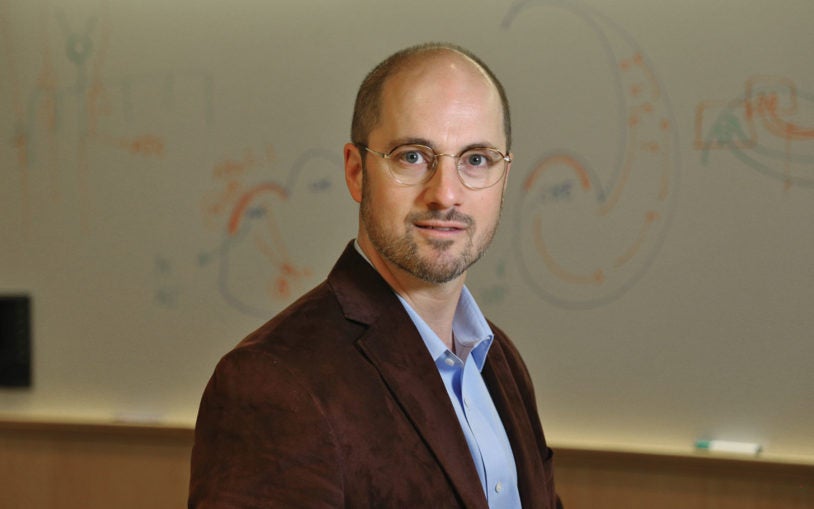
Tom Tullius is a Professor of Chemistry at Boston University, with joint appointments in Pharmacology and Experimental Therapeutics at the Boston University School of Medicine. He also serves as Director of the Boston University Bioinformatics Program. His research focuses on structural biology, biophysical chemistry, and genomics, particularly the development of hydroxyl radical footprinting to study DNA and RNA structures. Tullius earned his Ph.D. in Chemistry from Stanford University in 1979 and completed an NIH postdoctoral fellowship at Columbia University. Research Interests: Tullius's work includes the structural analysis of DNA and RNA, evolutionary selection of DNA shape, and the ENCODE project. His lab introduced hydroxyl radical footprinting, a method widely used for studying nucleic acid structures and their interactions with proteins. Current projects involve mapping DNA shape at single-nucleotide resolution and developing high-throughput techniques for RNA structure analysis. Awards and Honors: Ellison Medical Foundation Senior Scholar Award in Aging (2009–2013) Herbert A. Sober Award (1998) Fellow of the AAAS (1996) Searle Scholar (1984–1987) Grants and Collaborations: His research has been supported by NIH and NSF grants, including studies on DNA structural motifs and ENCODE Consortium projects. The Tullius Lab collaborates with institutions like NIH and the National Human Genome Research Institute. Labs and Teams: The Tullius Lab at Boston University develops chemical and computational tools for nucleic acid structure analysis. Projects include ORChID databases and GBshape genome browser tools for DNA structural annotations.
Xiaojun Tian is an Associate Professor at Arizona State University's School of Biological and Health Systems Engineering. He leads the Tian Laboratory, which focuses on quantitative approaches to understanding biological systems through the integration of mathematical modeling and experimental techniques. His work bridges systems biology, synthetic biology, and biomedical engineering. Education: Ph.D. in Systems Biology from Nanjing University (2012) Postdoctoral Fellow at Virginia Tech (2012-2014) Postdoctoral Fellow at University of Pittsburgh (2014-2017) Research Interests: Dr. Tian's research spans multiple interdisciplinary areas at the intersection of biology, engineering, and mathematics. His laboratory employs quantitative experiments and mathematical modeling to investigate fundamental problems in systems and synthetic biology, with particular focus on gene circuits, nonlinear dynamics, and cellular decision-making processes. His work on epithelial-mesenchymal transition (EMT) has provided important insights into cancer metastasis and tissue development. The lab's approach combines theoretical frameworks with experimental validation to develop predictive models of biological behavior. Research Trends: Analysis of Dr. Tian's recent publications reveals a strong focus on resource competition in synthetic gene circuits, growth feedback mechanisms, and the development of robust control strategies for biological systems. His work increasingly integrates concepts from nonlinear dynamics, control theory, and systems biology to address challenges in synthetic biology engineering. Recent publications demonstrate a shift toward more complex multi-module circuit designs and the development of strategies to mitigate context-dependent circuit failures. Scientific Awards: NIH Maximizing Investigators' Research Award (MIRA) NSF Career Award Advising and Grants: Dr. Tian has successfully mentored graduate students including Diego Barra Avila (who successfully defended his Master's Thesis) and Hanah (who passed her comprehensive exam). His research is supported by multiple significant grants including an NIH grant titled "Multi-Scale Engineering of Heterogeneity in the Host-Aware Synthetic Gene Circuits" (2021-2026), an NSF grant on "Epigenetics Control by Noncoding RNA" (2019-2022), and an NSF CAREER award "Molecular and Cellular Mechanisms Underlying Circuit-Host Interactions" (2022-2027). Laboratory: The Tian Laboratory at ASU focuses on developing quantitative approaches to understand and engineer biological systems. The lab actively recruits talented and motivated graduate students interested in interdisciplinary research at the interface of biology, engineering, and mathematics. Current research directions include investigating circuit-host interactions, developing strategies to address resource competition in synthetic gene circuits, and understanding the dynamical mechanisms underlying cellular decision-making processes.
Kirk W Deitsch is a Professor of Microbiology and Immunology at Weill Cornell Medical College , where he has been affiliated since 2010. His work focuses on Plasmodium falciparum biology with particular emphasis on antigenic variation , virulence gene regulation , and epigenetic mechanisms enabling chronic malaria infections. Education: Ph.D. , Michigan State University (1994) B.S. , Central Michigan University (1989) Research Interests encompass the molecular strategies malaria parasites employ for antigenic switching and immune evasion , including the role of DNA repair pathways , var gene family dynamics, and transcriptional plasticity in clinical isolates. His team investigates how chromatin structure and noncoding RNAs regulate virulence gene expression, with applications in vaccine development and epigenetic drug discovery . Recent publication trends show a focus on CRISPR-based gene editing in Plasmodium, telomere biology in genome stability, and transcriptional networks controlling antigenic variation. His work combines genomic approaches with epigenetic profiling to understand malaria pathogenesis. Research Funding includes grants from the National Institute of Allergy & Infectious Diseases (2024-2027) as Principal Investigator, and collaborative projects (2023-2025; 2019-2025) exploring transcriptional switching networks and translesional DNA polymerases in parasite genome diversification.
Professor Adam Siepel is a prominent computational biologist at Cold Spring Harbor Laboratory (CSHL) , where he has directed the Simons Center for Quantitative Biology since 2014. Holding a Ph.D. in Computer Science from UC Santa Cruz (2005), Siepel bridges computer science, statistics, and genetics to decode evolutionary patterns in genomic data. Key affiliations: CSHL (2014-present), Cornell University (2006-2014), National Center for Genome Resources (1996-2001) Research Focus : His work centers on developing mathematical models and computational methods to analyze genomic evolution. Siepel's lab explores molecular evolution , transcriptional regulation , and population genetics , with applications spanning cancer, plant breeding, and human disease. Recent Research Trends : His team has published extensively on transcription elongation dynamics , ancient human evolution , maize domestication , and cancer metastasis mapping . Articles highlight integration of nascent RNA sequencing , machine learning , and ancestral recombination graphs . Scientific Recognition : Guggenheim Fellowship (2012-2013) Sloan Research Fellowship (2009-2011) Packard Fellowship (2007) NSF CAREER Award (2007) Mentorship & Collaboration : Mentored over 20 graduate and postdoctoral researchers, including Ziyi Mo and Armin Scheben . Collaborates with experimentalists in cancer, neuroscience, and plant biology. Lab Overview : The Siepel Lab unites mathematicians, physicists, and biologists to tackle interdisciplinary problems. Current projects include modeling transcriptional equilibrium , tracking cancer evolution , and analyzing primate genomic constraints .
Caitlin C. O'Meara, PhD is an Associate Professor in the Department of Physiology at the Medical College of Wisconsin and a member of the Cardiovascular Research Center. Her research program focuses on understanding the molecular and cellular mechanisms underlying cardiac regeneration and repair following injury. Dr. O'Meara's research interests center on cardiac regeneration mechanisms, with particular focus on: Cardiomyocyte proliferation and cell cycle regulation IL-4/IL-13 signaling pathways in cardiac repair Cardiac macrophage function in regeneration Genetic regulation of heart function Cardiac remodeling after myocardial infarction Her most recent publications (2023-2025) demonstrate continued innovation in methodologies for measuring cardiomyocyte division and understanding the complex interplay between immune signaling and cardiac repair mechanisms. The research shows a clear trajectory toward translating basic findings into potential therapeutic approaches for heart disease. Notable scientific contributions include: Elucidating the role of IL-13 in promoting functional recovery after myocardial infarction Demonstrating that Runx1 influences but is not essential for cardiomyocyte cell-cycle activation Developing novel methods for quantifying cardiomyocyte cell division Revealing the adverse cardiac effects of IL4Rα blockade Dr. O'Meara maintains an active research program with consistent publication output, demonstrating strong mentorship through numerous collaborative projects and contributing significantly to the understanding of cardiac regeneration mechanisms. Her work bridges basic science and potential clinical applications for improving cardiac outcomes after injury.
Niels Tommerup is a Professor of Medical Genetics at the Department of Cellular and Molecular Medicine, University of Copenhagen, where he has served since 1996. He previously directed the Wilhelm Johannsen Centre for Functional Genome Research (2001-2013) and was Deputy Head of Department (2007-2019). His research group focuses on mapping balanced chromosomal rearrangements (BCR) to identify disease genes, regulatory domains (Topological Associating Domains), and novel genetic mechanisms, as well as characterizing germline chromothripsis and functional studies of non-coding RNA genes. Tommerup earned his DMSc. in genetics (1994) and medical degree (Cand.med., 1978) from the University of Copenhagen. His early career included positions as a junior doctor, research assistant, and senior doctor at the J.F. Kennedy Institute in Denmark (1978-89), and as a Consultant at the Department of Medical Genetics, Ullevål University Hospital in Oslo, Norway (1989-91). He has held visiting scientist positions at institutions in London, Australia, and Norway. His research spans multiple areas including cytogenetics, translocations and inversions, next generation sequencing, Topological Associating Domains, Long Range Position Effects, 3D-genome organization, and long noncoding RNAs. Tommerup coordinates the International Breakpoint Mapping Consortium (2014-present), involving over 100 diagnostic cytogenetic laboratories from more than 50 countries across six continents. His work has established that direct gene truncation may explain approximately 18% of BCR-associated developmental disorders, and that long-range position effects may be at least as frequent a cause as gene truncation. His recent publications reveal trends in understanding sex differential responses to viral infections (particularly focusing on the X-chromosome), linking anatomical variation to genetic variation, and developing methods for visualization of nuclear genome organization. His work bridges basic genomic research with clinical applications in developmental disorders, intellectual disability, autism, epilepsy, and other conditions. Det Classenske Fideicommis Boglegat (1987) Iris Preuss's Mindelegat (1994) First Harold Klinger Memmorial Award Lecture, Atlanta, USA (2006) Tommerup has supervised 27 PhD students and 10 postdocs. His editorial roles include service on the boards of Briefings in Functional Genomics, Clinical Genetics, Computational and Structural Biotechnology Journal, PeerJ, and Australasian Med J. He has organized numerous academic events including the International Summer School in Functional Genomics and the Wilhelm Johannsen Symposium. His international collaborations include the EU-concerted action Mendelian Cytogenetics Network and the International Breakpoint Mapping Consortium. Tommerup leads the Tommerup Group which coordinates the International Breakpoint Mapping Consortium and collaborates with Michael Talkowski's group at Harvard to accumulate the largest collection of sequence-resolved germline balanced chromosomal rearrangements. His laboratory combines DNA-DNA-interaction (Hi-C) studies with short and long read sequencing to improve the dissection of complex chromosomal rearrangements. The group has initiated systematic X-inactivation studies of sequence-resolved X;autosomal translocations and X-inversions, and conducts research on germline chromothripsis and host genetic factors underlying sex differential responses to viral infections.