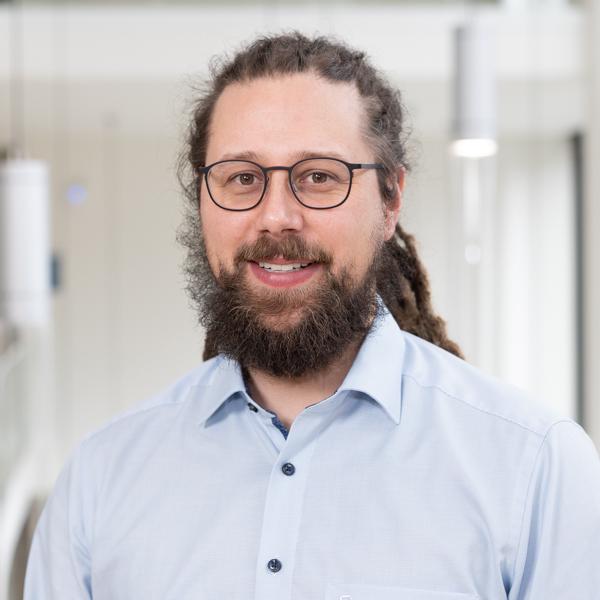
Prof. Igors Gorbovickis is an Associate Professor of Mathematics at the Department of Mathematics, School of Computer Science and Engineering, Constructor University (formerly Jacobs University Bremen). His research focuses on complex dynamical systems, including topics such as renormalization theory, bifurcation analysis, Julia sets, and applications to mathematical physics. He also contributes to discrete geometry, particularly exploring conjectures like the Kneser-Poulsen problem. His work bridges pure mathematics with interdisciplinary applications, emphasizing rigorous analysis of nonlinear systems and geometric configurations. Key areas of investigation include critical point accumulations, Hausdorff dimension estimates, and equidistribution phenomena in parameter spaces. Recent publications highlight advancements in understanding chaotic systems, circle maps, and the interplay between algebraic structures and dynamical behavior. Prof. Gorbovickis collaborates internationally, with co-authored papers appearing in journals like Advances in Mathematics , Ergodic Theory and Dynamical Systems , and Nonlinearity . His office is located at Research I, Room 128 on the Constructor University campus in Bremen, Germany.
Prof. Dr. Michael Ulbrich is a full professor and Chair of Mathematical Optimization at the Technical University of Munich (TUM), within the School of Computation, Information and Technology. He has held this position since 2006 and previously served as Dean of Studies (2007–2010) and Vice Dean of the Faculty of Mathematics (2012–2015). His research focuses on nonlinear optimization, optimal control, and numerical analysis, with applications in fluid dynamics, shape optimization, and PDE-constrained systems. He leads projects in the DFG SPP 1962 and IGDK 1754, and has received prestigious awards including the Howard Rosenbrock Prize (2015) and the Doctoral Award from the TUM Association of Friends (1996). Ulbrich is Editor-in-Chief of Optimization and Engineering and contributes to multiple journals. His work bridges theoretical foundations and practical applications, including CO2 sequestration, fluid-structure interaction, and distributed optimization algorithms. Education: PhD (1996), Habilitation (2002) in Mathematics at TUM. Research stays at Rice University (USA) under DFG funding. Research Areas: Semismooth Newton methods, PDE-constrained optimization, optimal control of Navier-Stokes equations, and distributed parameter systems. Awards: Rosenbrock Prize, Teaching Excellence Awards, and recognition for doctoral work. Leadership Roles: Department Head of Mathematics (2022–), Member of TUM Senate (2019–2022), and Co-Chair of GAMM 2018. Ulbrich has authored influential textbooks like Semismooth Newton Methods for Variational Inequalities and Nichtlineare Optimierung . His recent projects include OptiGeoS (2024–2026) and collaborations on nonsmooth optimization and stochastic algorithms. His academic contributions span over 100 publications, emphasizing both algorithmic innovation and rigorous mathematical analysis.
Vladimir Spokoiny is a Professor at the Departments of Mathematics and Economics of the Humboldt University of Berlin and Head of the Research Group "Stochastic Algorithms and Nonparametric Statistics" at the Weierstrass Institute for Applied Analysis and Stochastics (WIAS) in Berlin, Germany. His research spans multiple areas of statistics, machine learning, and financial mathematics, with significant contributions to nonparametric statistics, high-dimensional data analysis, and statistical methods in finance. Spokoiny received his M.Sc. in applied mathematics from the Moscow Institute of Railway Engineering in 1981 and his Ph.D. in mathematics from Lomonosov Moscow State University in 1988. He completed his Habilitation at Humboldt University in 1996. His academic career includes positions at the All-Union Institute of Railway Transport in Moscow, the Institute for Information Transmission Problems in Moscow, and the Institute for Applied Analysis and Statistics in Berlin before joining the Weierstrass Institute and Humboldt University where he has been a professor since 2002. Spokoiny's research focuses on adaptive nonparametric smoothing and hypothesis testing, high dimensional data analysis, statistical methods in finance, image analysis with applications to medicine, classification, and nonlinear time series. His work often addresses the challenges of nonstationarity in time series data and develops innovative methods for volatility estimation and risk management. He has made significant contributions to the development of adaptive weights smoothing procedures, which have applications in image processing, community detection, and manifold learning. His recent work has expanded into high-dimensional statistics, Bayesian inference, and optimization methods for machine learning, with publications demonstrating novel approaches to Gaussian approximation, Laplace methods, and statistical inference in non-Euclidean spaces. Spokoiny has supervised numerous PhD students including Oliver Reiss, Danilo Mercurio, Ying Chen, Elmar Diederichs, and Mstislav Elagin, whose research has focused on mathematical finance, time series analysis, and statistical methods. He serves as an Associate Editor for The Annals of Statistics (since 2004) and Statistics and Decisions (since 2002), and has previously served on the editorial board of the Journal of Statistical Planning and Inference. His professional activities include reviewing for major statistical journals including Annals of Statistics, Bernoulli, Econometrica, and Journal of American Statistical Association, as well as reviewing grant proposals for the National Science Foundation (USA), German Research Foundation, and Netherlands Organisation for Scientific Research. Spokoiny is a member of several professional societies including the International Statistical Institute, American Statistical Association, Institute of Mathematical Statistics, and Bernoulli Society. He is fluent in Russian (mother tongue), English, and German, and has good knowledge of French. His research group at WIAS focuses on developing novel statistical methodologies with applications across various scientific domains, particularly emphasizing adaptivity and robustness in complex data environments. The group's work has significant implications for financial risk management, medical imaging, and machine learning applications, with recent publications addressing fundamental questions in high-dimensional statistics and nonparametric inference.
Michael Muehlebach leads the independent Learning and Dynamical Systems research group at the Max Planck Institute for Intelligent Systems in Tuebingen, Germany. His interdisciplinary work bridges machine learning, dynamical systems theory, and control engineering to develop algorithms for cyber-physical systems with theoretical guarantees and practical implementations. Dr. Muehlebach received his B.Sc. and M.Sc. in Mechanical Engineering from ETH Zurich in 2010 and 2013, specializing in robotics and control systems. He completed his Ph.D. at ETH's Institute for Dynamic Systems and Control under Prof. R. D'Andrea in 2018, followed by postdoctoral research with Prof. Michael I. Jordan at UC Berkeley. His research focuses on constrained optimization, reinforcement learning, and control theory with applications in robotics. He pioneered approaches that express constraints in terms of velocities rather than positions, enabling more efficient optimization algorithms. His work spans theoretical foundations to physical implementations, including the One-Wheel Cubli balancing robot and electromagnetic navigation systems. Recent publications reveal a strong trend toward physics-informed machine learning, particularly for robotics applications requiring real-time performance and safety guarantees. Dr. Muehlebach has received numerous prestigious awards: Outstanding D-MAVT Bachelor Award Willi-Studer prize for best Master's degree ETH Medal and HILTI prize for doctoral thesis Branco Weiss Fellowship (2018) Emmy Noether Fellowship (2020) Amazon Fellowship (2024) He actively mentors doctoral researchers including Hao Ma, Melis Ilayda Bal, and Onno Eberhard, with research supported by multiple grants. His group maintains strong collaborations with Bernhard Schölkopf's Empirical Inference group at the Max Planck Institute. The Learning and Dynamical Systems group develops innovative hardware and software platforms, including Floaty (a wind-harnessing flying robot), advanced electromagnetic navigation systems, and data-efficient learning methods for robotic table tennis. Their approach combines rigorous theoretical analysis with practical validation on physical systems, emphasizing the integration of known physical structure into machine learning algorithms to improve sample efficiency and ensure generalization.
Michael Mühlebach is a Research Group Leader at the Max Planck Institute for Intelligent Systems in Tübingen, Germany, leading the independent Learning and Dynamical Systems group. His academic journey began at ETH Zurich where he earned his B.Sc. (2010) and M.Sc. (2013) in mechanical engineering, specializing in robotics, systems, and control. He completed his Ph.D. at ETH Zurich in 2018 under Prof. R. D'Andrea, followed by postdoctoral research at UC Berkeley with Prof. Michael I. Jordan. Dr. Mühlebach's research spans machine learning, dynamical systems, control theory, and optimization . His work bridges theoretical foundations with practical applications in robotics, developing methods that incorporate physical constraints and system dynamics into learning frameworks. His group focuses on online learning, physics-informed machine learning, and large-scale optimization for cyber-physical systems, with applications in electromagnetic navigation, robotic table tennis, and energy-efficient flight systems like the shape-changing robot Floaty . His publication record shows a strong focus on constrained optimization, with recent work exploring decision-dependent stochastic optimization, nonlinear feedback, and the theoretical foundations of reinforcement learning. His research integrates perspectives from control theory, dynamical systems, and optimization to develop algorithms with strong theoretical guarantees and practical performance. Outstanding D-MAVT Bachelor Award Willi-Studer prize for best Master's degree ETH Medal and HILTI prize for doctoral thesis Branco Weiss Fellow (2018) Emmy Noether Fellowship (2020) Amazon Fellowship (2024) Dr. Mühlebach actively mentors doctoral researchers and is seeking talented students for PhD and Master's projects. His research group has received funding from multiple prestigious fellowships and maintains collaborations across institutions including ETH Zurich, UC Berkeley, and various Max Planck research units. The group's work spans theoretical developments to practical implementations on robotic systems, demonstrating strong connections between mathematical theory and physical realization.
Aleksandar Bojchevski is a full professor of Computer Science at the University of Cologne, leading the Trustworthy Artificial Intelligence Lab (TAIL). His research focuses on developing robust, interpretable, and privacy-preserving machine learning models, particularly graph neural networks (GNNs). The lab emphasizes trustworthiness in high-stakes applications through methods that handle noisy, adversarial, or anomalous data. Bojchevski holds a PhD and PostDoc from the Technical University of Munich, advised by Stephan Günnemann. Previously, he was faculty at CISPA Helmholtz Center for Information Security. His work bridges theory and practice, addressing adversarial robustness, uncertainty quantification, and scalable GNN techniques. Research interests include: robustness certification for GNNs, conformal prediction, adversarial attack analysis, and privacy-aware machine learning. His lab actively collaborates with RWTH Aachen and organizes events like the Learning on Graphs Meet Up. Recent achievements include a teaching award for the Machine Learning lecture (SS 24) and NeurIPS 2024 acceptance of SVFT: Parameter-Efficient Fine-Tuning with Singular Vectors . Open positions are available in his group focusing on trustworthy ML topics. Key labs/teams: Trustworthy Artificial Intelligence Lab (TAIL), Center for Data and Simulation Science (CDS) as a core scientist.
Prof. Dr. Martin Burger is a leading scientist at DESY and a Full Professor in the Department of Mathematics at Universität Hamburg, where he leads the Computational Imaging Group. His research bridges applied mathematics, imaging sciences, and machine learning, with a focus on inverse problems, mathematical modeling, and partial differential equations. He has held professorial positions at Universität Münster and FAU Erlangen-Nürnberg prior to his current dual appointment. Full Professor, Universität Hamburg (2023–present) Leading Scientist, DESY, Hamburg (2023–present) Full Professor, FAU Erlangen-Nürnberg (2018–2023) Full Professor, Universität Münster (2006–2018) His research interests include inverse problems, variational regularization, optimal transport, kinetic models, and mathematical modeling in biology and social sciences. He has made significant contributions to imaging reconstruction, sparse neural networks, and the analysis of transformer architectures. His work often integrates theoretical analysis with computational methods, influencing both pure and applied mathematics. The most recent articles reflect a strong trend toward interdisciplinary applications, combining deep learning with PDE-based modeling, analyzing social and biological systems via kinetic and mean-field models, and advancing mathematical imaging through graph-based and optimal transport methods. His publications span high-impact venues in applied mathematics and computational science. Calderon Prize, Inverse Problems International Association (IPIA) ERC Consolidator Grant (2014) Invited speaker at ECM (2021), ICM (2022), and ICIAM (2023) Editor-in-Chief, European Journal of Applied Mathematics (since 2017) Prof. Burger has supervised numerous PhD students and postdoctoral researchers, many of whom appear as co-authors in his publications. His research is supported by major grants, including funding from the German Federal Ministry of Education and Research (BMBF). He is actively involved in collaborative projects across mathematics, physics, and engineering disciplines. He leads the Computational Imaging Group at DESY, fostering a collaborative environment for developing novel mathematical tools in imaging science. The group works on both theoretical foundations and practical implementations, contributing to advancements in tomography, machine learning, and data analysis.
Gianni Dal Maso is a Professor of Mathematical Analysis at the International School for Advanced Studies (SISSA) in Trieste, Italy. He has been a faculty member at SISSA since 1985, first as Associate Professor and then as Full Professor since 1987. He has held several leadership positions at SISSA including Head of the Sector of Functional Analysis and Applications (1993-1998, 2001-2010), Deputy Director (2010-2015), and Coordinator of the Mathematics Area (2016-2020). His educational background includes: 1973-1977: Undergraduate student in Mathematics at the University of Pisa and Scuola Normale Superiore 1977: Degree in Mathematics with honors at the University of Pisa (thesis: "Gamma-limits of set functions," advised by Ennio De Giorgi) 1977: "Diploma" in Mathematics from the Scuola Normale Superiore 1977-1981: Post-graduate Research Fellowship in Mathematics ("Perfezionamento") at the Scuola Normale Superiore Dal Maso's research focuses on the Calculus of Variations, with particular emphasis on semicontinuity and relaxation problems, Gamma-convergence, and more recently, free discontinuity problems and their applications to mechanics. His work bridges pure mathematical analysis with practical applications in material science, particularly in plasticity and fracture mechanics. He has developed mathematical frameworks for understanding crack propagation, material failure, and the behavior of solids under stress, contributing significantly to both theoretical foundations and practical modeling approaches in these areas. His extensive publication record shows a clear evolution from foundational work in Gamma-convergence (culminating in his influential book "An Introduction to Gamma-Convergence" in 1993) toward increasingly sophisticated models of material behavior, particularly in fracture mechanics and plasticity. Recent work demonstrates continued innovation in handling complex discontinuities, non-local effects, and multi-scale phenomena in material science applications. Among his notable scientific recognitions: 1982: Stampacchia Prize, awarded by the Scuola Normale Superiore 1990: Caccioppoli Prize, awarded by the Italian Mathematical Union 1996: Medaglia dei XL per la Matematica, awarded by the Accademia Nazionale delle Scienze detta dei XL 2003: Prize of the Minister for the Cultural Heritage for Mathematics and Mechanics, awarded by the Accademia Nazionale dei Lincei 2005: Prize Luigi and Wanda Amerio, awarded by the Istituto Lombardo Accademia di Scienze e Lettere Dal Maso has supervised 42 PhD students at SISSA, demonstrating a strong commitment to academic mentorship. His research has been significantly supported by multiple National Research Projects (PRIN) in Italy, and notably by an ERC Advanced Grant "Quasistatic and Dynamic Evolution Problems in Plasticity and Fracture" (QuaDynEvoPro) from 2012-2017, where he served as Principal Investigator. This major project focused on nonlinear evolution problems in plasticity and fracture, with three main research directions: plasticity with hardening and softening, quasistatic crack growth, and dynamic fracture mechanics. His scholarly activities extend to editorial service, with membership on the boards of numerous prestigious journals including Archive for Rational Mechanics and Analysis, SIAM Journal on Mathematical Analysis, and Journal of Convex Analysis. He has also been active in the mathematical community through membership in scientific committees and academies, including the Accademia Nazionale dei Lincei since 2014.
Matthew K. Tam is an Associate Professor at the School of Mathematics and Statistics, The University of Melbourne, specializing in Operations Research. He is also an investigator at the Melbourne Centre for Data Science and an associate investigator in the ARC Training Centre OPTIMA. PhD in Mathematics (2016) from University of Newcastle under Jonathan Borwein Postdoctoral research at University of Göttingen with RTG-2088 and Alexander von Humboldt Foundation Junior Professor at University of Göttingen (2017-2020) His research focuses on continuous optimization, monotone operator theory, and variational analysis, with applications in wavelet construction and inverse problems. Key trends include distributed algorithms, resolvent splitting, and convergence analysis for feasibility problems. Discovery Early Career Researcher Award (DECRA) Alexander von Humboldt Fellowship He collaborates with institutions like ANZIAM, Springer, and IEEE, with publications spanning mathematical optimization, harmonic analysis, and computational mathematics. His work emphasizes algorithmic design for complex data systems and real-world applications in imaging and industrial modeling.
Peter Richtarik is a Professor at the King Abdullah University of Science and Technology (KAUST), specializing in Machine Learning, Optimization, and Federated Learning. He actively teaches courses such as Stochastic Gradient Descent Methods and mentors PhD and MS students like Konstantin Burlachenko, Kai Yi, and Lukang Sun. His research spans distributed optimization, parameter-efficient fine-tuning, and theoretical frameworks for non-convex and non-smooth problems. Recent work includes 2025 contributions to Bernoulli-LoRA (theoretical PEFT) and Gluon (LMO-based optimizers). He co-developed Thanos (block-wise pruning) and BurTorch (CPU-optimized training framework). His publications focus on communication efficiency ( ATA , LoCoDL ), differential privacy ( DP-RBCD ), and stochastic proximal methods. Richtarik received the Charles Broyden Prize for his work on quasi-Newton methods. He frequently presents at workshops like MLSS in Senegal and FLOW seminars.
László Kozma is an Assistant Professor at the Theoretical Computer Science group of the Institute of Computer Science (Freie Universität Berlin). He obtained his PhD from Saarland University under Raimund Seidel, followed by postdoctoral positions at Tel Aviv University and TU Eindhoven. His research focuses on self-adjusting data structures , adaptive algorithms , and combinatorial optimization with applications to problems like the Traveling Salesman Problem, binary search trees, and geometric data structures. Academic Affiliation: Freie Universität Berlin (since 2018) Education: PhD in Computer Science (Saarland University, 2016); postdoc at Tel Aviv University and TU Eindhoven. His work explores the intersection of data structures, combinatorial algorithms, and geometric methods. He has made significant contributions to problems involving pattern-avoidance in inputs, saddlepoint detection , and self-adjusting heaps . Key areas include: Adaptive algorithms for pattern-avoiding inputs Optimal tree and heap structures Geometric and stochastic approaches to optimization Complexity analysis of classical algorithms Recent publications highlight efficient solutions for exponential cut problems (ESA 2025), balanced TSP partitioning (EuroCG 2025), and randomized saddlepoint algorithms (ESA 2024). His research often bridges theory and practice, exemplified by the smooth heap implementation and fun projects like Recursi and Cuckoo Hashing visualization.
Sebastian Stich is a tenured faculty member at the CISPA Helmholtz Center for Information Security , where he leads research in Trustworthy Information Processing . He has been a tenure-track faculty since 2021 and was promoted to tenured professor in 2025. He is also a member of the European Lab for Learning and Intelligent Systems (ELLIS) . Education: PhD in Computer Science, ETH Zurich (2010–2014) MSc and BSc in Mathematics, ETH Zurich (2005–2010) Research Scientist, EPFL (2016–2021) Research at CORE/ICTEAM, UCLouvain (2014–2016) His research centers on optimization for machine learning , with a focus on federated, decentralized, and distributed learning . He investigates methods for communication efficiency , adaptive stochastic optimization , privacy-preserving training , and generalization theory . His work bridges theoretical guarantees with practical scalability. His recent publications (2023–2025) consistently address gradient compression , error feedback , local updates , and decentralized consensus , demonstrating a strong trend toward making distributed learning more efficient, robust, and scalable—especially under heterogeneous data and limited bandwidth. Scientific Awards: ERC Consolidator Grant 2024 (CollectiveMinds) Google Research Scholar Award (2023) Meta Privacy-Enhancing Technologies Research Award (2022) Sebastian Stich actively advises PhD students and postdocs, including Anton Rodomanov , Xiaowen Jiang , and Yuan Gao . He has secured competitive grants such as the ERC CollectiveMinds project, supporting collaborative research on scalable federated learning. He teaches advanced courses at Saarland University and serves as an area chair for NeurIPS, ICML, and ICLR. He leads a research group at CISPA focused on trustworthy and efficient machine learning systems , contributing to both foundational theory and real-world applications in privacy and security.
Dr. Constantin Christof is a Lecturer (Akademischer Rat auf Zeit) at the Department of Mathematics , Technische Universität München , with prior roles as a W2 Stand-in Professor at Universität Augsburg and Research Associate at TUM and TU Dortmund. His research focuses on Optimal Control of PDEs , Variational Inequalities , and Nonsmooth Optimization , with applications in Non-Newtonian Fluids and Neural Networks . May 2015 - July 2018: Dr. rer. nat. in Mathematics, TU Dortmund Oct. 2013 - July 2014: MAST (Part III of Mathematical Tripos), University of Cambridge Oct. 2009 - Sept. 2012: B.Sc. in Technomathematics and Mathematics, TU Dortmund Christof's work bridges Finite Element Error Analysis , Sensitivity Analysis , and Physics-Guided Machine Learning , particularly in problems involving Contact Mechanics and Parabolic PDE Constraints . His recent publications address challenges in Semilinear Elliptic PDEs , Obstacle Problems , and Nonsmooth Superposition Operators , with a focus on theoretical and numerical advancements. Scientific awards include the Dissertation Award and Best Graduate Award from TU Dortmund, and the Award for Academic Excellence by the Minister President of North Rhine-Westphalia. He has supervised 11 theses at the Master's and Bachelor's levels, covering topics from Neural Network Surrogate Models to Bingham Fluid Simulations .
Mario Berta is a Professor of Physics at RWTH Aachen University’s Institute for Quantum Information, with an honorary Visiting Reader position at Imperial College London’s Department of Computing. His research focuses on mathematical aspects of quantum information science, including quantum communication theory, cryptography, and algorithms. He leads a group funded by the ERC Starting Grant QEntropy, exploring entropy’s role in quantum information. He actively recruits PhD/postdoc researchers and organizes workshops like the Mathematics of Quantum Information conference at RWTH Aachen and Beyond IID 13 in Munich. Education: PhD in Theoretical Physics from ETH Zurich. Prior roles include Senior Research Scientist at Amazon Web Services’ quantum computing division and Postdoctoral Researcher at Caltech’s IQIM. He has pioneered quantum Gibbs sampling algorithms for the Fermi-Hubbard model and contributed to quantum error correction and complexity theory. His work bridges theoretical foundations with practical implementations, emphasizing resource analysis and algorithm optimization. Research interests span quantum algorithms’ computational complexity, entanglement theory, and information-theoretic security. He explores topics like quantum channel coding, hypothesis testing, and distributed quantum protocols under communication constraints. His group’s activities include organizing international workshops and collaborations with institutions like ML4Q and EPSRC. Funding sources include the European Research Council, RWTH’s Exploratory Research Space, and the EPSRC. He advocates for open-access science, as seen in his German-language article Algorithmen für neue Hardware . His work aims to advance quantum technologies through rigorous mathematical frameworks and experimental feasibility analysis.
Prof. Boris Vexler, born in 1977 in Moscow, Russia, is a Professor of Optimal Control at the TUM Department of Mathematics under the TUM School of Computation, Information and Technology . He has served as Dean of Studies since 2015 and as speaker of the International Research Training Group IGDK 1754 since 2012. Education: Diploma (2000) and Ph.D. (2004) in Mathematics from the University of Heidelberg; Habilitation (2008) from the University of Graz. His research focuses on numerical analysis of partial differential equations (PDEs) , particularly finite element methods for optimal control problems governed by parabolic, elliptic, and hyperbolic PDEs. Key contributions include error estimates , adaptive discretization , and handling state constraints and measure-valued controls . Recent publications emphasize transient Stokes equations , Navier-Stokes control , and sparsity-constrained optimization . His work often integrates scientific computing and uncertainty quantification . Scientific Awards: Award for best supervisor of the elite degree program TopMath (2018) Finalist, ECCOMAS Prize for best dissertation (2005) Leslie Fox Prize in Numerical Analysis, 2nd place (2004)