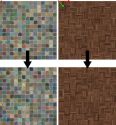
- Super-resolution fluorescence microscopy
- Single-cell transcriptome imaging
- Single-cell genome imaging
- +۸ مورد دیگر
Xiaowei Zhuang is the David B. Arnold Jr. Professor of Science at Harvard University, where she holds dual appointments as Professor of Chemistry and Chemical Biology and Professor of Physics. She is also an Investigator of the Howard Hughes Medical Institute. Her laboratory, located at 12 Oxford Street in Cambridge, Massachusetts, focuses on developing advanced imaging technologies to study cellular and molecular processes. Dr. Zhuang's research interests center on creating and applying novel imaging methods to understand cellular function and its dysfunction in disease. Her work particularly emphasizes: Developing super-resolution fluorescence microscopy techniques Creating tools for single-cell transcriptome and genome imaging Advancing single-molecule biology approaches Studying chromatin and chromosome structure Investigating gene expression regulation mechanisms Examining sub-cellular structures in neurons and neuronal connectivity Her recent publications demonstrate a strong focus on spatial transcriptomics, single-cell analysis, and advanced imaging techniques. The research from her lab frequently appears in top-tier journals and shows increasing emphasis on applying these imaging technologies to understand complex biological systems, particularly in neuroscience and cancer biology. Many recent papers integrate multiple omics approaches with high-resolution imaging to provide comprehensive views of cellular organization and function. Dr. Zhuang has received significant recognition for her work, including: Howard Hughes Medical Institute Investigator David B. Arnold Jr. Professor of Science at Harvard University Dr. Zhuang actively mentors a large research group comprising graduate students, postdoctoral fellows, and staff scientists. Her laboratory has trained numerous scientists who have gone on to establish independent research careers. The Zhuang lab applies diverse backgrounds in chemistry, physics, biology, and engineering to develop novel imaging methods, molecular probes, and image analysis algorithms. Current research in her lab focuses on three major areas: (1) super-resolution fluorescence microscopy, (2) single-cell transcriptome and genome imaging, and (3) single-molecule biology. The Zhuang Research Laboratory maintains a collaborative environment where students and postdoctoral fellows develop and apply cutting-edge imaging technologies. The lab has developed several important techniques including STORM (Stochastic Optical Reconstruction Microscopy) and MERFISH (Multiplexed Error-Robust Fluorescence In Situ Hybridization), which have become widely adopted in the field of super-resolution microscopy.