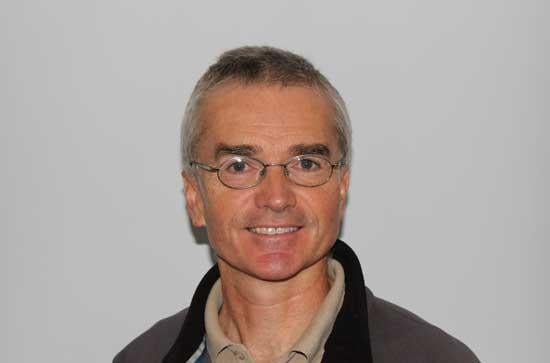
Bob Lawlor is a Lecturer in the Department of Electronic Engineering at Maynooth University (Faculty of Science & Engineering). His career spans academic research and industry experience at Sony Corp in the UK and Japan. Research interests include digital signal processing , speech and audio processing , and problem-based learning (PBL) in education. Key Research Areas Digital Signal Processing Speech and Audio Signal Analysis Audio Time-Scale Modification Computer-Assisted Language Learning Engineering Pedagogy Notable Awards 2012 NUI Maynooth Teaching Fellowship 1994 International Design Competition 1993 IEEE Chester Sall Award Leadership Co-chair, national Enquiry and Problem-Based Learning Network (Facilitate)
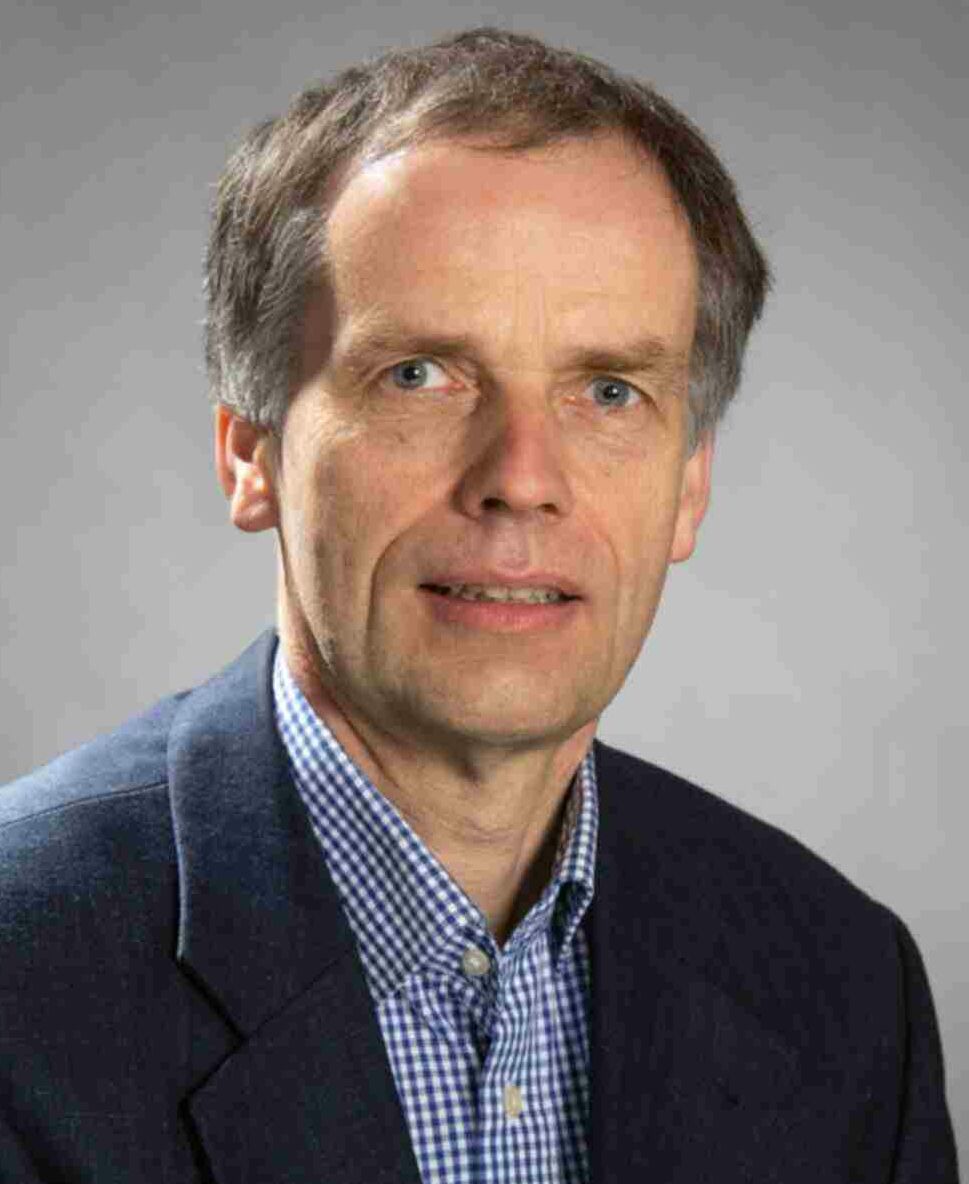
Alfonso Ortega Giménez is a Professor affiliated with the University of Zaragoza, Spain. His primary research focuses on speech and audio processing, including speaker verification, audio segmentation, and machine learning methodologies. He collaborates extensively with institutions like the Autonomous University of Madrid and the University of Arizona, contributing to projects such as the ViVoLab system for diarization and emotion recognition challenges. Key research interests include disentanglement learning, explainable AI, and robust speaker verification under varying conditions. He has authored over 130 publications in venues like ICASSP, INTERSPEECH, and IEEE journals, emphasizing advancements in deep learning for audio applications. His work often addresses challenges like domain adaptation, unsupervised learning, and anomaly detection in audio signals. Ortega’s contributions span system design for NIST challenges, emotion recognition, and broadcast domain analysis. Collaborations with co-authors such as Antonio Miguel and Eduardo Lleida highlight his role in multidisciplinary projects. His research bridges theoretical machine learning with practical audio applications, addressing real-world problems in speech enhancement and robustness.
Dr Niamh Buckley is a Senior Lecturer in Personalised Medicine and Pharmacogenomics at the School of Pharmacy, Queen’s University Belfast. Her research integrates in vitro, in vivo, bioinformatics, and pathology approaches to identify key pathways in poor-outcome cancers like triple-negative breast cancer (TNBC) and ovarian cancer, focusing on targeted treatment options. Education: First Class Honours in Biochemistry from Trinity College Dublin (2002), PhD in Oncology at Queen’s University Belfast under Prof. Paul Harkin. Her research interests emphasize Breast Cancer (particularly TNBC), BRCA1 , Personalised Medicine , and Biomarker Development . Recent publications highlight advancements in Nanomedicine for cancer treatment and Vaccine Development for TNBC and ovarian cancer. Dr Buckley has secured ~£5 million in competitive grants (with >£750,000 as PI) and published over 30 Q1 journal articles (1100+ citations). Her accolades include the All Ireland Researcher of the Year (2012) , CCRCB Researcher of the Year (2012) , and JD Williamson Prize (2011) . Scientific Awards: All Ireland Researcher of the Year (2012) CCRCB Researcher of the Year (2012) JD Williamson Prize for Research (2011) Keystone Travel Award (2004) Oral Presentation Award (2004) She contributes to teaching modules in MPharm , BSc Pharmaceutical Sciences , and BSc Pharmaceutical Biotechnology , including coordination of PMY3176 and PMY3027. Dr Buckley is an active member of the Nanomedicine and Biotherapeutics Cluster and associate member of the Patrick G Johnson Centre for Cancer Research at QUB.
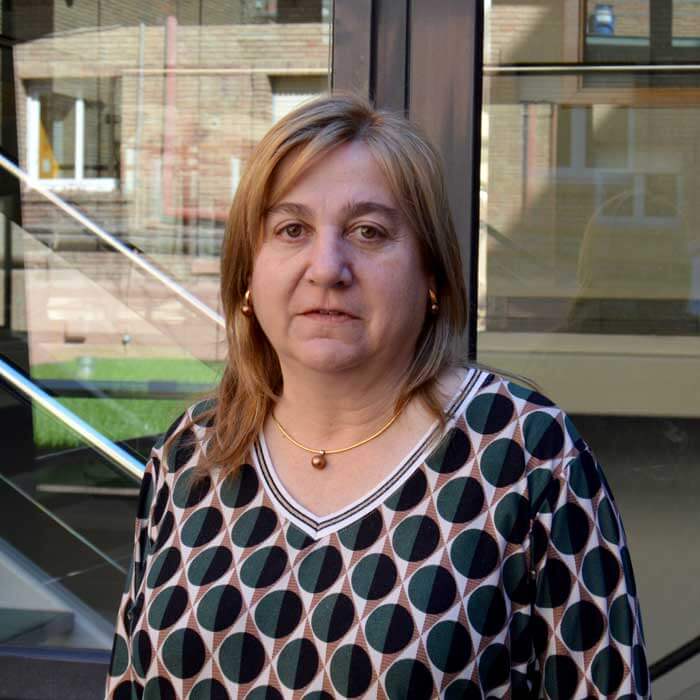
Professor Rik Thompson is a leading academic in breast cancer research at Queensland University of Technology (QUT), holding positions in the Faculty of Health and School of Biomedical Sciences. His expertise includes Cancer Biology, Invasion and Metastasis, and Epithelial-Mesenchymal Transition (EMT). He has led major initiatives like the EMPathy Breast Cancer Program and the Centre for Personalised Analysis of Cancers (CPAC). His work focuses on breast cancer metastasis, mammographic density as a risk factor, and plasma medicine applications. Education: PhD (Griffith University). Research Interests: EMT dynamics, breast cancer metastasis, mammographic density mechanisms, and translational plasma medicine. He has pioneered studies on triple-negative breast cancer treatment using cold atmospheric plasma and investigates circulating tumor cells (CTCs) as markers of metastasis. Key Contributions: Developed the 'within-woman' comparison strategy for mammographic density research and led national advocacy efforts through inforMD. His work on EMT has influenced clinical guidelines via COSA’s Breast Density Facts and Issues Statement. Awards: Honorary Lifetime Member of the Australasian Genomics Technologies Association, ANZBCTG Board Directorship, and COSA Council Membership. His research spans over 150 peer-reviewed articles, emphasizing EMT, plasma medicine, and precision oncology. Grants & Teams: Leads QUT@TRI research initiatives and collaborates with institutions like St. Vincent’s Institute and the Translational Research Institute. Supervises multiple PhD students in breast cancer and EMT research. Labs/Teams: Involved in the Centre for Genomics and Personalised Health and CPAC network, fostering Brisbane-wide clinical-research partnerships for personalized cancer analysis.
Sixin Zhang is an Associate Professor at INP-Toulouse, specifically affiliated with the ENSEEIHT school. He holds a Ph.D. from the Courant Institute of Mathematical Sciences, New York University (2012), following undergraduate studies. His postdoctoral research spanned institutions including ENS Paris, Peking University, and IRIT in France. His research focuses on machine learning, optimization, signal/image processing, statistics, dynamical systems, and high-dimensional data analysis. Key research areas include representation learning for recognition and inverse problems, optimization algorithms, and applications in industrial systems and astrophysics. He contributed to the development of the Kymatio library for scattering transforms and co-authored foundational work on transform learning in non-negative matrix factorization. His work bridges theoretical mathematics with applied machine learning, including contributions to generative models, data assimilation networks, and optimization techniques for neural networks. Notable projects include the MeteoNet AI challenge and the RWST statistical framework for interstellar medium analysis.
Jaakko Peltonen is a Professor of Statistics and Data Analysis at Tampere University, Faculty of Information Technology and Communication Sciences, Department of Computing Sciences. He leads the Statistical Machine Learning and Exploratory Data Analysis (SMiLE) research group and is affiliated with the Tampere Research Center in Information and Systems and the Academy of Finland Center of Excellence in Game Culture Studies. His research focuses on statistical machine learning, exploratory data analysis, and their applications in diverse domains including healthcare, social media analytics, gaming, and political discourse analysis. Notable projects include developing algorithms for transparent AI systems (e.g., TraQuLA, Flow of Trust framework) and analyzing online communities through platforms like Twitch and Steam. Recent work emphasizes ethical AI integration in education and healthcare, predictive modeling for emergency department management, and game studies involving player behavior analysis. Peltonen collaborates across disciplines, leveraging text mining, graph theory, and visualization techniques to address complex societal challenges. Key contributions span methodological advancements (e.g., constrained non-negative matrix factorization) and interdisciplinary applications in policy analysis, digital humanities, and health informatics. His work bridges technical innovation with real-world societal impact through collaborative research initiatives.
James Chapman is an Assistant Professor at Boston University, with a dual affiliation in the Departments of Mechanical Engineering and Materials Science & Engineering. His primary appointment is in Mechanical Engineering. He holds a PhD in Materials Science and Engineering from the Georgia Institute of Technology (2020). His research focuses on computational materials informatics, integrating machine learning with atomistic simulations to design novel catalysts and corrosion-resistant materials. Current work emphasizes high-entropy alloys for hydrogen production and pollution mitigation. Key honors include the Junior Faculty Fellow from the Hariri Institute for Computing (2024), the Trusted Reviewer Award from the Institute of Physics (2023), and the Lamar H. Franklin Fellowship (2020). His research lab, the Materials Informatics Lab, explores interdisciplinary approaches at the intersection of machine learning and materials science. Notable contributions include advancements in graph neural networks for material characterization and predictive modeling of atomic structures using diffusion models. Publications highlight themes such as topological message-passing algorithms, stratified data analysis, and multiscale modeling of defects in materials. His work bridges fundamental computational methods with practical applications in energy storage and environmental sustainability.
Rasmus Froberg Brøndum is an Associate Professor of Bioinformatics and Biostatistics at Aalborg University Hospital, affiliated with the Department of Clinical Medicine and the Center for Clinical Data Science under the Faculty of Medicine. His research focuses on data-driven solutions in personalized medicine, particularly in hematological cancers and inflammatory bowel disease. He leads collaborations with clinicians on molecular and clinical data analysis, including projects like the EU-funded ARISTOTELES and the PREDICT initiative. Education: PhD in Genetics (Aarhus University, 2013), MSc in Mathematics and Statistics (2008). Research interests include clonal evolution in cancers, AI applications in clinical complexity, and mutational signature extraction. He supervises PhD students and has contributed to over 60 publications, with datasets available on platforms like Figshare. Notable collaborations involve the National Centre of Excellence for Prediction of Inflammatory Bowel Disease and EU initiatives, focusing on infrastructure for clinical data science and AI integration in healthcare.
Prof. Dr. Klaus Neymeyr is a Professor of Numerical Mathematics at the University of Rostock, affiliated with the Faculty of Mathematics and Natural Sciences and the Institute of Mathematics. Since 2023, he serves as Prodekan of the faculty. Previously, he was Dean (2014–2023) and an associated member at the Leibniz Institute for Catalysis (LIKAT). He obtained his habilitation in mathematics at the University of Tübingen (2001) and has held academic roles since 2003. His research spans numerical linear algebra, chemometrics, and catalysis, with a focus on eigenvalue problems, multivariate curve resolution (MCR), and spectral data analysis. Notable contributions include advancements in preconditioned eigensolvers and the development of FAC-PACK for feasible solution computation. Neymeyr’s work integrates computational methods with chemical applications, such as catalyst characterization via FTIR and NMR spectroscopy. He has been recognized with awards including the Kowalski Prize (2016) and a highly cited paper designation by ISI (2003). His collaborations extend to interdisciplinary projects in catalysis and biopharmaceutical data analysis. Publications emphasize algorithm development, convergence analysis, and data-driven methodologies. Scientific achievements include patents on energy-optimized pump regulation and contributions to the theoretical foundations of MCR and eigensolver convergence. His research group actively publishes in top journals like SIAM Journal on Matrix Analysis , Analytica Chimica Acta , and Journal of Chemometrics .
Fengyu Cong is a Visiting Professor at the Faculty of Information Technology of the University of Jyväskylä (Finland). His research focuses on interdisciplinary computational neuroscience, biomedical signal processing, and machine learning applications in healthcare. Key contributions include EEG/fMRI analysis for mental health disorders such as depression and autism spectrum disorder, as well as federated learning methods for privacy-sensitive medical data. He has presented at major conferences including the 6th Conference on Mismatch Negativity (2012) and ESCAN 2014 , showcasing work on preattentive facial expression processing in neurological populations. His affiliations include the Engineering and Secure Communications Engineering and Signal Processing groups within his faculty. Research interests span neural signal analysis, multimodal imaging techniques, and AI-driven diagnostics. Notable methodologies include tensor decomposition for fMRI preprocessing, HMM-based sleep stage classification, and federated learning frameworks for distributed healthcare applications. His work bridges computer science and clinical neurology, with publications in top-tier journals addressing topics like vascular cognitive impairment, neural oscillations in autism, and artifact removal in biomedical signals.
Georgina Tarrant is a Data Scientist at Surrey DataHub within the University of Surrey, holding strong affiliations with the School of Veterinary Medicine in the Faculty of Health and Medical Sciences, and the Centre for Vision, Speech and Signal Processing (CVSSP). Her work bridges data science methodology with veterinary medicine applications, focusing on extracting meaningful insights from complex online discourse related to animal health issues. Her educational background includes: MCLIP Chartered Member of CILIP (2013) MSc Information Science from City University (2004) BSc Biochemistry (Toxicology) from University of Surrey (2001) Georgina specializes in AI-enhanced social listening techniques, developing innovative end-to-end methodologies for social media data collection, cleaning, and analysis. Her research integrates natural language processing, sentiment classification, and Non-Negative Matrix Factorisation topic modeling to advance understanding of public sentiment around animal health issues. She has pioneered approaches to systematically analyze online discourse about companion animal diseases, pet owner behaviors, and concerns, contributing to evidence-based veterinary care. Her methodology increasingly incorporates large language models to enhance data filtering, classification, and thematic analysis. Analysis of her publication record reveals a consistent focus on applying social media listening to understand animal health from pet owner perspectives. Her research spans feline and canine diseases, medication administration challenges, chronic conditions like kidney disease, and NSAID use in pets. She has also made significant contributions to semantic data innovation, developing frameworks for creating data hubs that facilitate information sharing in animal health across multiple stakeholders. Georgina has been actively involved in several significant research projects: Utilising social media listening to understand feline and canine disease pathways from pet owners' perspectives Investigating health outcomes from human-animal interactions, including zoonotic diseases and antimicrobial resistance Developing conceptual semantic data hubs for animal health information sharing Contributing to the Data Innovation Hub for Animal Health (DIHAH) through vHive Developing health-related quality of life measures for cats and dogs Participating in the African Livestock Productivity and Health Advancement (ALPHA) Initiative Her career path shows progression from information management roles in various sectors to her current specialized position in academic research. Previous roles include Marketing Data Manager and Digital Content Assistant at the University of Surrey, Taxonomy Specialist and Product Marketer at Artesian Solutions, and various information management positions in financial services and library sectors. As a chartered information professional, she brings extensive expertise in data organization and information systems to her current research in veterinary data science.
Montserrat Agut Bonsfills is a Full Professor in the Department of Bioengineering at IQS School of Engineering, Universitat Ramon Llull, where she also serves as Head of the Department (since 2020) and Head of the Microbiological Laboratory (since 1999). Her academic base is firmly rooted in bioengineering and microbiology, with strong interdisciplinary ties to biomedical sciences and veterinary medicine. Her educational background includes a Degree in Veterinary Science (UAB, 1988) Master in Microbiology (UAB, 1991) PhD in Sciences (Biology section, UAB, 1992) Vertex Program in Management for SMEs (IQS Executive, 2012) Her primary research interest lies in the microbiological aspects of photodynamic therapy , focusing on antimicrobial photodynamic inactivation of bacteria, fungi, and biofilms. Her work spans fundamental mechanisms, clinical applications in veterinary and human medicine, and environmental disinfection. She explores factors such as photosensitizer design, light dosimetry, oxygen dependency, and synergies with antibiotics. The analysis of her recent publications reveals a consistent focus on leveraging photodynamic techniques to combat antimicrobial resistance, with applications in medical, dental, veterinary, and environmental contexts. Her research integrates bioengineering principles with microbiological experimentation to develop innovative, non-antibiotic antimicrobial strategies. She is a recognized academic leader, serving as a Numerary Member of the Academy of Veterinary Sciences of Catalonia Corresponding Member of the Royal Academy of Medicine of Catalonia She actively contributes to academic training through the Bachelor’s Degree in Biomedical Sciences and PhD programs in Chemistry and Chemical Engineering and Bioengineering . While no formal list of advisees or awards is provided, her leadership roles and sustained research output suggest significant mentorship and grant involvement, particularly in interdisciplinary projects bridging microbiology, engineering, and medicine. She leads the Microbiological Laboratory, which likely functions as a core research team for her photodynamic therapy investigations.
Michael Antolovich is a Senior Lecturer and Course Director in Computer Science at Charles Sturt University (CSU), affiliated with the School of Computing and Mathematics and the Machine Vision and Digital Health (MaViDH) Research Group. He has held roles such as Associate Head of School and Acting Head of the Environment Studies Unit (ESU) at CSU. Doctor of Philosophy, University of New South Wales (1988) Bachelor of Science, University of New South Wales (1983) His research focuses on drones, 3D printing, AI, robotic systems, sensor networks, and data analysis. Recent work explores parametric classification of Bingham distributions, low-rank matrix approximation algorithms, and sports highlight generation using audio-visual features. Key trends in his publications include advancements in image processing , machine learning , and data visualization applied to video analysis, sensor networks, and business communication. Antolovich has served as a registered supervisor at CSU and coordinated the Apple University Consortium Development Fund (AUCDF). He is a Member of the Australian Computer Society (MACS) and a Practicing Computer Professional (PCP).
Dr. David Johnson is a Junior Independent Group Leader at Bielefeld University's Faculty of Engineering , leading the Human-Centric Explainable AI research group within CITEC. His work bridges Explainable AI with Audiovisual Affective Computing , focusing on high-stakes human-AI collaboration and industrial sound analysis. Current Position: Junior Independent Group Leader, Bielefeld University (since 2021) Previous: Postdoctoral Researcher at Fraunhofer Institute for Digital Media Technology (2019-2021) Education: PhD in Sound and Music Computing from University of Victoria (2019), MSc in Computing in the Arts from College of Charleston (2014) Research interests span Explainable AI , Human-AI Interaction , and Extended Reality applications, particularly in medical diagnostics and industrial sound processing. Recent publications highlight his work on trust dynamics in high-stakes AI and federated learning architectures . His collaborative projects include involvement in the TRR 318 'Constructing Explainability' initiative. While no formal awards are mentioned, his research has produced multiple publications and practical implementations in industrial and educational contexts.
Sokratia Georgaka is a Lecturer in Artificial Intelligence at the Division of Informatics, Imaging & Data Sciences. Her research focuses on spatial transcriptomics, gene regulatory networks, and predictive modeling of biological systems, particularly in liver disease and glioblastoma. She holds a PhD in Reduced Order Models for Nuclear Reactor Thermal Hydraulics from Imperial College London (2020), a Master's from the University of Birmingham (2014), and a Bachelor's from the University of Ioannina (2013). Her work contributes to UN Sustainable Development Goals related to health and innovation. Recent projects include developing computational methods for spatial transcriptomics (CellPie) and integrating multi-omic data to study liver fibrosis and glioblastoma progression. Collaborations include the Christabel Pankhurst Institute and institutions in oncology and bioinformatics. Publications emphasize applications of machine learning in medical imaging and molecular biology, with notable contributions to Science Advances , Nucleic Acids Research , and Bioinformatics .