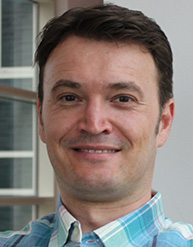
Klaus Hornberger is a Professor of Theoretical Physics at the University of Duisburg-Essen, Germany. He leads a research group focusing on quantum theory of nanoscale systems, decoherence, and molecular quantum optics. Previously, he held positions at the Max Planck Institute for the Physics of Complex Systems (Dresden) and Ludwig-Maximilians University Munich. His academic journey includes a PhD (2001, LMU Munich) supervised by Uzy Smilansky, supported by a Minerva fellowship, and a diploma thesis at the Max Planck Institute. Research Interests: Quantum nanophysics, decoherence mechanisms, quantum interferometry, and applications of theoretical physics to complex systems. Notable contributions include studies on matter-wave interferometry, quantum optomechanics, and nanorotor dynamics. Recent publications highlight advancements in nanoparticle cooling, rotational decoherence, and quantum optical binding. His work bridges quantum foundations with experimental techniques, aiming to explore macroscopic quantum phenomena. Awards include the Emmy Noether grant (2004) and the Otto Hahn Medal (2001). Advising and grants: Ran an independent research group funded by the Emmy Noether program, currently offering a postdoctoral position in quantum nanomechanics. Collaborations include projects with Anton Zeilinger, Markus Arndt, and international teams.
Associate Professor Haris Anastopoulos is affiliated with the Department of Theoretical and Mathematical Physics, Astronomy and Astrophysics at the School of Sciences, University of Patras. His research focuses on quantum foundations, gravitational physics, and quantum information. He has held academic roles at institutions including Imperial College London, University of Barcelona, and Technical University of Patras. Education : B.Sc. in Physics (University of Patras, 1988–92) M.Sc. in Theoretical Physics (Imperial College London, 1992–93) Ph.D. in Theoretical Physics (Imperial College London, 1993–96, supervised by J.J. Halliwell) Research Interests : Anastopoulos explores gravitational decoherence, quantum gravity, black hole thermodynamics, and relativistic quantum information. His work bridges quantum measurement theory with general relativity, addressing foundational questions like the role of gravity in quantum systems and spacetime structure. Awards : Pnevmatikos-Xanthopoulos Prize (1991) Marie Curie Individual Fellowship (2001–03) Julian Schwinger Foundation Grant (2021–22) Grants & Collaborations : He contributed to the Pythagoras II Program (2006–07), Karatheodori Program (2015–19), and ESPAn-2020 projects. His research involves collaborations on gravitational cat states and quantum measurements in relativistic systems. Labs/Teams : Active in quantum gravity and field theory research groups at the University of Patras, focusing on experimental and theoretical projects like the Deep Space Quantum Link initiative.
Herman Batelaan is a Professor in the Department of Physics and Astronomy at the University of Nebraska-Lincoln. His research focuses on fundamental interactions between light, electrons, and atoms, with an emphasis on quantum mechanics and electromagnetic theory. Key Research Areas: Quantum Foundations Electron Matter Optics Laser-Atom Interactions Interference Phenomena Ultrafast Electron Dynamics The Batelaan lab combines theoretical analysis, supercomputing (HCC/XSEDE), and experimental work to explore quantum phenomena like the Aharonov-Bohm effect and Kapitza-Dirac diffraction . Their studies often involve attosecond/femtosecond pulses, plasmonic devices, and electron interferometry. Recent publications (2012-2019) reveal a concentration on: Temporal control of electron waves Quantization mechanisms in classical systems Spin-dependent optical interactions Non-local electromagnetic effects 3D-printed electron optics Ultrafast plasmon dynamics
Anton Afanasyev is an Associate Professor in the Joint Department of Quantum Optics and Nanophotonics (a collaboration between HSE University and the Institute for Spectroscopy of the Russian Academy of Sciences) within the Faculty of Physics at HSE University. He joined the institution in 2019 and teaches advanced undergraduate courses including Experimental Methods of Classical Spectroscopy and Experimental Methods of Modern Quantum Optics. His academic background includes a Candidate of Sciences (PhD equivalent) earned in 2010 and a Master's degree in Applied Mathematics and Physics from the Moscow Institute of Physics and Technology in 2007. His research program focuses on atom optics, laser cooling and trapping, laser spectroscopy, and atom interferometry , with recent breakthroughs enabling rubidium-87 atom trapping for over four seconds—a critical advancement for quantum sensors used in navigation systems, mineral exploration, and dark matter research. Analysis of his publication record reveals a strategic progression from foundational atom trapping mechanisms toward optimized quantum sensor platforms. His work consistently addresses increasing trapped atom numbers and extending coherence times, with a notable shift toward practical atom chip implementations after 2020. The research integrates atomic physics, quantum optics, and nanophotonics, frequently featuring collaborations with the Institute for Spectroscopy (RAS). His recognition includes: Best Teacher Award (2025) Dr. Afanasyev currently supervises doctoral candidate D. Bykova, whose thesis focuses on atom chip development for quantum sensing applications. His research group operates within HSE University's advanced physics laboratories, utilizing specialized equipment for cold atom experiments including laser cooling systems and vacuum chambers. The Joint Department of Quantum Optics and Nanophotonics provides a collaborative research environment where Dr. Afanasyev's team works alongside physicists from the Institute for Spectroscopy (RAS) to advance quantum sensing technologies through shared facilities and expertise.
Pierre-Alexandre Gourdain is an Associate Professor in the Department of Physics and Astronomy at the University of Rochester. He began his career at UCLA in magnetic confinement fusion, then moved to Cornell University to study matter under extreme conditions using the Cornell Beam Research Accelerator. His current research focuses on high energy density plasmas, warm dense matter transport properties, and the role of magnetic fields in plasma stabilization and phase transitions. Research Focus High energy density physics Warm dense matter properties Magnetized plasma jets Laser-plasma interactions Extended magnetohydrodynamics Magnetic field generation His laboratory creates extreme astrophysical conditions to study fundamental interactions in strongly coupled systems. Recent work emphasizes numerical simulation validation through experimental measurements, particularly using pulsed power systems and high-speed diagnostics. Scientific Awards NSF CAREER Award (2020): "The Impact of Electrons on Laboratory Plasma Jets of Astrophysical Relevance" Research Trends Analysis of his recent publications reveals sustained focus on high energy density plasmas through experimental and computational approaches. Key areas include magnetic field effects on plasma dynamics, advanced diagnostics using laser interferometry and Faraday rotation, and application of machine learning techniques to plasma measurement challenges. His work bridges laboratory plasma physics with astrophysical phenomena through scaled experiments.
Surendra P Singh is a University Professor of Physics at the University of Arkansas , holding appointments in the J. William Fulbright College of Arts & Sciences . Since joining the faculty in 1982 he has served twice as Chair of the Department of Physics (1995–2002 and 2005–2011) and was promoted through the ranks from Assistant to University Professor. Education Ph.D. in Physics (Quantum Optics), University of Rochester, 1982 – Dissertation under Prof. Leonard Mandel M.Sc. in Physics (1st Class, Rank II), Banaras Hindu University, 1975 B.Sc. in Physics (Hons), Chemistry & Mathematics (1st Class, Chancellor’s Gold Medal), Banaras Hindu University, 1973 Research Interests Professor Singh’s research straddles experimental and theoretical quantum optics, laser physics, and nonlinear optics. He has conducted pioneering work on quantum and classical noise in lasers, nonlinear and quantum optical phenomena, and is currently expanding into applications of optical techniques for studying nanoparticles and biopolymers. His recent work explores orbital-angular-momentum-carrying beams, graphene optomechanics, fluctuation-induced transport, and novel polarization states of light. He actively investigates light–matter interactions, geometric (Pancharatnam–Berry) phases, and relativistic spin–orbit coupling effects, bridging fundamental physics with emergent applications in sensing, energy harvesting, and biophotonics. Publication Trends Over the past decade Singh’s articles reveal a clear trajectory from foundational quantum-optics studies toward interdisciplinary applications: high-precision photodetection statistics, energy harvesting from 2D materials, thermal management in nonlinear optics, and exploitation of structured light for advanced imaging and metrology. The corpus demonstrates a seamless integration of rigorous theoretical constructs with state-of-the-art experimental demonstrations. Scientific Honors & Awards Fellow, American Physical Society (2003) Hyer Award – Outstanding Mentor, APS Texas Section (2018) Outstanding Referee, American Physical Society Journals (2015) Dexter Prize – Outstanding Graduate Thesis, University of Rochester (1982) Chancellor’s Gold Medal, Banaras Hindu University (1973) Honorary Visiting Professor, IIT Madras (Spring 2019 & 2022) Visiting Fellow, JILA, University of Colorado (1989–90) Teaching & Mentoring Professor Singh has taught an extensive range of graduate and undergraduate courses including Mathematical Methods in Physics, Quantum Mechanics I & II, Advanced Electromagnetic Theory, Laser Physics, Applied Nonlinear Optics, Quantum Optics, Statistical Mechanics, and introductory physics sequences. His mentorship has been recognized with the Hyer Award, underscoring his commitment to student success. Laboratories & Teams While no formal laboratory name is provided, Singh leads an active research group within the Department of Physics at the University of Arkansas, focusing on experimental and theoretical quantum optics laboratories equipped with state-of-the-art laser systems, single-photon detection apparatus, and facilities for 2D-material characterization.
Unnikrishna Pillai is a Professor of Electrical Engineering at the Tandon School of Engineering, New York University since 1995. He previously held roles at Polytechnic Institute of New York from 1985. His research focuses on radar signal processing, synthetic aperture radar (SAR), autonomous systems, machine learning, and portfolio risk management. He has co-authored five textbooks and developed over 250 educational YouTube videos. Education: Ph.D. in Systems Engineering (University of Pennsylvania, 1985), M.S. in Electrical Engineering (IIT Kanpur, 1982), B.Tech. in Electronics Engineering (Banaras Hindu University, 1980). Research emphasizes signal decomposition for clutter mitigation, waveform design for radar systems, and dynamic swarming for vehicle coordination. His work bridges theoretical contributions with practical applications in defense and transportation. Teaching contributions include supplementary video lectures on electrical engineering topics. Non-academic interests include cultural projects like translating the Bhagavad Gita and producing classical Indian music recordings.
Dr. James Bateman is a Lecturer in the Physics Department at Swansea University, affiliated with the School of Biosciences, Geography and Physics. His research focuses on quantum optomechanics, levitated systems, and quantum measurement techniques, with contributions to projects like the MAQRO research campaign. He teaches modules such as Computational Physics I (PH-204) and Condensed Matter Physics II (PH-307). Research Interests : Dr. Bateman's work explores quantum phenomena in macroscopic systems, including optomechanical cooling, gravitational effects on quantum states, and interferometric methods for detecting dark matter and quantum collapse models. His experiments often involve levitated nanoparticles and cold atoms, pushing the boundaries of quantum technology and foundational physics. Supervision & Collaboration : He currently supervises PhD students on projects such as nanoparticle manipulation for quantum systems and optomechanical sensing technologies. Past students have worked on suppressing Rayleigh scatter and Bayesian inference in optomechanical systems. Collaborations span international teams, including MAQRO's efforts to test macroscopic quantum behavior. Labs & Teams : Dr. Bateman is part of Swansea University's quantum research groups, contributing to facilities and initiatives advancing optomechanics and quantum optics. His research aligns with the university's strategic focus on quantum technology and fundamental physics inquiries.
Arnt Inge Vistnes is a Professor at the Department of Physics, University of Oslo, specializing in quantum physics, electromagnetic waves, and the philosophy of science. He has held academic positions at the University of Oslo since 1974, with sabbaticals at institutions like the University of Rochester, University of Southern California, and Niels Bohr Institute. His research focuses on the quantum description of light, wave-particle duality, and experimental studies involving entangled photons and electromagnetic field effects on biological systems. He teaches courses such as FYS 2130 Oscillations and Waves. His career includes organizing the 27th International Physics Olympiad (1996) and contributions to epidemiological studies on low-frequency electromagnetic fields. Vistnes has received awards like the Fulbright Fellowship and the Maxwell's Golden Demon honor, recognizing his teaching and research excellence. His publications span quantum optics, biological effects of radiation, and physics education. Notable works include studies on the Hanbury Brown-Twiss effect in sound waves and entangled photon interference. He collaborates internationally and established a quantum optics laboratory at the University of Oslo since 2006.
Michael Gide JABBOUR is an Associate Professor in Quantum Communication at Télécom SudParis, part of the Institut Polytechnique de Paris . He is affiliated with the ISTeC institute and the Department of Communications, Images, and Information Processing (CITI). His research focuses on quantum information theory, quantum optics, and mathematical physics, particularly in infinite-dimensional systems. Key areas include entropy continuity bounds, bosonic quantum channels, and quantum interference phenomena. Education and Career: PhD from École polytechnique de Bruxelles (2015), thesis: Bosonic systems in quantum information theory Postdoctoral fellowships at University of Cambridge (2016-2018), Technical University of Denmark (2018-2019), and École polytechnique de Bruxelles (F.R.S.-FNRS Senior Fellow) Joined Télécom SudParis as Associate Professor in 2020 Research Interests: Explores fundamental aspects of quantum information through entropy analysis, Gaussian channels, and bosonic systems. Recent work addresses entanglement engines, timelike quantum interference, and majorization principles in quantum phase space. His studies bridge quantum thermodynamics with mathematical rigor, emphasizing non-Gaussian operations and infinite-dimensional systems. Publications: 15+ peer-reviewed articles and preprints since 2015, including high-impact journals like Physical Review Letters , IEEE Transactions on Information Theory , and Quantum . Key themes include entropy continuity, bosonic Gaussian states, and quantum interference in time. Future Work: Current projects involve boson-fermion complementarity, complexity of Gaussian optics, and central limit theorems for distinguishable bosons. Ongoing collaborations span quantum thermodynamics and foundational entropy principles.
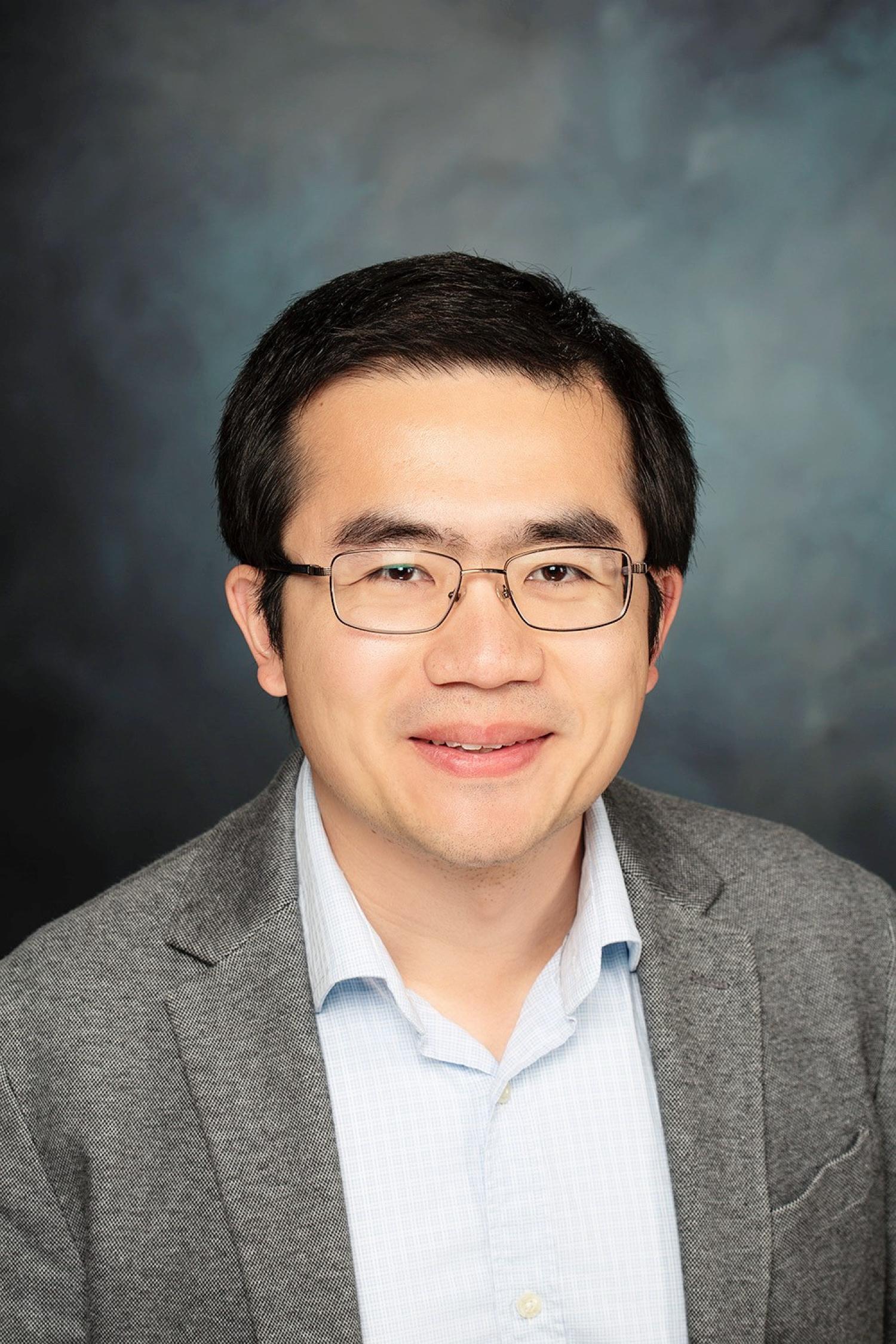
Yuan Shi is an Assistant Professor in the Department of Physics at the University of Colorado. He is affiliated with the Center for Integrated Plasma Studies (CIPS) and serves as a Faculty Mentor for students with last names starting with E-G. His research focuses on the intersection of plasma physics and quantum physics, particularly exploring how magnetic fields influence laser-plasma interactions for fusion and photonics applications. He also develops quantum algorithms for plasma-related problems and investigates relativistic and quantum plasma regimes using field-theory models. Education: PhD in Astrophysical Sciences (2018), MA in Astrophysical Sciences (2014), both from Princeton University’s Program in Plasma Physics; BS in Mathematics and Physics from the University of Hong Kong (2012). Research interests include magnetized laser-plasma interactions, quantum computing for high-energy-density systems, and plasma dynamics in extreme regimes. His teaching includes courses such as PHYS 1115 (General Physics 1), PHYS 3320 (Electricity and Magnetism 2), and graduate-level electromagnetic theory (PHYS 7310/7320). Notable awards include the Marshall N. Rosenbluth Outstanding Doctoral Thesis Award (2020), Lawrence Postdoctoral Fellowship (2018), and Carl Oberman Fellowship (2012). His group, the Plasma and Quantum Group, emphasizes collaborative exploration of fundamental physics and technological applications. Key projects involve quantum walk simulations for angular momentum states, plasma-based laser amplification/compression, and lattice QED modeling. Experimental work includes characterizing magnetized plasma jets via interferometry and proton radiography. The group also explores pulsar magnetosphere polarimetry and non-perturbative field theory phase diagrams.
Jonathan Dubois is a CNRS Research Scientist at the Laboratoire de Chimie Physique - Matière et Rayonnement (LCPMR) in Paris. His research focuses on atomic, molecular, and optical (AMO) physics, with an emphasis on nonlinear phenomena in strong-field physics and attophysics. He holds a PhD from Sorbonne University (2019) and has held postdoctoral positions at LCPMR and the Max Planck Institute for the Physics of Complex Systems (MPIPKS). His work combines classical, semiclassical, and quantum approaches to study ultrafast dynamics, Hamiltonian systems, and open quantum systems. Key Positions: CNRS Research Scientist (2025–present) Marie Skłodowska-Curie Fellow (2024) Postdoc at LCPMR (2023–2024) Postdoc at MPIPKS (2019–2022) Research Themes: Attosecond science and real-time electron dynamics Strong-field ionization and recollision processes Quantum chaos and decoherence-free subspaces Hamiltonian systems and invariant tori dynamics Publications: Over 15 peer-reviewed articles in Physical Review Letters , Physical Review A/E , and SIAM Journal on Applied Dynamical Systems , focusing on ultrafast phenomena, quantum control, and nonlinear dynamics. Labs/Teams: Active research in LCPMR and collaborations with international groups in attophysics and strong-field physics.
Maria Chekhova is a Research Professor and Group Leader of the Quantum radiation research group at the Max Planck Institute for the Science of Light in Erlangen, Germany. Her position as an independent research group leader at one of the world's premier physics research institutions places her at the forefront of quantum optics research. Professor Chekhova's research spans three interconnected domains: Quantum Optics, focusing on nonclassical states of light including single-photon, two-photon, three-photon, and squeezed states; Quantum Metrology, investigating sub-shot-noise measurements, quantum sensing, and nonlinear interferometry; and Nonlinear Optics, exploring strongly pumped parametric down-conversion, four-wave mixing, and parametric amplification. Her work bridges fundamental quantum phenomena with practical applications in quantum information science. Analysis of Professor Chekhova's publication record reveals a consistent focus on quantum state generation and characterization, with recent work (2025) advancing photon pair generation in subwavelength films, entangled photon generation in resonant structures, and multimode squeezing measurement techniques. Her research demonstrates a progression from fundamental quantum phenomena toward increasingly sophisticated quantum technologies with practical applications. Professor Chekhova has made significant contributions to quantum optics through her leadership of the Chekhova Research Group at the Max Planck Institute. Her team operates at the intersection of quantum information, nanophotonics, and quantum metrology, developing novel approaches to generate and characterize nonclassical light states for applications in quantum communication, sensing, and computation.
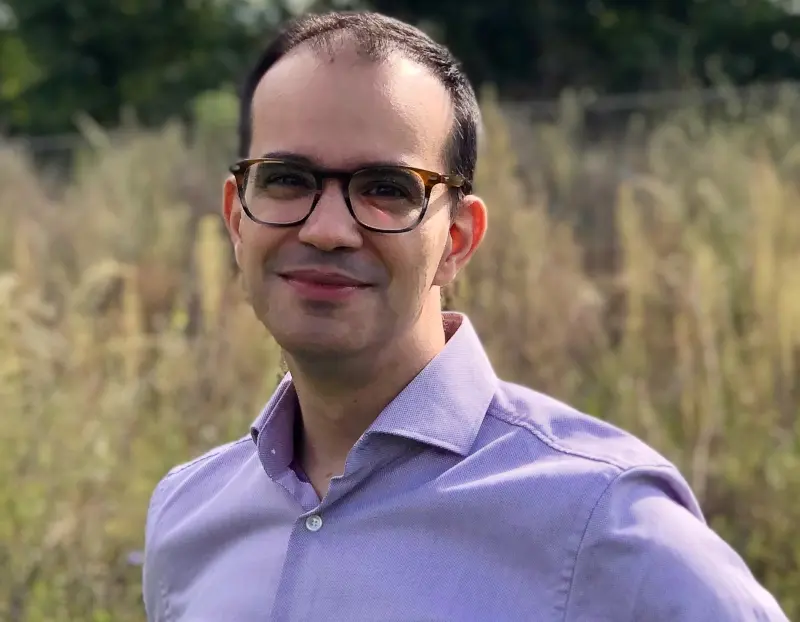
Hugo Ribeiro is an Assistant Professor in the Department of Physics and Applied Physics at the University of Massachusetts Lowell, affiliated with the Kennedy College of Sciences. His research focuses on quantum control, adiabatic processes, and nonlinear dynamics with applications in quantum computing and condensed matter physics. Key areas include accelerated quantum operations, exceptional point physics, and reservoir engineering. His work bridges theoretical developments and experimental implementations, emphasizing practical applications of quantum control techniques in solid-state systems and superconducting circuits. Recent efforts explore topological operations, non-reciprocal energy transfer, and high-fidelity quantum gate design under real-world constraints. Notable contributions include methodologies for shortening adiabatic processes while maintaining robustness, and foundational studies on Stückelberg interferometry in nanomechanical systems. Despite no awards being explicitly listed, his publications reflect impactful contributions to quantum dynamics and control engineering. His advising and grant activities remain unspecified in available records. Research is conducted within the Physics & Applied Physics department without mention of specific labs or collaborative teams.
Chenglong You is an Assistant Research Professor at the Department of Physics & Astronomy within the College of Science at Louisiana State University (LSU). His research focuses on quantum optics, plasmonics, and quantum metrology with applications in machine learning-enhanced quantum systems. He explores topics such as multiphoton coherence, quantum plasmonic sensing, and advanced interferometric techniques. Research interests include: quantum coherence dynamics, spatial mode engineering, entanglement-based technologies, and nonlinear optical phenomena. His work bridges classical and quantum optics through studies on Gaussian-Schell models and surface plasmon behavior. Recent advancements involve machine learning applications for turbulence correction and spatial mode reconstruction in structured light systems. Publications highlight breakthroughs in quantum metrology precision, phase sensitivity in SU(1,1) interferometers, and plasmonic systems' quantum statistics. Notable contributions include the van Cittert-Zernike theorem extension to quantum regimes and development of scalable quantum sensing frameworks. While no awards or grants are explicitly listed, his active research portfolio indicates significant contributions to quantum information science and nanophotonics. No advisees are currently documented.