معرفی
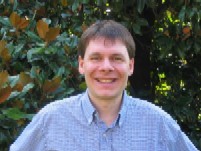
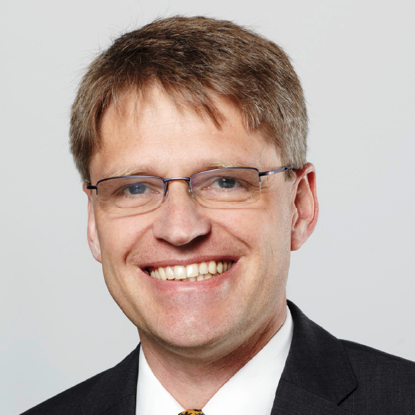
Anton Afanasyev is an Associate Professor in the Joint Department of Quantum Optics and Nanophotonics (a collaboration between HSE University and the Institute for Spectroscopy of the Russian Academy of Sciences) within the Faculty of Physics at HSE University. He joined the institution in 2019 and teaches advanced undergraduate courses including Experimental Methods of Classical Spectroscopy and Experimental Methods of Modern Quantum Optics.
His academic background includes a Candidate of Sciences (PhD equivalent) earned in 2010 and a Master's degree in Applied Mathematics and Physics from the Moscow Institute of Physics and Technology in 2007. His research program focuses on atom optics, laser cooling and trapping, laser spectroscopy, and atom interferometry, with recent breakthroughs enabling rubidium-87 atom trapping for over four seconds—a critical advancement for quantum sensors used in navigation systems, mineral exploration, and dark matter research.
Analysis of his publication record reveals a strategic progression from foundational atom trapping mechanisms toward optimized quantum sensor platforms. His work consistently addresses increasing trapped atom numbers and extending coherence times, with a notable shift toward practical atom chip implementations after 2020. The research integrates atomic physics, quantum optics, and nanophotonics, frequently featuring collaborations with the Institute for Spectroscopy (RAS).
His recognition includes:
- Best Teacher Award (2025)
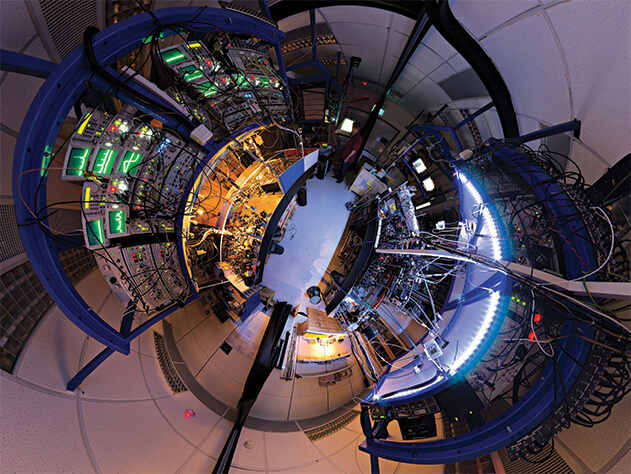
Dr. Afanasyev currently supervises doctoral candidate D. Bykova, whose thesis focuses on atom chip development for quantum sensing applications. His research group operates within HSE University's advanced physics laboratories, utilizing specialized equipment for cold atom experiments including laser cooling systems and vacuum chambers.
The Joint Department of Quantum Optics and Nanophotonics provides a collaborative research environment where Dr. Afanasyev's team works alongside physicists from the Institute for Spectroscopy (RAS) to advance quantum sensing technologies through shared facilities and expertise.