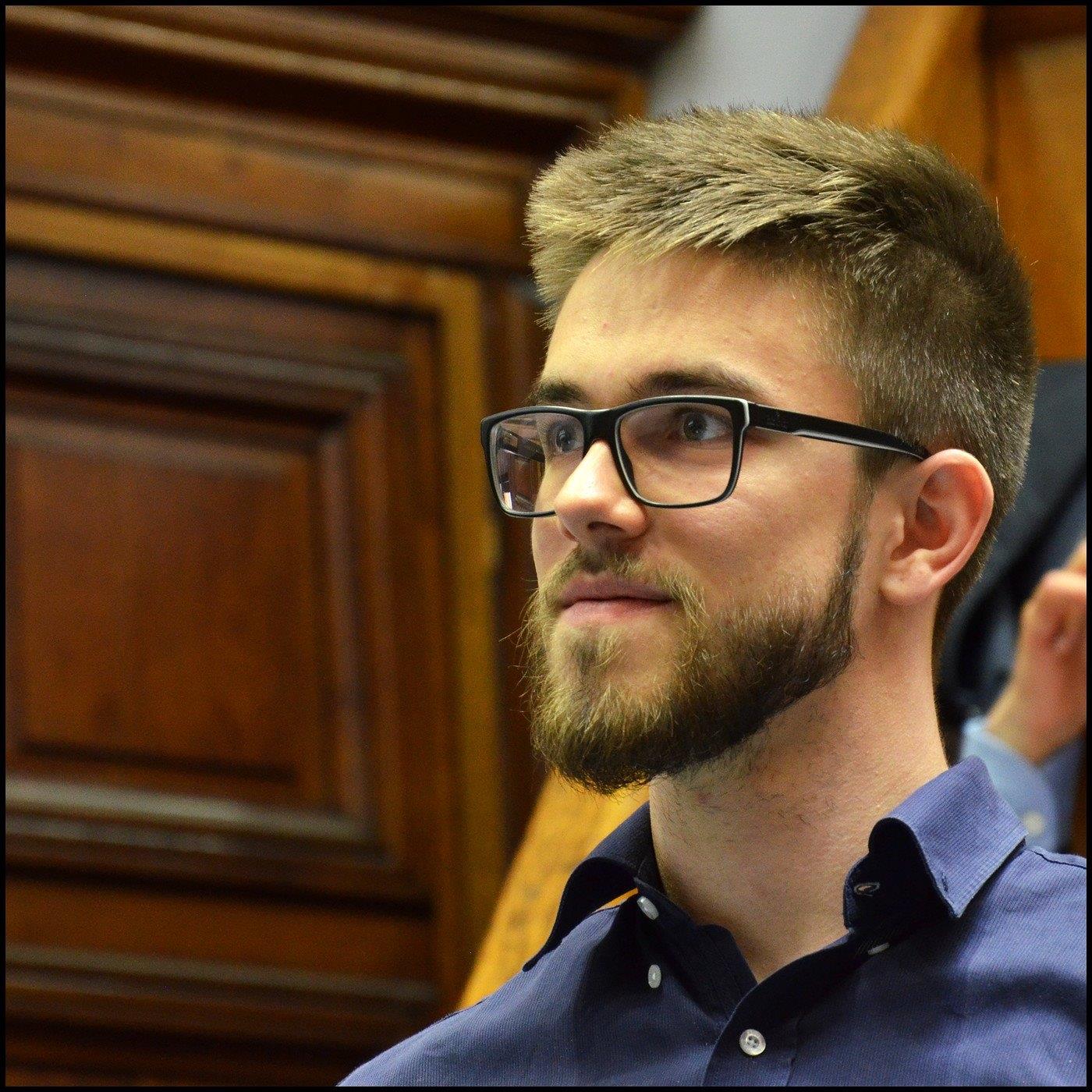
DANIEL Benoît is a Professor of Geometry at the Faculty of Science and Technology of the University of Lorraine (Nancy, France). His research focuses on differential geometry, particularly in minimal surfaces, constant mean curvature surfaces, and isometric immersions into homogeneous manifolds. Research Areas: Riemannian Geometry, Geometric Analysis, Surface Theory Key Collaborations: Joint works with Pablo Mira, Laurent Hauswirth, William Meeks, and Harold Rosenberg Publications highlight advancements in minimal surfaces in Nil³ and Sol³ geometries, uniqueness theorems for constant mean curvature surfaces, and Gauss map characterizations in Lie group geometries. His work spans applications of integrable systems and geometric PDEs. Contact: benoit.daniel@univ-lorraine.fr
Cameron Steer is a Lecturer at the University of West England (UWE) , specializing in Human-Computer Interaction (HCI) , User Experience (UX) , and Physical Computing . His research focuses on tangible user interfaces (TUIs) , shape-changing technologies , and non-rigid surfaces for enhancing digital art tools and game controllers. PhD in HCI from Swansea University (2020) Research Associate at University of Bath (ERC FORCE-UI, 2023) Research Assistant at Swansea University (Cherish Digital Economy Centre, 2028) His work investigates how tactile properties of deformable surfaces correlate with visual elements like colors and shapes, leading to design recommendations for intuitive interfaces. He has pioneered projects such as PickCells (reconfigurable touchscreen) and Liquid Tangible Display (mobile color mixing). Recent publications explore cross-modal correspondences, deformable interface design, and reconfigurable tactile displays, emphasizing the integration of physical and digital interaction paradigms.
Alex Eskin is the Arthur Holly Compton Distinguished Service Professor in the Department of Mathematics at the University of Chicago. He has been a faculty member at the University of Chicago since 1999 and is a leading researcher in dynamical systems, geometric group theory, and the theory of moduli spaces. His educational background includes: Undergraduate studies at UCLA PhD from Princeton University (1993) under Peter Sarnak Eskin's research focuses on rational billiards, geometric group theory, and the dynamics of the SL(2,R) action on moduli spaces of translation surfaces. His work bridges several areas of mathematics including ergodic theory, geometry, and number theory. He is particularly known for his breakthrough results on the classification of invariant and stationary measures for the SL(2,R) action on moduli spaces, which led to his Breakthrough Prize in 2020. Eskin's recent publications demonstrate a continued focus on measure rigidity, Lyapunov exponents, and the geometry of moduli spaces. His work often involves deep collaborations with other leading mathematicians such as Maryam Mirzakhani (until her passing), Amir Mohammadi, and others. The research spans from foundational theoretical work to applications in counting problems and effective estimates. His major scientific achievements include: Clay Research Award (2007) for work on quasi-isometric rigidity of solvable groups Fellow of the American Mathematical Society (2012) Election to the National Academy of Sciences (2015) Breakthrough Prize in Mathematics (2020) for classification of P-invariant and stationary measures for the moduli of translation surfaces Eskin has advised several PhD students including Moon Duchin and Simion Filip. His research has been supported by major grants from the National Science Foundation and the Simons Foundation. He has been an influential figure in the field, giving invited talks at the International Congress of Mathematicians in 1998 and 2010. His work has opened new directions in the study of dynamics on moduli spaces and has deep connections to other areas of mathematics. While not explicitly mentioned in the provided texts, Eskin is likely involved in research groups or seminars at the University of Chicago related to geometry, topology, and dynamical systems. His extensive collaboration network suggests active participation in the broader mathematical community through workshops, conferences, and collaborative research projects.
Martin Haase is an Associate Professor at the Faculty of Science , Utrecht University , where he leads research in Physical and Colloid Chemistry . His work focuses on non-equilibrium soft matter structures , utilizing interfacial self-assembly of materials to advance understanding of molecular behavior at interfaces and develop novel materials. Key Affiliations : Utrecht University (Van't Hoff Laboratory, Debye Institute for Nanomaterials Science) and Rowan University (Department of Chemical Engineering) Current Funding : ERC-Starting Grant '3D-FABRIC' and NWO Vidi Grant 'Bijel templated membranes for molecular separations' (Utrecht); American Chemical Society (Rowan) His research bridges colloid and interface science with transport processes, chemical synthesis, and fluid mechanics. Recent publications explore bijel membranes, solvent transfer methods, and pH-responsive materials, reflecting his expertise in soft matter engineering and nanoparticle-stabilized systems . Grants from major organizations underscore the significance of his work in materials design and industrial applications. Scientific Awards : While no explicit honors are listed, his research is supported by prestigious grants including the ERC-Starting Grant and NWO Vidi Grant , highlighting recognition in his field. Collaborative Labs : Haase's group operates at Utrecht's Van't Hoff Laboratory and Rowan's Chemical Engineering labs, combining physical chemistry and engineering approaches. His teaching includes courses like Physical Chemistry of Life Sciences and Thesis Projects , mentoring future researchers in soft matter and sustainability.
Prof. Dr. Kiran Varanasi serves as a Professor in Virtual and Extended Reality at the Faculty of Computer Science and Media, Leipzig University of Applied Sciences. His research focuses on 3D shape processing, real-time facial animation, and convolutional neural network applications in computer vision. University: Leipzig University of Applied Sciences School: Faculty of Computer Science and Media Academic Rank: Professor Research Interests: Varanasi's work bridges virtual reality , machine learning , and interactive systems . Key areas include: 3D reconstruction using deep learning Facial animation pipelines Light field data processing Surface defect classification with CNNs Interactive character control Publication Trends (2018–2021): His recent articles emphasize monocular 3D reconstruction , real-time feature extraction , and immersive VR environments , often leveraging convolutional networks and geometric warping techniques. Advising and Grants: No specific students or advisory roles are listed in the provided text. The faculty participates in collaborative projects like website redesign for the Egyptian Museum, though Varanasi's direct involvement isn't specified. Labs and Teams: The faculty includes multimedia labs and research groups in digital transformation, but Varanasi's direct affiliations with these units are not explicitly stated.
Christophe Farges is an Associate Professor at the University of Bordeaux, working within the IMS (Laboratoire de l'intégration, du matériau au système) research laboratory. He belongs to the Automatic Control research group and is part of the CRONE team. His academic career spans over 15 years since joining the University of Bordeaux in 2007. MSc in Electronics, Electrotechnical and Automatics from the University of Toulouse (2002) PhD in Automatic Control from the University of Toulouse (2006) Authorization to conduct research (HDR) (2017) Christophe Farges' research primarily focuses on fractional order systems, which exhibit dynamics in the power of time rather than classical exponential dynamics. His work spans several application areas including heat transfer, vibration of viscoelastic materials, and charging/discharging of electric batteries. He develops non-integer models for these systems and creates dedicated modeling tools, as well as analysis, control, and diagnostic methods based on these models. More recently, he has been working on methods for estimating remaining battery useful life using both model-based and artificial intelligence approaches. His publications demonstrate a strong focus on Volterra equations for fractional behaviors modeling, particularly applied to lithium-ion cells and other electrochemical systems. Christophe's work shows a clear evolution from fundamental fractional calculus theory toward practical applications in energy systems, particularly battery management. His most recent publications indicate an increasing integration of artificial intelligence methods with traditional control theory for remaining useful life estimation. His teaching activities are mainly performed at the Evering Institute of Merignac and concern modeling, control and fault detection and isolation. He has been involved in numerous research collaborations with industrial partners including STMicroelectronics, Stellantis, Thales, NXP, CEA Leti, and others through the GIS ALBATROS consortium. Christophe leads research within the CRONE team at IMS Bordeaux, which focuses on the application of fractional calculus to real-world engineering problems. His work bridges theoretical mathematical developments with practical engineering applications, particularly in the domains of energy storage and thermal systems.
Adam Kanigowski is an Associate Professor in the Mathematics Department at the University of Maryland. His research focuses on dynamical systems, particularly smooth flows, spectral theory, and mixing properties. Key Research Areas: Ergodic theory, parabolic systems, area-preserving flows, and spectral analysis. Publication Trends: Recent work examines chaotic properties of smooth systems, multiple mixing phenomena, and spectral singularities across surfaces of varying genus. Articles also address arithmetic applications, including prime number theorems for skew products. Technical Themes: Rigidity, slow entropy, Fourier uniformity, and the interplay between deterministic sequences and dynamical systems.
Dr. Marie Le Merrer is a Researcher at the Institut Lumière Matière (Light and Matter Institute), affiliated with University of Lyon 1 . Her work focuses on soft matter physics , particularly the mechanical behavior of complex fluids such as foams and polymer gels, linking microscopic dynamics to macroscopic properties. Her research explores the coupling between surfactants and hydrodynamics in soap films, bubble rearrangements, and the influence of fluid/solid surfaces on rheology. She has contributed to understanding foam stability, calcite gel elasticity, and wall slip phenomena in jammed suspensions. Recent publications highlight her expertise in surfactant-induced dissipation (2024), foam film stability (2021), and numerical modeling of bubble assemblies (2018). Her work spans fluid mechanics , colloid science , and materials engineering . Scientific accolades include the CNRS Bronze Medal (2020) . She has also been recognized through selections like the Focus on Fluids commentary (2017) and Scientific News of the CNRS Institute of Physics (2012). Her methodologies integrate experimental approaches (Raman spectroscopy, diffusing-wave spectroscopy) and computational simulations. Collaborations with groups such as Liquids and Interfaces and institutions like ESPCI and Ecole Polytechnique underscore her interdisciplinary impact.
Professor Fabrice Heitz serves as Director of the ICube Laboratory at Telecom Physics Strasbourg, University of Strasbourg, where he leads the IMAGeS research team (Images, Modeling, Learning, Geometry and Statistics). His academic career spans several decades with significant leadership roles including Director of LSIIT UMR 7005 CNRS (2005-2012) and Deputy Director of ICube Laboratory (2013-2022). Professor Heitz's educational background is closely tied to Telecom Physics Strasbourg where he has taught foundational courses including Introduction to Signal Processing, Processing Random Signals, Statistics, and 2D Signal and Image Processing across undergraduate and Master's levels in the Imaging, Robotics, Engineering for the Living program. His research expertise centers on signal and image processing with specialization in statistical modeling of 3D+t images , Markovian and non-Gaussian models , appearance models , and deformable models . His work in machine learning addresses critical challenges in rigid and deformable registration of multimodal images, 3D image segmentation, 3D+t temporal tracking, and inter-image change detection, with primary applications in medical imaging and time sequence analysis . Current research directions include cryo reconstruction EM, 3D surface modeling, and preoperative planning for ARC needles. Professor Heitz has established himself as a prominent figure in medical image analysis, with his supervised doctoral research spanning applications from brain MRI analysis to lung CT segmentation. His former students have achieved notable positions at INRIA, Philips, Microsoft, and universities worldwide, demonstrating the impact of his mentorship. Director of ICube Laboratory (2023-present) Elected member of Research Commission of University of Strasbourg (2021-2025) Former Head of IMAGeS team at ICube (2016-2022) Associate Editor of IEEE Transactions on Image Processing (1996-1999) Professor Heitz leads the IMAGeS research team, which brings together experts working at the intersection of image processing, machine learning, geometry, and statistics to develop innovative solutions for medical diagnostics, surgical planning, and other critical applications. His leadership extends to numerous national and international committees including AERES/HCERES expert panels and ANR review boards.
Professor Yuka Tabe of the Department of Physics, Faculty of Science and Engineering at Waseda University, is a leading researcher in Biophysics and Soft Matter Physics . Her work focuses on Liquid Crystals , Langmuir Monolayers , and Thermomechanical Coupling in chiral systems. Key affiliations: Waseda University (2012–present) Professional memberships: The Physical Society of Japan The Japanese Liquid Crystal Society Her research interests span: Cholesteric liquid crystal dynamics under thermal gradients Induced smectic phase formation in binary mixtures Photo-polymerization in 2D systems Defect manipulation in liquid crystal colloids Molecular diffusion in ordered soft materials Nanoscale patterning via micelle templating Recent publications (2016–2021) demonstrate: Heat-driven rotation of cholesteric droplets (Lehmann effect) Stabilization of double-twisted structures via elastic energy competition Photochemical control of topological defects in LC emulsions Gas permeation studies in smectic films Charge-transfer-induced smectic phase ordering Molecular dynamics simulations of 2D diffusion
Eiji Iwase is a Professor at the Department of Applied Mechanics and Aerospace Engineering , Waseda University , with concurrent roles at the Ministry of Education, Culture, Sports, Science and Technology (MEXT) as Senior Scientific Research Specialist (2018-2020). His research focuses on Nano/micro-systems Origami/Kirigami-based flexible electronics Self-folding mechanisms for deployable structures Thermoelectric energy harvesting Research Interests span mechanics/mechatronics integration, intelligent robotics, and materials engineering for stretchable devices. He pioneered bilayer self-folding techniques using heat-shrink films and liquid metal interconnects with reduced contact resistivity, enabling robust flexible thermoelectrics. Article Trends show consistent work on Origami/Kirigami engineering Stretchable electronics Thermoelectric generators Self-healing mechanisms Flexible photonic devices Mechanical metamaterials with interdisciplinary applications in medical devices, wearable systems, and microfluidics. Scientific Awards include Waseda Research Award (2016) MEXT Young Scientists' Prize (2015) Marubun Research Encouragement Award (2016) Micro-Nano Science & Technology Division Prize from JSME (2017) Commendation for Science and Technology by MEXT (2015) reflecting his contributions to mechanical systems and flexible electronics.
Gregorio Baldi is a Research Fellow (Chargé de Recherche) at the French National Center for Scientific Research (CNRS), affiliated with the Institut de Mathématiques de Jussieu - Paris Rive gauche. His research centers on Arithmetic Geometry , with expertise in Shimura varieties, variational Hodge theory, and the Zilber-Pink conjecture. He also investigates connections between homogeneous dynamics, Teichmüller dynamics, and geometric Diophantine problems. Baldi has authored significant publications in premier mathematical journals, including: Annals of Mathematics (2023, 2025) Inventiones mathematicae (2024) Ergodic Theory and Dynamical Systems (2025) His recent work (2023–2025) focuses on Hodge loci distribution, non-arithmetic ball quotients, and o-minimality in Hodge theory, demonstrating consistent contributions to foundational problems in geometry and number theory.