معرفی
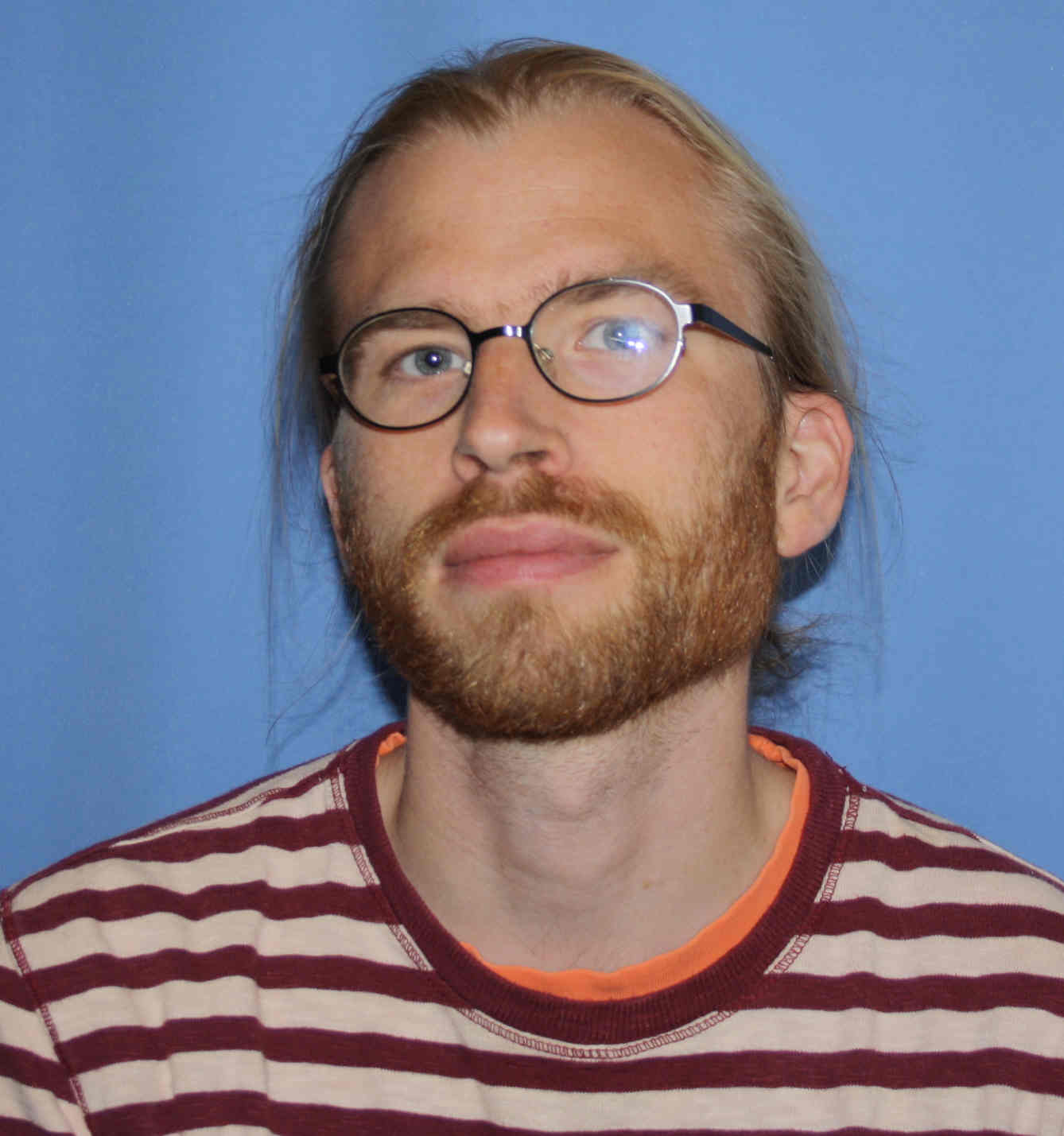
Alex Eskin is the Arthur Holly Compton Distinguished Service Professor in the Department of Mathematics at the University of Chicago. He has been a faculty member at the University of Chicago since 1999 and is a leading researcher in dynamical systems, geometric group theory, and the theory of moduli spaces.
His educational background includes:
- Undergraduate studies at UCLA
- PhD from Princeton University (1993) under Peter Sarnak
Eskin's research focuses on rational billiards, geometric group theory, and the dynamics of the SL(2,R) action on moduli spaces of translation surfaces. His work bridges several areas of mathematics including ergodic theory, geometry, and number theory. He is particularly known for his breakthrough results on the classification of invariant and stationary measures for the SL(2,R) action on moduli spaces, which led to his Breakthrough Prize in 2020.
Eskin's recent publications demonstrate a continued focus on measure rigidity, Lyapunov exponents, and the geometry of moduli spaces. His work often involves deep collaborations with other leading mathematicians such as Maryam Mirzakhani (until her passing), Amir Mohammadi, and others. The research spans from foundational theoretical work to applications in counting problems and effective estimates.
His major scientific achievements include:
- Clay Research Award (2007) for work on quasi-isometric rigidity of solvable groups
- Fellow of the American Mathematical Society (2012)
- Election to the National Academy of Sciences (2015)
- Breakthrough Prize in Mathematics (2020) for classification of P-invariant and stationary measures for the moduli of translation surfaces
Eskin has advised several PhD students including Moon Duchin and Simion Filip. His research has been supported by major grants from the National Science Foundation and the Simons Foundation. He has been an influential figure in the field, giving invited talks at the International Congress of Mathematicians in 1998 and 2010. His work has opened new directions in the study of dynamics on moduli spaces and has deep connections to other areas of mathematics.
While not explicitly mentioned in the provided texts, Eskin is likely involved in research groups or seminars at the University of Chicago related to geometry, topology, and dynamical systems. His extensive collaboration network suggests active participation in the broader mathematical community through workshops, conferences, and collaborative research projects.