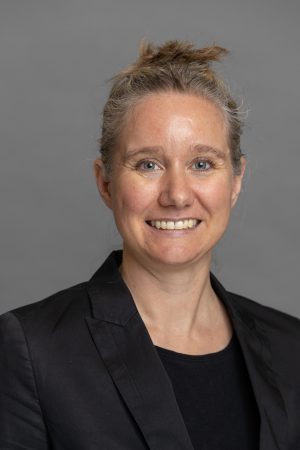
Maren Ehlersمشاهده پروفایل
دانشیار
- History of early modern and modern Japan
- History of East Asia
- History of poverty and poor relief
- +۳ مورد دیگر
Maren Ehlers is an Associate Professor of History and Honors Director at the University of North Carolina at Charlotte, where she is affiliated with the College of Health and Human Services (CHHS) and the Department of History. She maintains an active research profile focusing on early modern Japanese history, with particular expertise in the social history of the Tokugawa period. Dr. Ehlers received her M.A. from Universität Hamburg in 2003 and completed her Ph.D. at Princeton University in 2011. Her academic journey reflects a deep commitment to understanding the complexities of Japanese social structures during the early modern period. Dr. Ehlers' research interests center on the history of early modern and modern Japan, with particular focus on poverty and poor relief systems, social class structures, and local governance during the Tokugawa period. Her work challenges traditional interpretations of Japan's status order, revealing it not as a rigid hierarchy but as a complex web of locally specific social structures that evolved over time. She examines how ordinary subjects, including marginalized groups such as outcastes, participated in local administration and how poverty relief functioned as both a mechanism of social control and a means of maintaining social order. Her research methodology emphasizes microhistorical approaches, using detailed local records to reconstruct the lived experiences of people in castle towns like Ōno. Dr. Ehlers' publication record demonstrates a consistent scholarly trajectory examining social welfare systems, poverty relief, and status hierarchies in Tokugawa Japan, with particular focus on the Ōno domain. Her work spans multiple languages and publication venues, reflecting her engagement with both Western and Japanese scholarship. She has made significant contributions to understanding how domain governments managed social welfare, how marginalized groups navigated the status order, and how local communities responded to crises like famines. Her publications reveal a sophisticated understanding of how social structures, economic conditions, and cultural values intersected in early modern Japanese society. Dr. Ehlers received an Honorable Mention for the John Whitney Hall Book Prize of the Association for Asian Studies for her monograph Give and Take: Poverty and the Status Order in Early Modern Japan (Harvard University Asia Center, 2018). This recognition highlights the significance of her contribution to the field of Japanese historical studies. As Honors Director, Dr. Ehlers plays a key role in mentoring undergraduate students and developing enriched academic experiences. Her current research project continues her investigation of the Ōno domain, now focusing on domain reform during the Bakumatsu period. This work examines how small domains like Ōno engaged with broader networks of commerce, knowledge production, and cross-border connections in the final years of the Tokugawa shogunate. She is particularly interested in how Ōno domain interacted with groups that formed networks across domain borders, including wholesalers, shipping agents, sailors, lacquer harvesters and -dealers, miners, non-Japanese people on Karafuto, and others. Dr. Ehlers maintains strong connections with Japanese scholarship, particularly the work of the Status Marginality Research Group (Mibunteki shūen kenkyūkai), and frequently engages with archival materials in Japan. Her research methodology emphasizes careful reading of local documents and cursive script (kuzushiji), allowing her to reconstruct detailed social histories from primary sources.